Adaptive Sync can work over DisplayPort, but it is not guaranteed in a daisy-chained MST setup. For reliable gaming, connect your Adaptive Sync monitor directly to the GPU; for productivity chains, treat VRR as a bonus, not a promise.
Does your game feel smooth on one monitor, then start tearing or stuttering when you add a second screen through DisplayPort Out? A clean MST chain can simplify a desk with one cable path, but the practical win only holds when bandwidth, monitor firmware, GPU support, and refresh-rate targets all cooperate. This guide will help you decide whether to keep the chain, lower settings, or plug the gaming display directly into your graphics card.
The Short Answer
DisplayPort MST and Adaptive Sync are both DisplayPort-era technologies, but they solve different problems. MST carries multiple independent display streams through one connection, while Adaptive Sync matches the monitor’s refresh timing to the GPU’s changing frame rate.
That means the two are not automatically incompatible, but they are not automatically compatible in every real setup. A daisy-chain connection shares the bandwidth of one DisplayPort link across multiple displays, and that shared pipe is where high resolution, high refresh rate, HDR, 10-bit color, and VRR can start competing.
For a serious gaming display, especially a 144 Hz, 165 Hz, 240 Hz, or OLED monitor, the safest configuration is still a direct DisplayPort connection from the GPU to the monitor. For office displays running 1080p or 1440p at 60 Hz, MST daisy chaining is usually more sensible because its value is cleaner cabling and extended workspace, not peak motion performance.

What Adaptive Sync Actually Needs
Adaptive Sync dynamically adjusts a display’s refresh rate to match the graphics card’s frame output, which helps reduce tearing and stutter when frame rate moves up and down during gameplay or high-motion video. The key requirement is not just a label on the monitor box; the graphics card and monitor both need compatible variable-refresh-rate support, and the connection path has to preserve that behavior.
In a direct setup, the GPU talks to one monitor and can negotiate its supported VRR range. For example, a 144 Hz monitor with a practical VRR window around 48 Hz to 144 Hz can smooth out a game bouncing between 70 FPS and 120 FPS. You still need the right GPU driver settings, but the signal path is simple.
In an MST chain, the GPU is not sending one simple display stream to one panel. It sends multiple streams through one DisplayPort output, then the first monitor acts as a pass-through point for the next screen. That extra routing layer is where compatibility can become uneven. Some monitors expose Adaptive Sync only on their primary DisplayPort input, some disable it when MST is enabled, and some allow it only under reduced bandwidth conditions.

What DisplayPort MST Does Well
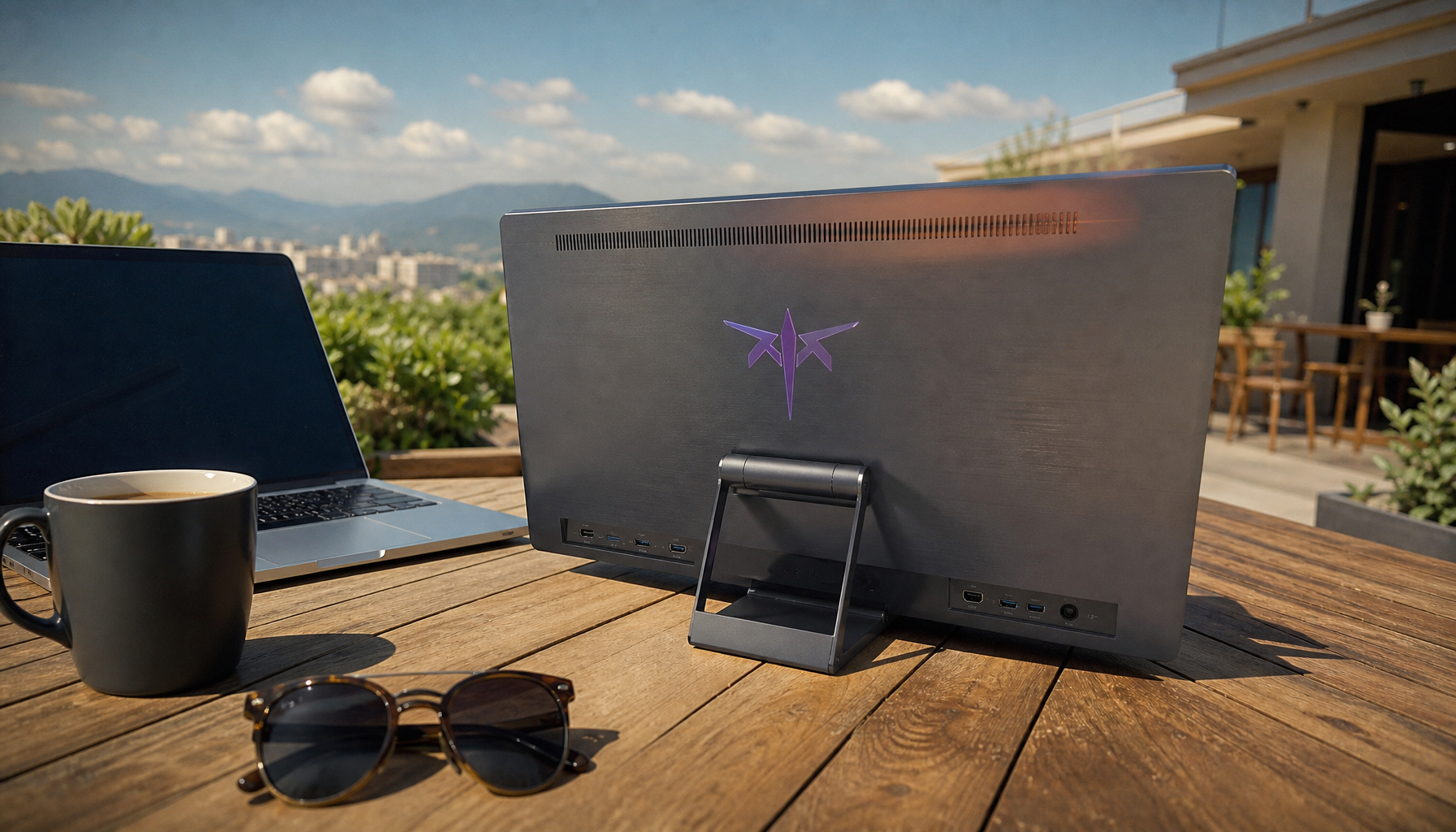
DisplayPort daisy chaining is built for clean multi-monitor workstations. A normal chain connects the computer to the first monitor, then connects the first monitor’s DisplayPort Out to the second monitor’s DisplayPort In. DisplayPort 1.2 or newer introduced MST, and MST lets one connection carry multiple independent video signals instead of merely duplicating the same image.
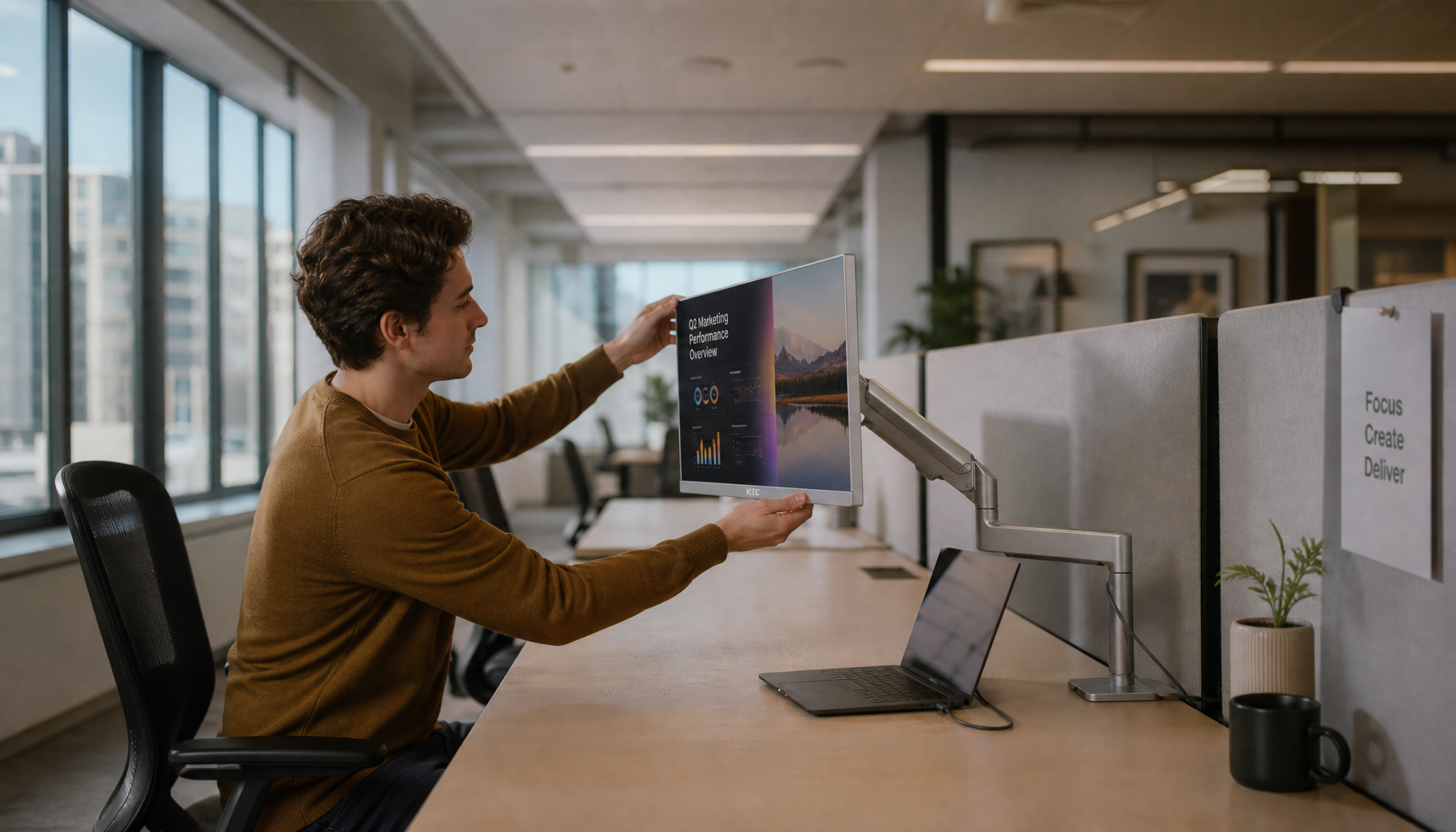
That is excellent for office productivity. A laptop with one DisplayPort-capable USB-C port can drive a writing display, a spreadsheet display, and a communication display with far less cable clutter. A desktop can preserve GPU ports for a headset, capture card, or separate gaming monitor.
The tradeoff is that every monitor in the chain shares the available link. If one DisplayPort connection has to carry two 1440p displays, each at high refresh with rich color settings, the chain may need to reduce refresh rate, color depth, or resolution. If the gaming monitor is also trying to run Adaptive Sync, you are asking the same connection to support both multiple display streams and variable timing.
Why VRR Can Fail in a Daisy Chain
The most common failure is not dramatic. The monitors still turn on, the operating system still extends the desktop, and both screens may look fine at 60 Hz. The problem appears when you launch a game and expect the primary monitor to behave like it did over a direct cable. You may see tearing, periodic hitching, a missing VRR option, Adaptive Sync grayed out in the monitor menu, or a refresh rate that silently drops.

The reason is usually one of three practical limits. First, bandwidth may be exhausted. Second, the monitor’s scaler may not support VRR while MST output is active. Third, the GPU driver may choose stability over variable refresh when multiple streams are negotiated through one DisplayPort output.
This is why gaming-focused advice often favors direct GPU connections. Daisy chaining can create performance issues and unreliable Adaptive Sync behavior. That matches real desk builds: MST is clean for productivity, but direct DisplayPort is the repeatable path for low-latency, variable-refresh gaming.
A Practical Compatibility Matrix
Setup |
Likely Result |
Best Use |
One gaming monitor directly connected by DisplayPort |
Highest chance of proper Adaptive Sync |
Competitive and immersive gaming |
Two 1080p or 1440p office monitors over MST at 60 Hz |
Strong chance of stable extended desktop |
Productivity, coding, finance, content review |
One high-refresh gaming monitor plus one secondary monitor over MST |
Mixed; VRR may disappear or become unstable |
Only worth testing if ports are limited |
Two high-refresh monitors over one MST chain |
Risky; bandwidth and VRR support may conflict |
Avoid for performance-first setups |
Monitors without MST support |
Not true daisy chaining |
Use direct connections or a dock after checking specs |
How to Test Your Own Setup
Start with the simplest chain possible. Connect the gaming monitor directly to the GPU first, enable Adaptive Sync or VRR in the monitor’s on-screen menu, then confirm the matching option appears in the graphics driver control panel. Run a familiar game where frame rate fluctuates below the monitor’s maximum refresh rate. Adaptive Sync matters most when FPS is below max refresh, because if your system is already pushing far above the panel’s Hz ceiling, the benefit is much less visible.
After that baseline, add the second monitor through DisplayPort MST. Enable MST or daisy-chain mode in the first monitor’s menu, set the operating system to extend the displays, and check whether the GPU driver still exposes VRR for the gaming monitor. If the option vanishes, the answer for your hardware combination is effectively no.
If the option remains, test motion rather than trusting the checkbox. Use a game that runs in the middle of your VRR range, such as 80 FPS to 120 FPS on a 144 Hz panel. Watch for tearing during horizontal camera pans and for rhythmic stutter when frame rate changes. If the direct connection feels smooth and the MST version does not, the chain is the bottleneck even if the software setting looks correct.
Bandwidth Is the Quiet Decider
Modern gaming monitors are demanding. Current gaming displays include features such as QHD OLED at 480 Hz, 4K modes, variable-refresh support, and extremely fast response behavior, and monitor-selection factors now include refresh rate, adaptive sync support, ports, desk space, and budget. Those features are valuable, but they also increase signal load.
A simple example makes the decision easier. Two 1080p 60 Hz office displays are modest by modern standards, so MST is usually a reasonable way to reduce clutter. A 1440p 240 Hz gaming monitor plus a 4K secondary display is a very different class of signal demand. Even before VRR enters the conversation, that setup is better served by separate GPU outputs.
Panel type also matters for expectations. OLED and high-refresh LCD gaming panels can reveal timing problems more clearly because their response behavior is fast. OLED displays are self-emissive and do not need a backlight, which helps explain their excellent contrast and responsiveness; OLED displays are valued for fast refresh behavior and strong image quality. If you bought that kind of monitor for immersion, do not bury its best feature behind a questionable chain.
When Daisy Chaining Still Makes Sense
Daisy chaining is still a smart solution for many users. If your main goal is a cleaner office workstation, fewer cables, and more usable screen area for browser windows, spreadsheets, chat, dashboards, and reference material, MST is practical and reliable when every device supports it.

It is also useful for portable smart-screen setups where the second screen is for monitoring, notes, email, or streaming controls rather than fast gameplay. In that case, you can keep the productivity displays chained and reserve the GPU’s strongest direct output for the gaming monitor.
For hybrid users, the best layout is often split. Put the primary gaming display on its own DisplayPort cable from the GPU. Daisy-chain the secondary productivity monitors from another port if your GPU and monitors support it. That gives you cable discipline without sacrificing the display that actually needs variable refresh.
Pros and Cons
Approach |
Pros |
Cons |
Direct GPU connection for gaming monitor |
Best VRR reliability, lowest uncertainty, strongest high-refresh support |
Uses more GPU ports and cables |
DisplayPort MST chain |
Cleaner desk, fewer direct computer connections, efficient for work screens |
Shared bandwidth and uneven Adaptive Sync behavior |
Dock or hub |
Helpful for laptops and office setups with peripherals |
Can add compatibility limits; VRR support must be verified |
Mixed direct plus MST setup |
Best balance for gaming plus productivity |
Requires enough GPU or dock outputs |
Recommended Setup for Most Users
If gaming performance matters, connect the Adaptive Sync monitor directly to the GPU and use MST only for secondary displays. Set the gaming display as the primary monitor in the operating system, enable VRR in the GPU driver, and keep the game running on that directly connected display.
If productivity matters more than gaming, use MST confidently after checking that the first monitor has DisplayPort In and DisplayPort Out, the last monitor has DisplayPort In, and all devices support DisplayPort 1.2 or newer. Keep refresh rates conservative, especially at 4K, and avoid assuming that a daisy-chain setup will preserve every gaming feature printed on the monitor box.
If you have only one DisplayPort output and want both a gaming monitor and a secondary screen, test before buying more hardware. Lower the secondary display to 60 Hz, disable HDR or 10-bit color if needed, and confirm whether Adaptive Sync stays available. If it does not, a GPU with more outputs, a different dock, or a direct-cable layout is the better long-term fix.
FAQ
Can Adaptive Sync Work Through DisplayPort MST?
It can in some hardware combinations, but it should not be assumed. Adaptive Sync depends on compatible GPU, monitor, driver, and connection behavior, and MST adds another negotiation layer.
Can Vendor-Compatible VRR Work in a Daisy Chain?
Sometimes, but it is less predictable than a direct DisplayPort connection. Users should verify that the VRR option remains available after enabling MST and should test real gameplay for tearing or stutter.
Is MST Bad for Gaming?
MST is not inherently bad, but it is not ideal for the primary gaming monitor. It is best for productivity displays where extended workspace and cable reduction matter more than VRR consistency.
Should I Use Another Cable Standard Instead?
Most monitor connections do not support true daisy chaining. For multi-monitor chains, DisplayPort MST or a high-bandwidth USB-C display connection is the normal path; for gaming VRR reliability, a direct connection is still the cleaner choice.
Adaptive Sync and DisplayPort MST can coexist, but the dependable performance path is clear: use a direct cable for the screen where motion matters, and use daisy chaining for the screens that expand your workspace. Build the setup around the display you actually feel, not just the cable layout you want to hide.