Yes, there is a noticeable sharpness difference between 1440p and 4K on a 27-inch monitor, but it is much easier to appreciate in text, desktop work, and static image detail than in fast-moving games.
If you have ever stared at two 27-inch monitors and wondered why one looks only a little cleaner in games but obviously crisper on text, that is the exact decision point here. Real-world user reports and side-by-side use consistently show the same pattern: 4K looks sharper, while 1440p often feels like the better balance for high-refresh gaming. You will leave with a practical way to choose based on how far you sit, what you play, and whether your monitor is mostly for motion or mostly for detail.
What Changes at 27 Inches
Pixel density is the core reason 4K looks sharper
At the same 27-inch size, 1440p is about 109 PPI and 4K is about 163 PPI. That is a major jump in pixel density, which is why 4K can render text edges, UI lines, and fine image detail with less visible jaggedness.
The raw pixel count gap is even larger. 4K has 8,294,400 pixels, while standard 1440p has 3,686,400, so a 4K panel is asking the display and GPU to work with a little more than twice as many pixels. On a spec sheet, that makes 4K clearly superior for sharpness. In practice, whether you notice it immediately depends on what is on screen and how close you sit.
The difference is real, but not equally visible in every task
User reactions vary because the benefit is not uniform. In one community discussion, a user sitting roughly 26 to 29 inches away felt 1440p gave only a slight clarity boost over 1080p in gaming, while several replies argued that 27-inch 4K is much more obviously sharper, especially for text.
That split is useful for monitor buyers. It suggests the sharpness gain is not imaginary, but your eyes will notice it more when the screen shows fine static detail than when a game camera is swinging quickly across a map at high refresh.
Where 4K Looks Meaningfully Better
Text, icons, and desktop UI benefit the most
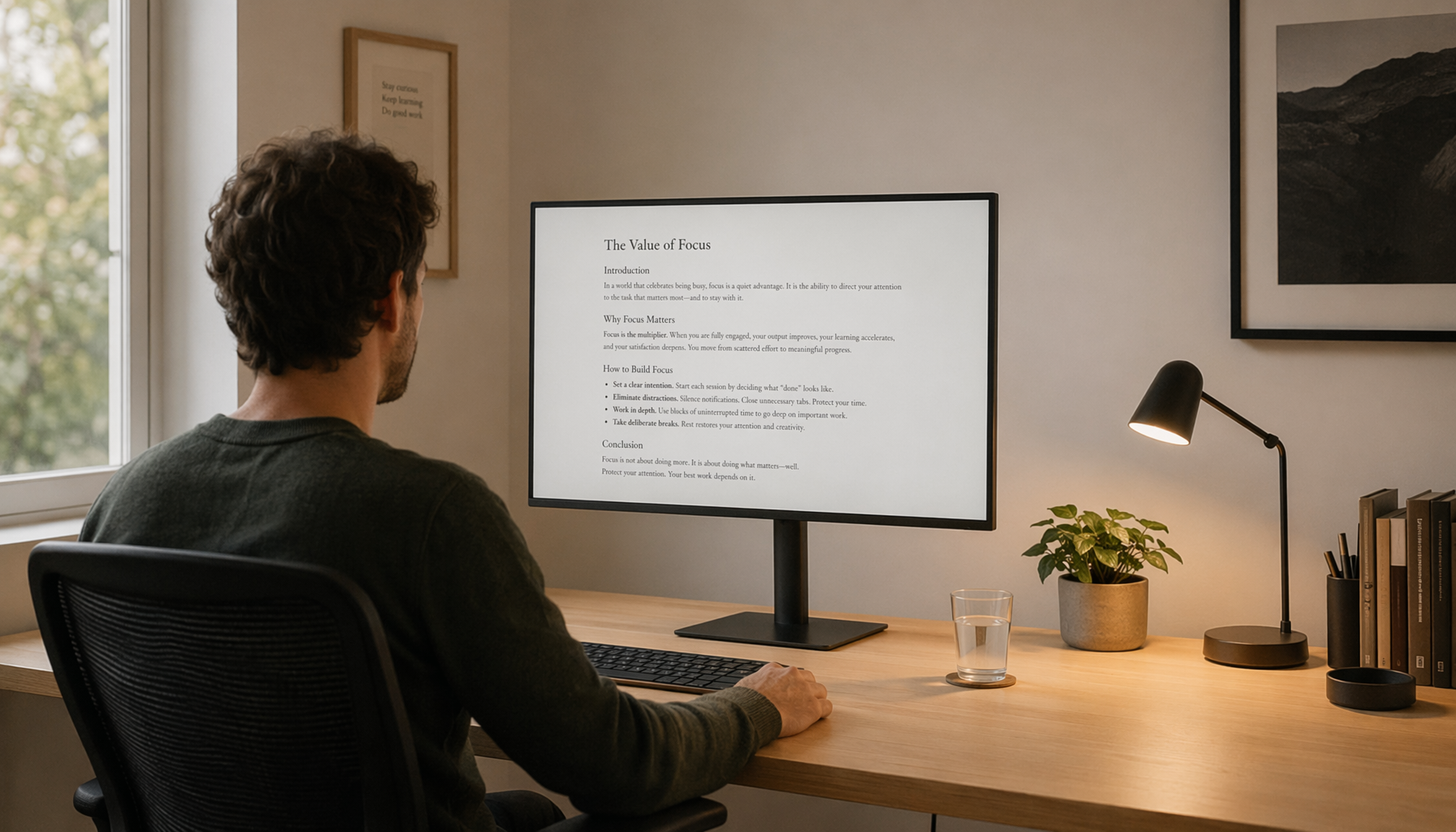
The clearest case for 27-inch 4K is desktop clarity. In a hardware forum thread, a user said a 27-inch 4K monitor at 150% OS scaling looked crisper and more defined than a 27-inch 1440p monitor at 100%, even though both displayed roughly the same amount of content on screen.
That matches what many buyers notice in real use: email, spreadsheets, code editors, browser text, and small interface elements look cleaner on 4K. If your day includes long reading sessions or text-heavy work on a monitor, 4K at 27 inches has an immediately practical advantage.

Static detail improves more than moving detail
A second tech site comparison found that a 27-inch 4K IPS display was visibly sharper for text and static UI, but the author still preferred a newer 27-inch 1440p OLED for primary gaming. That is a useful distinction for gaming monitor shoppers: static sharpness and motion performance are not the same thing.
In other words, 4K wins the screenshot test more easily than the gameplay test. If you mostly admire environmental detail, single-player visuals, and clean UI rendering, 4K has clear appeal. If your focus is tracking targets at very high frame rates, that extra sharpness can matter less than smoothness.
Why 1440p Often Feels Better for Gaming
The performance cost is much larger than the sharpness gain
A pixel-count comparison shows 4K carries about 126% more pixels than 1440p. That is a huge workload increase for the GPU, even though the visual jump at 27 inches may feel modest in many games.
This tradeoff appears repeatedly in user reports. One player in the community thread described frame rate dropping from about 150 FPS to 100 FPS after moving up in resolution, while feeling the clarity gain was small in actual play. That is only one person’s experience, but it captures the reason 1440p remains the sweet spot in high-refresh gaming monitors.

High refresh and motion clarity can beat higher resolution
Another tech site hands-on comparison put a 160 Hz 27-inch 4K IPS monitor against a 360 Hz 27-inch 1440p OLED. The 1440p OLED became the main gaming display because its near-instant response time, better motion clarity, and easier frame-rate targets made it better for fast games like a competitive shooter and a battle royale.
For monitor buyers, this is the key gaming reality: 4K improves image sharpness, but 1440p often delivers more of the things players actually feel during gameplay. Higher frame rate, steadier frame pacing, and less aggressive upscaling can be more valuable than finer pixel structure on a 27-inch panel.
Viewing Distance and Scaling Change the Answer
Distance affects how obvious the sharpness gap feels
Reports from enthusiasts suggest the difference is easier to see when you sit closer. In a tech discussion, users debating 27-inch 4K vs 1440p described 4K as noticeably sharper at typical desk distances of about 1.5 to 3 feet, while others still felt the practical benefit was limited unless the setup or workload favored detail.
A gaming forum thread shows the same pattern. One user said they could clearly see the improvement from about 3.25 feet away, while another said they owned both 27-inch 4K and 1440p displays and could not tell much difference. That does not weaken the case for 4K; it shows that visual acuity and desk setup matter more than a spec-sheet argument.
OS scaling reduces the workspace advantage, not the clarity advantage
At 27 inches, 4K at 150% scaling often produces a desktop layout similar to native 1440p. That means many buyers should not expect dramatically more usable workspace unless they are comfortable running smaller text.
What scaling does preserve is sharpness. The hardware forum example is important because it shows why 4K can still be worthwhile even when content size looks similar: you may get the same practical layout, but with cleaner text and finer edge definition.
Which Buyers Should Choose Each Resolution?
4K makes the most sense for detail-first use
Choose 27-inch 4K if your monitor is heavily used for reading, coding, office work, photo viewing, strategy games, slower single-player titles, or any mixed-use setup where text clarity matters every day. The brand breakdown frames 4K as the better fit for text-heavy work, and that matches the desktop-scaling experiences shared in forum discussions.

It also makes more sense if you already own a very high-end GPU and are comfortable using upscaling, frame generation, or lower in-game settings when needed. Even then, several users in the tech discussion thread still treated 4K at 27 inches as more compelling for premium systems than as an automatic recommendation for everyone.
1440p remains the safer all-around gaming buy
Choose 27-inch 1440p if your priority is esports, high-refresh gameplay, long-term GPU efficiency, or getting more performance per dollar from a gaming monitor. The gaming comparison and multiple forum discussions point the same direction: 1440p is easier to drive, easier to pair with 240 Hz or 360 Hz panels, and often the more balanced resolution for actual gaming.
That does not mean 1440p and 4K look the same. It means the visible sharpness gain from 4K is often outweighed by smoother performance, especially on fast IPS or OLED gaming monitors where motion quality is part of the buying decision.
Comparison Table
Factor |
27-inch 1440p |
27-inch 4K |
Pixel density |
About 109 PPI |
About 163 PPI |
Sharpness in text and UI |
Good |
Excellent |
Sharpness in fast gaming |
Good, often sufficient |
Better, but less dramatic in motion |
Lower |
Much higher |
|
Strong for 144 Hz to 360 Hz |
Harder to sustain at high settings |
|
OS scaling need |
Usually optional |
Often preferred above 100% |
Desktop workspace |
Straightforward native layout |
Similar to 1440p if scaled to 150% |
Best fit |
Competitive gaming, value, high refresh |
Mixed use, text clarity, visual detail |
Practical Next Steps
Action checklist
- Measure your normal seating distance from your eyes to the screen.
- Decide whether your monitor is used more for text and desktop work or for high-refresh gaming.
- Check the frame rates your GPU can realistically hold at 1440p and 4K in the games you actually play.
- If you prefer 240 Hz or higher, treat 1440p as the default starting point.
- If you care about crisp text more than maximum FPS, shortlist 27-inch 4K models and plan on using OS scaling.
- If possible, compare a 27-inch 1440p and 27-inch 4K monitor side by side with small text, browser tabs, and one familiar game.
The simplest buying rule is this: 27-inch 4K is visibly sharper, but 27-inch 1440p is often the better overall gaming monitor. If your monitor spends more hours showing text than showing fast motion, 4K earns its keep. If it spends more hours pushing high frame rates, 1440p is usually the smarter choice.
FAQ
Q: Can most people see the difference between 1440p and 4K on a 27-inch monitor?
A: Yes, especially in text, icons, and fine desktop detail. In fast games, the difference is still there, but it is often less dramatic than the frame-rate penalty.
Q: Does 4K at 27 inches give more workspace than 1440p?
A: Not always. Many people use 4K at 125% to 150% scaling, which can make the layout feel similar to 1440p while still looking sharper.
Q: Is 4K worth it on a 27-inch gaming monitor?
A: It depends on your priority. If you want maximum sharpness and also use the monitor for text-heavy work, yes. If you want the best mix of price, performance, and high refresh, 1440p is usually the better buy.
References
- Steam Community discussion on 27-inch monitor clarity and FPS tradeoffs
- XDA discussion of 4K vs 1440p pixel count, density, and GPU load
- XDA hands-on comparison of a 27-inch 4K IPS and 27-inch 1440p OLED
- Tom’s Hardware thread on 27-inch 4K at 150% scaling vs 1440p
- Linus Tech Tips thread on whether 27-inch 4K is worth it for gaming
- Steam Community thread on upgrading from 1440p to 4K at 27 inches
- KTC article on 27-inch monitor PPI, scaling, and gaming fit
- GameFAQs discussion on whether 4K is too much for a 27-inch monitor