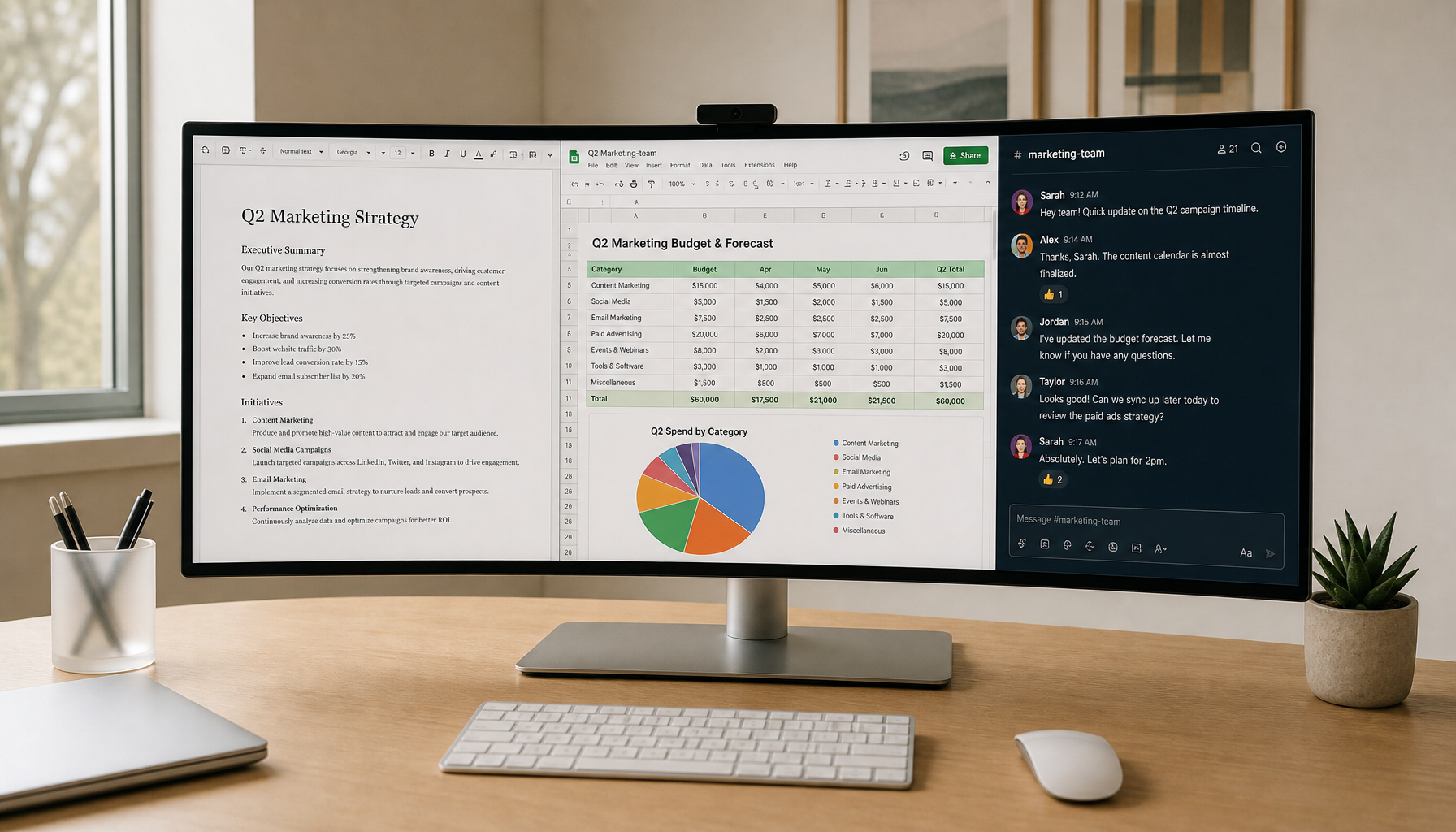
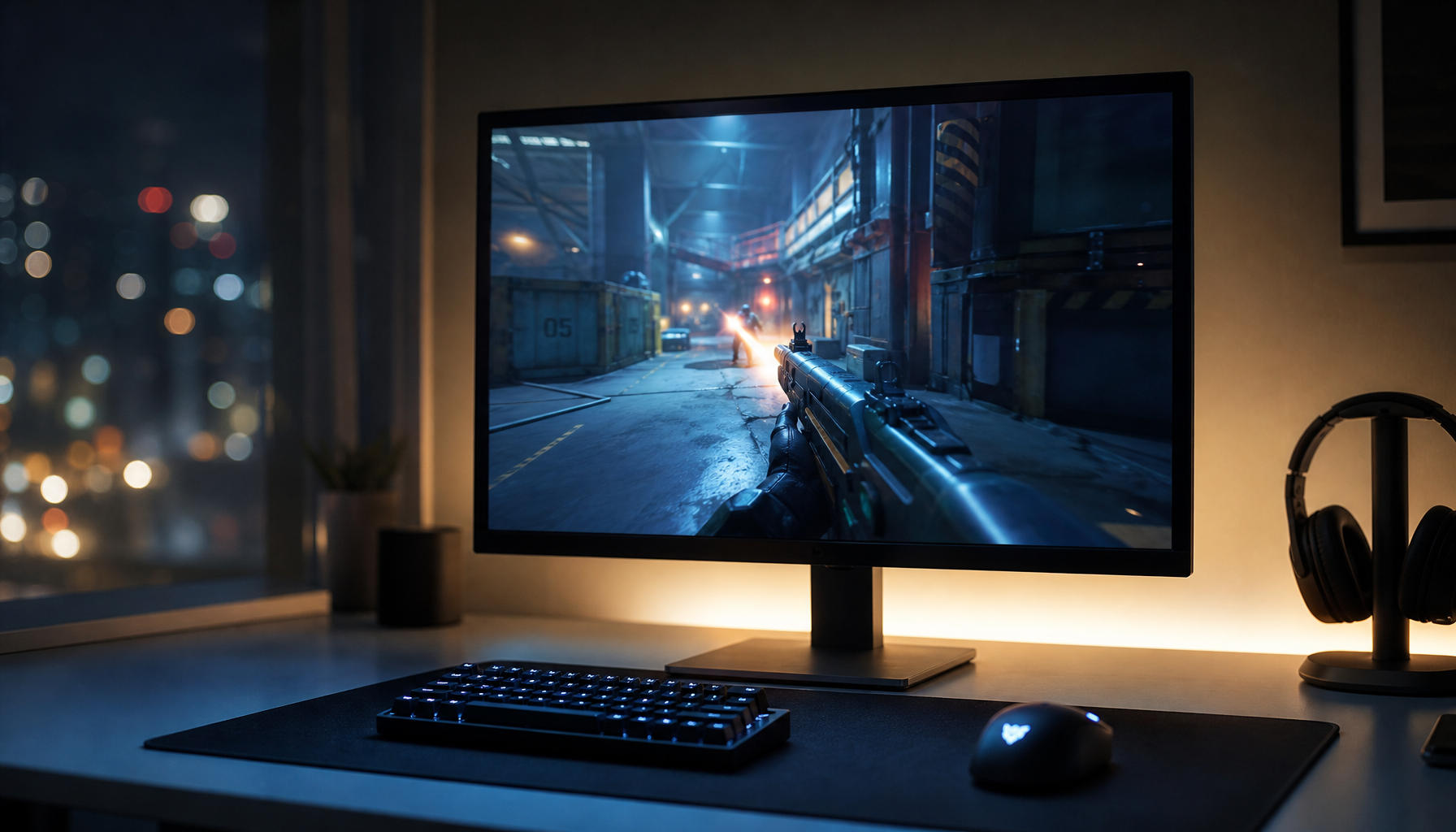
After 10,000 hours of heavy daily use, 2026 OLED panels show strong mechanical reliability with lower outright hardware failure rates than many LCDs, but they still carry a cumulative risk of visible burn-in under prolonged static light-mode productivity workloads. Mini-LED backlights deliver exceptional brightness stability with under 3% drift at this mark and effectively zero burn-in risk, making them the safer default for developers, coders, and multitaskers who keep bright interfaces or taskbars visible for 8+ hours per day.
The choice between the two technologies now hinges less on marketing claims and more on your daily UI habits, brightness preferences, and tolerance for minor workflow adjustments. Dark-mode users can comfortably choose 2026 OLEDs with MLA 3.0 or Gen 4 QD-OLED panels. Light-mode power users should lean toward Mini-LED for consistent performance over years of 12-hour sessions.

The 2026 Tech Update: MLA 3.0 vs. RGB Mini-LED
Panel technology in 2026 has narrowed the gap between OLED and Mini-LED, primarily through better thermal management and efficiency gains. MLA 3.0 and fourth-generation QD-OLED designs incorporate improved heat dissipation layers and more sophisticated pixel compensation algorithms that slow the rate of organic material wear. These updates reduce the speed at which static UI elements create uneven aging, though they do not eliminate the underlying chemical limits of organic emitters.
On the Mini-LED side, the industry shift toward RGB Mini-LED backlights removes the color filter layer found in earlier white-LED designs. As Consumer Reports notes, this approach improves light efficiency and lowers operating temperatures, which in turn reduces heat-related aging effects on the backlight components. The result is a more consistent performer for sustained high-brightness use.
Despite these advances, the fundamental difference remains: OLED pixels are self-emissive and subject to differential wear, while Mini-LED relies on a robust inorganic backlight that is far less sensitive to static content. For productivity users, this means the 2026 improvements make OLED more viable in controlled conditions but do not make it interchangeable with Mini-LED for always-on bright interfaces.
Analyzing the 10,000-Hour Benchmark: Cosmetic Wear vs. Fatal Failure
The 10,000-hour mark serves as a practical benchmark because it roughly equals three to four years of 8-to-10-hour daily use. Accelerated longevity testing by RTINGS and others has shown a counter-intuitive result: OLED panels often record lower total hardware failure rates than LCD or Mini-LED counterparts over this period. The primary reason is that OLEDs have fewer discrete components prone to sudden death; most LCD failures stem from backlight arrays, power supplies, or logic boards rather than the panel itself.
However, OLED degradation typically appears as cosmetic burn-in or image retention rather than a complete panel failure. This differential aging occurs when certain pixels are used far more than others, such as bright taskbars, window borders, or syntax-highlighted code lines that remain static for hours. Mini-LED panels avoid this entirely because the backlight is not pixel-level emissive in the same organic way.
Tom's Hardware coverage of the multi-year RTINGS test highlights that while some OLED units developed visible burn-in under extreme static conditions, the majority of outright failures occurred in LCD models due to backlight or power issues. This reframes the longevity conversation: OLED is mechanically reliable but chemically finite, while Mini-LED's main long-term risks lie in supporting electronics rather than the light source.
OLED vs Mini-LED Longevity for Productivity Use
A decision aid for the 10,000-hour mark: OLED can still be a workable choice with mixed content and care features enabled, while Mini-LED remains the safer low-risk fit for static productivity workloads.
View chart data
| Category | OLED: typical fit zone | Mini-LED: typical fit zone |
|---|---|---|
| 0h | 0.0 | 1.0 |
| 5,000h | 1.0 | 2.0 |
| 10,000h | 2.0 | 2.0 |
| 15,000h | 2.0 | 2.0 |
This zone-style visualization clarifies the practical decision boundary without implying exact failure probabilities. It shows that OLED suitability narrows under heavy static light-mode use by the 10,000-hour point, while Mini-LED maintains high suitability across the tested range for productivity workloads.
Brightness Drift and Backlight Uniformity at 10,000 Hours
Brightness stability matters enormously for coders and spreadsheet users who rely on consistent color and luminance across long sessions. High-performance Mini-LED panels demonstrate exceptional stability here, with industry benchmarks showing less than 3% brightness degradation after 10,000 hours of continuous maximum-output operation. The BOE/PatSnap longevity benchmark supports this level of consistency, positioning Mini-LED as the clear “Consistency King” for color-critical or high-brightness productivity work.
LED backlights in general have a theoretical half-life—the point at which they reach 50% of original brightness—of 50,000 to 100,000 hours. The 10,000-hour mark therefore represents just the early phase of their operational life. In practice, most Mini-LED monitors maintain uniformity well beyond this point, provided the power supply and cooling system remain healthy.
OLED brightness, by contrast, is managed through automatic brightness limiting (ABL) and pixel compensation cycles that can cause slight perceived dimming or color shifts over time in static bright areas. For users who run at sustained high nits with white backgrounds, this makes Mini-LED the more predictable choice. Uniformity issues on Mini-LED are usually limited to minor clouding that improves with firmware updates, whereas OLED burn-in is permanent without panel replacement.
The Daily Reality: Haloing, ABL, and the 'Toggle Tax'
Longevity is not only about panel physics; it is also about how annoying the monitor is to live with for 12-hour days. Mini-LED monitors with high zone counts often produce noticeable haloing or blooming around bright text and UI elements when local dimming is active in SDR mode. Many users end up disabling dimming for productivity work, which defeats much of the contrast advantage and requires repeated OSD adjustments when switching between work and media. This “Toggle Tax” becomes a source of fatigue and, for some, monitor returns.
OLEDs avoid haloing entirely because each pixel controls its own light. Their primary daily frictions are automated: hiding the taskbar and dock to reduce static bright pixels, and accepting occasional ABL dimming during bright HDR bursts. These are passive adjustments that do not interrupt workflow as frequently as manual toggling. User reports suggest satisfaction drops sharply when a display demands more than three manual setting changes per day.
For mixed work-and-play users, OLED’s passive hygiene often feels less intrusive than Mini-LED’s active babysitting, especially once dark-mode habits are established. High-end Mini-LED firmware continues to improve automatic SDR/HDR handshakes, but many current implementations still require user intervention in productivity scenarios.

Decision Guidance: Coding, Gaming Demanding Work, and Mixed Productivity
Your daily interface and brightness habits determine the better long-term choice more than peak specs. Dark-mode developers who use IDEs with dark themes for 8–12 hours can safely choose 2026 OLED models equipped with MLA 3.0 or Gen 4 QD-OLED. Improved thermal design and compensation cycles have pushed the burn-in threshold high enough that static syntax highlighting and UI chrome pose manageable risk when taskbars are hidden and brightness is kept moderate.
Light-mode power users who rely on white backgrounds, spreadsheets, or documentation for 6–10 hours daily should select Mini-LED. The sustained high-brightness requirement and risk of uneven organic wear make OLED a poorer fit even with 2026 advances. For extreme mixed-use setups exceeding 12 hours with no willingness to adopt dark mode or pixel-care routines, Mini-LED remains the lower-regret option.
KTC’s M27P6 Mini-LED 4K monitor aligns well with light-mode productivity needs thanks to its high zone count, 1400 nits peak, and full ergonomic stand that supports portrait rotation for coding. For users comfortable with dark-mode workflows, the G27P6 OLED model offers excellent motion clarity and contrast that many find less fatiguing over long sessions. Both support the All-Mini-LED Monitors and All-OLED Monitor collections if you want to browse compatible sizes and refresh rates.
Additional practical steps include enabling screen savers, varying window positions, using pixel-shift or compensation features where available, and keeping peak brightness below 70% for OLEDs. These habits extend usable life far more than any single panel technology.
How Do Burn-In Risks Differ for Coding vs. General Productivity in 2026?
Burn-in risk is significantly lower for coding when dark themes are used, because far fewer pixels are driven at high brightness. Static bright elements such as menu bars or browser tabs remain the dominant concern. In 2026, compensation cycles and MLA technology have reduced the rate of visible retention under typical 8-hour dark-mode sessions, but light-mode spreadsheets or documentation still accelerate wear. General productivity with mixed applications and frequent window movement carries moderate risk that is easily managed with basic hygiene.
Does Mini-LED Brightness Stay Consistent After 10,000 Hours of Daily Office Use?
Yes, Mini-LED panels typically show less than 3% brightness degradation after 10,000 hours even at high output levels. The inorganic LED backlight maintains uniformity far better than organic materials under sustained use. The main variables that could affect real-world consistency are power supply quality and thermal design rather than the LEDs themselves. For office environments running 300–500 nits, drift is usually imperceptible.
What Daily Habits Most Effectively Prevent OLED Degradation?
Hide the taskbar and dock, use dark mode wherever possible, vary window positions throughout the day, enable built-in pixel refresh or compensation cycles, and avoid leaving static bright images at maximum brightness for hours. Keeping average brightness under 70% and using screen savers during breaks adds meaningful protection. These steps matter more than any single firmware update.
Is OLED Now Reliable Enough for All-Day Developer Work?
For developers committed to dark themes and basic pixel-care habits, 2026 OLED panels with MLA or QD-OLED technology are reliable for 8–12 hour days. The mechanical failure rate is actually lower than many Mini-LED or LCD monitors. However, if your workflow includes extensive light-mode spreadsheets, constant bright UI elements, or you prefer zero maintenance, Mini-LED is still the lower-risk choice for multi-year reliability.
When Should You Choose Mini-LED Over OLED for Long-Term Productivity?
Choose Mini-LED when your daily workload involves 6+ hours of light backgrounds, high sustained brightness above 400 nits, or when you want to avoid any burn-in anxiety. It is also preferable for users who dislike managing taskbar hiding or who frequently switch between many bright applications. OLED is the better pick for dark-mode-centric users who value perfect blacks, fast pixel response, and lower long-term hardware failure rates when proper habits are followed.