In 2026, Tandem OLED (also known as 4th-generation WOLED) is emerging as a serious contender against QD-OLED for professional color work. Creative professionals should choose Tandem OLED when their workflow involves long editing sessions or rooms with some ambient light, while QD-OLED remains preferable for peak color volume in fully controlled dark studios. The deciding factor is usually your studio lighting and session length rather than raw peak specs.

The 2026 Panel Shift: Why Tandem OLED Changes the Game
Tandem OLED, or stacked OLED, uses a dual organic layer design that splits the electrical load required to produce light. This architecture allows panels to reach higher brightness levels with less stress on individual layers compared to traditional single-stack OLEDs like earlier QD-OLED designs. As explained in technical overviews of the technology, the dual-stack approach distributes current more efficiently, which supports both brighter highlights and improved longevity (Tandem OLED Technology 2026).
For 27- to 32-inch creator monitors, this typically translates to HDR peaks around 1,000–1,500 nits in small windows rather than the 4,500-nit panel-level figures sometimes quoted for larger TVs. Both panel types now meet stringent VESA DisplayHDR True Black standards, delivering the near-infinite contrast that makes shadow detail in video timelines pop without blooming (VESA DisplayHDR True Black Standard).
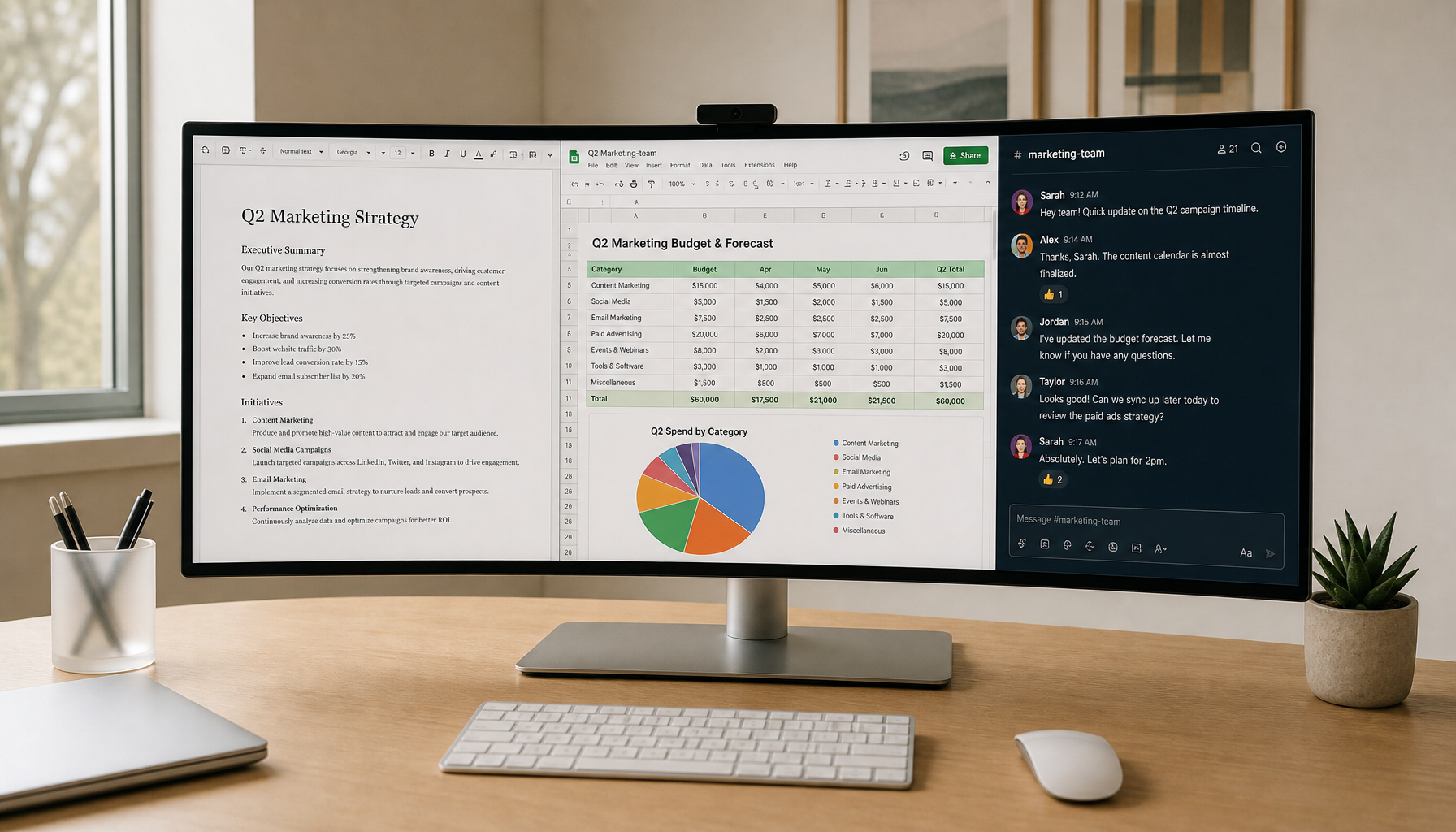
The practical takeaway for color-critical users is that Tandem OLED reduces the thermal and electrical strain that previously limited OLED adoption in professional environments. This shift makes the technology viable for designers and editors who previously worried about panel wear from static interface elements in tools like DaVinci Resolve or Adobe Premiere.
Color Performance: Peak Volume vs. Rec.2020 Coverage
QD-OLED continues to lead in peak color volume, particularly for highly saturated reds and greens at maximum brightness. Its quantum-dot color conversion layer enables more vivid extremes that can benefit visual effects work where maximum saturation matters (4th Gen Tandem WOLED vs QD-OLED).
Tandem OLED has narrowed the gap significantly, now achieving approximately 85% Rec.2020 coverage. This level is sufficient for most broadcast, web, and streaming standards that professional creators actually deliver against (Why Tandem OLED Monitors Matter). The difference appears most noticeable in side-by-side comparisons of extreme HDR content rather than typical photo retouching or standard video grading.
What this means for your workflow is that QD-OLED still wins on pure “pop” in a dark room, but Tandem OLED now delivers color accuracy that meets professional thresholds for the majority of paid client work. Delta E values below 2—where most humans cannot perceive a difference—remain achievable on both when properly calibrated, as discussed in our guide to what Delta E values actually mean for creative work.
Thermal Stability: Preventing Color Drift During Long Sessions
For colorists working on feature-length projects or multi-hour grading sessions, thermal stability often matters more than initial color volume. Single-stack designs like QD-OLED can require higher current densities to reach bright HDR targets, generating localized heat that may cause subtle white-point or Delta E shifts after four to six hours of continuous use.
Tandem OLED’s dual-layer approach lowers the stress on each organic layer, improving heat management and helping maintain stable color performance throughout an eight-hour workday. This reduces the need for mid-session recalibration that can break creative flow. The dual-stack design acts as a thermal buffer, keeping color drift within tighter professional tolerances during extended high-brightness HDR work.
Many creators report that this stability becomes the deciding factor once they experience both panels in real editing environments. If your typical day includes long timelines with HDR footage and static UI elements visible, the reduced thermal load of Tandem OLED often translates to fewer interruptions and more consistent deliverables.

Tandem OLED vs QD-OLED Trade-offs for 6-Hour Creative Sessions
This comparison shows how the two 2026 panel types balance color volume against thermal stability in typical professional workflows. Higher bars indicate better performance for color-critical work.
Show Data Table
| Panel | Peak Color Volume | Long-Session Stability | Ambient Light Tolerance |
|---|---|---|---|
| QD-OLED | 9 | 6 | 5 |
| Tandem OLED | 7 | 9 | 8 |
This visualization clarifies the core trade-off discussed throughout the article. In mixed-light or long-duration scenarios, the stability advantage often outweighs the color-volume edge.
The Ambient Light Test: Raised Blacks and Purple Tint
Room lighting dramatically affects real-world contrast on OLED panels. QD-OLED designs lack a traditional circular polarizer, so ambient light can reflect off the quantum dot layer and create a purple or grey tint that raises black levels. This effect can turn the “infinite contrast” marketing claim into something closer to 2% grey in typical office environments (Tandem OLED vs QD-OLED Explained).
Tandem OLED panels (WOLED architecture) retain better black-level performance in the presence of ambient light, maintaining deeper, inkier blacks even with windows or overhead fixtures present. For creators working in anything other than a fully light-controlled “batcave” studio, this difference often proves more noticeable than spec-sheet color volume numbers.
The practical test is simple: sit at your editing desk during normal working hours with typical room lighting. If you see any purple sheen or lifted blacks on a QD-OLED demo unit, that panel may require additional light control measures that add cost and complexity to your setup. Many professionals ultimately find Tandem OLED delivers more reliable contrast day-to-day.
Longevity and Burn-In: Which Panel Survives the UI?
Static user interfaces in professional software remain the biggest burn-in concern for color-critical users. Toolbars, timelines, and preview windows in Resolve, Premiere, or Photoshop stay on screen for hours. Tandem OLED’s lower current density per layer significantly reduces the stress that leads to uneven wear, offering a meaningful improvement in expected panel lifespan compared to previous single-stack generations.
Both technologies have advanced with pixel-shifting, screen savers, and manufacturer burn-in warranties that typically cover three years. However, the dual-stack design gives Tandem OLED a practical edge for heavy professional use where the same interface elements remain visible for thousands of hours. This makes it the lower-risk choice for designers and long-form editors who cannot afford downtime for panel replacement.
Our related article on HDR display calibration and mastering inconsistency explains why maintaining consistent panel behavior over time matters more than initial out-of-box performance for client deliverables.
Workflow Fit: Choosing the Right Panel for Your Studio
The best 2026 panel depends on your specific creative discipline and studio conditions rather than a universal winner.
Choose QD-OLED if you work primarily in a completely dark, light-controlled grading suite and need maximum color volume for visual effects or high-saturation motion work. These panels still deliver the most striking HDR highlights and saturated colors when ambient light is eliminated.
Choose Tandem OLED for mixed-light offices, long-form documentary or narrative editing, photography retouching with variable daylight, or any workflow where session length exceeds four hours. Its superior thermal stability and ambient-light performance reduce the need for constant recalibration and light management.
A quick self-check framework:
- Do you control all room lighting? (If no → lean Tandem OLED)
- Do your sessions regularly exceed six hours? (If yes → lean Tandem OLED)
- Is your primary output broadcast or web video rather than theatrical VFX? (If yes → Tandem OLED coverage is now sufficient)
- Do you frequently work with extremely saturated custom graphics? (If yes → consider QD-OLED)
For most prosumer and mid-level professional creators in 2026, Tandem OLED removes more practical friction than it sacrifices in peak performance. When evaluating actual monitors, look beyond marketing brightness numbers and test the panel in your real workspace with your typical software visible for at least two hours.
Our collection of office monitors includes high-color-accuracy options that pair well with either panel technology, while the all-OLED monitor series showcases current implementations. Understanding how bit depth affects gradient smoothness and viewing angle performance will further refine your final selection.
FAQs
Does Tandem OLED Eliminate Burn-In Risk for Professional Software?
No panel is completely immune, but Tandem OLED’s dual-stack design meaningfully lowers the risk by reducing current density. Combined with modern pixel-shifting and warranty coverage, it represents a safer long-term choice for users with heavy static UI exposure. Always enable all manufacturer safeguards and avoid maximum brightness for prolonged static work.
Is 85% Rec.2020 Coverage on Tandem OLED Good Enough for Professional Video Editing?
For most broadcast, streaming, and web deliverables it meets or exceeds requirements. Only specialized theatrical or print work that demands extreme saturation may still benefit from QD-OLED’s higher color volume. Test your specific deliverables to confirm.
How Much Does Ambient Light Affect QD-OLED Performance?
It can raise black levels noticeably and introduce a purple tint that reduces the perceived infinite contrast advantage. In rooms with windows or standard office lighting, many colorists find the effect distracting enough to prefer Tandem OLED. Adding bias lighting or full blackout measures can mitigate but adds workflow friction.
Should I Prioritize Brightness or Stability for HDR Color Grading?
For sessions longer than four hours, stability usually delivers more consistent results. A panel that maintains accurate white point and minimal drift throughout the day reduces the need for repeated calibration passes and produces more reliable client files.
Will Tandem OLED Monitors Be Widely Available in 2026?
Major manufacturers are ramping up production of 4th-generation WOLED panels specifically for the creator and professional monitor market. Availability should improve throughout the year, though early models may still carry a premium over equivalent QD-OLED options.
Can the Same Calibration Settings Work for Both Panel Types?
Basic factory calibration profiles often work well for both, but Tandem OLED typically requires less frequent adjustment due to better thermal behavior. Professional colorists should still validate with external tools for client-critical work, especially when switching between different panel technologies.