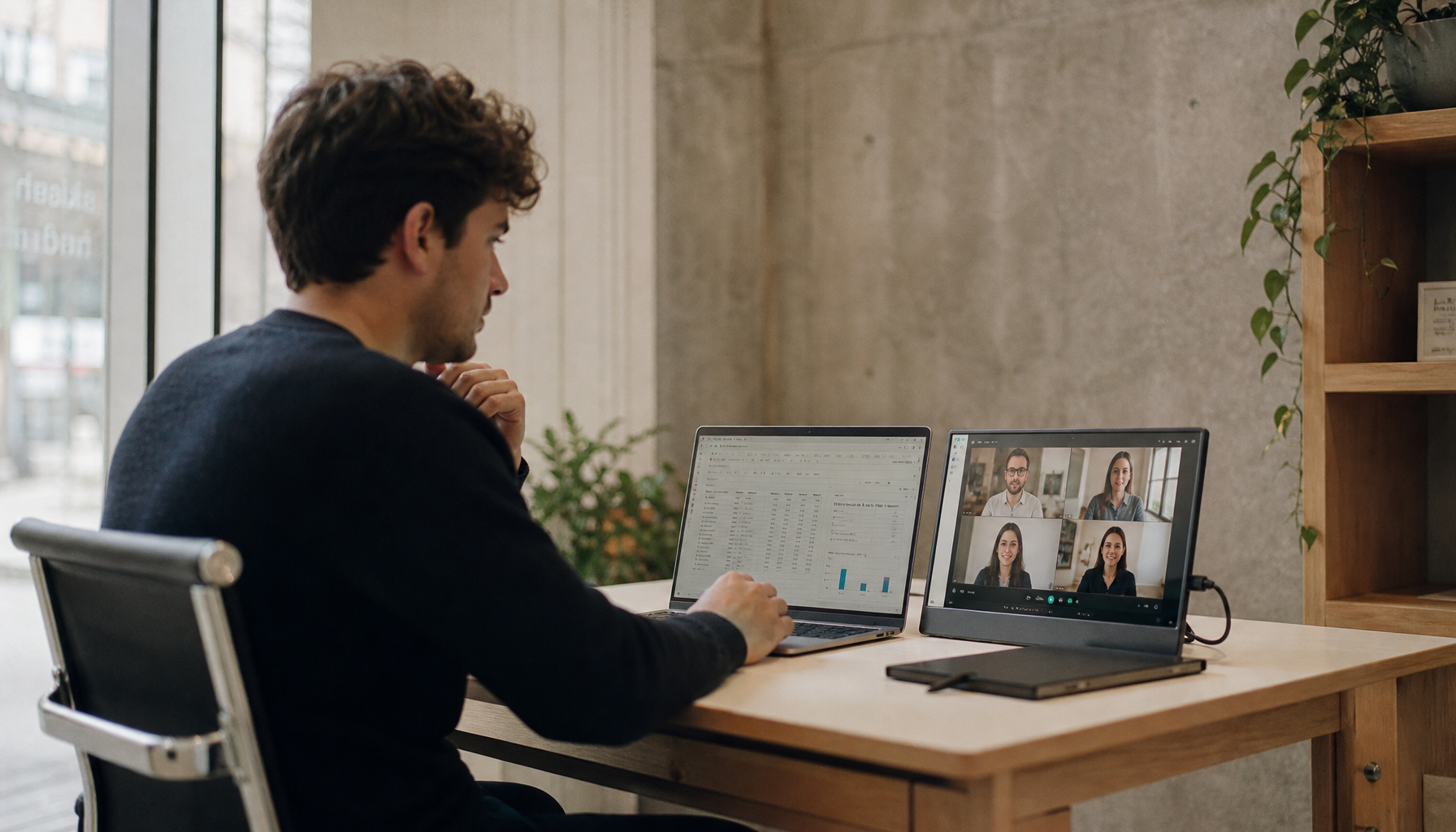
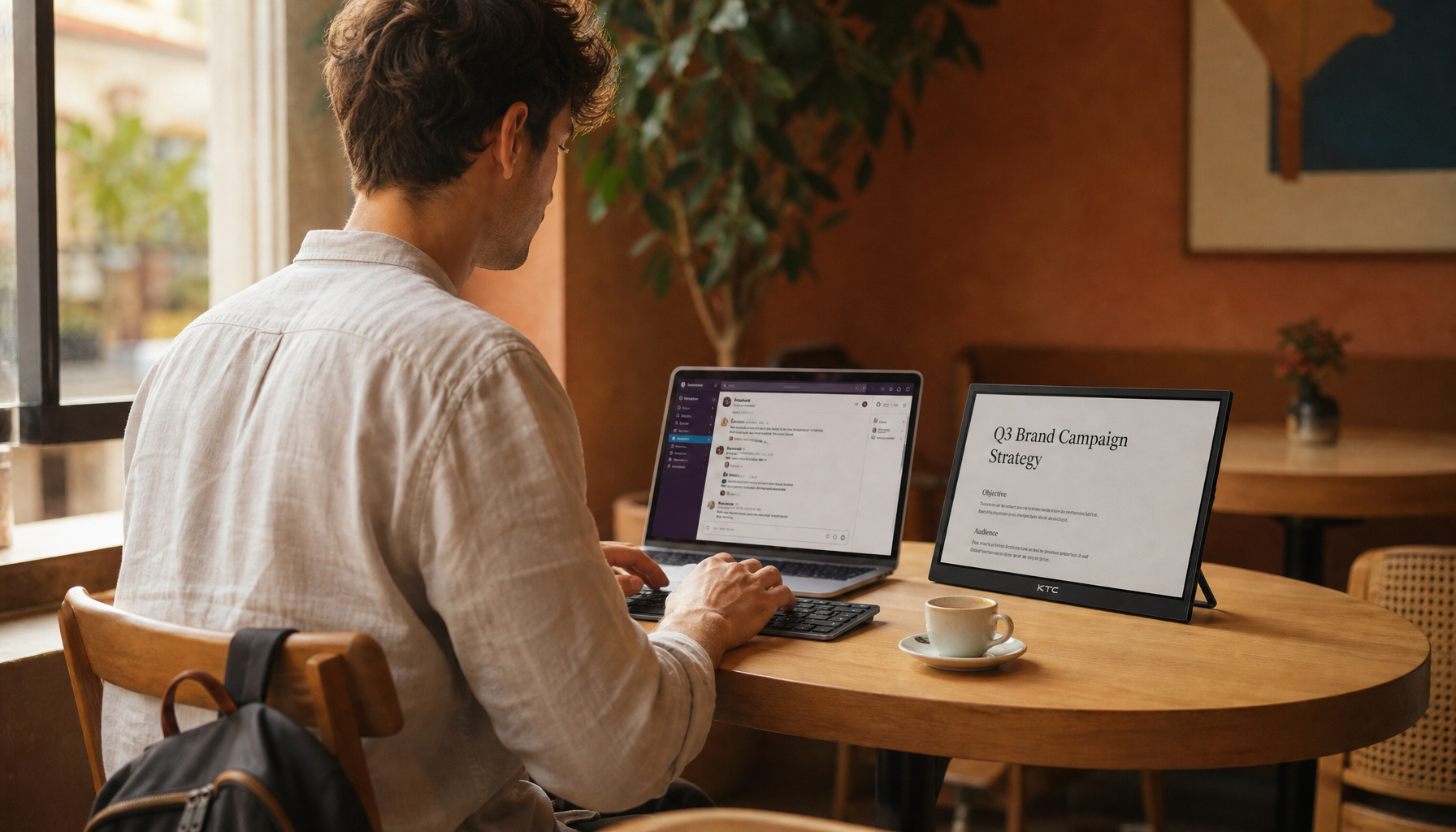
Portable monitors give PS5 and Xbox Series S owners a flexible way to game in hotel rooms, dorms, or small apartments without sacrificing too much responsiveness. Success hinges on matching the monitor’s inputs, power needs, and refresh-rate support to what the consoles actually deliver over HDMI.
Why Portable Monitors are the New Standard for Console Travel
Travel and space constraints push many console players toward compact screens. A portable monitor slips into a backpack and sets up quickly on a hotel desk or bedside table, whereas even a small TV often requires extra outlets and careful packing. The key advantage is the combination of slim panels with fast response times and solid brightness that still fit the consoles’ output limits. In practice, these displays work best for single-player campaigns, casual multiplayer, or quick sessions where full immersion matters more than absolute competitive edge.
Setup friction remains low once you accept HDMI as the only native connection. Users who travel frequently or share living spaces report that a dedicated portable panel reduces cable sprawl compared with hauling a larger display. Internal guides such as How to Build a Mobile Dual-Screen Gaming Setup with a Portable Monitor expand on dual-screen ideas that pair well with console play on the move.
Technical Requirements: Power, Latency, and the HDMI Reality
The PS5 and Xbox Series S output video exclusively through HDMI 2.1 and do not support native USB-C video. Any attempt to run a standard USB-C cable between console and monitor will fail because the consoles lack DisplayPort Alt Mode. This limitation forces a choice between native HDMI cables or active adapters that convert the signal.

Console USB ports supply roughly 10-15 W, enough to run most 1080p portable monitors but often insufficient for brighter 4K panels. When power falls short, the screen may flicker or drop the signal entirely. Native HDMI connections paired with a wall outlet for the monitor therefore deliver the most stable experience, while adapter chains add processing steps that can raise latency or cap refresh rates.
Competitive Console Play: Latency Fit by Setup
Lower latency is generally favored for competitive play. Native HDMI and higher refresh rates usually fit better, while adapter chains and limited USB power can add latency risk or restrict output.
View chart data
| Scenario | Native HDMI | Adapter | 60Hz | 120Hz | USB Power | Wall Power |
|---|---|---|---|---|---|---|
| Low Latency | 3 | 1 | 2 | 3 | 3 | 2 |
| Medium Latency | 1 | 3 | 3 | 1 | 1 | 2 |
| High Latency | 1 | 2 | 1 | 2 | 3 | 2 |
Active HDMI-to-USB-C adapters remain variable in quality. Many budget models hard-cap output at 60 Hz or introduce enough processing delay to affect timing in fast-paced games. For the lowest latency, a direct HDMI cable plus separate monitor power remains the safer route. See DisplayPort Alternate Mode Over USB-C: How Video, Data, and Power Share the Same Lanes for deeper background on why consoles cannot use simple USB-C video cables.
Optimizing Your PS5 Setup for 120Hz and Low Latency
The PS5 can output 1080p at 120 Hz when the connected display reports the correct EDID information. In the console settings, choose Performance Mode and confirm the monitor supports the higher refresh rate over HDMI. Even if a portable panel lists 144 Hz, the console itself caps at 120 Hz, so the extra headroom on the monitor brings no additional benefit.
VRR support on the PS5 requires a full HDMI 2.1 handshake. Most portable monitors use HDMI 2.0 and therefore cannot enable VRR on PlayStation hardware, although they may still work with Xbox Series S FreeSync. Players who prioritize smooth motion without tearing should verify the monitor’s HDMI version before purchase. Guides such as How to Connect Your PS5 or Xbox Series X to a Gaming Monitor and Which Refresh Rate Is Best for Gaming: 60Hz, 144Hz, or 240Hz? walk through the exact menu steps.
Xbox Series S: The Ultimate Compact Companion for Mobile Gaming
The Xbox Series S pairs naturally with portable monitors because it outputs 1080p and 1440p at 120 Hz over standard HDMI 2.0 connections. This flexibility reduces the risk of refresh-rate mismatches that sometimes appear with the PS5. FreeSync support on many portable panels also translates directly to smoother frame pacing on Xbox without additional configuration.
Because the console is smaller and draws less power than the PS5, it travels more easily and leaves more USB bandwidth available for accessories. Users who value minimal setup often find the Series S plus a compact 1080p portable monitor creates a reliable secondary station for hotel rooms or shared living spaces.
Troubleshooting Black Screens and 60Hz Locks on Consoles
Black screens or forced 60 Hz output usually trace back to three issues: insufficient monitor power, cable quality, or HDCP handshake problems. Start by confirming the portable display receives at least 5 V / 2 A. Swap to a known-good HDMI 2.0 or 2.1 cable and power the monitor from a wall outlet rather than the console USB port.
If the screen remains black, lower the console resolution temporarily or disable HDCP in the system settings to test the connection. Audio can route through the monitor’s built-in speakers or a headset connected to the controller; most portable panels do not pass high-quality audio back to the console, so separate audio remains the practical choice. Checking these steps in order resolves the majority of travel-setup headaches.
Choosing the Right KTC Portable Display for Your Gaming Lifestyle
KTC offers portable options that align with different console lifestyles. The compact H15F9 model provides a simple HDMI input, built-in speakers, and low weight that suits frequent travelers who need only 1080p at 60 Hz. For users who want a larger secondary screen in a dorm or apartment, the MegPad series adds touch capability and higher brightness while remaining portable enough to move between rooms.
When deciding between 1080p and 4K panels, consider whether the extra pixels justify the higher power draw. Most console sessions at 1080p already deliver sharp images on a 15- or 25-inch portable display, and the lower power requirement keeps the setup stable from the console’s USB ports. A quick checklist helps: verify HDMI 2.0 or better, confirm at least 300 nits brightness for typical indoor lighting, and test power delivery before relying on the setup away from home. The 5 Essential Specs to Check Before Buying a Portable Touch Screen Monitor expands on these criteria with additional detail.
For readers who already own compatible cables or need replacements, the Premium Display Signal Cables for Gaming & Productivity Monitors collection offers HDMI 2.1 options that maintain full console output.