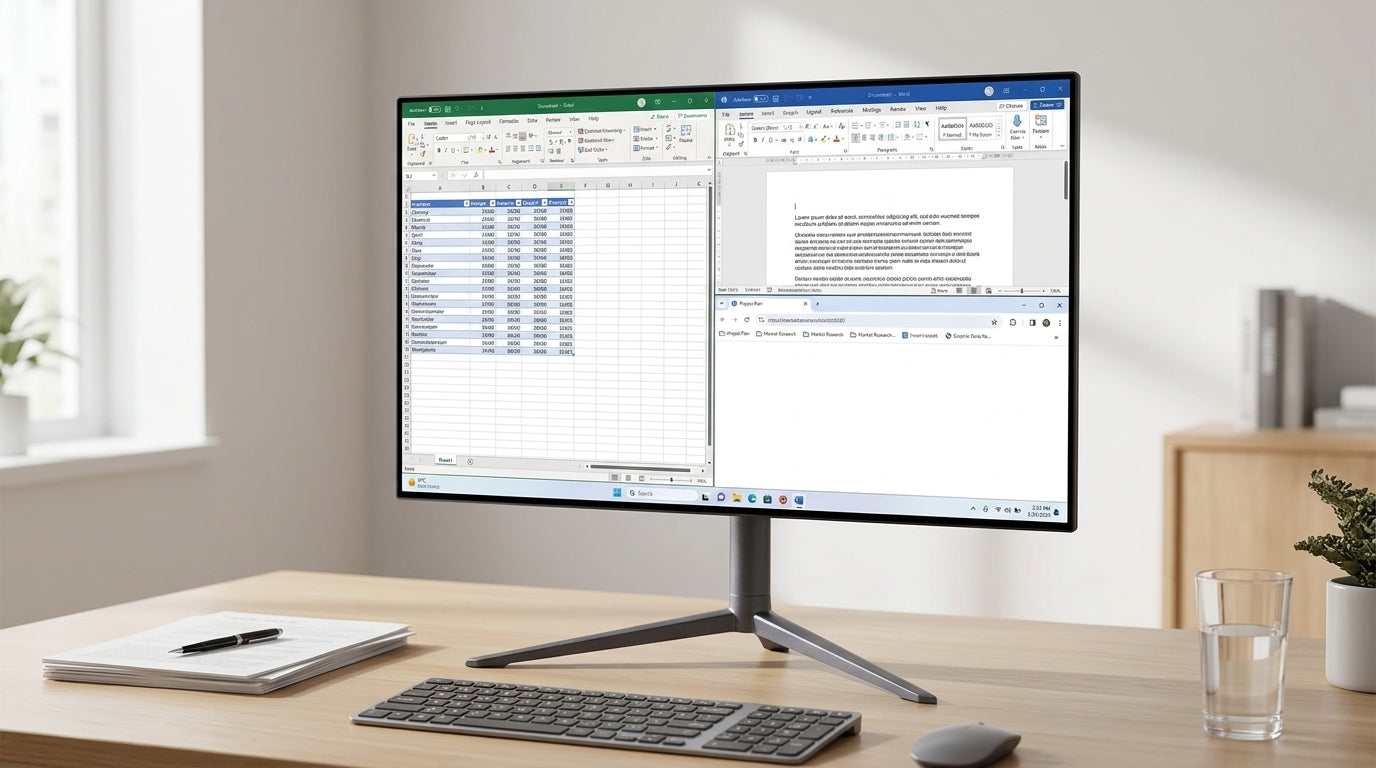
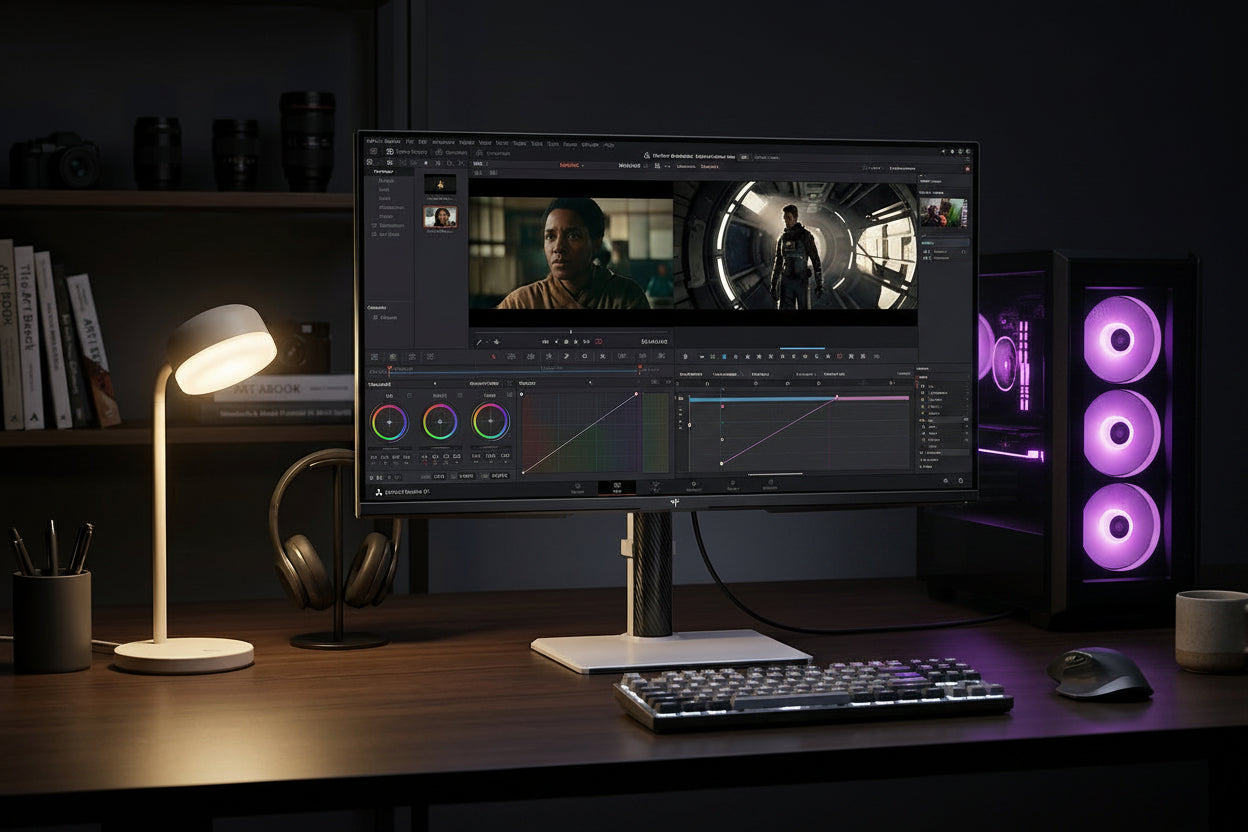
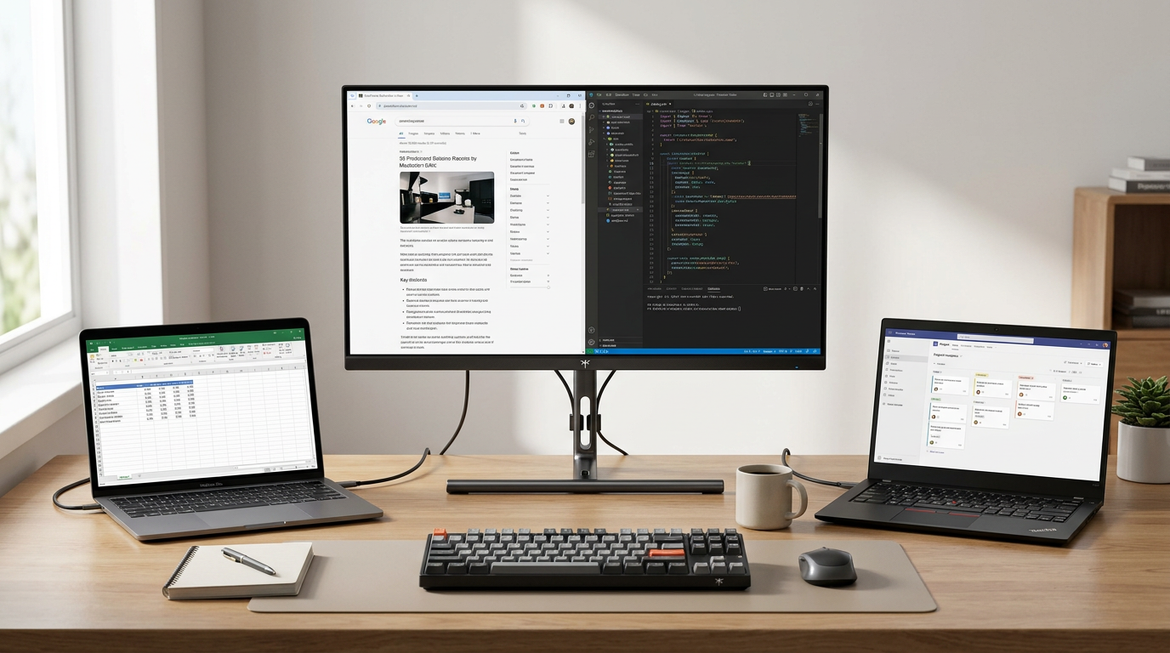
A value monitor for a hybrid home office should make spreadsheets, calls, and browser work feel easy day after day, not just look cheap at checkout. For most buyers, that means starting with 27-inch 1440p as the default value lane, then moving to 27-inch 4K only if sharper text is worth the extra spend and the lower refresh rate does not bother you.
What Value Means in a Hybrid Home Office
For hybrid buyers, value is the best mix of comfort, text clarity, desk fit, and ownership cost. The lowest sticker price can be a poor deal if the stand is awkward, the text looks soft, or you end up replacing the monitor arm a month later.
That is why a value monitor should be judged by daily usefulness first. If your day is mostly spreadsheets, documents, video calls, and web apps, office clarity matters more than gaming extras. If you also do light creative work, color and resolution matter more than flashy HDR language. The right choice depends on which of those tasks happens most often.
A simple rule helps: if the monitor is for work first and casual gaming second, keep the work fit at the center of the decision. If you are already leaning toward a gaming-first desk, the recommendation changes and the value test should be stricter about speed, not just price.
Set Your Budget Before You Compare Specs
Budget should narrow the field before you get lost in panel marketing. At the low end, buyers usually trade away stand quality or sharper text. In the middle, 27-inch 1440p often becomes the most practical compromise. Higher budgets can buy stronger sharpness, better ergonomics, or faster motion, but only if those features match the job.

| Budget band | Typical best fit | What usually improves | When it stops being smart |
|---|---|---|---|
| Under $200 | Entry 27-inch 1440p or budget 1080p only if the desk use is light | Basic text clarity, occasional smoother scrolling, simple ports | When you are paying extra for gaming speed you will not use or accepting weak ergonomics |
| $200 to $400 | 27-inch 1440p with stronger comfort, better ports, or 27-inch 4K | Sharper text, better stand options, more complete office fit | When the monitor is built around gaming features you do not need for work |
| Above $400 | Premium-sharpness or high-refresh mixed-use models | Better creator-adjacent detail, more speed, or more advanced ergonomics | When office-only use does not justify the extra cost |
This is where total cost of ownership matters. Shipping, return flexibility, warranty, and whether you need a separate stand or arm can change the real price more than a spec sheet does. If you want to browse by budget, the budget monitor range and the midrange monitor range make sense as starting points rather than final answers.
| Resolution / budget | Under $200 | $200 to $400 | Premium |
|---|---|---|---|
| 1080p | Basic only for light desk use | Usable, but usually not the best value at 27 inches | Hard to justify for work-first buyers |
| 1440p (2K) | Strong value pick if the rest of the setup is simple | Best all-around balance for many hybrid desks | Good if you want better ergonomics or extras |
| 4K | Usually too much tradeoff for the money | Worth considering when sharper text matters | Best fit when crispness is the top priority |
Choose the Right Size and Resolution
At 27 inches, 1440p is the safest value choice for most hybrid office buyers. It is the practical middle ground between soft text and overspending, and it fits spreadsheets, browser tabs, and split-screen documents better than 1080p. A home-office monitor guide and KTC's own 27-inch 1440p versus 4K comparison both point to 27-inch QHD as the sweet spot for that reason.
The sharpness jump to 27-inch 4K is real. On KTC's comparison page, 27-inch 1440p is about 109 PPI, while 27-inch 4K is about 163 PPI. In plain English, that means the 4K screen can make text look finer and cleaner, especially if you spend long hours in documents or care about creator-adjacent detail. But the gain is best treated as a premium upgrade, not the default answer.
That is why the featured 27-inch 4K office monitor makes sense for sharper-text buyers, not for everyone. It is the better call when your work feels cramped on 1440p and you are willing to trade some budget efficiency for crispness.
By contrast, 27-inch 1080p should be the low-end warning sign. At that size, text can look too soft for many professional desk setups. If your monitor will spend most of its time on spreadsheets, documents, and email, 1080p at 27 inches is usually the wrong place to save money.
A useful decision sentence is this: if your desk work is text-heavy and your budget is tight, 27-inch 1440p is usually the best value monitor lane; if you want sharper text and can accept a higher price, 27-inch 4K is the better premium lane; if the screen is 27-inch 1080p, treat it as a lower-bound compromise rather than a first choice.
If you want a practical way to compare sharpness before buying, KTC's PPI guide can help you translate resolution into text clarity instead of guessing from marketing terms.
Balance Color, Brightness, and Refresh Rate
For office-first buyers, reliable color matters more than wide-gamut bragging rights. Light creative work changes that a bit, because photo touch-ups, design tasks, or content work benefit from stronger coverage. Even then, you do not need pro-grade calibration for every desk. The real question is whether your apps and output needs justify the extra cost.
Brightness and eye-comfort claims need a careful read. TÜV Rheinland's Eye Comfort certification defines a certification framework that evaluates things like flicker-free performance, hardware low blue light, and ambient light management. That is useful, but it is not the same as a guaranteed health outcome. Treat eye-comfort features as helpful design choices, not medical promises.
For long work sessions, 100Hz or higher can still be worth paying for. A brightness calibration guide gives a practical home-office starting point for setting brightness so the screen feels comfortable in the room rather than overly bright or dim. In real use, that matters more for comfort than for raw speed.
Here is the clean split: work-first buyers should treat 100Hz as a nice comfort upgrade, not a requirement; casual gaming buyers may value it more, but they should not sacrifice text clarity or ergonomics just to chase a faster number. If you want the work-and-play balance in one place, the hybrid monitor guide is the right follow-up.
Ergonomics and Connectivity That Actually Pay Off
This is the hidden value layer. A monitor can look inexpensive and still cost more in practice if the stand is too basic, the ports do not match your dock, or the desk arrangement forces a separate arm purchase. That is why ergonomics and connectivity belong in the buying decision, not just in the setup phase.
USB-C Power Delivery is a real convenience when it matches your laptop workflow. A remote-work setup guide points to 65W+ USB-C PD as a practical way to reduce desk clutter and charging friction. It is helpful when it replaces adapters and extra cables, but it is not required for every hybrid desk.
The featured KTC H27P27 27-inch 4K office monitor is a straightforward example of that tradeoff. Internal product details show 4K resolution, 60Hz refresh, 99% sRGB, 400 nits typical brightness, flicker-free technology, a hardware blue-light filter, VESA support, a 3-year warranty, and a 30-day returns policy. That makes it a sharper office-first pick, but the fixed tilt-only stand means some buyers may still want a monitor arm for a better desk fit.
A second decision sentence: if your desk layout changes often, prioritize height and VESA support before you chase HDR or gaming speed; if your desk is fixed and simple, a tilt-only stand can still be acceptable; if you expect to use a laptop dock and want fewer cables, USB-C PD becomes a meaningful value feature.
The office-focused monitor collection is useful if you want to compare options by desk workflow rather than by gaming headline specs.
How to Shortlist the Best Fit for Your Desk
Start with the main job. If the monitor is for text work first, 27-inch 1440p should be your default comparison point. If sharper text or creator-adjacent detail matters more, compare 27-inch 4K models next. If casual gaming matters too, treat 100Hz+ as a bonus, not the reason to ignore workflow fit.
Next, check the desk itself. Make sure the screen size matches your viewing distance and leaves room for a keyboard, dock, and notebooks. Then ask whether the included stand is enough. A basic tilt stand is fine for many fixed desks, but a cramped or changing setup often needs VESA flexibility.
Before checkout, read the warranty, shipping, and return details as part of value, not fine print. That is especially important when you are choosing between a lower-cost QHD monitor and a sharper 4K model. The best value monitor is the one that fits your workday without forcing extra accessories or a quick return.
If you want a simple buying path, browse the office monitor range when clarity and productivity are the priority, or compare the midrange monitors when you are deciding whether sharper 4K or better ergonomics is worth the higher spend.
FAQs
What Size Is Best for a Hybrid Home Office?
For most desks, 27 inches is the most balanced choice because it gives enough workspace without taking over the room. Bigger screens can help if you keep many windows open, but they also make desk fit and viewing distance more important than the spec sheet suggests.
Is 1440P Enough for Spreadsheet Work?
Usually, yes. For spreadsheet-heavy and document-heavy use, 1440p is often the value sweet spot because it gives you better clarity and usable space than 1080p without pushing you into premium pricing. If you stare at dense text all day, 4K can be worth a look.
When Does 4K Become Worth the Extra Cost?
4K becomes more attractive when text crispness is the main reason you are upgrading, or when you do creator-adjacent work that benefits from finer detail. If your day is mostly email, browser tabs, and calls, the extra money may buy more than you actually need.
Do I Need High Refresh Rate for Office Work?
Not usually. A 100Hz monitor can make scrolling and cursor movement feel smoother, which is nice for long sessions, but office buyers rarely need esports-level speeds. Treat higher refresh as a comfort feature unless gaming is a real part of the use case.
Should Light Gaming Change My Monitor Choice?
Only a little. Casual gaming can justify a smoother panel, but it should not push you to sacrifice text clarity, stand quality, or budget discipline. If the monitor is still work-first, a balanced QHD model usually makes more sense than chasing a gaming-first spec sheet.
Final Takeaway
For a hybrid home office, the best value monitor is the one that fits your desk and your workday before it impresses you on paper. In most cases, that means 27-inch 1440p as the default value lane, 27-inch 4K when sharper text is worth the premium, and a monitor with enough ergonomics and warranty support to stay useful after the first week. If you want to compare options, start with the office range and work outward from your actual workflow.