A smart display can simplify homeschooling and online learning when it fits the room, the number of users, and the way your family switches between lessons. This smart display buying guide for homeschooling helps you judge size, touch, mobility, app access, and setup before you pay for features you may not use.

What Homeschool Families Need From a Display
Start with the daily workflow, not the product type. For a lot of families, that means live classes, worksheet time, parent oversight, and a screen that can shift between one child, two siblings, and a tutor call without turning setup into a chore.
A large screen is not automatically a better learning fit. In practice, the better question is whether the display makes it easier to see, tap, hand off, and reset during the day.
The main trade-offs are simple: size, touch, app access, mobility, and cable simplicity. If the screen will stay in one place, a simpler setup often wins. If it needs to move, mobility starts to matter, but only when that movement is part of the routine.
For homeschool families, the safest way to shop is to match the display to the room first and the feature list second. That keeps the smart display buying guide for homeschooling focused on actual use, not on extras that look useful on a product page.
Screen Size and Layout for Shared Lessons
When you compare 27-inch and 32-inch displays, do it by room depth, desk footprint, and how many people need to read the screen at once. A bigger screen can help with split view and shared viewing, but only if the table or floor space can absorb the footprint.
For most fixed desks, 27-inch is the easier starting point. In a kitchen table setup or family room learning corner, 32-inch can make sense if the screen has room to sit back and everyone can still view it comfortably.
| Setup type | 27-inch display | 32-inch display | Mobile large-screen display |
|---|---|---|---|
| Fixed desk or study nook | Usually the cleaner fit | Often more screen than the space needs | Usually unnecessary unless it doubles as a shared household screen |
| Kitchen table lessons | Good if the table stays uncluttered | Better when several people need to see from different seats | Useful if the screen must move after class |
| Shared family learning corner | Works well for one student at a time | Better for parent oversight and split-screen use | Best only if the room truly changes during the day |
| Room-to-room learning | Not the main advantage | Can work if it stays parked in one place | Strongest fit when repositioning is part of the routine |
Maryville University's ergonomic workstation guidance is useful here because it points readers back to fit, height, and distance instead of assuming bigger is better. For homeschooling, that is the right mindset.
Why Touch, Apps, and Sign-In Matter
Touch is useful when it reduces friction during the day. That usually means tapping educational apps, switching activities quickly, or letting a child interact directly with an on-screen lesson. It is less compelling if the display will mostly mirror a laptop and sit there as a shared monitor.
Families should keep touch support and app support separate in their heads. A touchscreen can still depend on the right ecosystem or an external device for some workflows, so the buying question is not just "does it touch?" It is "does it make daily handoffs easier?"
Interactive displays can also support more active, hands-on use in classroom-style settings. HuddleCamHD's online education guidance notes how touchscreens can support annotation and co-annotation, while Sharp Business explains how interactive displays can support multi-sensory learning. For younger children, a peer-reviewed review on touchscreen exposure also suggests that touch can support engagement, but that does not mean every family needs it or that it guarantees better learning.
App Access Without Extra Devices
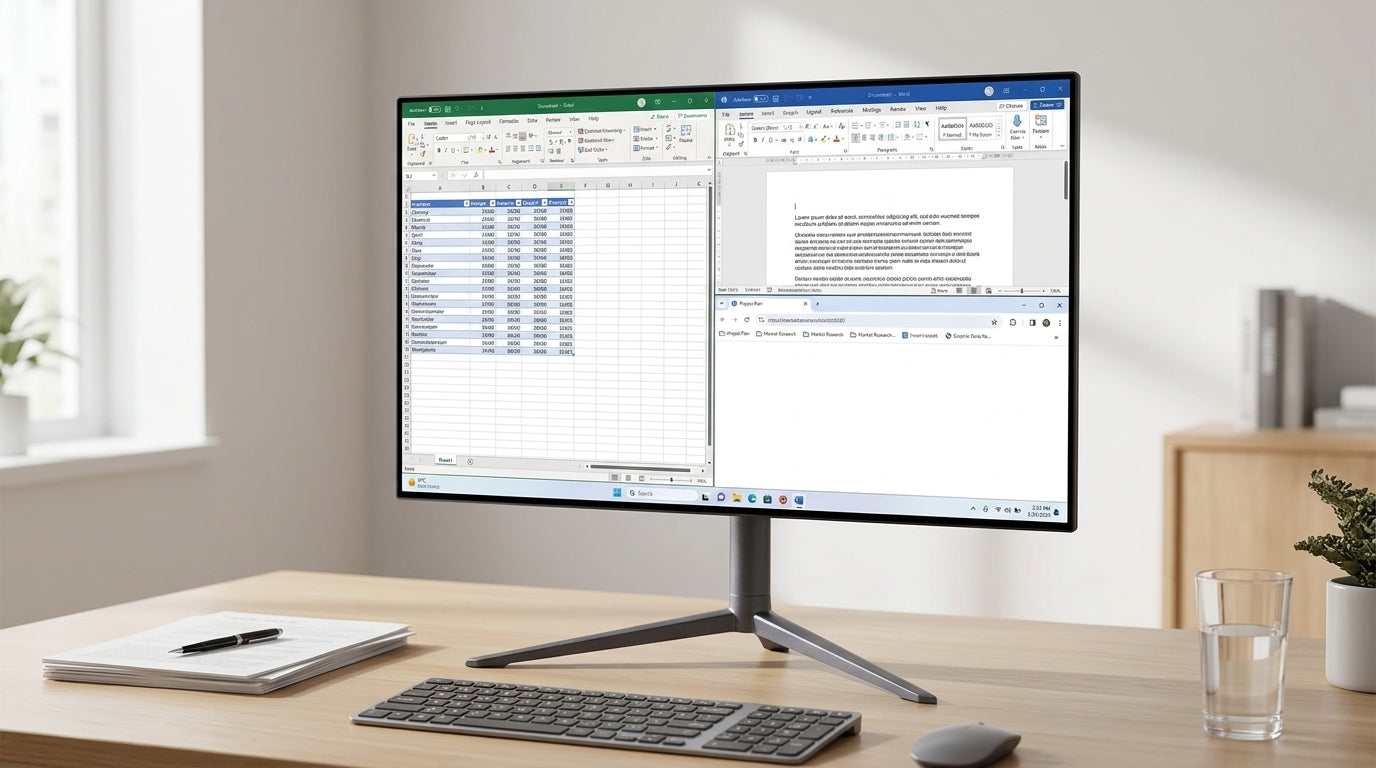
If your family wants the display to run apps itself, verify that before buying. A smart monitor fits app-first use better than a plain office monitor, while a plain monitor fits laptop-centered schoolwork better. That is the first fork in the road.
If your routine is mostly Chromebook, laptop, or tablet based, a simpler office monitor can be the cleaner choice. If you want an app-first path, start with the smart monitor collection and check whether the display supports the specific learning flow you use at home.
That is also where the 27-inch MEGAPAD mobile touch screen becomes relevant. It has built-in Android 14, Google EDLA certification, Wi-Fi, Bluetooth, a built-in 8MP camera, and a battery-backed mobile design, so it fits room-to-room online classes better when all of those features actually reduce daily setup friction. If you do not need the app-first and touch-first package, check whether a simpler display would be the better buy.
Shared Logins and Family Switching
Shared homes should think about logins, profiles, and how fast one student can hand the screen to another. If a parent, two children, and a tutor all use the same setup, easy switching can matter more than flashy creator features.
This is where the privacy settings guide is worth a look, because camera and app-data exposure are real concerns in a shared room. Privacy is not just a security topic here. It is also a daily friction topic.
For families that need a more app-heavy shared screen, the 32-inch MEGAPAD mobile touch display is the larger mobile option to check. It makes more sense when a bigger screen matters more than a fixed desk monitor and when you actually need the display to move around the home. If the screen will mostly stay parked in one learning corner, the mobility premium is usually harder to justify.
When a Rolling Display Fits Better
Rolling smart displays make sense when the screen really moves between rooms or learning zones. If the display is going from a kitchen table to a desk to the living room on the same day, wheels can reduce setup friction and help one screen serve more than one spot.
That said, mobility is not a universal upgrade. It adds cable checks, parking space, and stability questions. If the screen stays in one place most of the week, a fixed monitor is usually simpler and easier to live with.
The clearest case for a rolling smart display is a family that changes rooms often and wants quick repositioning without rebuilding the whole setup each time. KTC's rolling display workflow guide is a useful follow-up if you want to compare that use case against a fixed screen.
A practical rule of thumb is this: choose mobility only when movement is part of the routine, not when it just sounds convenient. If you would rather keep cables hidden, the screen parked, and setup identical every day, a standard desk monitor may be the better fit.

Connectivity Checks Before You Commit
Before you buy, verify the connection path your family already uses. For a lot of homes, that means HDMI for a laptop, USB-C or Type-C where supported, Wi-Fi for apps, Bluetooth for accessories, and casting if you want quick sharing from a phone or tablet.
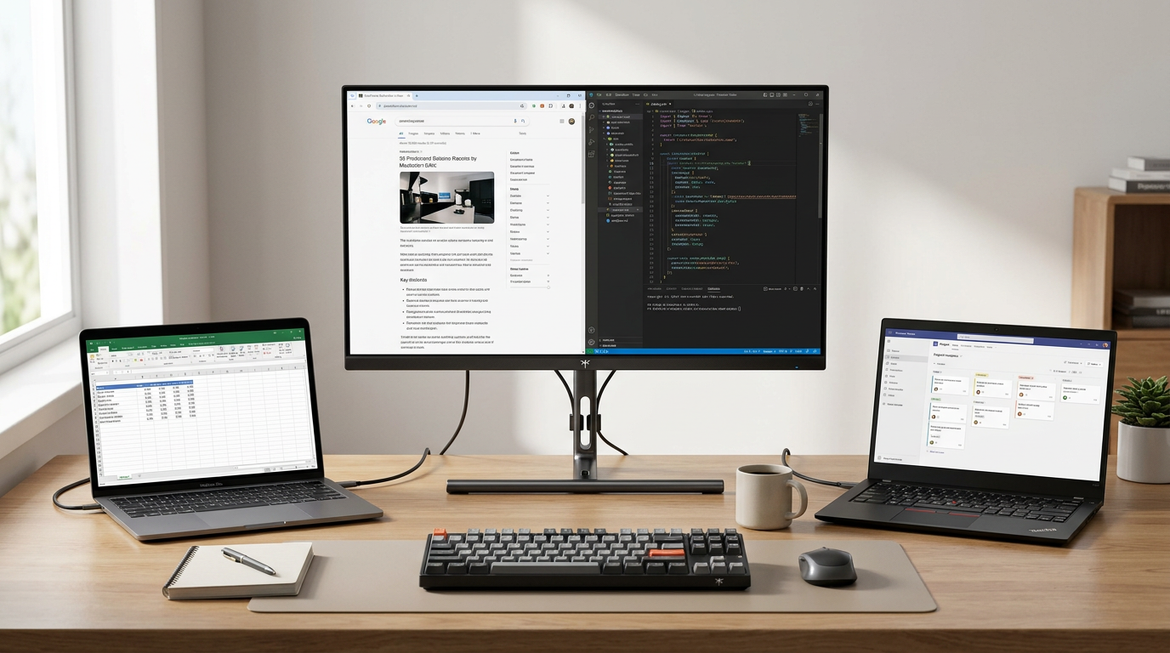
Also decide whether the display must work standalone or as a laptop partner. Those are different buying jobs. A smart display with built-in apps can reduce setup steps, but a plain monitor may be enough if the classwork always starts on a computer.
The product details for the 27-inch MEGAPAD show a built-in camera, Android 14, Google EDLA certification, Wi-Fi 5, Bluetooth 5.1, Type-C all-in-one connectivity, 8GB of RAM, 128GB of storage, and a 12-month warranty. That combination matters if your priority is app-first family use and quick switching.
The 32-inch MEGAPAD adds the larger mobile form factor, Wi-Fi 6, Bluetooth 5.2, Google EDLA Android 13, a 9500mAh battery, 8GB of RAM, 128GB of storage, and wheels for rolling between rooms. That makes it a stronger check-before-buying option for households that really want a larger mobile screen for shared classes.
By contrast, the 27-inch home and office monitor is the better kind of link to keep in mind if your routine is mostly laptop-led schoolwork and you do not need app-first features. Its office monitor alternative collection is the right browsing path when simplicity matters more than a smart interface.
A separate privacy check is smart in shared spaces. The privacy settings guide is useful for camera, mic, and account behavior, especially when siblings, parents, and guests all share the same room.
A Simple Shortlist for Your Setup
Use this final filter before checkout:
- Start with the room. If the display stays in one place, keep the setup simple. If it moves often, mobility may be worth paying for.
- Choose size by distance and shared viewing. A 27-inch screen is usually easier to place, while a 32-inch screen helps when several people need to see the lesson.
- Decide whether touch actually reduces friction. If the family mostly mirrors a laptop, touch may be optional.
- Check app, login, and casting needs. Smart features only matter if they fit the way your home already works.
- Finish with the purchase details. Warranty, shipping, and return policy are the last checks, not the first selling point.
If your family wants an app-first, room-to-room screen, the Mobile Touch Screen collection is the most natural place to start. If you want a simpler desk-first path, the office monitor category is likely the cleaner fit. For homes that want built-in apps and a shared-screen experience, the smart monitor collection is worth comparing next. If you want a practical next read on family privacy trade-offs, the privacy settings guide is a good follow-up.
FAQs
Do You Need a Touch Display for Homeschooling?
Not always. Touch is helpful when your family wants fast interaction, app tapping, or shared on-screen work, but it is not required if the display mainly mirrors a laptop or desktop.
What Size Display Works Best in a Shared Learning Space?
For most rooms, 27-inch is the easier starting point and 32-inch is better when several people need to see the screen. The real check is room depth and viewing distance, not size alone.
Can a Rolling Smart Display Replace a Desk Monitor for Online Classes?
It can, if your routine truly moves between rooms or learning zones. If the screen stays in one place most of the week, a fixed desk monitor is usually simpler.
What Connectivity Should I Check Before Buying for Online Learning?
Verify the ports and wireless paths you actually use, including HDMI, USB-C or Type-C, Wi-Fi, Bluetooth, and casting. Also confirm whether the display must work on its own or mostly with a laptop.
How Do I Choose Between a Smart Monitor and a Plain Office Monitor?
Choose a smart monitor when app-first, all-in-one use matters. Choose a plain office monitor when schoolwork starts on a laptop and you want a simpler, lower-friction setup.
Final Takeaway
The best smart display for homeschooling is the one that fits the room, the routine, and the number of people sharing it. For many families, that means choosing the simplest setup that still handles lessons, switching, and supervision cleanly. If you want app-first flexibility, start with the smart monitor path. If you want the least complicated desk setup, keep the office monitor option in play.