USB-C is enough when your laptop, cable, and portable monitor all support video and power over the same connection. You need a separate power adapter when USB-C lacks DisplayPort Alt Mode, the cable is charge-only, HDMI is used, brightness is high, or the host device cannot supply enough power.
Does your portable monitor flicker, stay black, or drain your laptop faster than expected right when you need a clean second screen? A properly matched USB-C setup can provide one-cable video and power, while the wrong cable or a low-power host can make the same monitor unreliable. Here is how to tell when USB-C is truly enough and when a dedicated adapter is the smarter performance choice.
The Short Answer: USB-C Can Be Enough, But Only If It Is the Right USB-C
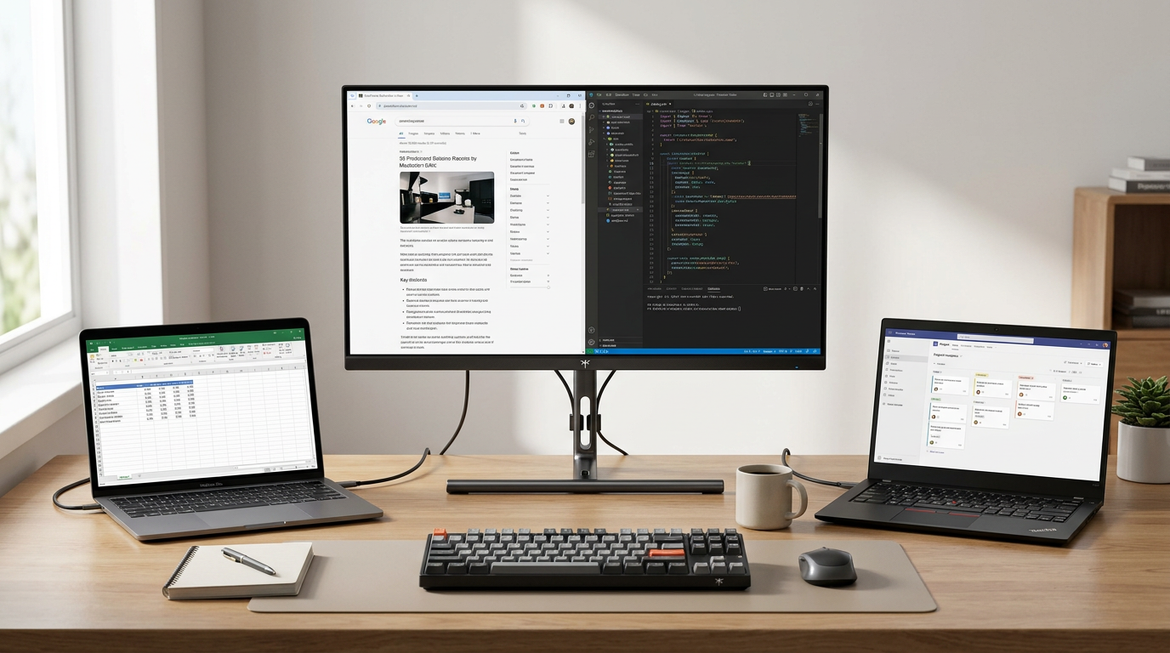
A portable monitor is built for mobility, not magic. Most modern models are designed around USB-C or HDMI, and the strongest one-cable setups use USB-C because it can carry display signal, power, and sometimes touch data through a single cable. That convenience depends on the source device supporting the right display mode, the cable carrying video, and the monitor receiving enough wattage to stay stable.
The key phrase is DisplayPort Alt Mode. DisplayPort Alt Mode allows a supported USB-C port to send video to an external screen, but a USB-C connector by itself does not prove that video output is available. Some USB-C ports are only for charging or data. Some cables are only for charging. Some hubs have one video-capable port and another that looks identical but only handles data.
In practical terms, a 15.6-inch 1080p IPS portable monitor connected to a modern laptop with full-featured USB-C is the best-case scenario. A 4K portable monitor at high brightness, a dual-screen extender, or a gaming-focused 144Hz panel is more likely to need extra power, especially if the laptop is already under load.
When One USB-C Cable Is Enough

USB-C is usually enough when three things line up: the host device can output video over USB-C, the monitor can accept video and power over USB-C, and the cable is rated for both. Many portable monitors are sold specifically for this style of setup, and USB-C with DisplayPort Alt Mode and Power Delivery is the preferred connection because it can combine video, power, and touch input data.
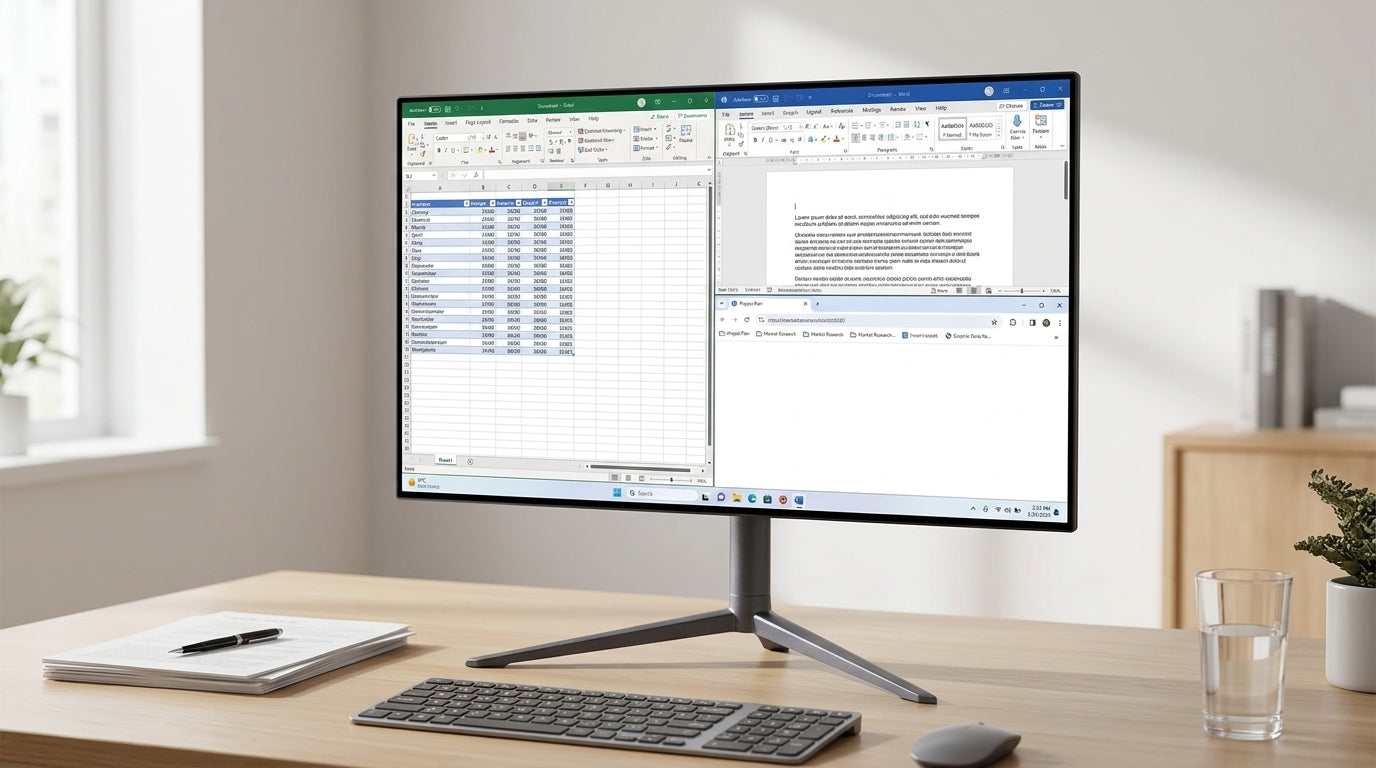
For office productivity, this is the sweet spot. A 13- to 16-inch portable display at 1080p is light, sharp enough for spreadsheets and browser work, and easier on laptop battery than a higher-resolution panel. Research notes consistently point to 15.6 inches as the practical balance between usable workspace and travel weight, while 1080p is the safer choice for broad compatibility and lower power draw.
A real-world example is a consultant working from a hotel desk with a 15.6-inch 1080p portable display, a business laptop, and one full-featured USB-C cable. If the laptop’s USB-C port supports video output and enough bus power, the monitor can light up immediately, extend the desktop, and avoid the mess of a wall charger. That is the cleanest version of portable productivity.
When You Need a Separate Power Adapter

You need separate power when the monitor receives video from HDMI, because HDMI carries the image but not the power needed to run the panel. HDMI and Mini HDMI are useful for older laptops, game consoles, cameras, and fallback compatibility, but they usually require a second USB cable connected to a charger, laptop port, power bank, or wall adapter.
You also need separate power when the host device cannot supply enough wattage. This is common with phones, tablets, older laptops, budget notebooks, and handheld gaming systems under load. The display may turn on briefly, dim itself, flicker, or show “no signal” because the power budget is too tight. If adding a USB-C charger to the monitor fixes the issue, the problem was not the video path; it was power delivery.
Brightness can push the setup over the edge. Portable monitors are often dimmer than desktop monitors, and many portable monitors cluster around modest brightness levels, while newer OLED panels can be much brighter. Higher brightness means higher power demand. A screen that works from one USB-C cable in a dim room may need auxiliary power when you raise brightness near a window.
Touchscreens add another layer. A touchscreen portable monitor needs video, power, and a data path for touch. USB-C can handle all three when the setup is full-featured, but HDMI usually handles only the image. That means a touch monitor connected by HDMI often needs USB for touch data and separate power, turning a simple desk into a three-cable setup.
The Cable Is Often the Weak Link

A surprising number of “USB-C monitor problems” are cable problems. A charging cable may fit perfectly and still fail because it does not carry video. A low-spec cable may pass power but not data. A worn or overly long cable may create intermittent flashing or black screens.
This is why the cable that came in the monitor box matters. Charge-only USB-C cables cannot transmit video even when the laptop and monitor both support USB-C display output. For a portable monitor, use a short, full-featured USB-C cable that explicitly supports video and power delivery. If your screen works with the included cable but not with a random cable from a drawer, the diagnosis is already done.
The same logic applies to adapters and hubs. A USB-C hub can limit power delivery, and some hub ports are not wired for display output. If your monitor fails through a hub, test it directly from the laptop before blaming the screen.
How Much Power Does a Portable Monitor Need?

There is no single wattage that covers every portable monitor because resolution, brightness, panel type, refresh rate, speakers, touch input, and USB hub features all affect draw. Still, the buying pattern is clear: 1080p productivity displays are easier to run from laptop USB-C, while 4K, high-refresh, dual-screen, and bright OLED models need more headroom.
The same principle appears in larger USB-C monitor setups. A monitor advertised with high Power Delivery may still deliver less in real use because power is negotiated among the monitor, cable, and computer. 100W pass-through charging, for example, is designed to let an external power source feed through the display while the setup stays connected, but your laptop and cable still need to support the relevant modes.
Setup |
Is USB-C Alone Usually Enough? |
Better Power Choice |
13- to 15.6-inch 1080p office monitor |
Often yes |
One full-featured USB-C cable |
15.6-inch touchscreen monitor |
Often yes with full-featured USB-C |
Add power if touch or brightness is unstable |
HDMI from laptop or console |
No |
HDMI for video plus USB power adapter |
4K portable monitor |
Sometimes |
USB-C plus wall power for stability |
Gaming or high-refresh portable monitor |
Sometimes |
Dedicated power during long sessions |
Phone-to-monitor setup |
Device-dependent |
External power strongly recommended |
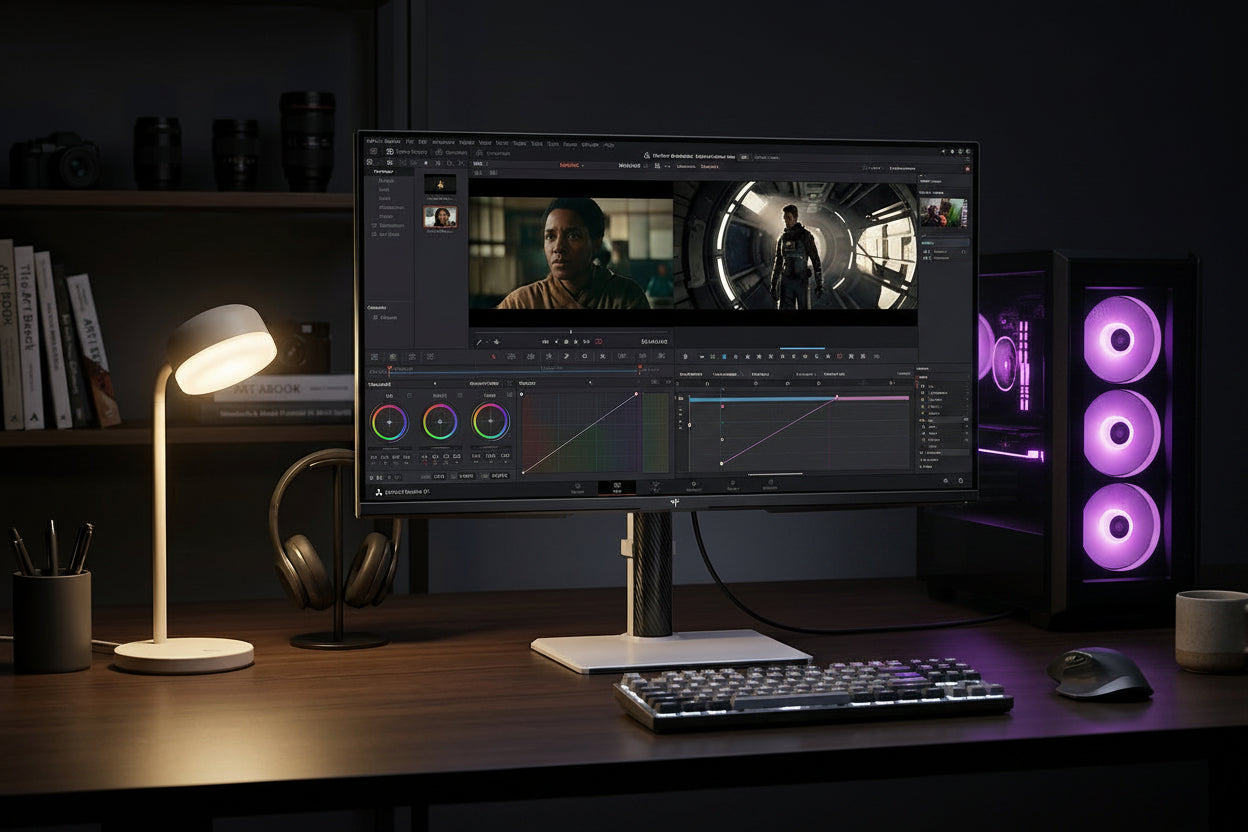
For a performance-driven setup, the power adapter is not a failure of portability. It is insurance. If the screen is mission-critical for client work, coding, trading dashboards, tournament travel, or creative review, stable power beats aesthetic cable minimalism.
Laptop, Phone, Console: Power Rules Change by Device
With laptops, the first check is whether the USB-C port supports video output. Laptop USB-C capabilities vary widely, though models with Thunderbolt, USB4, or modern USB-C display support are usually more predictable. Still, even on a compatible laptop, a low-power port or under-rated cable can keep the monitor from working correctly.
Phones are less predictable. A compatible setup requires a phone that supports video output, the right cable or adapter, and enough power. A smartphone connection is simplest with USB-C to USB-C when the phone supports DP Alt Mode, but many phones will drain quickly or fail to power a monitor reliably without an external charger. Wired connections are still the best choice for mobile gaming because they reduce latency compared with wireless options.
Game consoles usually push you toward separate power. Home consoles connect by HDMI, so the monitor needs its own power. A handheld console may need a dock or compatible HDMI solution rather than a direct handheld USB-C-to-monitor cable. Handheld gaming PCs are better suited to USB-C display output, but long gaming sessions are exactly when dedicated power is most valuable.
Pros and Cons of Relying on USB-C Only
USB-C-only setups are clean, fast, and travel-friendly. They reduce desk clutter, make airport-lounge work less awkward, and let a portable monitor feel like a true extension of the laptop instead of a small desktop rig. For a 15.6-inch 1080p office display, that is often the best experience.
The downside is dependency. One weak link can break the chain. The laptop port must support video, the cable must carry video and power, the monitor must accept the signal, and the host must have enough battery and wattage overhead. USB-C-only also increases laptop battery drain because the laptop may be powering two displays at once.
A separate adapter adds bulk, but it also adds stability. It lets you run higher brightness, use HDMI sources, support touch monitors more reliably, and reduce battery drain on the host device. For anyone who uses a portable monitor as a daily work tool rather than an occasional convenience, carrying a compact USB-C charger is a value-oriented choice.
A Practical Setup Test Before You Travel

Test the monitor before the first meeting, class, stream, or trip. Connect it directly to the laptop with the included USB-C cable. Confirm that the operating system detects the display, switch to extended mode, raise brightness to your normal working level, and leave it running for at least 15 minutes. If the screen flickers, dims, disconnects, or drains the laptop too aggressively, repeat the test with the monitor connected to separate power.
If you use HDMI, assume you need power from the start. If you use a phone, assume you may need power unless you have already tested that exact phone, cable, and monitor combination. If you use a touchscreen, confirm that taps land on the correct display, not just that the image appears.
For buying, prioritize USB-C with DP Alt Mode support, Power Delivery, HDMI as a fallback, a sturdy stand, and an included full-featured cable. A monitor under 2 lb with a 15.6-inch 1080p IPS panel remains the most reliable all-around choice for portable productivity, while 4K, OLED, and high-refresh models should be matched with stronger power planning.
FAQ
Can a USB-C cable power a portable monitor and send video at the same time?
Yes, but only if the laptop or source device supports USB-C video output, the monitor supports USB-C input, and the cable is full-featured. A basic charging cable may power the screen without sending an image.
Why does my portable monitor work with USB-C on one laptop but not another?
The two laptops may have different USB-C capabilities. One port may support DisplayPort Alt Mode while the other is data-only or charging-only. Cable quality, hub limitations, firmware, and display settings can also affect detection.
Does HDMI ever power a portable monitor?
No, not in a normal portable monitor setup. HDMI sends video and audio signals, but the monitor still needs power from USB, a wall adapter, a power bank, or another supported source.
Will a power bank work instead of a wall adapter?
Often, yes, if the power bank can supply the monitor’s required output. For higher-brightness, 4K, touch, or gaming displays, choose a power bank with strong USB-C Power Delivery rather than a low-output backup battery.
Final Word
USB-C is enough when the whole chain is built for one-cable display use. For dependable work, travel, and gaming, treat the separate power adapter as a performance tool rather than extra clutter: leave it behind only after your exact laptop, cable, and monitor have passed a real test.