OLED monitor choices for static office work come down to workload fit, not just picture quality. If your screen spends most of the day on IDEs, dashboards, spreadsheets, taskbars, and browser layouts, a lower-risk panel is usually the simpler default. OLED can still work for some office users, but it is a better fit only when static elements are not the dominant pattern or when you are willing to manage the display more actively.

Why Static Office Work Changes the OLED Decision
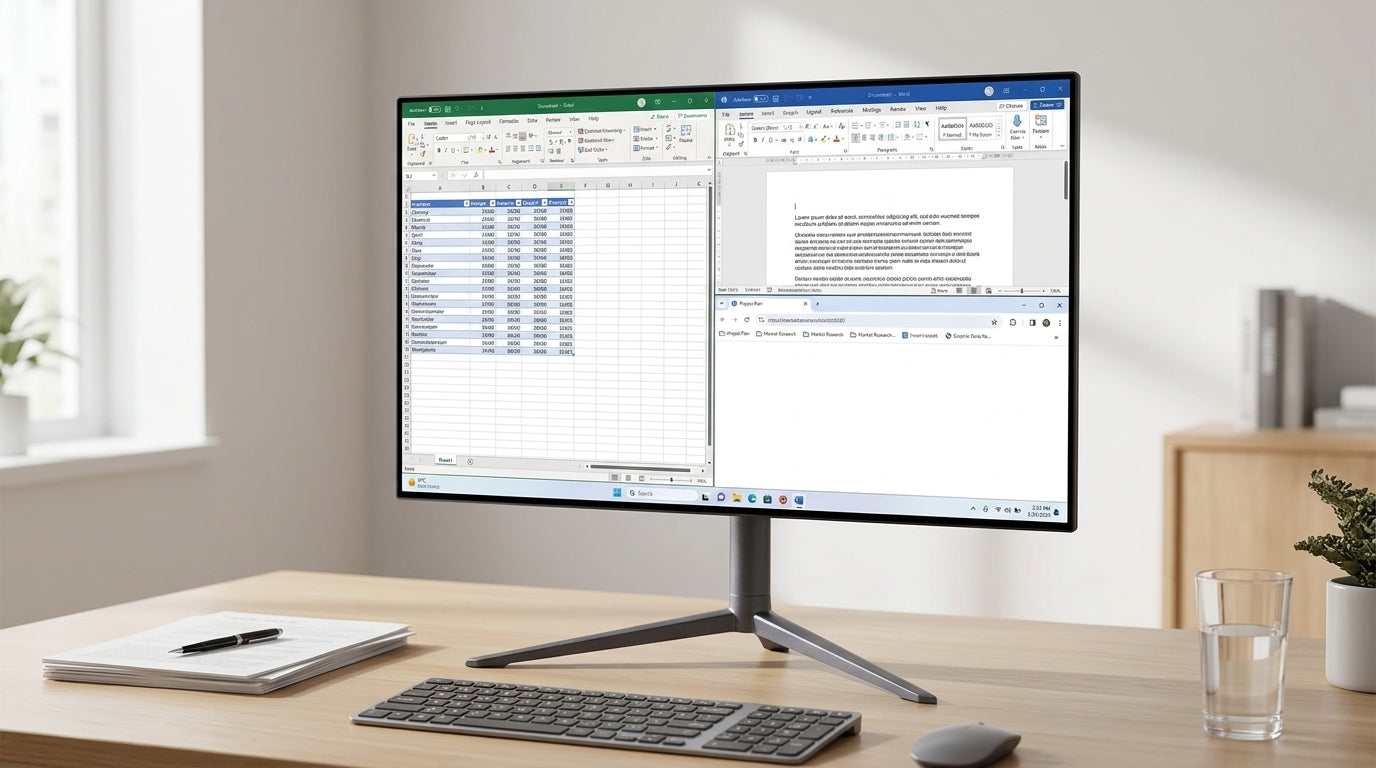
The reason this topic matters is simple: office screens often keep the same interface in the same place for hours. That includes taskbars, code panes, ticket boards, mail columns, and dense spreadsheets. Long-term testing and expert commentary have repeatedly pointed to static elements like taskbars and window borders as the kinds of patterns that can create trouble on OLED over time, which is why persistent UI elements deserve extra caution in office-style use.
For a mostly static desk, the real choice is whether you want OLED's contrast benefits enough to accept more management. That is the trade-off, and it is why an OLED monitor for programming is not a one-size-fits-all question. If your workflow changes a lot during the day, OLED can be reasonable. If the layout barely changes, IPS is the conservative baseline and Mini-LED is the premium lower-risk step up.
A helpful way to judge it is to ask three questions: how many hours the same UI stays up, how often the layout changes, and how much maintenance you are willing to do. OSHA's workstation guidance also reinforces a broader point that monitor choice and placement affect comfort and fatigue, so the screen should match the job rather than the other way around.
When OLED Fits Static Desk Work
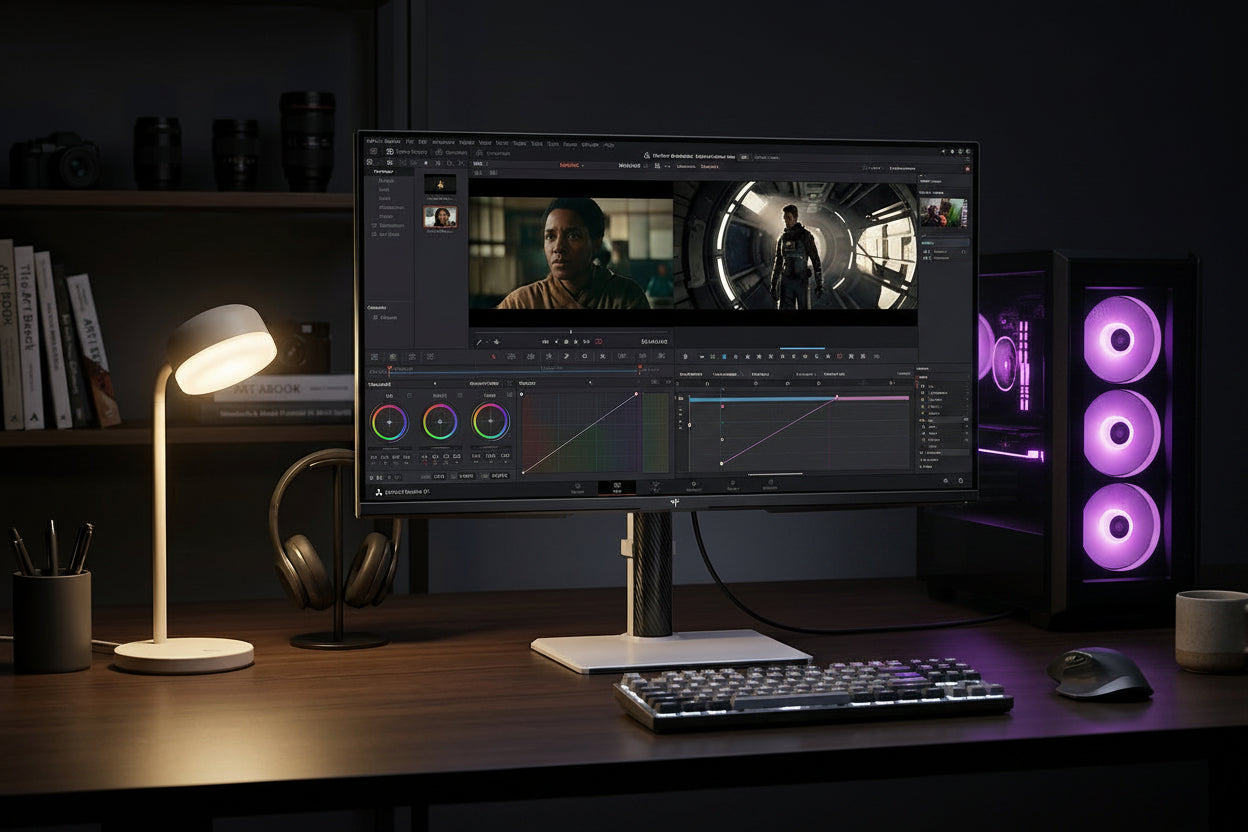
OLED is most defensible on a desk that is not truly static all day. If you split time between coding, calls, video, design work, and general browsing, the display is not staring at the same fixed bars and panels hour after hour. In that setup, an OLED monitor can make sense if image quality matters a lot and you accept that you will need to be more deliberate about how you use it.
Mixed-use home offices are the easiest fit. A monitor that spends part of the day on documents and part of the day on moving content is less exposed than one that sits on the same dashboard or IDE layout from morning to evening. That is why a shorter, more varied workday often changes the recommendation more than a spec sheet does.
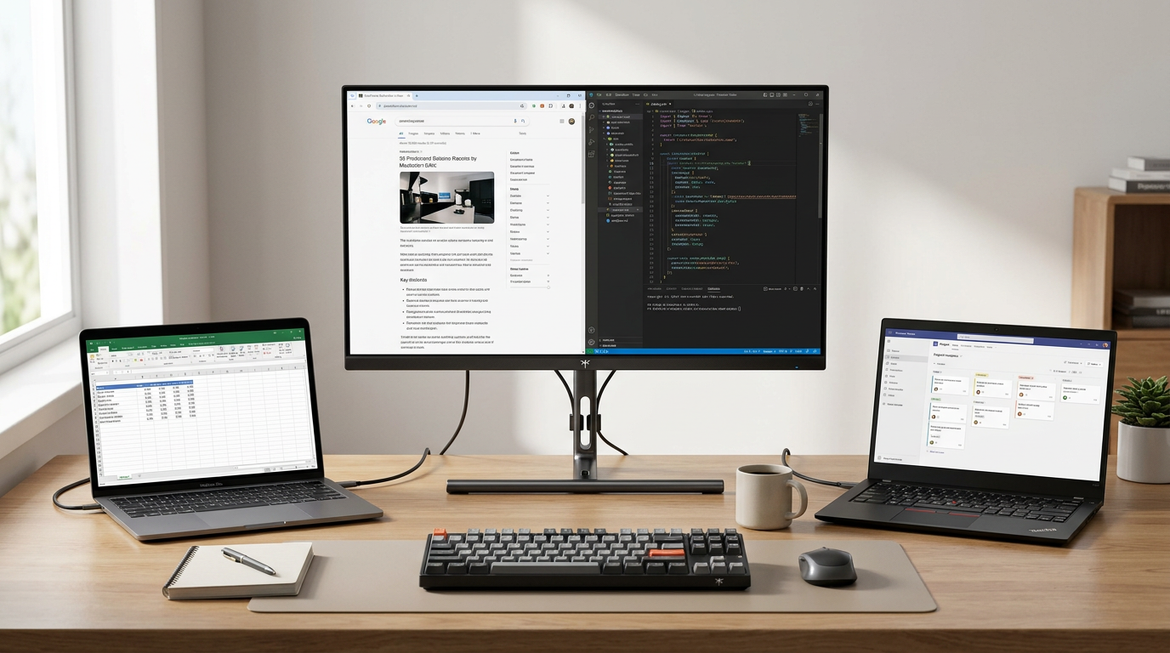
The fit starts to break down when the screen stays parked on the same app stack for most of the day. Always-on taskbars, pinned browser columns, fixed code panes, and dense analytics boards all raise the odds of regret for cautious buyers. If that sounds like your desk, the safer move is usually to look at a non-OLED productivity panel first.
For buyers who still want to compare premium panel families, the Mini-LED vs OLED decision framework is the right next read. It helps you separate the image-quality upside from the static-work trade-off without turning the decision into a gaming-only discussion.

If your work looks mixed now but may become more document-heavy later, the long-view productivity framework is a useful follow-up for thinking about how the choice holds up over time.
Lower-Risk Alternatives for Office Use
For mostly static office work, IPS is the safest default because it keeps the decision simple. It is the easiest fit for spreadsheets, email, documents, and fixed desk setups where the same interface stays open for long stretches. If you want the least mental overhead, IPS is usually where to start.
Mini-LED is the premium lower-risk option when you want more contrast and brightness without making burn-in concern the central trade-off. Rtings' Mini-LED vs OLED comparison notes that Mini-LED does not carry the same permanent burn-in risk as OLED under long static exposure, while still offering stronger contrast than a basic office IPS panel in many setups.
Here is the practical shorthand:
| Panel family | Static-content risk | Maintenance burden | Brightness / contrast upside | Best fit |
|---|---|---|---|---|
| IPS | Lowest concern | Lowest | Good, but more plain | Spreadsheets, email, documents, fixed desks |
| Mini-LED | Lower concern | Moderate | Strongest premium middle ground | Bright rooms, high contrast, mixed productivity |
| OLED | Conditional fit | Highest | Best contrast and black levels | Mixed-use desks, image-first buyers, users who accept more care |
If you want to browse a category built around office-first use, the office monitor selection is a cleaner starting point than a general entertainment-oriented lineup. For buyers who care more about contrast and brightness than the lowest possible management burden, the Mini-LED monitor range is the more relevant browse path.
A practical product-level example is the H27D9 office monitor. It is an IPS QHD model with a straightforward office fit, so it belongs in the conversation as a lower-risk baseline rather than as a burn-in solution.
If You Still Want OLED, Reduce Exposure
If you choose OLED anyway, the goal is to reduce exposure, not pretend the risk disappears. Start by varying what stays on screen. Hide taskbars when you can, avoid leaving the same window layout untouched for hours, and rotate between full-screen or near-full-screen views when the workflow allows it.
Brightness management matters too. Use only the brightness you need for the room, and avoid running the panel harder than necessary during long office sessions. That does not make the display immune, but it can lower how aggressively the screen is stressed during a typical workday.
A simple review habit helps as well. After a week of normal office use, ask whether the monitor still feels like a natural fit or whether you are spending too much energy managing the screen. If you are already thinking about static overlays and habits every day, that is usually a sign that OLED is asking for more attention than you want to give it.
For readers who want a practical example of the underlying problem, this guide on static overlay hotspots explains why fixed elements create trouble when they sit in the same spot for long periods. The context is gaming, but the usage lesson carries over to office layouts.
A Practical Buyer's Checklist
Before you buy, check the workload first. If your desk is mostly spreadsheets, IDEs, dashboards, email, and browser tabs, start with IPS or Mini-LED before you spend extra on OLED. That is the simplest decision rule for static office work.
Then check the room and the desk. Bright offices, wide window glare, and large text-heavy layouts often favor higher brightness and a more forgiving panel. Also confirm that the monitor can sit comfortably at the right height and distance for long sessions. OSHA's computer workstation checklist is a useful reminder that monitor placement is part of the comfort decision, not an afterthought.
A quick buyer check looks like this:
- Choose OLED only if static content is not the dominant pattern.
- Choose IPS if you want the safest conservative default for long office hours.
- Choose Mini-LED if you want a more premium picture with less burn-in concern than OLED.
- Check warranty, returns, and desk ergonomics before you pay for extra panel quality.
- Reconsider OLED if the same taskbar, dashboard, or editor layout will stay visible all day.
If you want a simple place to start browsing, the office monitor collection and the 4K monitor collection are more aligned with productivity-first buying than a panel-agnostic search. For a lot of buyers, that is the cleaner path than trying to force an OLED monitor into a mostly static office routine.
Final Takeaway
If your desk is mostly static, OLED is a conditional choice rather than the default. IPS is the safest baseline, Mini-LED is the stronger premium alternative, and OLED makes sense only when you value its picture quality enough to manage the trade-off. If you want less worry and fewer habits to manage, start with office-first or Mini-LED options instead of forcing OLED to fit.
FAQs
Is an OLED Monitor Worth It for Programming?
It can be, but mostly for mixed-use coding desks or shorter sessions with lots of layout changes. If your IDE, taskbar, and side panels stay in the same place for most of the day, IPS or Mini-LED is usually the calmer choice.
What Monitor Type Is Safer for Spreadsheets and Dashboards?
IPS is the most conservative default, and Mini-LED is the better premium step up if you want more contrast and brightness. Both are easier to live with than OLED when the screen stays on the same static layout for long hours.
Can OLED Burn-In Be Reduced With Settings Alone?
Settings and habits may lower exposure, but they do not remove burn-in risk. That is why the workload pattern matters more than any single feature or menu option.
Why Do Office Monitors Often Make More Sense Than Gaming OLEDs?
Office monitors are usually easier to live with for static work because they are built around stable text, simpler usage, and fewer concerns about fixed UI elements. That makes them a better match for work that does not change much during the day.
How Do I Decide Between OLED and Mini-LED for a Home Office?
Choose OLED if the desk is mixed and you want the best contrast, but only if you are comfortable managing static content. Choose Mini-LED if you want a premium display with less burn-in concern and a lower-maintenance office routine.