Schools should treat an education monitor buying guide as an operations and total-value decision, not just a spec comparison. For most classrooms, the right buy is the monitor that fits the room, deploys consistently, and is easy to support at scale. EDLA only matters when the display itself needs Google-managed workflow support; otherwise it is usually not the main filter.

What Schools Need From Classroom Monitors
Classroom monitors are usually purchased in batches, so one weak policy choice can affect dozens of rooms. That is why school buyers should weigh durability, support, warranty, deployment consistency, and long-term value together. CoSN's K-12 sustainability procurement guidance makes the core point clearly: districts should think in terms of repairability, energy use, and total cost of ownership, not just the lowest upfront price.
A practical rule is simple: if two monitors look similar on paper, the better choice is the one that is easier to standardize, easier to replace, and easier to keep in service. That matters more in a district refresh than it does in a single desk purchase.
If a model looks cheap but creates extra support work, it often stops being the better value. If a model costs more but reduces rollout friction across classrooms, it may be the stronger procurement option.
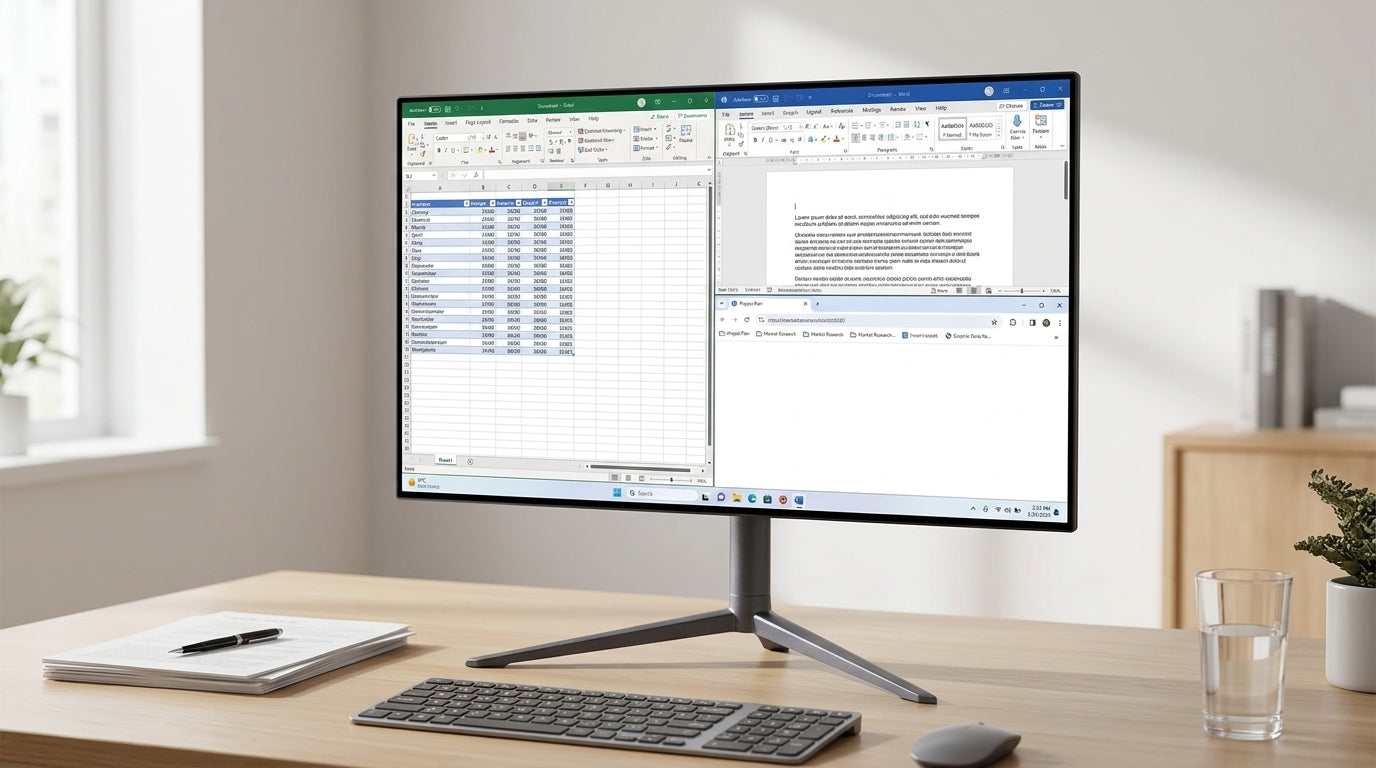
For buyers who want a broader browse path while they build a shortlist, the office monitor category is a reasonable starting point for classroom-adjacent desk setups.
Set the Evaluation Criteria First
Start with durability and physical handling. In this context, durability means the monitor can survive normal classroom movement, cleaning, reboxing, and repeated setup without becoming a support burden. It does not mean a vague promise that the unit is "rugged." Buyers should ask how the display will be stored, mounted, moved, and serviced during rollout.
Next, check display fit for classroom work. Screen size, resolution, brightness, and viewing angles all affect whether a teacher or student can read shared content comfortably. In a shared room, a monitor that looks fine on a sales page may still feel cramped if students sit farther away or if multiple people need to view it at once.
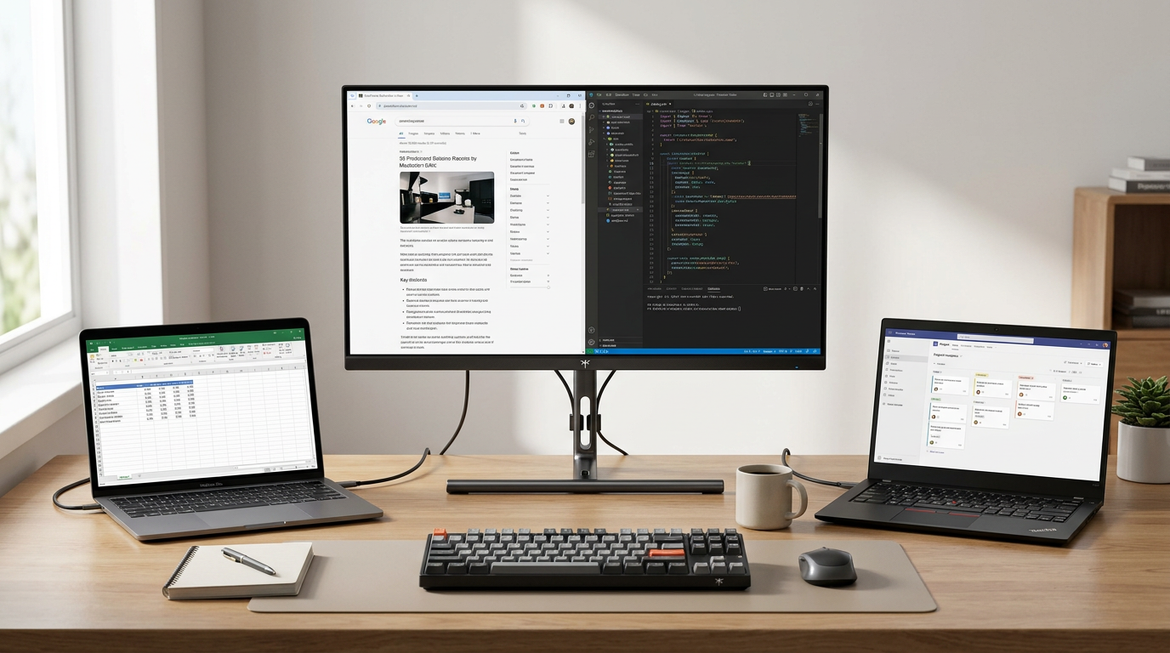
Connectivity and deployment practicality matter just as much. Ports, cable simplicity, and input flexibility affect how quickly IT can standardize a room. If a district uses docks, USB-C, HDMI, or adapter-heavy carts, compatibility should be verified in the product documentation, not assumed from the category name.
Finally, require standardization across multiple sites. A district that buys three different monitor types may save on one line item but create more training, spare-unit, and replacement complexity later. Standardization helps support teams, procurement, and campus techs speak the same language.
How EDLA Fits Education Buying Decisions
EDLA is a workflow-fit threshold, not a universal classroom requirement. In Google's managed-display ecosystem, Google EDLA certification gives displays official access to Google Mobile Services, including Google Play, Drive, and YouTube. That is useful when the display itself is expected to behave like a managed endpoint.
For a standard classroom monitor that mainly acts as a passive screen, EDLA usually does not change the core job. In that situation, buyers should not pay for certification just because the label sounds more advanced. The better question is whether the classroom workflow actually needs Google services on the display itself.
That is the clean dividing line. If the answer is yes, EDLA may be worth paying for. If the monitor is just showing a teacher's PC or docked device, EDLA is usually not the deciding factor.
This is also why a mobile touch display should not be used as proof that all classroom monitors need the same certification. A product like the KTC MEGAPAD 32" 4K Android 14 Google EDLA Smart Touch Monitor with 8550mAh Battery belongs to a managed touch-display workflow, so it is best treated as a fit example for that narrower use case rather than a default model for ordinary desktop classrooms.
A useful decision sentence is this: if the classroom needs Google-managed apps on the display itself, EDLA can justify the premium; if it does not, the certification is usually a nice-to-have at best.
Compare Support, Warranty, and Replacement Paths

Support terms often matter more than one or two spec differences because they affect whether a room stays usable after a problem appears. In bulk school buying, the real question is not just "What is covered?" It is "Who handles the claim, what happens to a dead-on-arrival unit, and how fast can the district recover a working display?"
The table below summarizes the support factors that usually protect classroom uptime most in bulk deployments.
| Evaluation item | Why it matters in schools | What to verify | Common red flags |
|---|---|---|---|
| Support response path | Determines how quickly a problem becomes a fix | Who takes the first claim, where to submit it, and what proof is required | Only a generic email address or unclear ownership |
| Warranty length | Limits how long the district carries the risk | The exact warranty term in the official policy or product page | Vague wording like "limited support" without details |
| Return window | Helps separate shipping damage from normal use issues | How long the district has to return unopened or faulty units | Short window with no clear inspection guidance |
| Spare-unit planning | Keeps teaching schedules stable if a unit fails | Whether the district will stock extras or hold a backup path | No plan for classrooms that cannot wait |
| DOA handling | Reduces rollout disruption at arrival | What evidence is needed and whether the unit can be swapped quickly | Confusing process for first-day failures |
| Shipping or replacement logistics | Affects how long rooms stay offline | Who pays shipping, how replacements are sent, and where they ship | Hidden steps that delay a replacement |
For a supplier-side follow-up on claims handling and support expectations, buyers can review KTC warranty expectations. For receiving checks, arrival inspection basics is a useful reminder that dead pixels, panel issues, and missing accessories should be caught before the return window closes.
A practical procurement rule is: if the support path is unclear, do not treat the quote as equivalent to a bid with clear replacement terms. That difference affects uptime, admin effort, and total value.
Map Product Fit to District Use Cases
Once the framework is in place, product examples should come in as fit checks, not as universal recommendations. The useful question is whether a specific display profile matches the district's actual workflow.
A managed touch display can make sense when the room needs a built-in Google workflow, touch interaction, and more self-contained operation. That is the condition where an EDLA product may be relevant. But for ordinary desktop classroom use, a simpler monitor with predictable video input, clear support terms, and easy replacement handling is often the cleaner choice.
If the district is still narrowing the field, the safest approach is to remove any model with unclear certification status, unsupported compatibility, or vague support documentation. Then compare the remaining options on price, warranty, and rollout fit. That keeps the shortlist focused on must-haves instead of shiny extras.
For buyers who want a broad category view while they compare options, All Monitors is a neutral browse path. It is better used for shortlist building than for deciding certification fit.
A decision sentence worth using in RFQs is this: if the product is meant to act as a managed Google endpoint, keep EDLA on the checklist; if it is only a display, exclude certification from the must-have list unless the district has a specific workflow reason.
Vendor Questions Before You Issue an RFQ
Use the RFQ stage to remove ambiguity before the district commits to a bulk order:
- Is this exact model a standard desktop monitor or a managed touch display?
- If EDLA is claimed, where is that status documented in official product materials?
- Who owns the support case from first contact to resolution?
- What is the exact process for dead-on-arrival units?
- What evidence is required to start a warranty claim?
- How are replacements shipped, and who covers freight or handling?
- Are spare units, accessories, and cables available in the same purchase window?
- Can the vendor confirm current model availability for every campus or room?
That sequence aligns with the basic K-12 procurement process, which usually starts with a recognized need and then checks whether the purchase fits budget timing and academic goals. If you need a quick next step, pilot two or three models first, then lock the district shortlist only after support and replacement terms are clear.
Final Takeaway
The best education monitor buying guide is the one that protects classroom uptime, not the one that wins on a single spec. For most schools, the decision comes down to fit, standardization, and support clarity. EDLA matters only when the display itself needs Google-managed workflow support. If you are preparing an RFQ, use the checklist above and keep the shortlist limited to models with clear documentation and workable replacement paths.
FAQs
How Does EDLA Certification Affect School Monitor Purchases?
EDLA is useful when the display itself needs Google services and managed workflow support. It is not a universal requirement for every classroom monitor. If the unit is only acting as a passive screen, buyers should verify whether EDLA adds any real operational value before they pay for it.
What Should a District Compare in a Bulk Monitor Purchase?
Districts should compare support path clarity, warranty terms, replacement logistics, return windows, and spare-unit planning, not just screen size or resolution. In bulk buys, a slightly better spec can be less useful than a vendor that can keep classrooms running and simplify claims.
Can a Classroom Monitor Be Bought Without Touch or Smart Features?
Yes. If the room only needs a reliable display for a connected PC, dock, or teacher device, a feature-light monitor can be the cleaner option. That choice often reduces setup friction and lowers the number of things that can go wrong during rollout.
Why Does Support Response Matter More Than Some Specs?
When a monitor fails in a classroom, downtime affects instruction immediately. A clear support process, sensible replacement handling, and a workable return path can matter more than a small spec improvement that students may never notice in daily use.
How Should Schools Verify a Monitor Before Rollout?
Use arrival inspection and a short pilot test before district-wide acceptance. Confirm the panel is intact, the inputs work, accessories are present, and any claimed workflow features behave as expected. That check is especially important when the return window is short.
Final Takeaway
The right education monitor choice is usually the one that is easiest to standardize and support over time. Keep EDLA tied to actual workflow needs, verify warranty and replacement terms before purchase, and use arrival checks to reduce avoidable rollout problems.