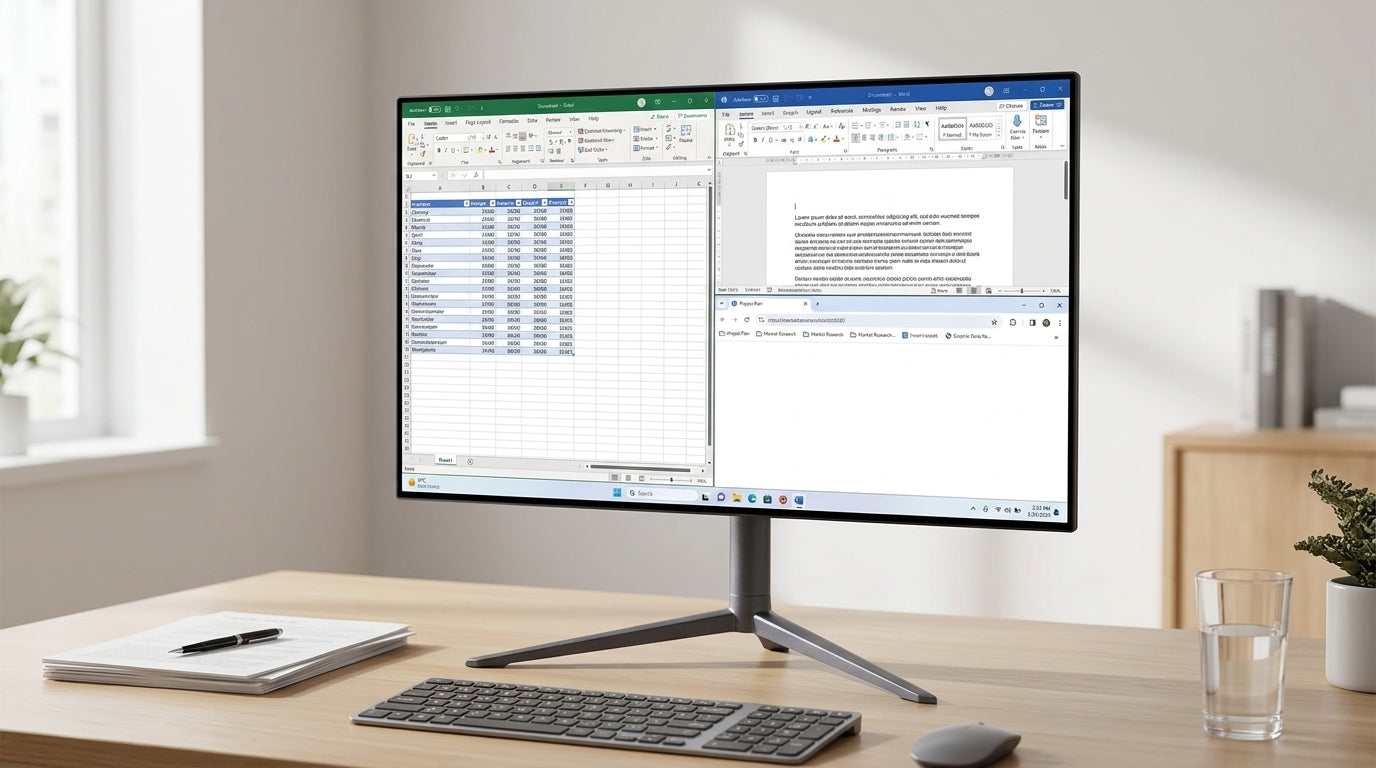
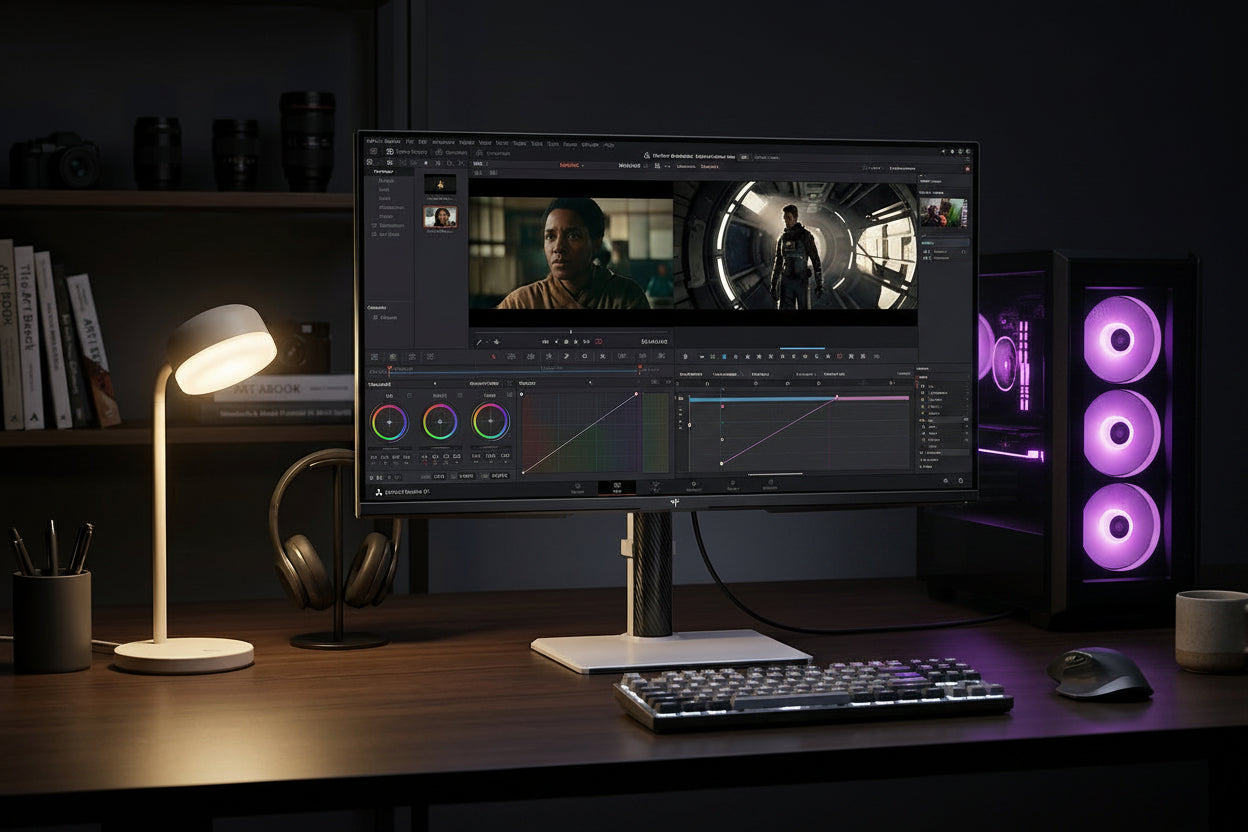
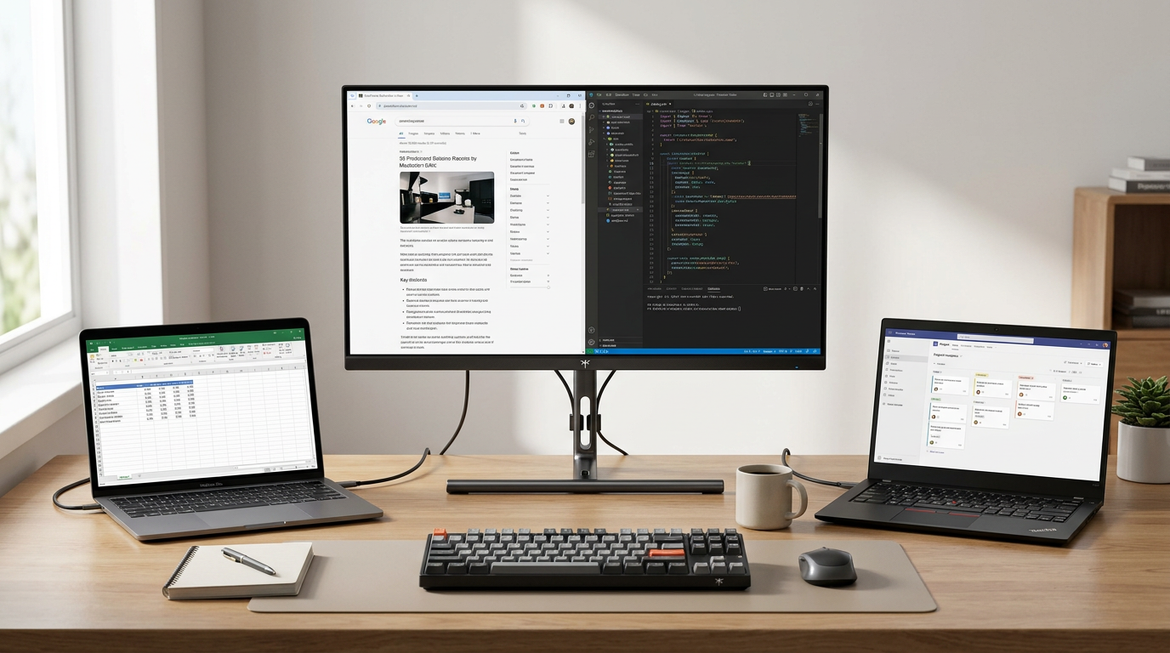
For most buyers, the best monitor for MacBook use is a 27-inch 4K display with solid USB-C support, unless you specifically want the denser text feel of 27-inch 5K. The real choice is not just resolution. It is whether you want the cheapest crisp setup, the closest Retina-like desktop feel, or a one-cable desk that actually works with your MacBook.

What MacBook Buyers Need From a Value Monitor
A good MacBook monitor has to do three things well: make text look crisp, connect cleanly, and keep color trustworthy enough for everyday work. That does not mean chasing the highest spec sheet number. It means matching the screen to how you actually use your MacBook, whether that is writing, spreadsheets, web work, or light photo and design tasks.
For budget-conscious buyers, 27-inch 4K is usually the value starting point, while 27-inch 5K is the premium text-clarity step. Apple’s guidance on USB Power Delivery for Macs also makes one thing clear: charging only counts if the monitor can deliver enough wattage for your model, so the port label alone is not enough.
A simple way to judge the category is this: if you want a monitor that feels better than a random office screen but do not want to pay for perfection, start with 4K. If you notice text density more than brightness or gaming speed, keep 5K in the conversation.
Pick the Right Size and Resolution
For most MacBook buyers, 27-inch 4K is the value sweet spot. Bjango’s breakdown of Mac external display scaling explains why: 27-inch 5K aligns with macOS’ Retina-like density, while 27-inch 4K is widely used as a value choice that relies on scaling. In plain terms, 5K is the cleaner text path, but 4K is often the better buy if you want to save money and still get a sharp desk display.

The practical threshold is simple. Choose 5K if you spend long hours reading dense text, you notice scaling artifacts easily, or you want the closest thing to a Retina-like desktop feel. Choose 4K if you want crisp enough text for work and would rather keep more of your budget for other gear.
27-inch 4K vs 27-inch 5K pixel density is also worth a quick look if you want the Mac-specific scaling trade-off in more detail. The comparison mostly comes down to comfort versus cost, not right versus wrong.
If you are trying to keep costs down, 1440p can still be a reasonable value choice. It is easier to justify when you sit a little farther back, want a larger workspace, or care more about price than about the most refined text rendering. That said, it is not the first pick for readers who are highly sensitive to Mac text clarity.
| Fit Zone | What It Means for MacBook Buyers | Best Move |
|---|---|---|
| 27-inch 4K | Crisp, value-led, and a common default for macOS scaling | Start here if you want the best balance of price and sharpness |
| Threshold zone | You notice scaling and text density more than most shoppers | Consider 5K if sharpness matters more than budget |
| 27-inch 5K | Denser text and closer to the Retina-like feel many Mac users want | Pay extra only if you will notice the difference |
If you want a MacBook monitor that is easy to live with, the resolution choice should be practical rather than aspirational. The 27-inch 4K vs 27-inch 5K pixel density guide is useful because it helps you decide whether sharpness or savings should lead the purchase. That is the heart of the best monitor for MacBook question for value shoppers.
Use USB-C Only When It Actually Helps
USB-C is worth paying for when it turns the desk into a cleaner one-cable setup. That usually means display, data, and charging through one connection. It is convenient, but it is not magic. A USB-C port on the monitor does not automatically mean every MacBook will charge, output video, and wake reliably the same way.
Apple’s Mac charging guidance says charging depends on USB Power Delivery and sufficient wattage for the specific MacBook model. The connection path also matters. The cable, dock, adapter, and MacBook port all affect what you actually get.
KTC’s USB-C resolution guide is useful here because it reinforces the practical check: DisplayPort Alt Mode, Thunderbolt support, cable rating, and adapters can all limit the result. In other words, USB-C is a convenience feature first, not a guarantee.
If you mainly want dependable video and charging but do not care about the cleanest cable setup, HDMI plus a separate charger is still a valid plan. That is often the safer choice when you are not sure about the full USB-C path.
For buyers comparing the best monitor for MacBook setups, the key USB-C question is not “Does it have a USB-C port?” It is “Does that path support the resolution and wattage I actually need?” If you skip that check, you can end up with a monitor that looks right on paper and feels wrong on the desk.
Match Color and Text Clarity to Your Work
For basic office work, dependable color usually means the screen does not look wildly off, not that it matches a MacBook panel exactly. For light creative work, you want steadier presets, decent gamut coverage, and factory calibration that gives you a predictable starting point. You do not need pro-display pricing unless your work truly depends on tighter color control.
Apple’s display support for MacBook Pro confirms that modern MacBooks can drive higher-refresh external displays when the monitor and cable path support the mode. That matters if you are comparing office monitors against gaming-first models. It means refresh rate can be a bonus, but it is not the main reason to buy for MacBook productivity.
For text clarity, use native resolution and sensible scaling rather than relying on sharpness tricks. The monitor should make letters look clean because the signal path and pixel density are right, not because the sharpness setting is turned up. If a screen only looks good after heavy processing, it is usually a compromise, not a value win.
Fine detail sharpness without over-sharpening is a good follow-up if you want a practical setup reminder. The main lesson is simple: sharp text comes from the right resolution, not from aggressive image processing.
For casual buyers, color accuracy is about consistency first. If you are not doing client-facing color work, a factory-calibrated display with decent sRGB coverage is often enough. If you do edit photos or design assets, treat color as a check, not a promise, and plan to verify your own workflow before you buy.
Which KTC Models Fit Which MacBook Buyer
If you want the cleanest MacBook text path and are willing to pay for it, KTC 27" 5K office monitor is the featured premium fit. Its 27-inch 5K panel, 65W USB-C, and factory-calibrated color make sense for users who care more about desktop refinement than gaming speed. It is not the cheapest option, but it is the most direct answer for Mac users who want the denser-text tier.
For a value-first alternative, the 4K monitor lineup is where most MacBook shoppers should start browsing. Within that group, the KTC 27" 4K 160Hz/320Hz 90W Gaming Monitor | H27P6 works as a more flexible 4K pick if you want USB-C power delivery and do not mind a gaming-leaning spec sheet. The KTC Mini LED 27" 4K 160Hz HDR1400 Gaming Monitor | M27P6 is the stronger pick if you care more about HDR impact and richer contrast than about keeping the setup simple.
| Model | Best Fit for MacBook Users | Why It Belongs Here | Main Caution |
|---|---|---|---|
| H27P3 | Text-heavy Mac work and a premium desktop feel | 5K sharpness, 65W USB-C, calibrated color | Costs more than most buyers need |
| H27P6 | Value 4K with one-cable convenience | 4K panel, 90W USB-C, flexible dual-mode behavior | More gaming-first than office-first |
| M27P6 | Creator-adjacent and HDR-leaning work | 4K Mini-LED, high contrast, USB-C PD | HDR is a bonus, not the core MacBook need |
If you are comparing against broader budget ranges, Above $200 Monitors is a reasonable place to filter out the lowest-end choices that usually cut too many corners for MacBook use. That category is not a proof of fit by itself, but it helps narrow the search to models with more serious display and connectivity specs.
The important thing is to keep the product section as a fit map, not a trophy list. A gaming-first 4K monitor can still be a good MacBook monitor if the text clarity, USB-C behavior, and color balance fit your desk. A 5K office monitor is only worth the premium if you will actually notice the sharper text.
For readers narrowing down the best monitor for MacBook use, the best KTC path is simple: 5K if text density is the priority, 4K if value matters more, and Mini-LED if contrast and HDR are the draw. That is a cleaner way to shop than chasing the highest spec line.
Make the Final Call With a Simple Checklist
Before you buy, check the resolution, the USB-C path, the wattage, and the return policy. For MacBook use, those four items matter more than marketing terms like “pro,” “creator,” or “HDR.” If you rely on adapters or docks, confirm the exact signal chain before checkout, because the cable path can change the result as much as the panel itself.
- Choose 27-inch 4K if you want the value default and are fine with macOS scaling.
- Choose 27-inch 5K if text density matters enough to justify the higher price.
- Confirm USB-C wattage before you expect laptop charging.
- Use HDMI plus separate power if you want a simpler fallback.
- Check the return window in case the desktop feel is not right for your eyes.
If you want the simplest answer, start with the 4K collection and move up only when you know you need the sharper 5K path. That is the most practical way to buy a MacBook monitor without paying for extras you will not use. The best monitor for MacBook buyers is the one that matches your desk, your eyes, and your budget.
FAQs
Is 4K Enough for MacBook Use?
For many buyers, yes. A 27-inch 4K monitor is the value default because it gives you crisp enough text for work without jumping to premium pricing. If you are sensitive to scaling or read dense text all day, 5K may feel better.
When Does USB-C Matter Most?
USB-C matters when you want one cable for display and charging. It is less useful if you are already fine using HDMI and a separate charger. The port is only helpful when the full signal path supports your target resolution and wattage.
Should Color Accuracy Be the Deciding Factor?
Usually not for everyday office use. If you edit photos or design assets, color matters more, but a factory-calibrated display with decent sRGB coverage is often enough for a value setup. For casual work, consistency is the more practical goal.
What Is the Safest Value Pick?
The safest starting point is a 27-inch 4K monitor with USB-C that you can verify before buying. From there, move to 5K only if sharper text is worth the extra cost.