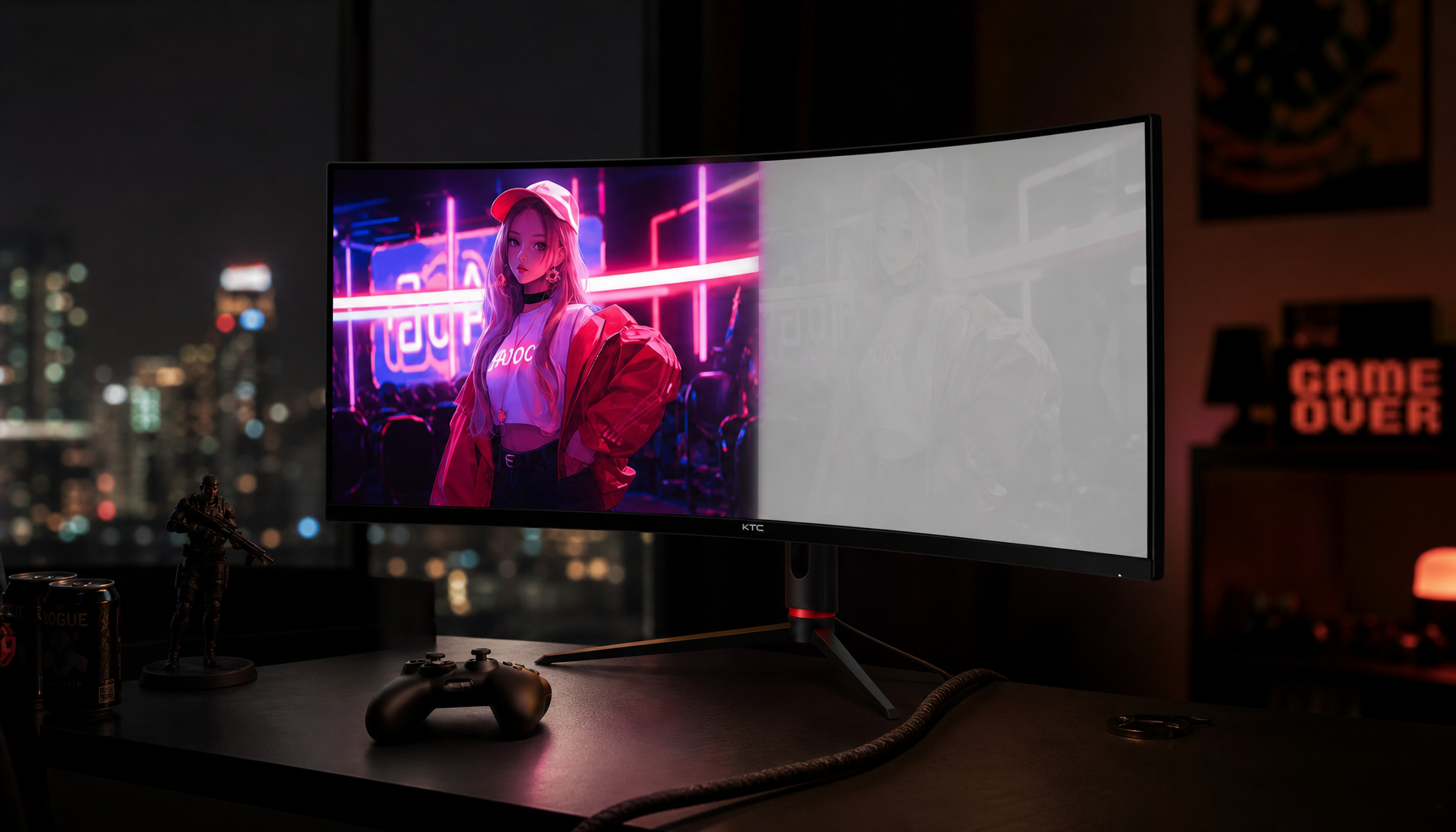
Fast-refresh LCD panels have less time to finish each pixel transition, so stronger overdrive is often used to sharpen motion. When that push is too aggressive, pixels overshoot their target shade and create bright halos, dark outlines, or inverse ghosting.
Speed Shrinks the Pixel Transition Window
A 60Hz monitor refreshes every 16.67 milliseconds. A 144Hz display cuts that window to about 6.94 milliseconds, and 240Hz trims it to about 4.17 milliseconds.
That tighter timing is why fast panels lean harder on overdrive. Overdrive applies extra voltage so LCD pixels change shades faster, reducing regular ghosting, but excessive overdrive can make pixels go past the intended color before settling back.
So the paradox is real: a faster monitor can show more visible artifacts if its fastest response mode is tuned for benchmark numbers instead of clean motion.
Overshoot Is Not the Same as Normal Ghosting
Normal ghosting looks like a soft trail behind moving objects because pixels are too slow. Overshoot, or inverse ghosting, often looks sharper and harsher: bright coronas, dark shadows, colored fringes, or glowing outlines around motion.
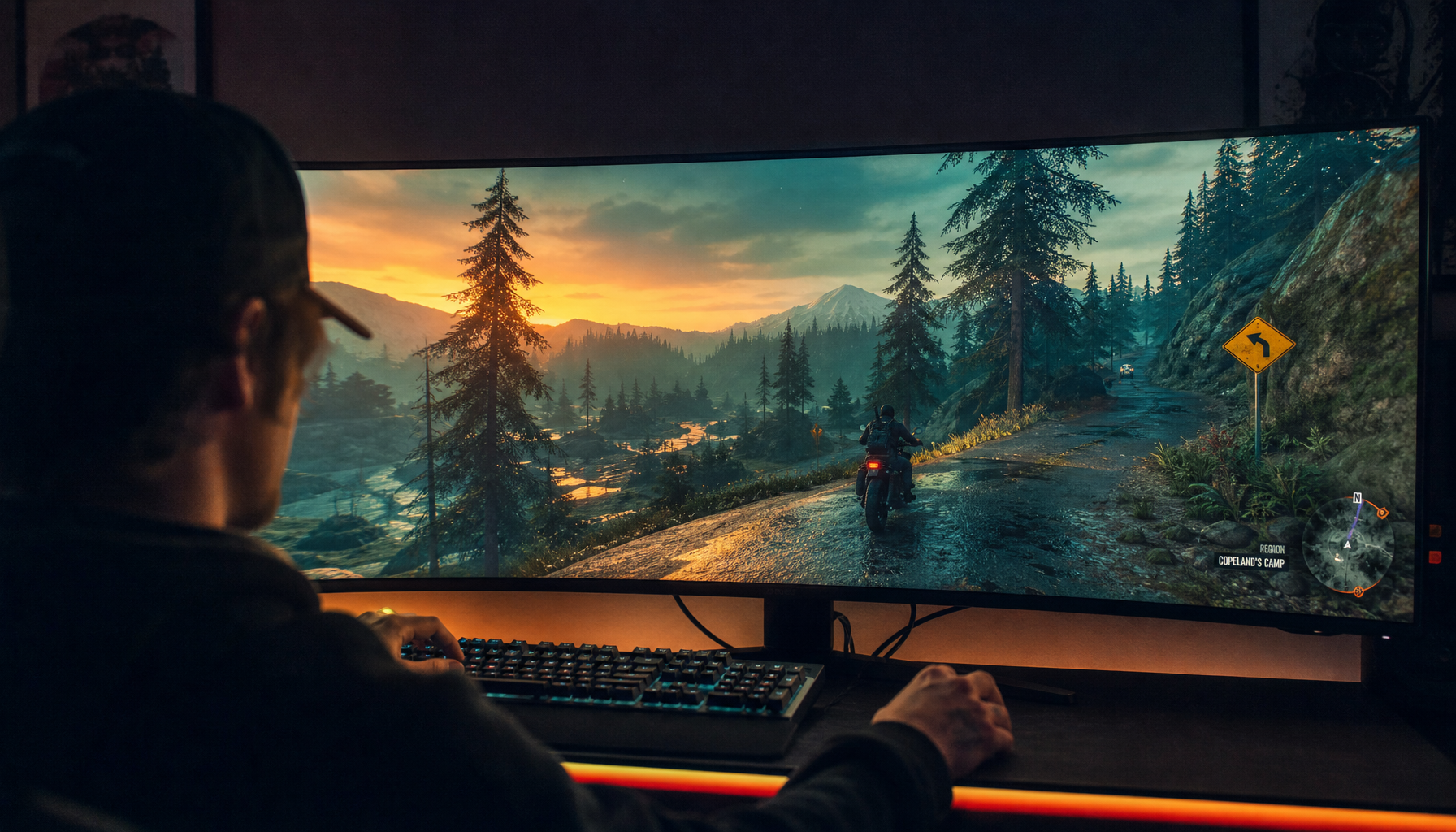
 That difference matters when tuning a gaming monitor. If enemies, crosshairs, scrolling text, or dark tree lines smear behind the object, response is too slow. If they gain a bright edge or strange halo, the overdrive setting is probably too high.
Inverse ghosting is especially noticeable in high-contrast motion, such as a dark object moving across a bright sky or a light HUD element crossing a dark scene. That is why it can feel worse than blur even when the panel is technically responding faster.
Why Fastest Often Looks Worse
Monitor settings use labels such as Response Time, Overdrive, Fast, Faster, Extreme, or Premium. The naming sounds performance-driven, but the top mode is not automatically the best mode.
 In many LCD monitors, the highest overdrive level is tuned to make gray-to-gray response measurements look stronger. In real games, that can trade soft trailing for harsh inverse ghosting. High refresh rates can support smoother play and lower perceived delay, but panel response, GPU output, and overdrive behavior still have to work together.
Variable refresh rate adds another wrinkle. A setting that looks clean at 240Hz may overshoot when the game drops closer to 100 FPS, because the monitor is no longer operating in the exact timing range where that overdrive mode behaves best.
OLED displays avoid LCD overdrive overshoot in the traditional sense, but they bring their own tradeoffs, such as burn-in risk and possible VRR flicker.
How to Tune for Clean Motion
Start with the monitor’s middle overdrive preset, not the extreme one. On many displays, Normal, Medium, or Fast is the practical sweet spot.
Use a repeatable motion test, then confirm the result in your actual games or workflows. The refresh setting should also match the mode you intend to use, because a monitor left at 60Hz will not show its real high-refresh behavior.
- Set native resolution and intended refresh rate.
- Start overdrive at Medium or Normal.
- Raise one step only if dark trailing remains.
- Lower one step if halos or bright edges appear.
- Retest at common FPS ranges, not only peak refresh.
The Smart Buying Takeaway
For gaming, productivity, and portable smart screens, the winning spec is not just highest Hz or 1 ms. It is balanced motion: fast enough response, controlled overdrive, stable refresh behavior, and clean image quality.
A well-tuned 144Hz or 165Hz monitor can look better in motion than a poorly tuned 240Hz panel running in its most aggressive mode. For value-focused buyers, that means reviews, return policies, and real motion testing matter as much as the number printed on the box.