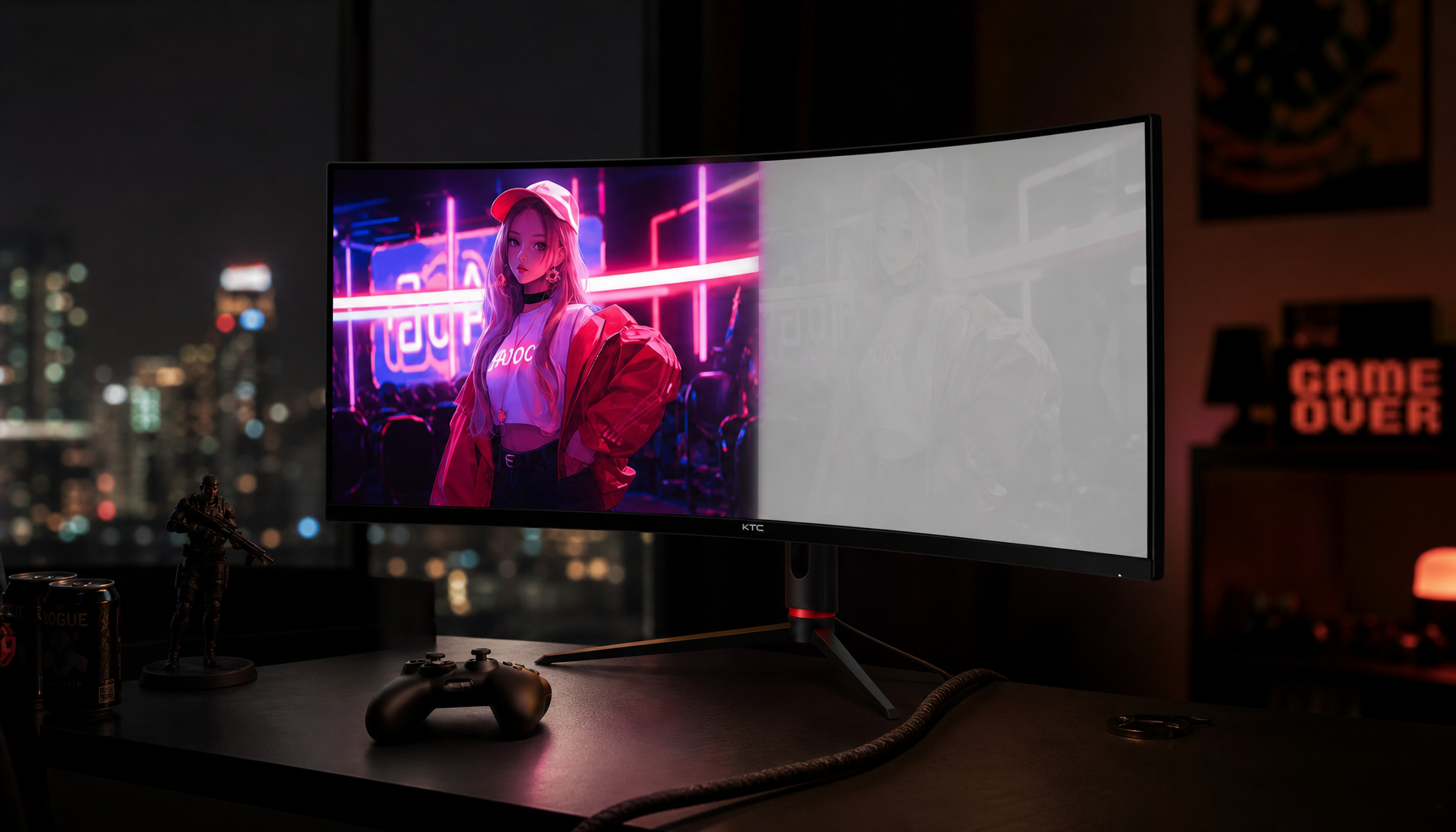
Disabling local dimming can make a monitor look sharper because it removes zone-based brightness shifts that create halos, glow, or crushed shadow detail around fine edges. The panel is not gaining resolution; your eyes are seeing cleaner edge boundaries.
Local Dimming Boosts Contrast, Not Pixel Detail
Local dimming is built to improve perceived contrast on LCD and mini-LED displays. Because LCD pixels do not emit light by themselves, the backlight has to brighten and dim behind them; local dimming divides that backlight into zones so dark areas can drop lower while highlights stay bright.
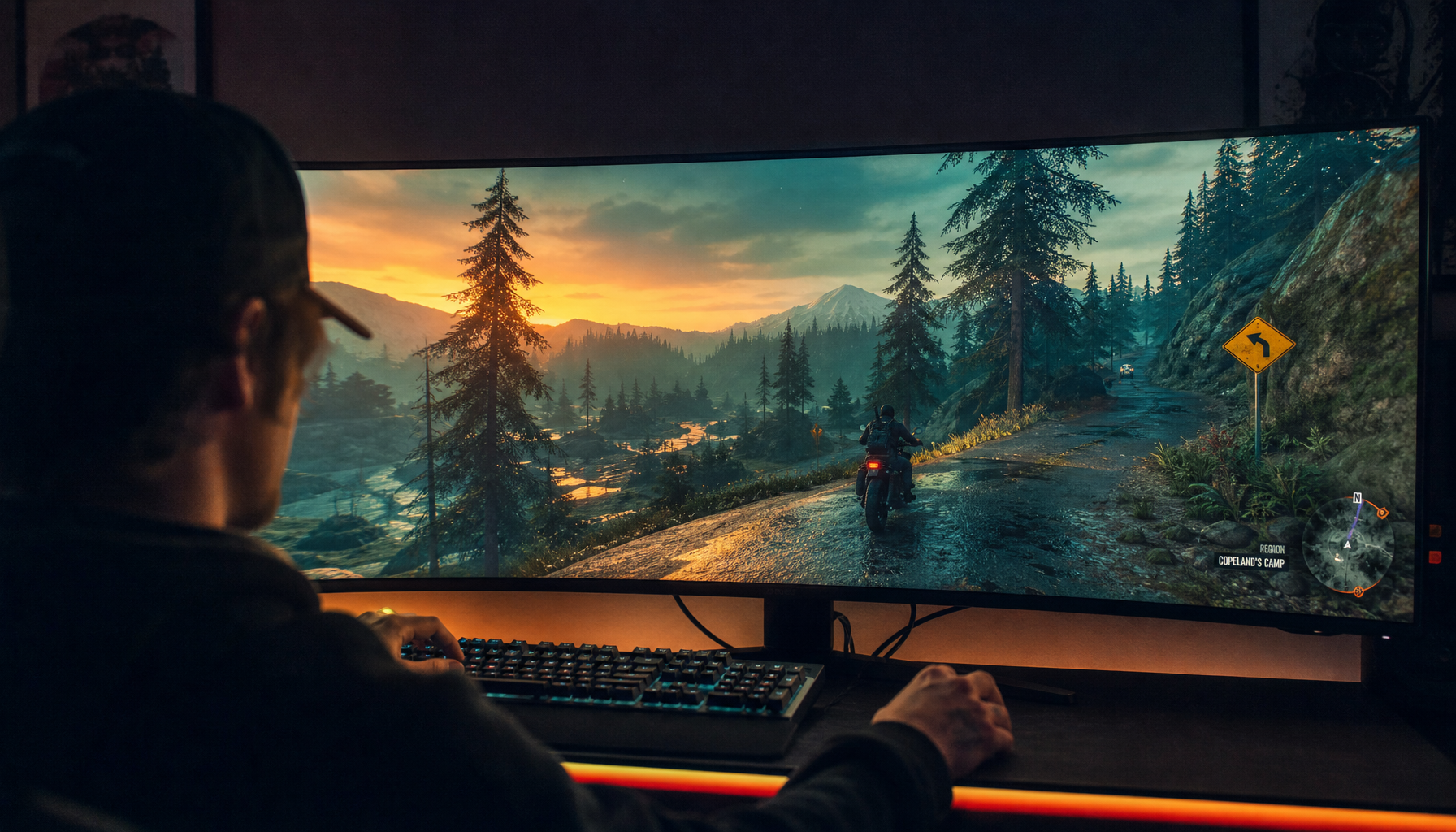
That can help HDR movies, atmospheric games, and dark-room viewing. A starfield, neon sign, or torch-lit cave can look more dramatic when the backlight works zone by zone.

Sharpness is different. True sharpness comes from pixel density, native resolution, scaling quality, subpixel rendering, and panel response. Local dimming changes light behavior behind groups of pixels, so it can improve contrast while making small details look less precise.
Why Edges Can Look Cleaner With Local Dimming Off
The common culprit is blooming. When a bright object sits on a dark background, the local dimming zone behind it may brighten a larger area than the object itself, causing a soft glow around the edge. That glow lowers edge contrast, so text, cursors, subtitles, HUD elements, and thin white lines can look less crisp.

This is especially visible on desktop content. A white mouse pointer over a dark wallpaper, spreadsheet gridlines in dark mode, or small text in a code editor can trigger local dimming in ways that feel distracting.

Even strong mini-LED monitors still control zones, not individual LCD pixels. As LED local dimming improves black levels, it can still create halo effects when the backlight zone is larger than the bright object on screen.
Disabling it makes the backlight more uniform. Blacks may look grayer, but edge lighting becomes steadier, which can make the image feel more sharply drawn.
Sharpness Settings Can Add a Second Problem
Monitor sharpness controls are usually edge enhancement, not real added detail. They increase contrast around borders to make lines pop, but too much can create bright outlines, dark rims, jagged text, and artificial halos; monitor sharpness is best treated as a tuning tool, not a resolution upgrade.
Now combine that with local dimming. The sharpness algorithm may emphasize an edge, while the dimming algorithm brightens the backlight zone behind it. The result can be a double-outline effect: digitally sharpened borders plus physical backlight glow.

For productivity displays, this is why a less enhanced image often feels more professional. Lower sharpness, native resolution, correct scaling, and local dimming off can beat a punchier but messier image during long work sessions.
When You Should Keep Local Dimming On
For HDR gaming and cinematic content, local dimming is still a major advantage. Some monitor makers recommend local dimming for HDR because mini-LED monitors are designed to use zone control for deeper blacks and brighter highlights, while SDR office use often benefits from a more restrained setup.
Use local dimming when:
- You are playing HDR games or watching HDR movies.
- The room is dark and black depth matters.
- The monitor has many zones and a strong dimming algorithm.
- You prefer contrast impact over perfect desktop uniformity.
Turn it down or off when:
- You read, code, write, or work in spreadsheets for hours.
- You notice glow around cursors, subtitles, or window borders.
- Dark UI elements pulse as content changes.
- Fine text looks softer with dimming enabled.
The Best Practical Setup
Create two display profiles if your monitor allows it: one for SDR desktop work with local dimming off or low, and one for HDR gaming or media with local dimming on.
Then calibrate sharpness separately. On a 4K monitor, start low; on a 1080p monitor, use just enough edge enhancement to firm up text without visible halos. The performance-driven move is not always on or always off; it is matching the backlight behavior to the content in front of you.