Wide color gamut means a monitor can display a larger range of colors than a basic screen, but it only improves display quality when accuracy, HDR performance, and color management keep up.
If a new monitor makes game worlds look richer but web pages and skin tones suddenly look too intense, the screen is probably showing more color than the content expected. That extra range can help open-world games, ultrawide scenes, and editing work look less washed out when the monitor is tuned correctly. The real question is when wider color is a real upgrade and when it is just a distracting spec.
Wide Color Gamut Is About Range, Not Automatic Quality
Range vs. target
In monitor terms, color gamut is the range of colors a display can actually reproduce, while a color space is the target that content or hardware is aiming for. That is why two monitors can both claim support for the same standard and still look different in practice.
For buyers, the practical jump is from basic panels that cover about 72% of NTSC to wide-gamut models that reach 90% or more. That extra range gives the monitor the ability to show stronger reds, deeper greens, and finer shade separation instead of collapsing nearby colors into the same flat result.

Why the names matter
The labels matter because sRGB is still the baseline for web, office work, SDR video, and many games, while DCI-P3 is more relevant to cinema-style media, HDR-oriented content, and premium displays. A print-oriented color space is useful too, but it is mostly a photo and print concern rather than a must-have for the average gaming monitor.
When Wider Gamut Actually Improves Display Quality
Gaming and ultrawide immersion
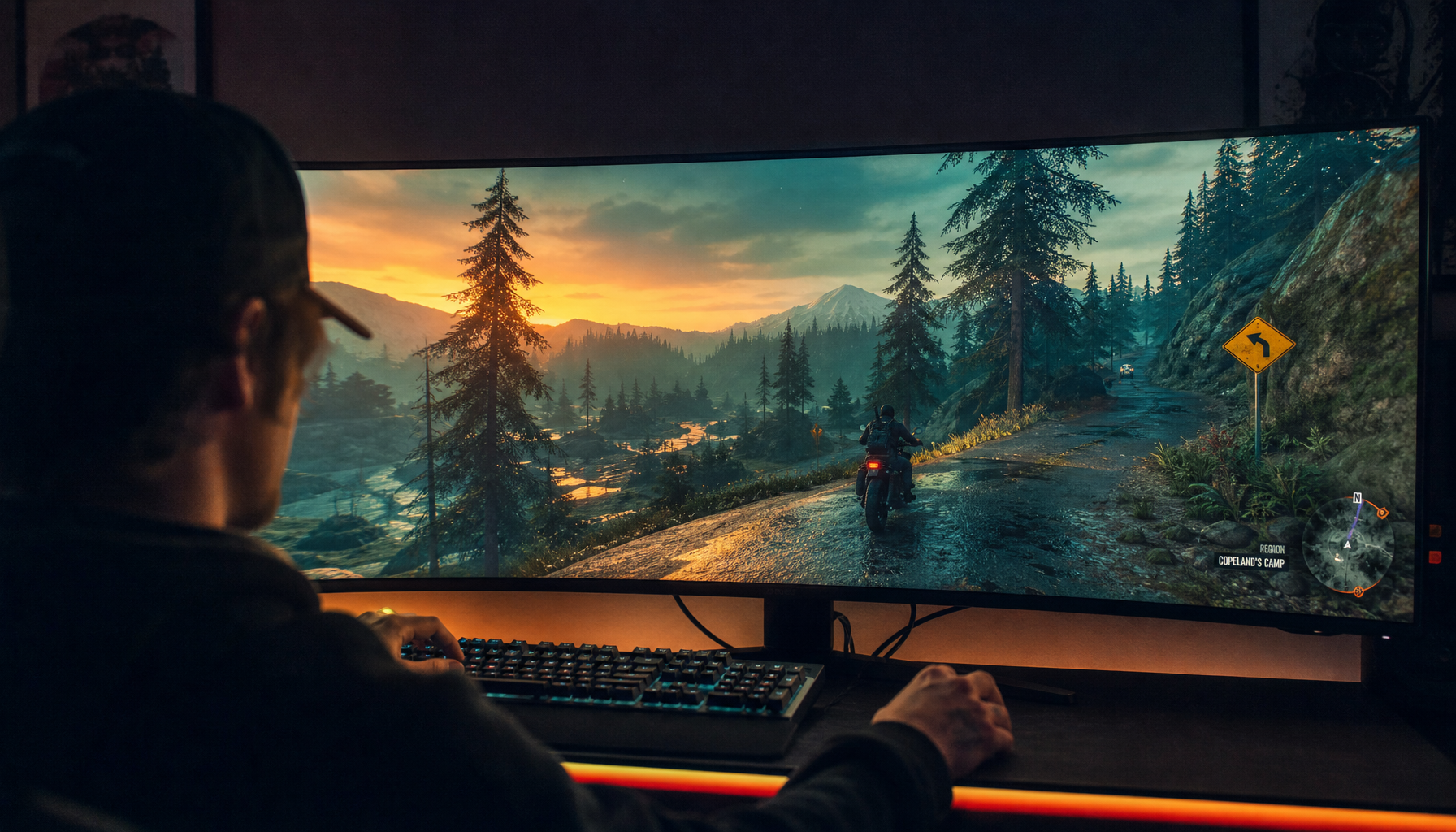
In real gameplay, wide gamut helps most when a game leans on atmosphere, gradients, and shadow detail. On a fast ultrawide monitor in a dark single-player title, the benefit is not just “more pop.” Small tonal differences can be easier to separate, which helps environmental cues, UI warnings, and motion in darker areas stand out more clearly.

That is why story-driven games are rated high for color-gamut benefit, competitive games medium-high, and streaming or content creation very high. Esports still depends more on refresh rate, response time, and clarity, but once a monitor is already fast enough, wider color becomes a meaningful quality upgrade for cinematic games and creator-heavy setups.
Portable monitors and mixed workflows
Portable displays benefit for a different reason because factory-calibrated sRGB, a print-oriented color space, and DCI-P3 coverage can help a secondary screen match a modern laptop workflow more closely. If you review clips on a cell phone, trim them on a laptop, and preview them on a portable monitor, choosing the right gamut target is often more useful than simply buying the screen with the biggest percentage claim.
When Wide Gamut Makes a Monitor Look Worse
Oversaturation is the main risk
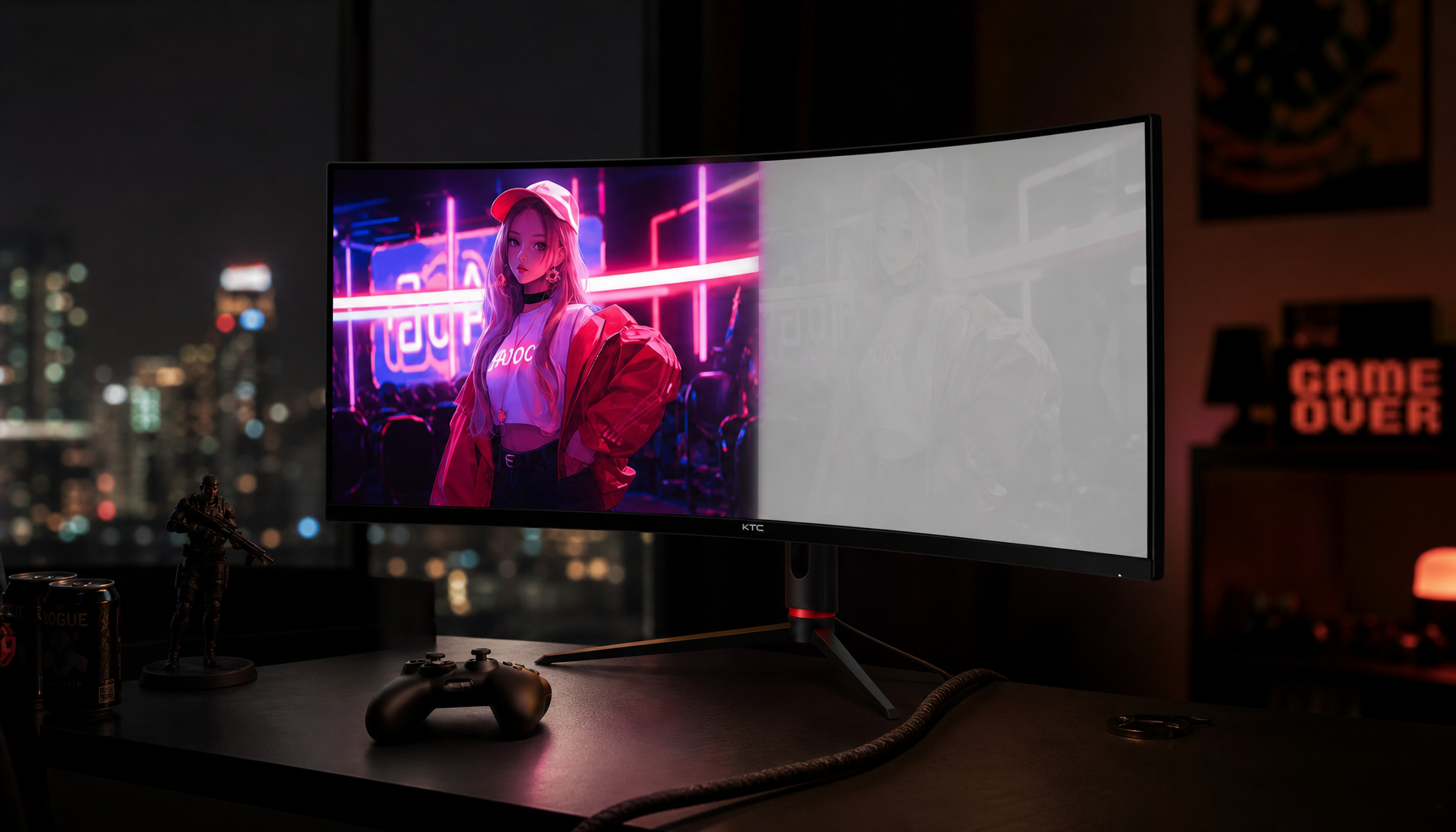
The biggest trap is that more gamut does not equal more accuracy. On a wide-gamut monitor without proper color handling, normal sRGB content can make skin look too red, grass look unnaturally vivid, and everyday brand colors feel louder than intended.
Color management decides whether it works
That mismatch shows up because the operating system does not broadly remap all content to a monitor’s native gamut by default, and unmanaged apps often stretch ordinary colors across the larger panel range. Some browsers and creative apps can use ICC profiles correctly, but many games, video paths, and older viewers still behave as if every display were a basic sRGB monitor.
The practical fix is workflow-based: use native gamut only in color-managed apps with known file profiles, and switch to sRGB mode or a gamut clamp for unmanaged SDR content. A proper ICC profile and hardware calibration target such as 6500K white point and gamma 2.2 are far more reliable than simply lowering a saturation slider.
Wide Gamut Is Not the Same as HDR or Overall Panel Quality
HDR needs brightness and contrast too
For HDR-style gaming, wider color is only one part of the picture because brightness, local dimming, and contrast decide whether those colors have real impact. A monitor with a basic HDR400 badge can still look flat, while models with HDR600+, 400+ nits, and better backlight control are much more likely to show convincing highlights and richer scene depth.

That is also why Mini LED is treated as a premium path, with thousands of backlight zones improving local dimming, brightness, contrast, and highlight control. On a large gaming ultrawide, those supporting traits matter as much as gamut coverage because the panel has to hold bright and dark areas on screen at the same time.
Accuracy and consistency still matter
Better buying signals come from measured coverage, low post-calibration color error, good uniformity, stable viewing angles, and a usable sRGB emulation mode. That is especially important on ultrawide monitors, where edge consistency is easy to spot, and on portable monitors, where matching a laptop screen can matter more than raw saturation.
A spec sheet can also mislead because a monitor that covers 97% of a color space is still missing part of that target, and two displays aimed at the same standard can still render differently. Wide gamut is useful, but it is not a shortcut around good calibration and solid panel behavior.
Which Gamut Specs Matter Most When Buying
A practical filter for monitor shopping
A sensible shortlist starts with budget, primary use, color-space coverage, panel type, HDR level, and measured review data. That order stops wide gamut from becoming a distraction on a monitor that still misses basics like brightness, motion handling, or a usable sRGB mode.
Quick comparison table
Monitor segment |
Color target |
Best for |
Why it matters |
Check next |
Budget gaming monitor |
95%+ sRGB, ideally 99% sRGB |
SDR gaming, web, desktop use |
Safest fit for how most content is mastered |
Refresh rate, response time, avoid sub-90% sRGB |
Midrange 1440p or portable hybrid |
99% sRGB with good factory calibration |
Mixed gaming, docking, travel |
Better consistency across apps and devices |
sRGB mode, brightness, calibration quality |
Premium ultrawide or HDR gaming monitor |
99%+ sRGB and 90%+ DCI-P3 |
Open-world games, HDR-style media, streaming |
Wider color becomes visible in richer scenes |
HDR600+, 400+ nits, local dimming or stronger contrast |
Creator-leaning gaming setup |
95%+ DCI-P3 or a workflow-matched print-oriented color space |
Streaming, video work, hybrid gaming/editing |
Better match to premium devices and video workflows |
ICC support, calibration options, panel uniformity |
Portable creator monitor |
Match laptop workflow: sRGB, print-oriented color space, or DCI-P3 |
Travel editing and preview work |
Helps the portable panel behave predictably next to the main screen |
Factory calibration, white point consistency, 300-nit class brightness |
Marketing shorthand like “130% sRGB” can be incomplete because it may describe expansion area rather than clean coverage of the actual sRGB space. What you want instead is measured coverage of the color space you actually use, plus confirmation that the monitor can rein itself in with a decent sRGB mode when you are back on the desktop.
The use-case split is fairly simple: sRGB is the best fit for general digital use, DCI-P3 is the better match for video-centric and premium device workflows, and a print-oriented color space makes the most sense for print-focused work. For most gaming monitor buyers, that means paying extra for a print-oriented color space only if the monitor will also serve serious photo or print work.
Practical Next Steps
For a one-monitor setup, sRGB remains the safest default target for the desktop, web, office apps, SDR video, and many games. In plain terms, a well-tuned 99% sRGB gaming monitor is often a better buy than a sloppy wide-gamut panel that makes everyday content look wrong.
If your setup includes HDR gaming, streaming, or a laptop that already uses a P3-class display, wide gamut is worth paying for when it matches the workflow and comes with real calibration support. The safest buying rule is to treat extra color as one part of total display quality, not as a standalone badge.
- Check for at least 95% sRGB first.
- Add 90%+ DCI-P3 when you want richer HDR-style gaming, streaming, or creator use.
- Ignore oversized gamut slogans if measured coverage and sRGB behavior are missing.
- Verify brightness, HDR level, calibration quality, and panel consistency before paying a premium.
FAQ
Q: Is 100% sRGB enough for a gaming monitor?
A: For most buyers, yes. sRGB is still the baseline for much web, office, SDR video, and many games, so a true 100% sRGB display already covers the content most people see every day.
Q: Is DCI-P3 better than a print-oriented color space for a gaming monitor?
A: Usually, yes. DCI-P3 is generally the more relevant target for video, film-style media, premium devices, and many high-end displays, while a print-oriented color space is more useful for photography and print workflows than for pure gaming.
Q: Should I leave a wide-gamut monitor in native mode all the time?
A: Usually not. Native wide-gamut mode works best in color-managed apps with known profiles, while an sRGB mode or clamp is often the better choice for ordinary desktop use and unmanaged SDR content.