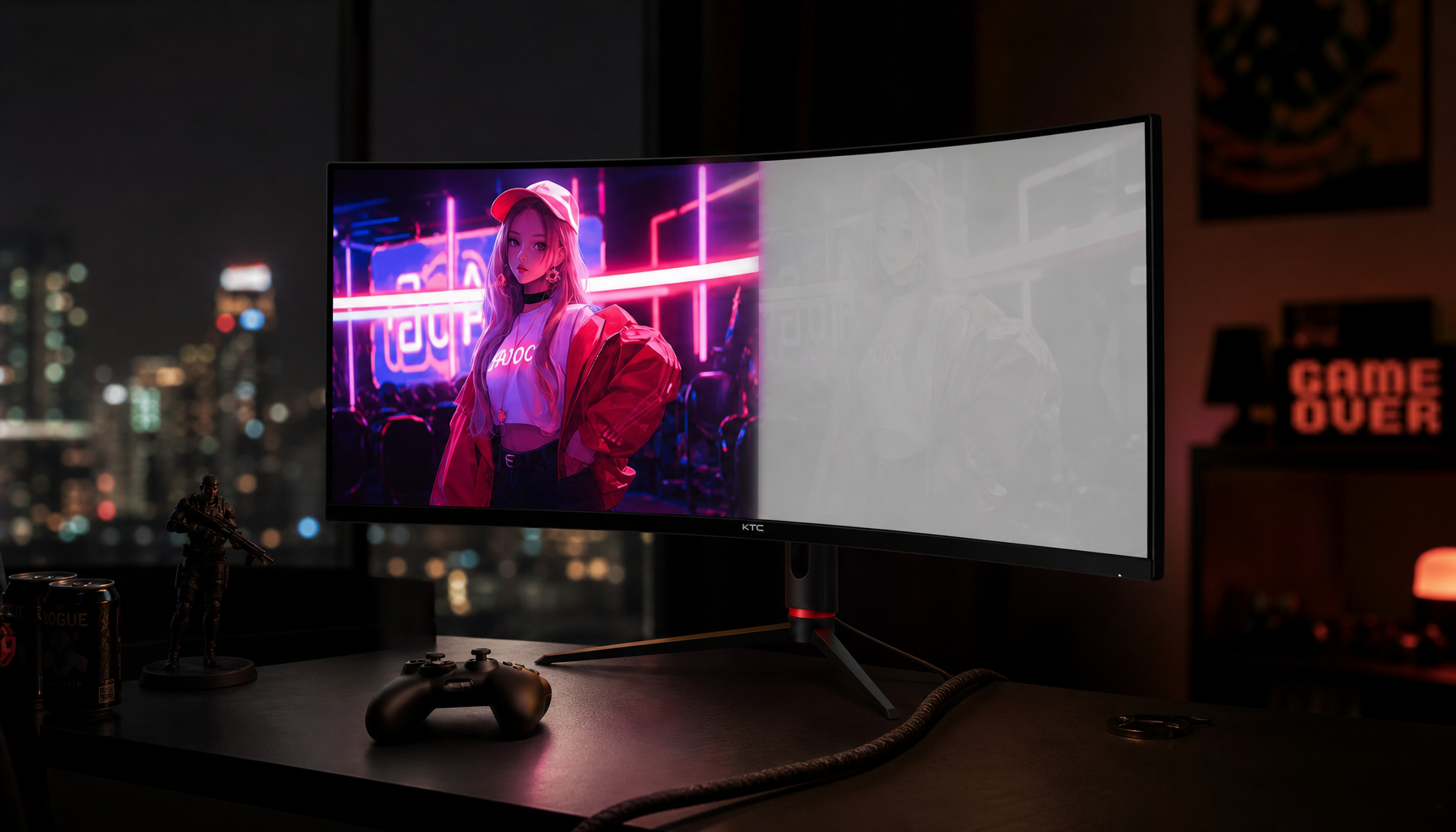
A color space tells a monitor what RGB numbers are supposed to mean, and sRGB and DCI-P3 use different boundaries for those colors. That is why two displays can both look “correct” yet still show different reds, greens, and HDR highlights.
If you have ever upgraded to a new monitor and wondered why games suddenly looked richer while your desktop looked a little too intense, you were not imagining it. On modern gaming monitors, ultrawide displays, and portable monitors, the gap between a standard-color panel and a wide-color panel often explains that change more than resolution alone. You’ll leave with a practical way to read color specs, avoid oversaturation, and decide when sRGB or DCI-P3 is actually worth paying for.
What a Color Space Spec Actually Tells You
Color Space vs. Color Gamut
A color space is a standardized way to define colors so they can be reproduced consistently across devices. That matters for monitors because an RGB value by itself is incomplete: 255, 0, 0 only describes the intended red if the source space is known.
A monitor’s gamut is the range of colors it can physically display. When a spec sheet says 99% sRGB or 95% DCI-P3, it is telling you how much of that target space the panel can cover, not whether the monitor is automatically accurate out of the box.
Why Monitor Listings Use sRGB and DCI-P3
For most PC buyers, sRGB is still the baseline for web content, a platform, and standard SDR use. That is why even fast 240Hz gaming monitors and budget portable monitors almost always advertise sRGB coverage first.
A wider-gamut display can show colors beyond sRGB, which is why premium monitor listings also call out DCI-P3. In practical buying terms, sRGB tells you how well a screen should handle everyday SDR content, while DCI-P3 gives you a better clue about HDR games, streaming, and cinema-style color.
Why sRGB and DCI-P3 Cover Different Colors
The Difference Is Real, Not Marketing
On a standard gamut chart, sRGB covers about 35.9% of the CIE 1931 space, while DCI-P3 covers about 53.6%. That extra area is not spread evenly; DCI-P3 mainly reaches farther into saturated reds and greens, which is why wide-gamut monitors often make neon lighting, foliage, sunsets, and skin warmth look fuller in supported content.

Those differences exist because different RGB spaces use different primaries and mappings to a reference space. In plain English, sRGB and DCI-P3 are not two labels for the same palette; they are two different instructions for what the same RGB numbers should look like on a screen.
Why Two Similar Monitors Can Still Look Different
A monitor’s real gamut depends on its hardware and measured behavior, not just the logo on the box. Two 27-inch 1440p gaming monitors can both claim wide color, yet one may only cover sRGB well while the other reaches deep enough into DCI-P3 to improve HDR games and video.
In monitor shopping, premium models are commonly described as hitting 99%+ sRGB and 95%+ DCI-P3, while many mainstream models stop at strong sRGB coverage. That is why a spec sheet with both numbers is more useful than a vague “wide color” badge, especially if you are comparing an ultrawide for mixed work and gaming against a cheaper high-refresh alternative.

When Wider Gamut Helps and When It Does Not
Best Cases for DCI-P3
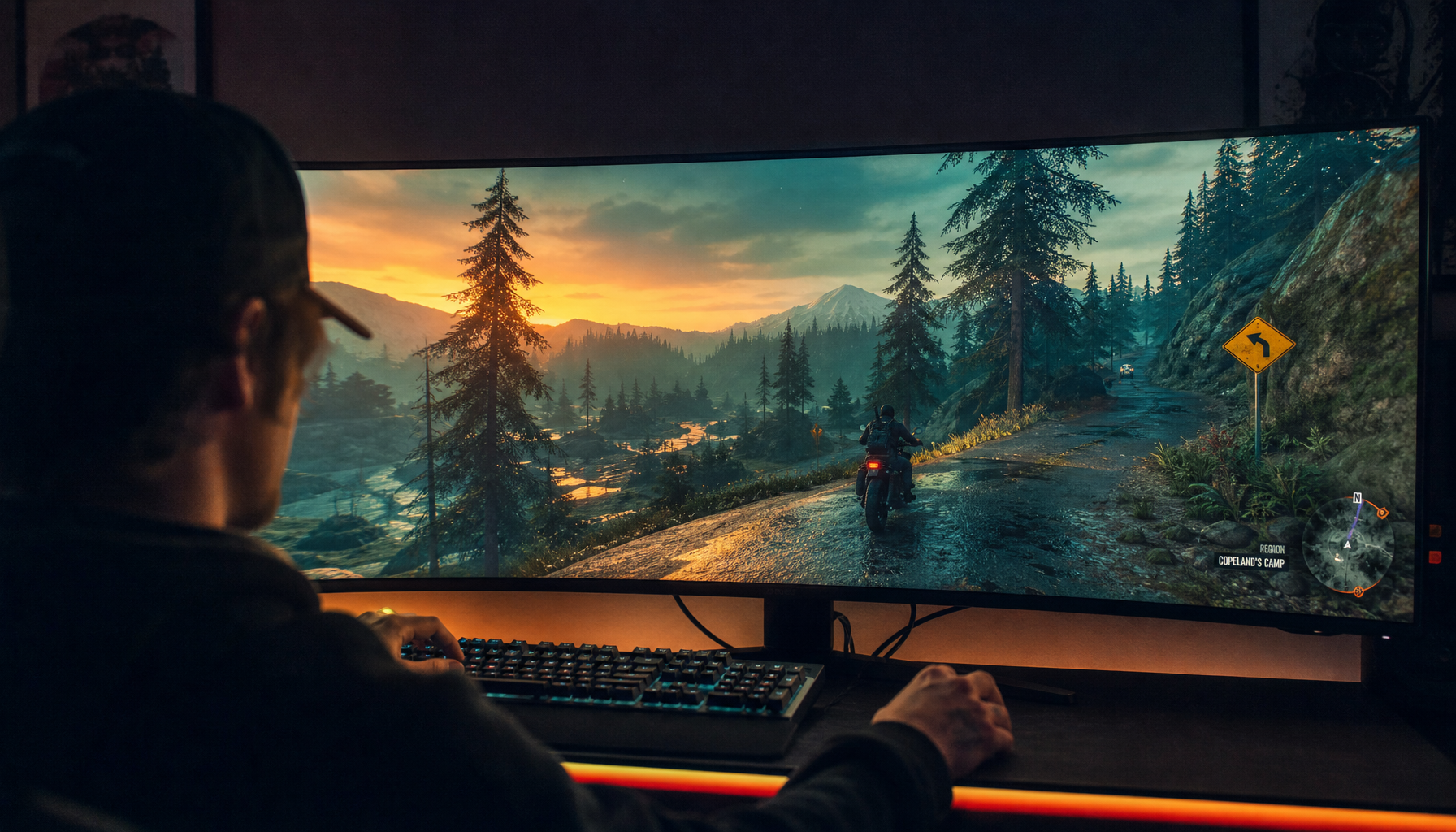
A wide-gamut monitor is most useful for modern games, HDR video, RAW media work, and P3-capable devices. On a good mini-LED or OLED gaming monitor, that wider range can make fire, UI accents, vegetation, and sky gradients look less flat than they do on an sRGB-only panel.
For actual buying priorities, DCI-P3 is a better fit for gaming, movies, and video editing, while sRGB remains the better match for web design, office work, and coding. That split matters if you want one monitor to do everything: a 34-inch ultrawide used for spreadsheets by day and story-driven games by night benefits more from wide gamut than a pure office screen does.
Where sRGB Still Wins
A wider gamut is not automatically a better gaming experience. For competitive play, motion clarity, refresh rate, response tuning, and consistency usually matter more than squeezing out extra saturation, which is why a clean 240Hz esports monitor with a solid sRGB mode can be a better buy than a slower wide-gamut screen.
Portable monitors are another case where restraint helps. A practical baseline is at least 95% sRGB for a good general-use gaming or creative display, while 90%+ DCI-P3 is the richer option if your workflow actually uses it. If the screen will mostly mirror a laptop for web, office, and SDR gaming, accurate sRGB is usually the smarter priority.
Why Wide-Gamut Monitors Can Look Wrong on the Desktop
The Oversaturation Trap
A wide-color-gamut monitor can make a platform UI and non-color-managed apps look oversaturated. The problem is simple: the content was authored for sRGB, but the monitor is showing those same numbers through a larger native gamut.
That mismatch is why the same RGB values can map to visibly different colors on different displays. In real use, that shows up as skin tones that look too warm, grass that looks radioactive, or older games that suddenly appear more colorful than their artists intended.
What Actually Fixes It
A basic saturation slider is usually not a real fix for a gamut mismatch. Users often report that lowering saturation makes some colors dull while others still look unnatural, because the underlying space conversion never happened.
The durable fix is proper color management with a correct ICC profile, plus an sRGB mode or clamp for unmanaged SDR content. On a platform, that may mean calibrating the monitor, profiling it for color-aware apps, and using a GPU- or monitor-level sRGB clamp when you want the desktop, browsers, or older games to stop overshooting.

How to Read Monitor Color Specs Before You Buy
Coverage Beats Marketing Volume
A claim like “130% sRGB” can be misleading because it often describes a larger area rather than clean coverage of the actual sRGB triangle. For buying decisions, 99% sRGB and 90%+ DCI-P3 tell you more than percentage inflation language.
A wide gamut does not guarantee good accuracy. A strong monitor for mixed use should also offer a usable sRGB preset, sensible factory tuning, and calibration targets close to 6500K with gamma 2.2 for SDR work.
Practical Targets for Monitor Buyers
A useful buying process is to set your budget, define your main use, check color-space coverage, choose panel type, verify HDR, and confirm the behavior in real reviews. The table below turns that into monitor-specific shorthand.
Use Case |
Target Spec |
Why It Works |
Watch Out For |
Everyday desktop, office, coding, SDR browsing |
Matches most a platform and web content without extra hassle |
Sub-90% sRGB, no usable sRGB mode |
|
Competitive gaming monitor |
95%+ sRGB plus strong motion tuning |
Keeps color natural while you prioritize refresh rate and response |
Paying extra for wide gamut that adds little to esports |
Single-player, console, and HDR gaming |
99% sRGB and 90%+ DCI-P3 |
Better color depth for HDR titles and cinematic games |
Wide gamut with weak HDR, such as basic HDR400 implementation |
Ultrawide for gaming and content |
99% sRGB, strong DCI-P3, easy preset switching |
Lets one display handle SDR work and richer media well |
Great gamut numbers but poor calibration or awkward mode switching |
Portable monitor for travel |
95%+ sRGB minimum |
More consistent match with laptops and SDR apps |
Vague “wide color” claims with no real coverage numbers |
Which Gamut Should You Buy for Your Setup
Buy for the Content You Actually Use
For most buyers, sRGB is still the safest default because it matches the web, a platform, and most non-HDR content. If you mostly browse, work, code, and play SDR games, a well-tuned sRGB monitor will usually feel more predictable than a wide-gamut model with weak clamping.
If your screen is mainly for immersive gaming, streaming, and media creation, DCI-P3 becomes more valuable because it supports richer color for those use cases. That is especially true on larger ultrawides and premium 4K gaming monitors, where HDR and cinematic presentation are part of the reason to buy the display in the first place.
The Best One-Monitor Compromise
A mixed-use monitor works best when you can use native wide gamut in color-managed apps and switch to sRGB mode for unmanaged SDR content. That is the sweet spot for many buyers choosing one display for gaming, streaming, work, and casual editing.

If a monitor lacks that flexibility, a simpler sRGB-first panel is often the smarter purchase. A wide-gamut spec looks impressive on a product page, but if the desktop is oversaturated and the presets are poor, you may spend more time fixing color than enjoying the screen.
FAQ
Q: Is 125% sRGB better than 95% DCI-P3?
A: Not necessarily. 125% sRGB is often a marketing-style volume claim, while 95% DCI-P3 is usually a clearer coverage number for a wider target space. For buying, ask for actual coverage, an sRGB mode, and whether the monitor handles unmanaged SDR content cleanly.
Q: Do I need DCI-P3 on a gaming monitor?
A: Only if your games, media, and workflow benefit from it. Story-driven games, HDR titles, console gaming, and streaming work gain more from DCI-P3 than pure esports, where refresh rate, response tuning, and clarity usually matter more.
Q: Why does my new monitor make skin tones and reds look too strong?
A: That is usually a wide-gamut mismatch, not a sign that the monitor is “more accurate.” If the content was created for sRGB and your monitor is showing it in a larger native gamut without proper management, colors can look exaggerated until you use an sRGB mode, clamp, or correct profile.
Final Takeaway
If you are comparing monitors, treat sRGB as the baseline for everyday PC use and DCI-P3 as the upgrade for HDR, cinema-style gaming, and media work. The best buying question is not “Which spec is bigger?” but “Which color space matches my content, and does this monitor switch cleanly between them?” On a gaming monitor, ultrawide, or portable display, that answer matters more than flashy percentage claims.
References
- Wide Color Gamut For Gaming How To Pick The Best
- Wide Color Gamut Displays & Color-Accurate Workflows
- How can I reduce saturation on my wide gamut monitor to have it display at sRGB levels?
- Managing WCG Oversaturation in a platform: Seeking Advice
- Colours are oversaturated on wide-gamut displays
- Color space
- Why are colors more saturated on a wide gamut screen?
- What Are Color Gamuts and Color Spaces in TVs and Monitors, and Do They Matter?
- How Does Color Management Work?
- sRGB vs. DCI-P3: Which Monitor Color Gamut Do You Actually Need?