Panel lamination can make a screen look clearer by reducing the visible gap between the image layer and the surface, but it does not automatically eliminate glare. For gaming, office work, and portable displays, the best result comes from pairing good lamination with the right resolution, panel type, brightness, and surface treatment.
Is your monitor sharp in a dark room but washed out beside a window, or does your portable screen look like the image is sitting under a sheet of glass? The practical value of understanding lamination is simple: you can judge whether a display will feel crisp and readable before paying extra for resolution or refresh rate. Here is how to evaluate clarity, reflections, and real-world value without getting buried in spec-sheet noise.
What Panel Lamination Means

Panel lamination describes how tightly the display layers are bonded together. In a typical screen stack, the image-producing panel sits behind layers such as polarizers, cover glass, a touch sensor on some models, coatings, and adhesives. A fully laminated display bonds key layers together so there is less separation between the surface and the pixels underneath.
That matters because every air gap can create another reflective boundary. When light from a lamp or window hits the screen, some of it reflects off the outer surface, and some can bounce between internal layers. A tighter optical stack usually makes the image feel closer to the surface, improving perceived sharpness, contrast, and touch accuracy on portable smart screens.
This is not the same as resolution. A 4K display still has more pixel detail than 1440p; 4K has over twice as many pixels as 1440p, which is why text, thumbnails, and image work often look cleaner on a properly scaled 4K productivity monitor. Lamination affects how cleanly that detail reaches your eyes.
How Lamination Improves Image Clarity
A laminated panel can reduce the “screen-door-under-glass” feeling that appears on cheaper touch displays and portable monitors. In practical setup work, the difference is most obvious when moving a stylus, dragging windows, or reading small text at an angle: the cursor or content appears more directly under the surface, with less visual offset.
For office productivity, that translates into less visual friction. If you spend six hours in spreadsheets, email, code editors, or dashboards, clarity is not just about appearance; it affects reading speed and fatigue. Display setup guidance consistently treats resolution, scaling, brightness, contrast, and calibration as core visibility factors, and display settings affect productivity because they change text clarity, comfort, and viewing ease.
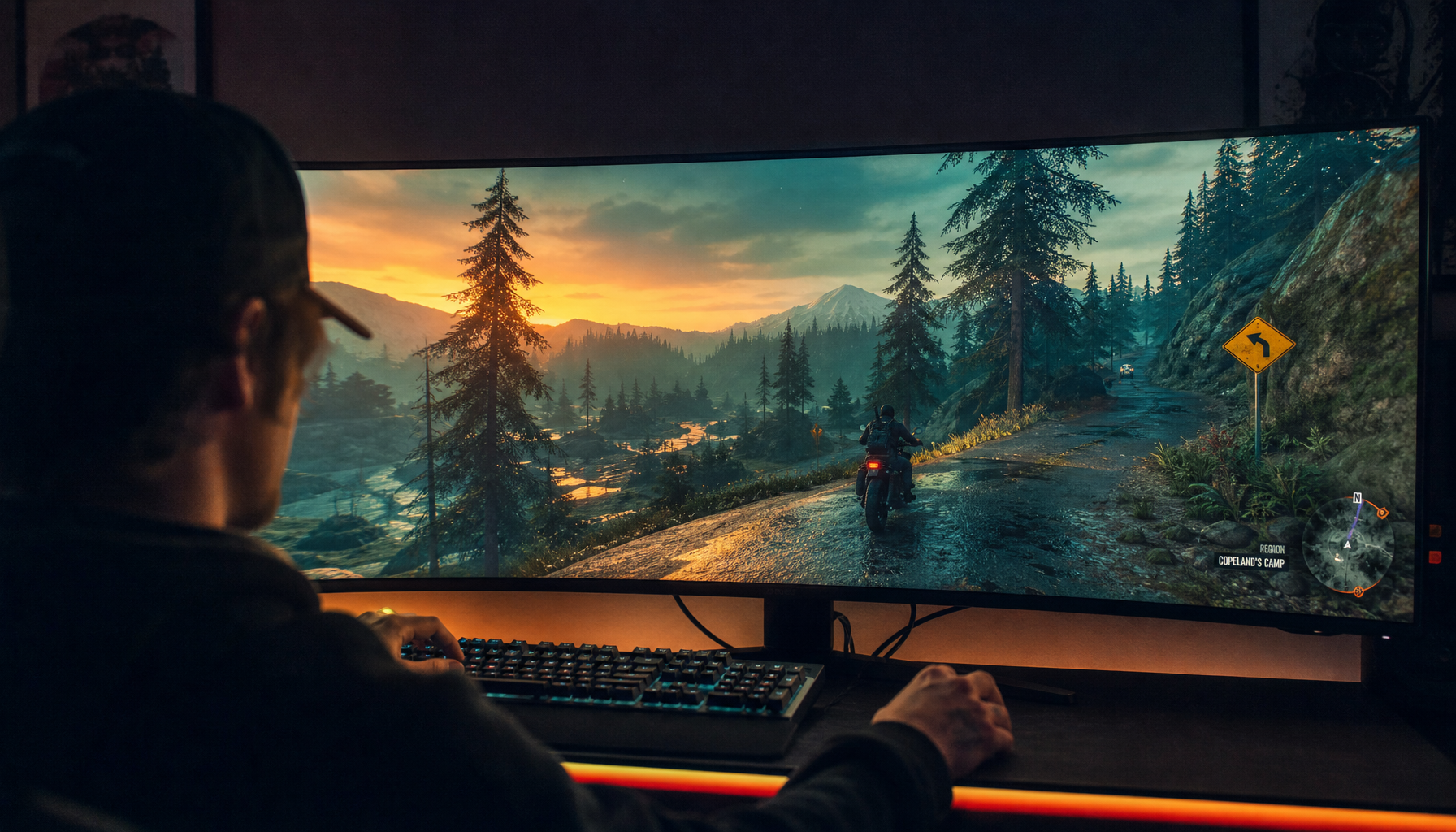
For gaming, lamination is more subtle than refresh rate or response time, but it still contributes to image immediacy. A laminated surface can make HUD elements, crosshairs, maps, and bright scene details feel more precise, especially on glossy OLED or high-end IPS displays. It will not turn a slow panel into an esports monitor, though. Competitive players still need to prioritize fast response, high refresh, and low blur; gaming monitor choice depends on resolution, refresh rate, response time, and GPU capability.
Lamination Versus Glare Resistance

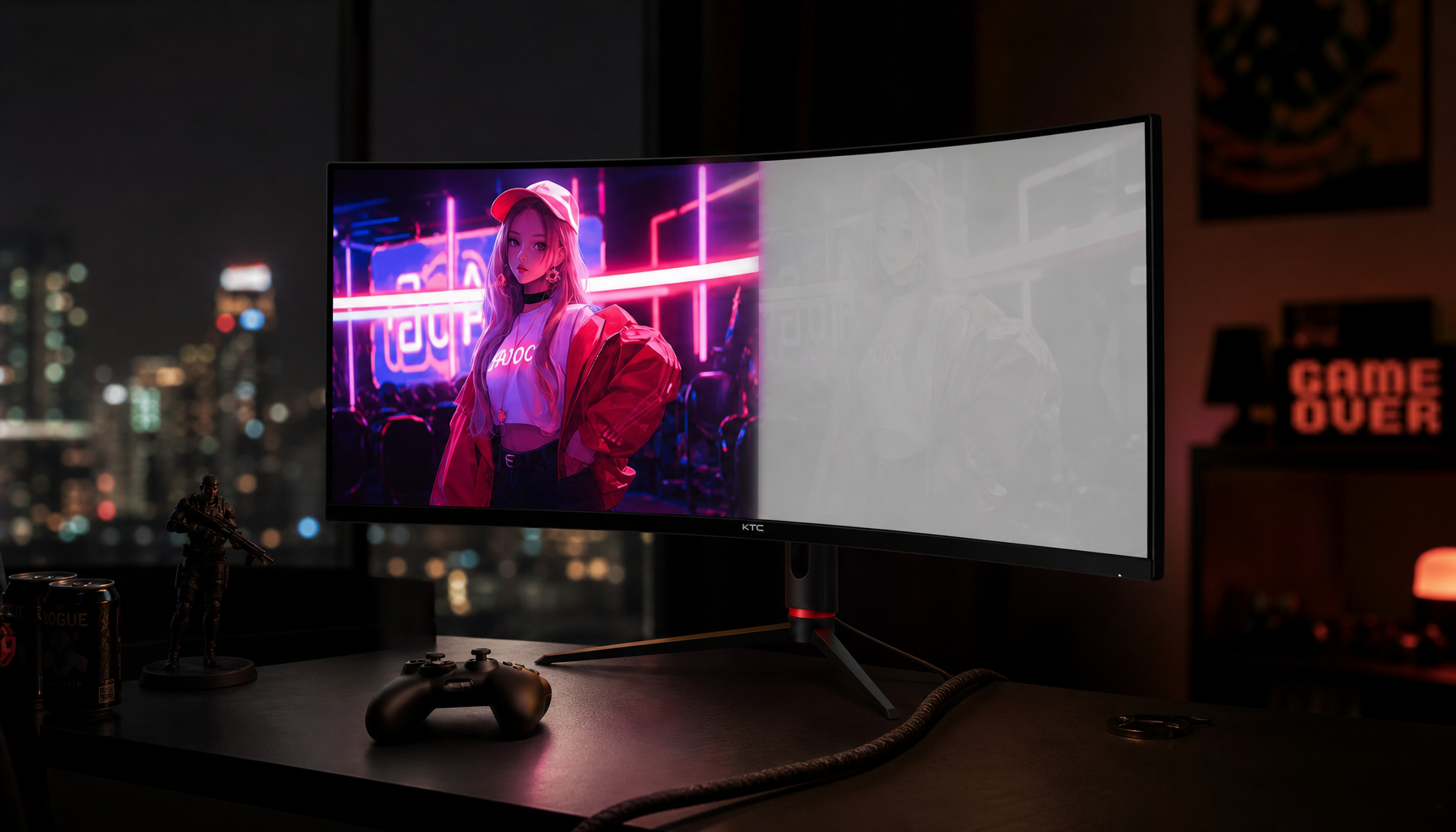
Lamination reduces internal reflections, but glare resistance is mainly controlled by the outer surface and coating. A glossy fully laminated display can look stunning in a controlled room and still reflect a bright window like a mirror. A matte non-laminated display may scatter reflections better but can look slightly hazier, especially over white backgrounds or fine text.
This is the tradeoff that matters at a desk. If your monitor faces a window, glare control can matter more than raw contrast. Office monitor guidance often treats the display as part of an ergonomic workstation, and a home-office monitor should be chosen with the wider workspace in mind, not only the panel spec. In practice, that means checking lamp position, window angle, brightness range, and whether the screen has a matte, semi-gloss, or anti-reflective finish.
A simple test helps. Place a black document or dark game menu on the screen, then look at it with your usual room lights on. If you see your keyboard, face, window frame, or ceiling light more clearly than the content, lamination alone will not solve the problem. You need a better surface treatment, higher usable brightness, or a changed lighting setup.
Why Panel Type Still Matters
Lamination is only one part of the optical system. IPS, VA, OLED, Mini-LED, and TN panels still behave differently because they produce contrast, color, motion, and viewing angles in different ways.
IPS is usually the safest all-around choice for office work, creative workflows, and mixed gaming because it holds color and brightness more consistently off-center. IPS panels are widely valued for color accuracy and broad viewing angles, which helps when you use dual monitors, share a screen, or sit slightly off-axis.
VA panels often deliver deeper blacks and higher contrast, making them strong for dark-room gaming, movies, and cinematic single-player titles. The tradeoff is that motion can smear more on some models, so a laminated VA screen may look rich and immersive in static scenes while still trailing in fast camera pans.
OLED and QD-OLED screens benefit strongly from clean optical presentation because their black levels and pixel response are already excellent. Current premium gaming recommendations increasingly favor OLED for contrast, color, and speed; OLED monitors are now common in high-end gaming picks, though price, text rendering, and burn-in risk remain practical concerns.

Use Case |
Lamination Benefit |
What Still Matters More |
Competitive gaming |
Cleaner HUD edges and a more immediate image |
Refresh rate, response time, input lag, GPU output |
Office productivity |
Sharper-feeling text and less surface depth |
Resolution, scaling, brightness, ergonomics |
Portable smart screens |
Better touch feel and less parallax |
Brightness, coating, USB-C power, stand angle |
Creative work |
More direct image presentation |
Color accuracy, resolution, calibration, panel uniformity |
Bright rooms |
Fewer internal reflections |
Matte or anti-reflective surface, brightness, room lighting |
Fully Laminated, Air-Gap, Matte, and Glossy Screens
A fully laminated glossy panel often gives the punchiest image. Colors look dense, blacks appear cleaner, and fine details seem closer to the glass. This is why many premium tablets, portable touch displays, and high-end monitor designs favor laminated construction.
An air-gap design can be cheaper and easier to service, but the image may look recessed. On touch displays, that gap can also make pen or finger input feel less direct. For basic office work, the difference may be acceptable if the monitor has good resolution, comfortable brightness, and a low-reflection coating.
Matte laminated displays aim for the best working compromise. They reduce some reflection while keeping the image optically close to the viewer. The weakness is that aggressive matte coatings can scatter light across the surface, which may create a grainy or slightly softened look on white documents.
Glossy laminated displays are more immersive in controlled lighting. They suit gaming rooms, media setups, and color-rich content, especially when paired with OLED, QD-OLED, or high-quality IPS. In a bright office, however, the same gloss can become a liability.
Buying Advice for Gaming, Office, and Portable Displays
For pro gaming monitors, treat lamination as an image-quality enhancer, not a performance spec. Start with your target resolution and refresh rate, then check panel response and real testing. Detailed gaming monitor guidance emphasizes panel type, size, resolution, refresh rate, adaptive sync, because those factors decide whether the monitor fits the system.
For office productivity displays, prioritize readable text first. A 27-inch 4K monitor with good scaling can be a sharper daily work tool than a larger low-density screen, even if both are laminated. If you handle documents, dashboards, and browser windows all day, clarity comes from pixel density, proper scaling, stable viewing angles, and glare-controlled placement.
For portable smart screens, lamination deserves more weight. These displays are used closer to the eyes, moved between lighting conditions, and often touched directly. A laminated portable display feels more premium because the image and input plane appear aligned. Still, if it cannot get bright enough in a coffee shop or airport lounge, the optical stack will not rescue visibility.

Practical Setup Checks After You Buy
Set the monitor to its native resolution first. Running below native resolution softens the image, which can make a well-laminated panel look worse than it is. Then adjust scaling until text is comfortable without forcing you to lean forward.
Match brightness to the room. A screen that is too dim in daylight looks dull and reflective; a screen that is too bright at night causes fatigue. Increase contrast enough for text separation, but avoid crushing dark detail in games or making white documents harsh.
Finally, fix the room before blaming the panel. Move the display so windows sit to the side instead of directly behind you or in front of the screen. Tilt the monitor slightly to redirect reflections away from your eyes. For portable screens, even a few degrees of stand adjustment can turn an unusable glossy reflection into a clean working angle.

FAQ
Does full lamination make a monitor sharper?
It can make the image look sharper because there is less visual separation between the surface and the pixels. Actual sharpness still depends on resolution, pixel density, scaling, panel quality, and whether the monitor is running at native resolution.
Does lamination reduce glare?
It can reduce internal reflections, but glare resistance depends more on the outer coating and room lighting. A glossy laminated screen may still reflect lamps and windows strongly.
Is a laminated screen worth it for gaming?
It is worth having on a premium gaming display, especially for immersive OLED, QD-OLED, IPS, or portable gaming screens. For competitive play, refresh rate, response time, and input lag should come first.
Is matte or glossy better for office work?
Matte or semi-gloss is usually easier for long work sessions in bright rooms. Glossy laminated screens can look clearer and richer, but they require better lighting control.
A well-laminated panel gives the image a cleaner, more immediate feel, but it is not a magic fix for glare or weak specs. Buy it as part of the whole display system: resolution for detail, panel type for contrast and color, coating for reflections, and setup discipline for daily comfort.