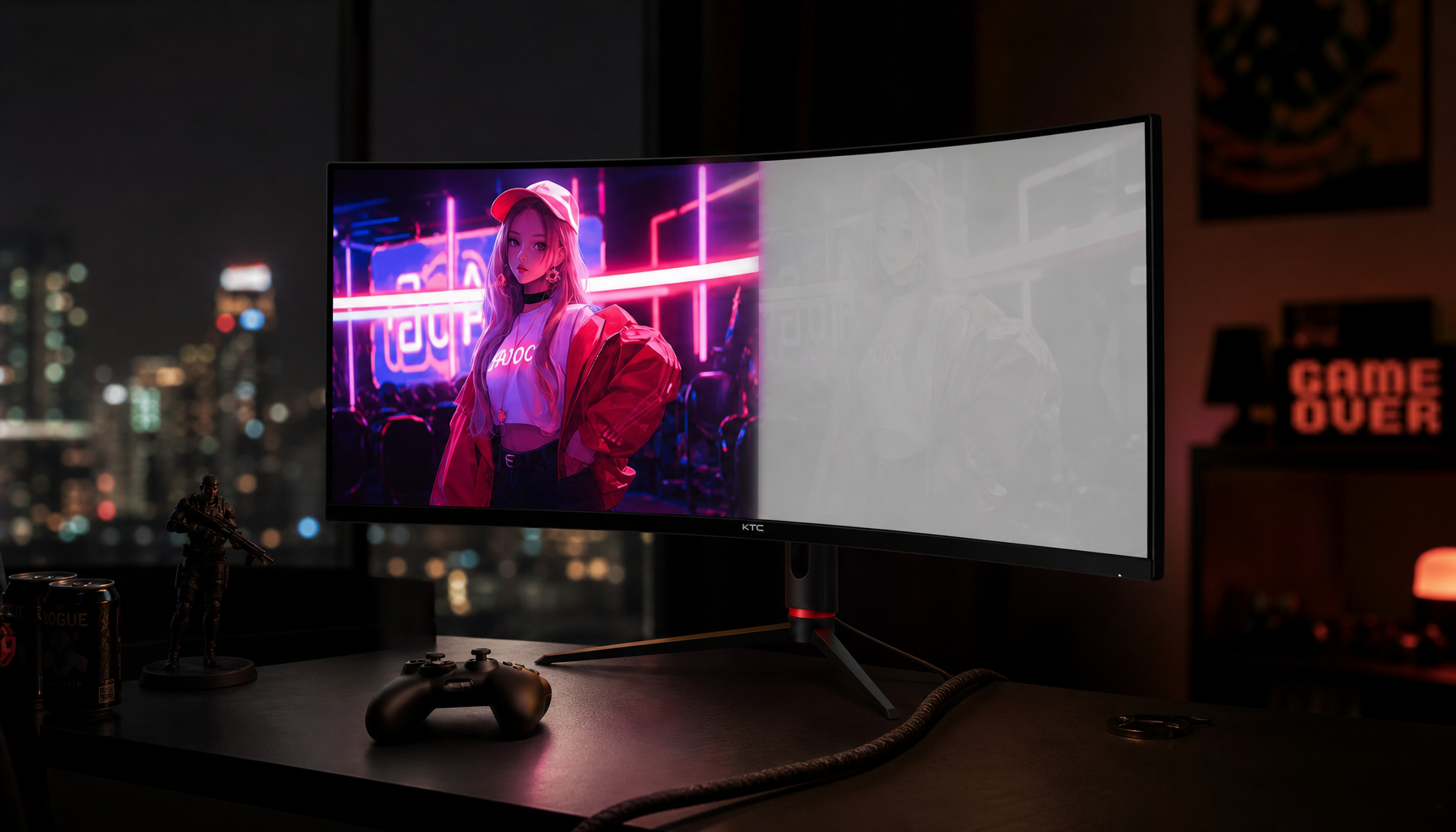
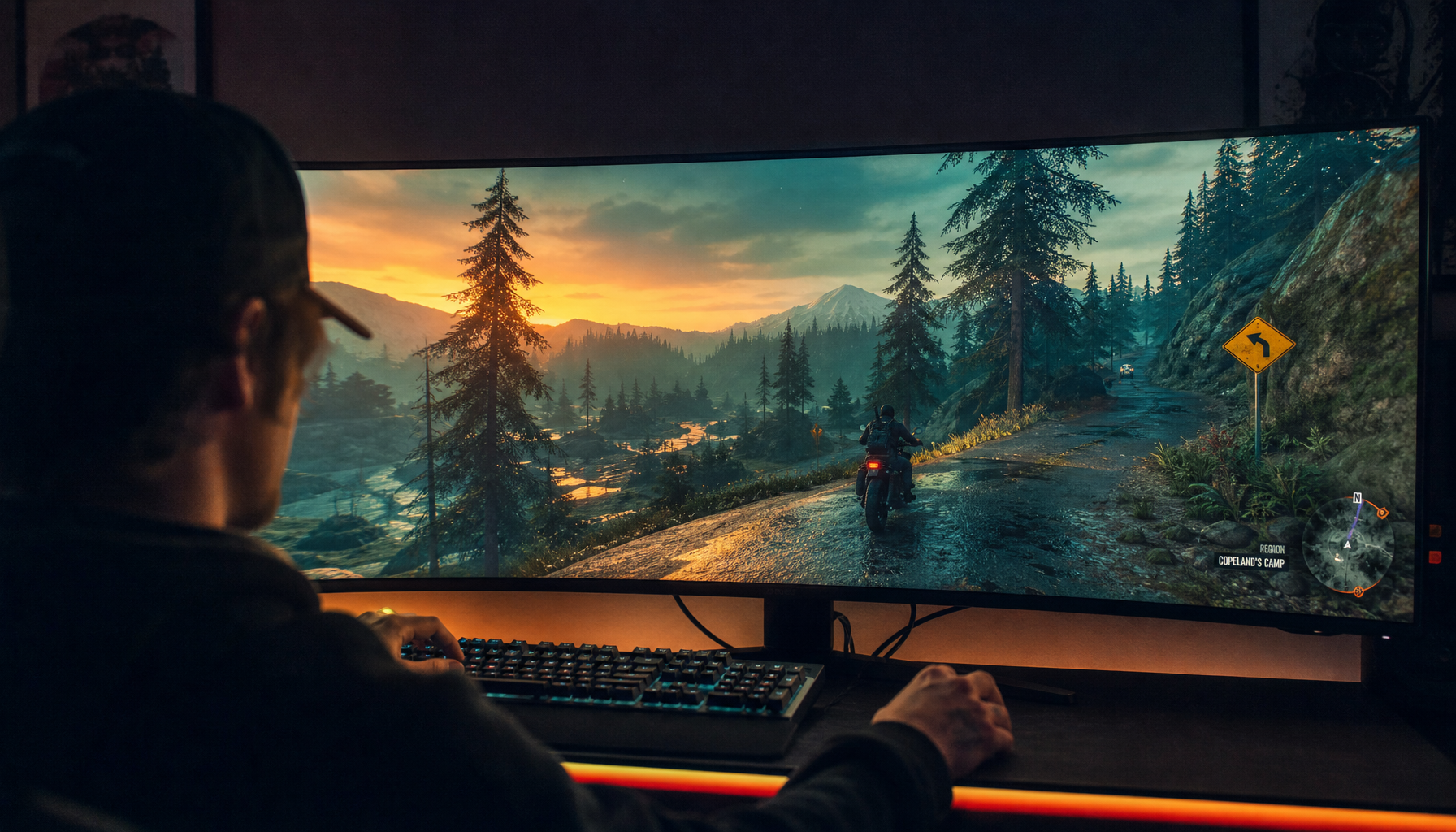
Supersampling improves image quality by rendering a frame at a higher resolution than your screen can show, then shrinking it back down so each final pixel contains cleaner averaged detail. The result is smoother edges, reduced shimmer, and a more refined image, but it costs GPU performance.
Do distant railings, hair strands, cockpit lines, or thin UI edges look jagged even when your monitor is set to its native resolution? In real display tuning, supersampling is one of the most visible upgrades when a GPU has performance headroom because it improves the whole rendered frame, not just obvious edges. Here is what it does, when it is worth enabling, and when a sharper monitor or different anti-aliasing method is the better value.
What Supersampling Means
Supersampling, often called SSAA, is an anti-aliasing method that renders an image above the display’s final resolution and then downsamples it to the target output. A higher render resolution gives the GPU more sample data to average into each final pixel, which helps reduce stair-stepping, crawling edges, and fine-detail breakup.
Think of a 1080p monitor showing a game rendered internally at 4K. Your screen still has 1,920 x 1,080 physical pixels, but the game engine first calculates a much denser image, then compresses that information into the 1080p frame. That extra information is why a diagonal sword edge, chain-link fence, or distant power line can look less harsh.
This is not the same as owning a native 4K monitor. A physically higher-resolution panel has more real pixels and higher pixel density, so it can show more actual detail. A forum analysis makes the practical distinction clearly: native higher resolution provides clarity and definition that supersampling cannot fully recreate on a lower-resolution screen.
How Supersampling Works Step by Step

The process starts with the game or graphics application rendering the scene at a higher internal resolution than the monitor output. For example, a 2,560 x 1,440 screen might render at 3,840 x 2,160 internally, or a 1080p display might render at 1440p or 4K.
Next, the rendered frame is filtered and downsampled. During this stage, multiple high-resolution samples are averaged into each final display pixel. If four or more samples describe the edge between a dark object and a bright sky, the final pixel can represent that transition more gracefully instead of snapping to a hard, blocky edge.
Finally, the image is output at the monitor’s native resolution. A good downsampling filter matters because poor filtering can make the image look soft or blurry. That is why supersampling controls often include a smoothing or sharpness adjustment: too little filtering can leave aliasing behind, while too much can smear texture detail.
Why It Improves Image Quality
The main win is edge quality. Supersampling reduces the jagged “stair-step” look on diagonal and curved edges because it evaluates more detail before choosing the final pixel color. On a productivity display, the same principle explains why higher pixel density makes text and lines look cleaner; on a gaming monitor, it helps thin geometry look less artificial.
The second win is coverage. Unlike some anti-aliasing methods that focus mainly on polygon edges, SSAA can improve geometry, textures, shader effects, alpha-tested foliage, fences, wires, and other fine detail. That broad coverage is why SSAA works across more visual problem areas than many lighter anti-aliasing options.
The third win is perceived stability. When you pan the camera slowly across a roofline or a field of grass, supersampling can reduce the harsh sparkle caused by undersampled detail. It will not fully eliminate temporal aliasing, especially flicker during motion, but it often makes still frames and slow movement look more refined.
The Performance Cost Is Real

Supersampling is expensive because the GPU must render pixels the monitor never directly displays. If you move from 1080p output to a 4K internal render, you are asking the system to process roughly four times as many pixels per frame. A technical summary notes that common supersampling factors can push workloads to 4x, 9x, or 16x the final pixel count, which can stress GPU shading, memory bandwidth, and VRAM.
Here is the practical version: if your game already runs at 150 FPS on a 144Hz monitor, modest supersampling may be a smart image-quality upgrade. If your game barely holds 60 FPS, supersampling will likely make motion feel worse, even if still screenshots look cleaner.
Setting Choice |
Image Benefit |
Performance Cost |
Best Use |
Native resolution only |
Cleanest baseline scaling |
Lowest |
Competitive play or weaker GPUs |
Light supersampling |
Better edges and fine detail |
Moderate |
1080p or 1440p screens with GPU headroom |
Heavy supersampling |
Very smooth image |
High to extreme |
Screenshots, older games, cinematic play |
Native higher-resolution monitor |
Real pixel-density gain |
Depends on resolution |
Long-term clarity upgrade |
Supersampling vs. Native Resolution
A strong monitor strategy starts with native resolution. Gaming display guidance consistently recommends matching monitor specs to the GPU’s realistic output instead of chasing one headline number. A 1440p screen gives nearly 78% more pixels than 1080p, which is why 27-inch 1440p remains a high-value sweet spot for many PC gamers.
Supersampling can make a 1080p screen look cleaner, but it cannot turn that panel into a true 1440p or 4K display. Physical pixels still define how much fine text, UI detail, and image structure the screen can resolve. Monitor testing guidance frames this through pixel density: a 27-inch 4K monitor is sharper than a 27-inch 1440p monitor because the same screen area contains more pixels.
For value-oriented buyers, the decision is practical. If you already own a capable GPU and a decent 1080p monitor, supersampling is a free test. If you are buying a display for the next several years, a 1440p high-refresh monitor may deliver a more consistent clarity gain than forcing supersampling on a lower-resolution panel.
Supersampling vs. Other Anti-Aliasing Options

SSAA is the quality-first approach, but not always the smartest one. MSAA usually costs less because it focuses more on geometry edges. FXAA is fast and broadly compatible, but it can blur fine detail. TAA can handle motion better, but it may introduce softness or ghosting depending on implementation.
Modern games complicate the term “supersampling” because some reconstruction features render at a lower internal resolution and then intelligently rebuild or upscale the image. A gaming article argues that supported players should often enable these technologies because effective supersampling can raise frame rates with little visible loss in quality. That recommendation is useful, but it describes modern reconstruction more than classic SSAA, which traditionally improves quality by rendering above the output resolution.
The practical rule is simple: use classic supersampling when you have extra GPU power and want the cleanest image. Use modern reconstruction or upscaling when the game supports it and you want a better balance between clarity and frame rate. Use native resolution with lighter anti-aliasing when latency and stable FPS matter most.
When Supersampling Makes Sense

Supersampling is strongest in older games, stylized games with hard edges, racing and flight sims with thin distant lines, and single-player titles where image quality matters more than peak FPS. It also helps when a monitor is large enough that 1080p pixel structure is easy to notice, such as a 27-inch 1080p gaming display viewed from a typical desk distance.
It is less attractive for esports shooters where every frame matters. A 240Hz or 360Hz monitor only feels valuable when the PC can feed it enough frames. Monitor testing notes that high-refresh benefits depend on system output and bandwidth, while variable refresh rate can reduce tearing when frame rates fluctuate. If supersampling drags your FPS far below your refresh target, the smoother edges are usually not worth the lost responsiveness.
For office productivity, supersampling is not the main lever. Text clarity comes more from native resolution, pixel density, scaling settings, panel quality, and proper sharpness calibration. A portable smart screen or secondary work display should be run at native resolution first; supersampling is mainly a rendering technique for games and graphics workloads, not a cure for poor desktop scaling.
How to Tune It on a Gaming Monitor
Start at native resolution and confirm the monitor is running at its highest refresh rate. Gaming settings advice puts the baseline clearly: use the monitor’s native resolution to avoid scaling issues and preserve sharpness before adding extra processing.
Then enable supersampling in the game, GPU control panel, or render-scale menu if available. Begin with a modest scale rather than jumping straight to 4K on a 1080p screen. Watch three things at once: edge shimmer, texture sharpness, and frame-time stability. A setting that looks great in a static scene may feel worse once explosions, weather, or crowds increase GPU load.
Use a real scene as your test pattern. Stand near thin geometry, foliage, text, or distant fences, then pan slowly. If the image becomes cleaner without pushing FPS below your comfort target, keep it. If it looks softer, reduce smoothing or try a lower render scale. If input feels heavier, turn it down and prioritize refresh rate, adaptive sync, or a better native-resolution panel.
Pros and Cons
Supersampling’s advantage is clean, comprehensive image improvement. It attacks aliasing at the source by giving the final frame more information, which is why it can improve edges, transparent textures, shader detail, and fine scene elements in a way many cheaper techniques cannot.
Its weakness is efficiency. You may spend enormous GPU power for a subtle gain, especially on a high-pixel-density monitor where native clarity is already strong. It can also soften the image if the downsampling filter is poor, and it does not fully solve motion-related flicker.
For a performance-driven setup, supersampling should be treated like a premium graphics setting, not a default switch. It belongs after you have already chosen the right resolution, refresh rate, panel type, and adaptive-sync behavior for your actual games.
FAQ
Does supersampling make 1080p look like 4K?
No. It can make 1080p cleaner and smoother, but it cannot add physical pixels to the panel. A true 4K monitor still has more real display detail.
Is supersampling better than anti-aliasing?
Classic SSAA often produces higher overall image quality than lighter anti-aliasing methods, but it costs much more performance. For competitive play, lighter AA or modern reconstruction may be the better trade-off.
Should I use supersampling on a 1440p monitor?
Yes, if your GPU has spare performance and you care more about visual polish than maximum FPS. For many gamers, 1440p native at high refresh is already the better baseline, and supersampling should be added only when frame times stay stable.
Final Word
Supersampling is one of the cleanest ways to make a rendered image look more refined, but it is not magic and it is not free. Use it when your GPU has headroom, your game shows visible jaggies or shimmer, and your monitor is already configured correctly at native resolution and full refresh rate. For the best long-term display experience, pair smart rendering settings with the right panel, pixel density, and refresh target.