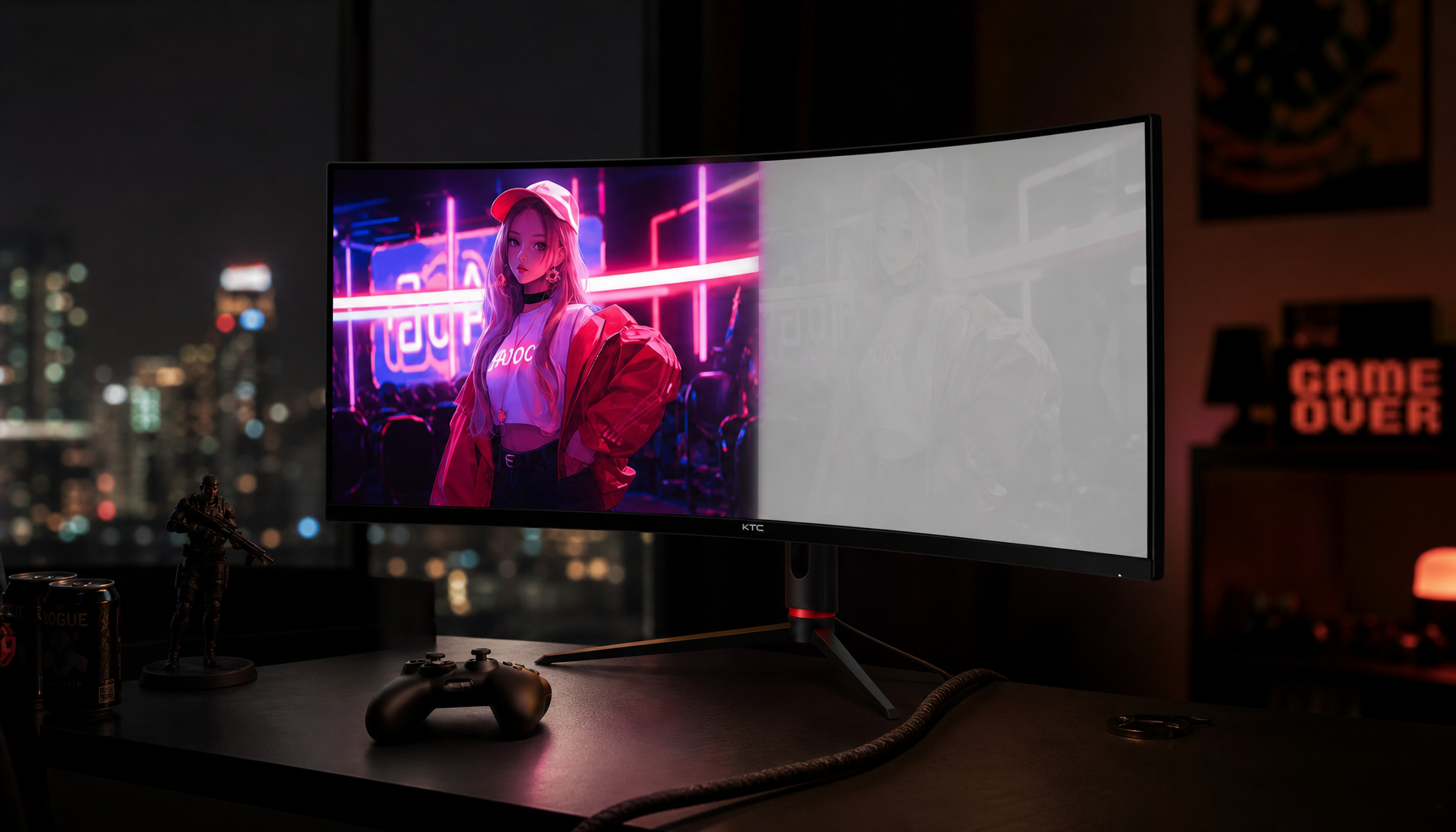
IPS monitors can deliver wide viewing angles and strong color consistency, but small manufacturing tolerances across stacked LCD layers can make two units of the same model show different corner glow, edge bleed, or gray-screen shading.
Why Same Model Does Not Mean Same Uniformity
An IPS panel is not a single sheet of glass doing one job. It combines a liquid-crystal layer, polarizers, color filters, diffuser films, a light guide or direct backlight, and a chassis that holds everything under controlled pressure.

That matters because IPS improves viewing-angle stability, but it still depends on a backlight; LCD pixels modulate light rather than creating it themselves. In practical terms, IPS panel technology gives the monitor its color and angle behavior, while the backlight system determines how evenly light reaches the viewer.
Manufacturing tolerances enter at every layer. A slightly uneven diffuser, a tighter bezel corner, a shifted light guide, or minor adhesive tension can brighten one edge or dim one quadrant. None of these parts has to be broken for the effect to show up on a black test screen.
The Tolerance Stack: Where Variation Starts
Backlight uniformity is a tolerance stack problem. Each part may pass inspection alone, but the assembled monitor can still show variation because tiny deviations add up.
Small LED brightness differences can make one strip or zone look stronger than another. In edge-lit designs, light guide alignment is especially important because the LEDs sit around the border and must spread light across the full panel. Diffuser and prism films can create patches when spacing or pressure varies, while tight bezel corners may increase visible leakage. Panel curvature or chassis flex can also matter, especially on large or portable screens.

Direct-lit systems place LEDs behind the panel and can improve edge-to-corner consistency, while edge-lit displays trade some uniformity risk for slimmer, lighter construction.
For a gaming monitor, that tradeoff is familiar: thin chassis, high brightness, fast refresh tuning, and aggressive pricing all compete with perfect optical evenness.
IPS Glow, Backlight Bleed, and Black Uniformity Are Different
Not every bright corner is the same defect. IPS glow changes as your head position changes; backlight bleed tends to stay fixed in the same location. Black uniformity describes how evenly the monitor presents dark scenes across the whole screen.

This distinction helps avoid bad buying decisions. A corner haze that fades when you sit centered is likely IPS glow. A bright edge patch that remains in the same place at normal brightness is more likely physical light leakage.
IPS is still valued because it offers wide viewing angles and color stability, but its typical weakness is lower dark-room contrast than VA or OLED. For buyers comparing panels, LCD panel types differ meaningfully: VA usually has deeper blacks, OLED avoids backlight uniformity issues entirely, and IPS balances speed, color, and viewing angle.
A faster IPS monitor is not automatically less uniform, but high-refresh budget models often make harder tradeoffs among panel grade, backlight design, coating, and factory tuning.
How to Judge a Unit Without Overreacting
A smart test should match real use, not punish every LCD for failing a pitch-black torture scene at maximum brightness. Warm the monitor up, reset extreme image modes, disable HDR or dynamic contrast for testing, then check black, gray, and white screens from your normal seated position.

- Test after 20 to 30 minutes of warm-up.
- Set brightness near normal desktop use, often 120 to 150 nits.
- View straight-on from your usual distance.
- Compare black, gray, and white screens, not black only.
- Decide based on real content, not camera exposure.
Calibration can tune white point, gamma, and color response, but it cannot physically re-space diffuser films or loosen a pressure point. When severe uniformity remains visible after reasonable setup, replacement is the realistic fix; non-uniform screen discussions consistently point to hardware variation as the limit.
What This Means When Buying an IPS Monitor
Backlight uniformity variation is not random; it is manufacturing tolerance made visible by dark scenes, high brightness, and large screen area. A 27-inch gaming IPS panel has more surface area to keep even than a smaller portable screen, and an ultrawide gives your eyes more off-axis territory to judge.
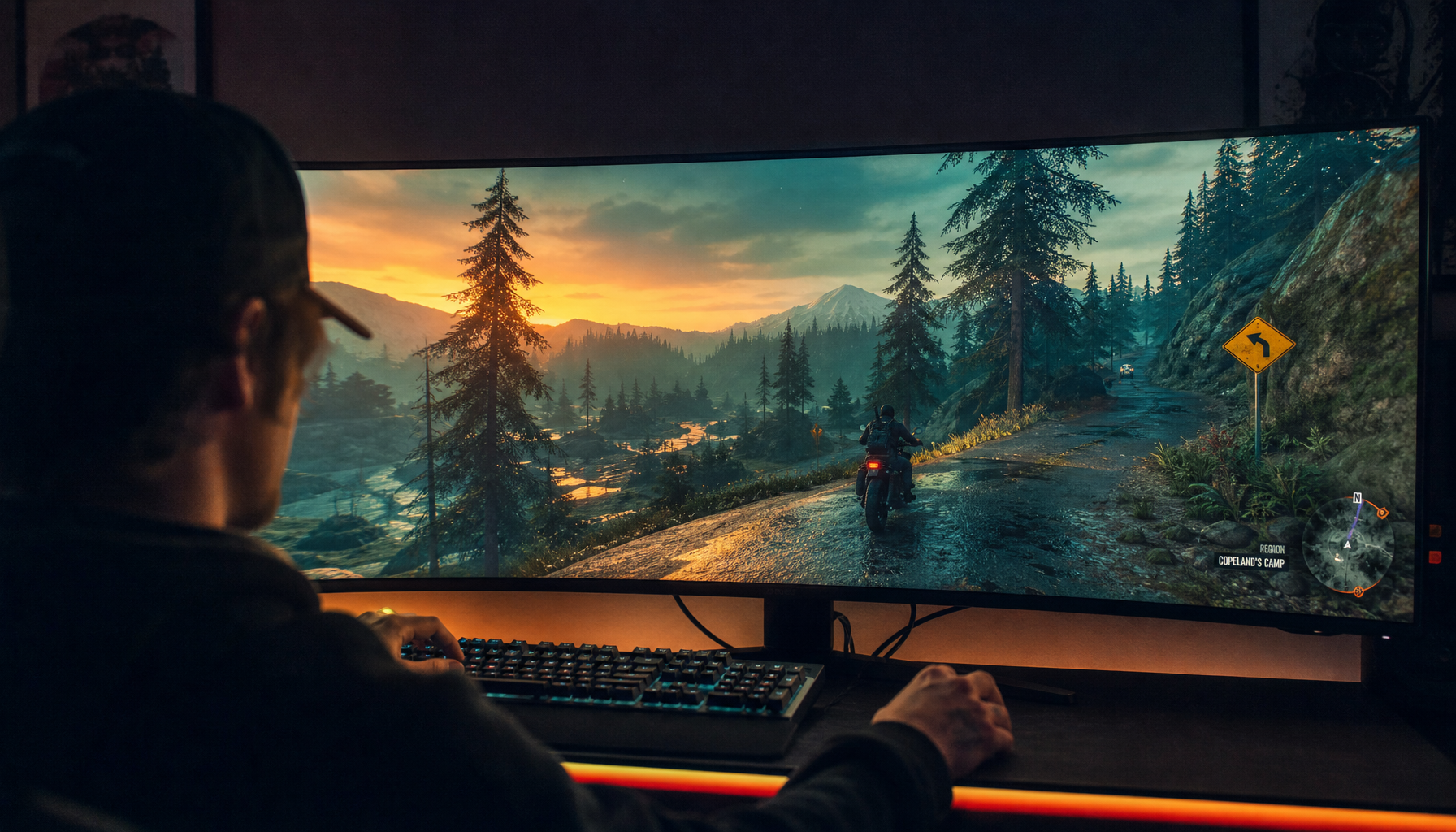
For competitive gaming, prioritize refresh rate, response tuning, and input feel, but check the return window because panel lottery still matters. For office productivity, uniform gray and white screens matter more than perfect black. For creative work, uniformity should sit beside gamut, calibration support, and resolution on the shortlist.
The best IPS choice is not the one with zero variation. It is the one whose tolerances stay invisible in your actual games, spreadsheets, timelines, and long work sessions.