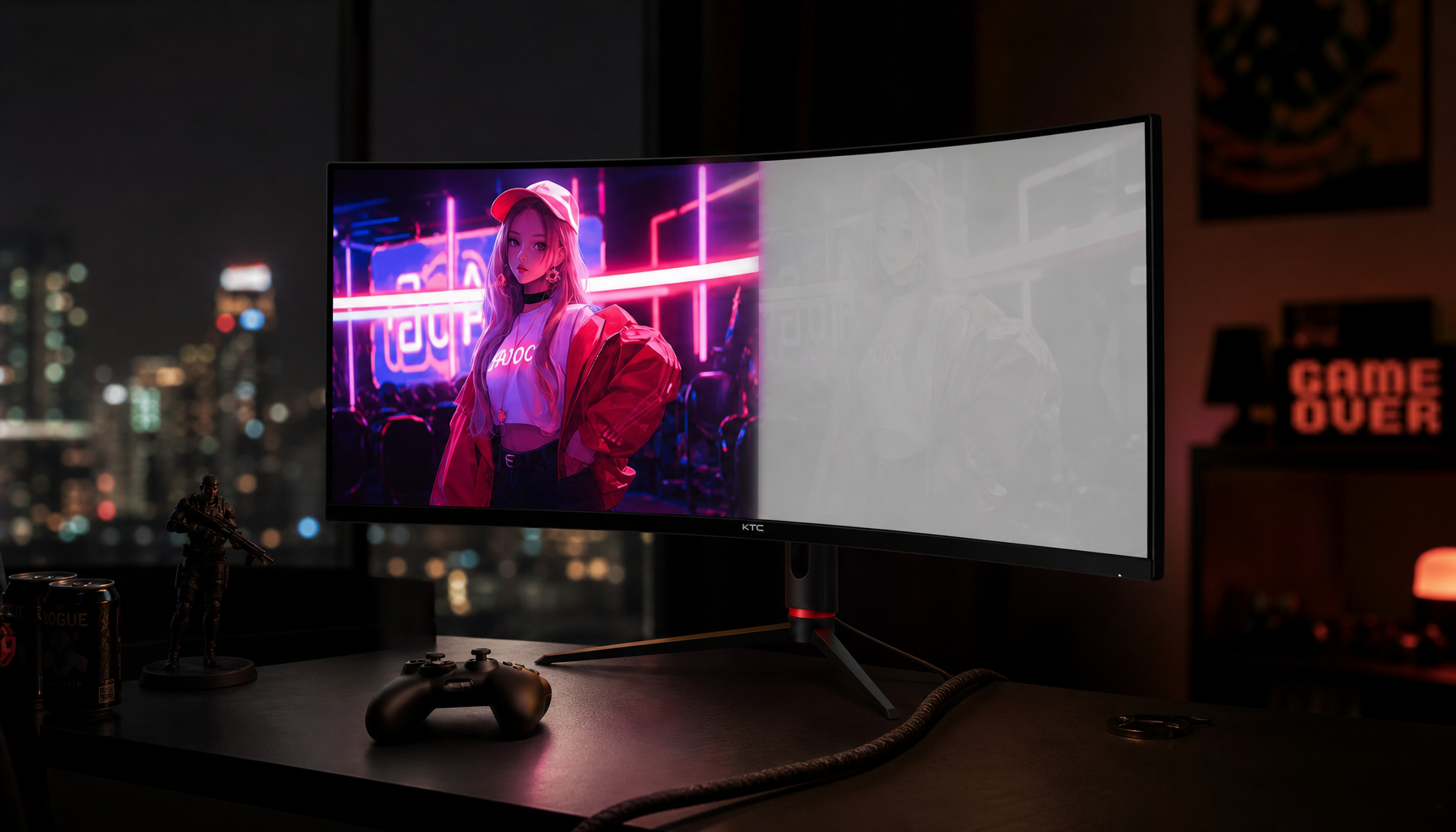
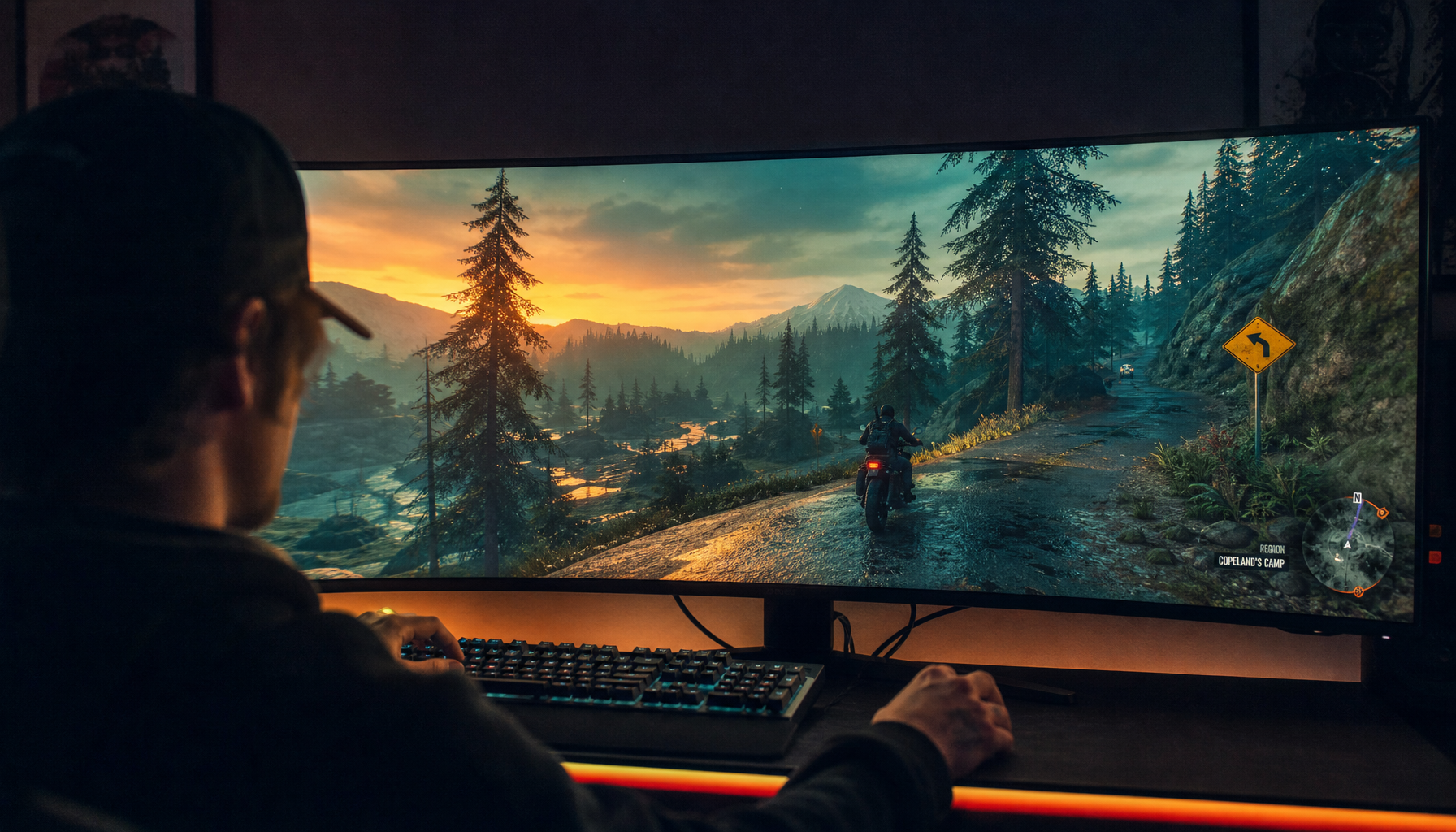
Ambient lighting can make the same monitor look warmer, cooler, flatter, or more saturated even when the on-screen settings never change. For gaming monitors, ultrawide monitors, and portable displays, room light is part of the picture quality.
If your monitor looks balanced in the morning but oddly harsh at night, the panel may not be the only reason. A centered seat about 2 to 2.5 ft from the screen, controlled glare, and consistent room lighting can noticeably reduce color shift on larger displays. The sections below show what changes, which monitors are most affected, and what setup choices improve the image in a real room.

Why Room Lighting Changes What You See on a Monitor
Your eyes adapt to the room, not just the screen
Ambient light intensity changes how display colors are perceived, which is why a gaming monitor can look darker and lower-contrast in a bright office but brighter and punchier in a dim bedroom. In high room light, blacks lose depth and highlights feel less dramatic. In very low light, the opposite happens: the same screen can feel too bright, with exaggerated contrast and more visible eye fatigue.
Color constancy helps your visual system discount some shifts in illumination, but that compensation is imperfect on emissive displays. Paper reflects room light, while a monitor emits its own light, so your brain is balancing two different signals at once: the screen’s output and the room’s overall color cast. That is why a white webpage can look slightly blue under cool LEDs and slightly yellow under warm lamps even when the monitor is unchanged.
Room surfaces and mixed bulbs also change perceived color balance, because reflected light picks up the hue of walls, desks, and nearby decor. A white monitor bezel beside a beige wall and a warm lamp can make a neutral display look cooler by comparison. The effect is subtle on a well-controlled desk, but it becomes obvious on large screens in bright, colorful rooms.
Which Displays Show Ambient-Light Problems the Most
Viewing-angle behavior changes color, brightness, and contrast off-center, so panel type matters before you even adjust room lighting. TN panels tend to shift fastest, many VA panels hold contrast well but can lose shadow detail off-angle, IPS panels stay more consistent across the screen, and OLED handles off-angle color best. If you buy a display mainly for competitive gaming or creator work, room lighting issues are easier to manage on IPS and OLED because the panel itself is more stable.
Screen size and placement make ultrawides more sensitive to off-axis viewing. On a 34-inch ultrawide or 49-inch super-ultrawide, the edges are already being seen at a slight angle even when you sit centered, so bright side windows and overhead lights compound the problem. Portable monitors add another variable: they move from kitchen tables to hotel desks to coffee shops, which means their apparent color is often driven more by the environment than by the panel spec sheet.

Display type |
Common ambient-light issue |
Why it happens |
Best setup priority |
TN gaming monitor |
Fast color and brightness shift off-center |
Narrow viewing angles |
Keep seat centered and control overhead light |
VA gaming monitor |
Deep blacks flatten under glare |
Strong contrast is easily washed out by reflections |
Reduce direct light and use bias lighting |
IPS ultrawide monitor |
Edges can look slightly uneven |
Wide screen increases off-angle viewing |
Sit about 2 to 2.5 ft back and keep lighting even |
OLED monitor |
Reflections can dominate in bright rooms |
Excellent panel stability does not stop surface glare |
Avoid window-facing placement |
Portable monitor |
Color changes from location to location |
Room light changes more than the display does |
Use neutral lighting and lower brightness swings |
Which Room Lighting Helps and Which Hurts
Light source color changes undertones, saturation, and apparent warmth. Warm bulbs around 2,700 K to 3,000 K can make whites look creamier and reduce the crispness of blues and cool grays, while 4,000 K to 5,000 K lighting usually looks cleaner and closer to daylight. For monitor buying and setup, that means a display that looks “too warm” may simply be sitting in a warm room.
Natural light direction changes color appearance through the day, which matters if your desk is near a window. Morning light can lean cooler, midday light can wash colors out, and late-day sun can make everything look warmer. A monitor tuned to look perfect at 10:00 AM can feel oversaturated or yellow by early evening if the room itself shifts dramatically.
Uniform, glare-free lighting supports better visual performance. In practice, that means diffuse ambient light, blinds or curtains on bright windows, and fixtures that do not shine into your face or directly onto the panel. A neutral wall behind the monitor and a roughly mid-tone background also help, which is why color-critical desks often avoid bright white walls, glossy posters, or mixed warm-and-cool bulbs.
Bias Lighting, Glare Control, and Desk Placement
Bias lighting can reduce visual fatigue and improve perceived contrast when you use a monitor in a dim room. The idea is simple: put a neutral light behind the screen so your eyes are not jumping between a bright panel and a dark wall. It does not turn an LCD into OLED, but it usually makes black levels feel more stable and long evening sessions feel less harsh.

Direct light on the screen causes uneven reflections that distort perception, especially on glossy or semi-gloss surfaces. A practical example is a screen light bar or rear-mounted light placed so the beam misses the display surface. One reported setup used a single rear light bar on a 27-inch monitor successfully, which lines up with what many desk users find in practice: one controlled source works better than several bright, competing ones.

Monitor placement matters almost as much as calibration. Sitting about 20 to 30 inches away, with the top of the screen at or slightly below eye level, reduces angle-related tint shifts and eye strain. On an ultrawide, moving back even a few inches often improves edge consistency more than another round of menu tweaking.
Settings and Calibration That Actually Improve Perceived Accuracy
Factory settings often prioritize punch over accuracy, so many monitors ship too bright, too vivid, or with extra processing enabled. If your display has an sRGB mode or a clearly labeled accurate preset, start there before touching advanced controls. Also disable night modes or ambient-light compensation features when you are judging color, because they can change the image as the room changes.
Basic calibration targets give you useful guardrails for monitor setup. A white point around 6,500 K, gamma near 2.2, and white-balance error under dE 3 are sensible benchmarks for most web, gaming, and general-use displays. For buyers comparing models, a monitor that covers close to the sRGB gamut without overshooting badly and still allows flexible brightness control is usually easier to live with in changing room light.
Ambient-light-aware calibration can improve the visual match to your room, but it is a tradeoff. Tools that adjust tone response, saturation, or contrast based on current room light can make the image feel more natural in that moment, especially if you switch between day and night work. For strict color-critical use, though, stable room lighting plus hardware calibration is still the cleaner approach because automatic compensation can reduce pure colorimetric accuracy.
Buying Guidance for Real Rooms
Panel limitations cannot be calibrated away, so the best buying decision starts with your room. If you play in a bright room with side windows, prioritize strong reflection handling, wide viewing angles, and enough brightness headroom. If you mostly game at night, look harder at low-brightness control, comfort, and whether the display works well with bias lighting.
Room brightness changes how bright “correct” actually feels, which is especially important for portable monitors and secondary displays. A small portable monitor that looks fine in a hotel room may appear weak and washed out in a sunlit office. For that use case, matte finish, decent brightness flexibility, and a reliable standard color mode often matter more than chasing the widest possible gamut.
FAQ
Q: Why does my monitor look yellow at night?
A: Warm room lighting, lamp reflections, and night-mode features can all push your eyes toward a warmer reference point. The monitor may be unchanged, but your perception is not.
Q: Is bias lighting worth it for a gaming monitor?
A: Usually yes, especially for evening use. It can reduce eye strain and improve perceived contrast, but it will not fix poor viewing angles, low native contrast, or strong reflections.
Q: Can calibration fix glare or off-angle color shift?
A: No. Calibration can improve white point, gamma, and brightness balance, but glare is a room problem and off-angle shift is a panel behavior problem.
Practical Next Steps
- Put the monitor where no window or lamp shines directly on the screen.
- Keep room lighting consistent instead of mixing very warm and very cool bulbs.
- Sit centered at about 20 to 30 inches, with the top of the display at or just below eye level.
- Start with the monitor’s most accurate preset, then adjust brightness for your usual room conditions.
- Add neutral bias lighting behind the display if you use the monitor at night.
- For new purchases, favor IPS or OLED for better color consistency, especially on ultrawide monitors.
References
- How to improve your WFH lighting to reduce eye strain
- Why doesn’t the ambient lighting condition change the perception of colors we see on a monitor?
- Viewing Angle & Color Accuracy for Gaming Monitors
- Color Accuracy For Newbies - Tips & Tricks
- The Effects of Light on Color
- Ambient Light Smart Control: What is it…what does it do?
- Influence of lighting on visual performance
- How Lighting Affects Interior Design Colors
- Ambient lighting (bias lighting) for monitors
- Monitor Color Accuracy