Color depth controls how smoothly a monitor renders shades, while color gamut controls how wide a range of colors it can reproduce. They work together, but they solve different image-quality problems.
You have probably seen two displays side by side where one looks richer and the other looks smoother, and the spec sheet does not make it obvious why. In real monitor buying, the difference shows up in visible banding, oversaturated colors, and whether HDR or wide-color claims actually translate into a better gaming or work setup. This guide will show you what each spec changes on screen, which one matters more for your use case, and how to judge those claims before you buy.
What Each Spec Actually Means on a Monitor
Color depth is about tonal steps
Color depth is the number of bits used to describe a pixel’s color, which is why it affects how smoothly a monitor transitions from one shade to the next. On a display, that is most obvious in gradients like blue skies, fog, skin tones, smoke effects in games, and shadow ramps in dark scenes.
An 8-bit display typically gives each RGB channel 256 levels, while 10-bit raises that to 1,024 levels per channel, increasing total combinations from about 16.7 million to about 1.07 billion. In practical monitor terms, that does not mean you suddenly “see a billion colors” in normal desktop use; it means you are less likely to see hard steps between shades when the source, GPU path, and panel processing support it.
Color gamut is about color range
Color gamut is the range of colors a display can reproduce. Instead of counting tonal steps, it describes how far the monitor can reach into spaces such as sRGB, a print-focused color space, or DCI-P3.
For monitor buyers, sRGB is the baseline for most web, desktop, and standard video content. DCI-P3 matters more for modern HDR media and many premium gaming monitors, while a print-focused color space is more relevant for print-focused photography workflows than for most gaming or home-office setups. A wider gamut can make reds, greens, and saturated highlights look more vivid, but it does not improve gradient smoothness by itself.

Why They Are Often Confused
Bigger color numbers can hide the real tradeoff
Bit depth affects smoothness within the gamut, not the size of the gamut itself. That is the cleanest way to separate the two specs when you are reading a monitor product page.
This matters because brands often mix claims like “1.07 billion colors,” “95% DCI-P3,” and “HDR-ready” in the same block. Those claims refer to different parts of the image pipeline. A monitor can accept a 10-bit signal and still have only modest gamut coverage, or it can have a wide gamut and still show banding if its effective bit depth or processing is limited.
A wide gamut does not guarantee a better-looking desktop
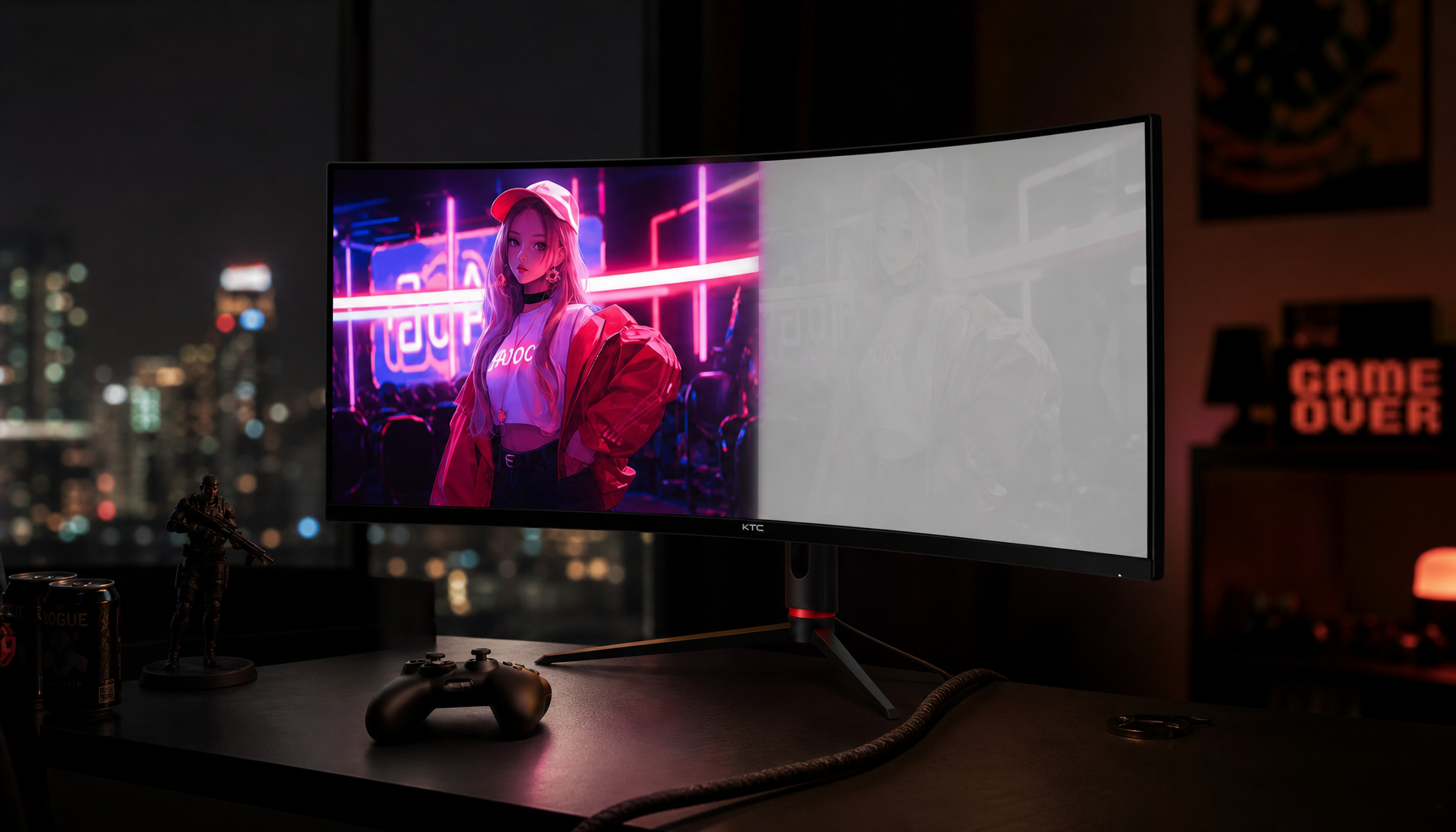
Wide-gamut monitors can make non-color-managed content look oversaturated. That is a real buying issue, especially if your main workload is browsing, office work, SDR gaming, or general streaming rather than color-managed creative software.
This is why an sRGB mode still matters on gaming monitors, ultrawide monitors, and even portable monitors. If a display stretches ordinary sRGB content across a wider native gamut without proper management, colors can look louder rather than more accurate. For everyday use, controlled color is usually better than simply having the widest spec.
What You Will Notice in Real Use
Color depth shows up in gradients and HDR transitions
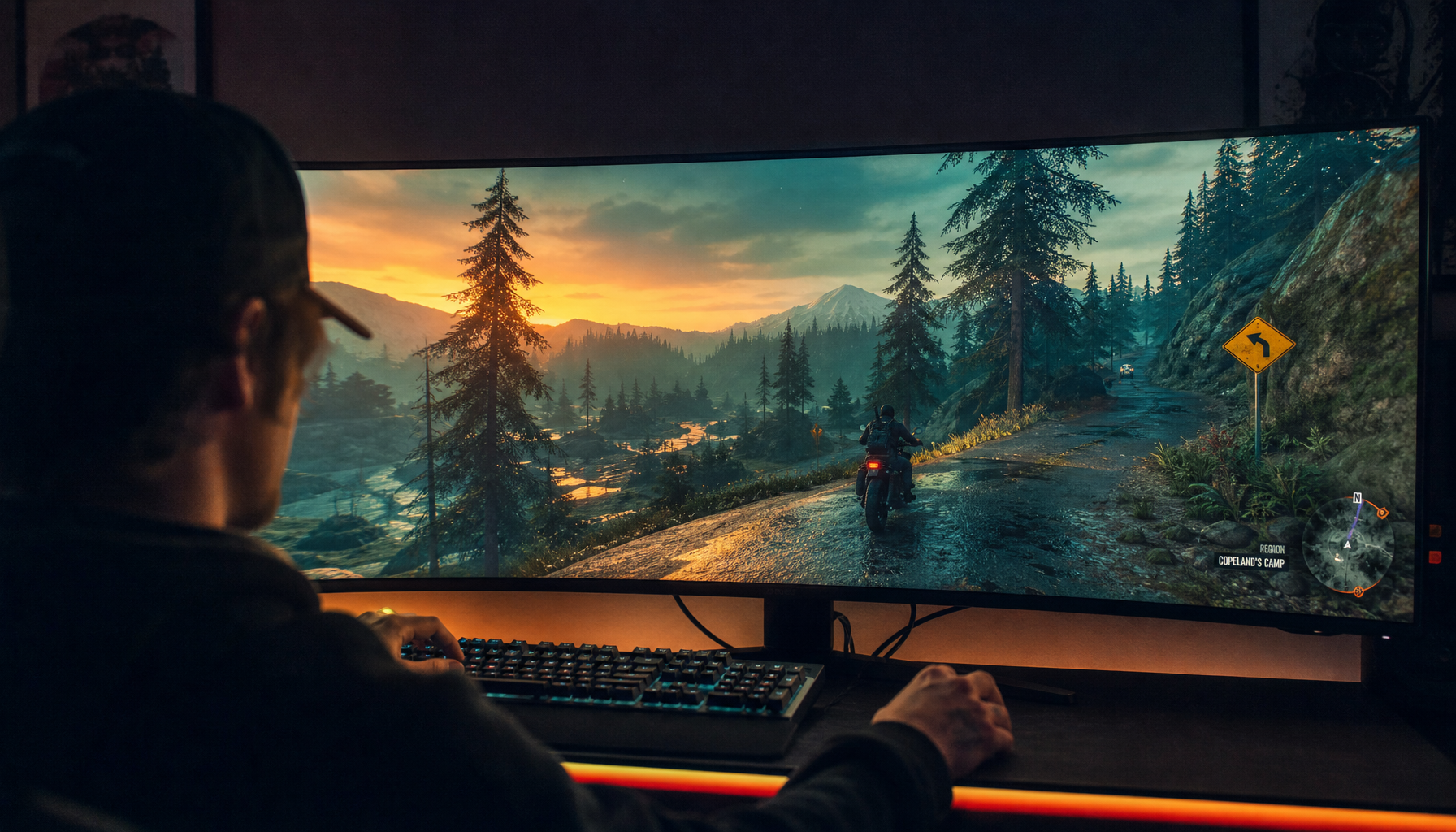
Higher color depth reduces banding and posterization, so its benefit is easiest to spot in scenes with gradual tonal change. On a gaming monitor, that includes dusk skies, volumetric lighting, smoke, and shadow detail. On a portable monitor, you may notice it sooner because smaller, lower-cost panels often cut more corners in processing.
In SDR desktop use, the visible jump from 8-bit to 10-bit is often smaller than buyers expect. A forum discussion found nearly identical gamut results between 8 bpc and 10 bpc in one calibrated setup, reinforcing that gamut coverage comes mainly from the backlight and panel design, not from switching the signal depth alone. Where 10-bit becomes more worthwhile is HDR content, heavy gradient work, or workflows where poor truncation would otherwise expose banding.
Gamut shows up in saturation and color reach
DCI-P3 is larger than sRGB and is common on modern high-end displays, which is why so many premium gaming and creator monitors advertise it. In practice, wider gamut helps with neon signs, foliage, cinematic reds, and other saturated colors that sRGB cannot fully contain.
For most buyers, the visible difference between 95% and 100% sRGB is small, but moving from basic sRGB coverage to strong DCI-P3 coverage can be easier to notice in supported content. That said, gamut alone does not tell you whether the monitor is accurate, calibrated, or well-tuned out of the box. A wide gamut with poor control can still look worse than a standard-gamut monitor with a solid sRGB mode.
Which Matters More for Gaming, Ultrawide, and Portable Monitors
Gaming monitors: prioritize the full picture, not one headline spec
Good monitor color performance depends on panel type, HDR support, brightness, color depth, color space coverage, contrast, and local dimming. For gaming, that means color depth and gamut both matter, but neither should outrank refresh rate, response behavior, and HDR implementation on its own.
A practical example is a 4K 144 Hz setup like a monitor model paired with a graphics card, where one user found an operating system defaulting to 8-bit until 10 bpc was manually selected in a control panel, while HDR switched the display to 10 bpc automatically. That kind of setup shows why gamers should check the actual signal path and not assume the monitor runs at full color depth in every mode.

Ultrawide and portable monitors: match the spec to the job
On an ultrawide monitor used for both gaming and work, broad sRGB coverage with a reliable sRGB clamp is often more useful than chasing a print-focused color space. You get better consistency for web content, UI work, and most games, while still benefiting from wider color in supported media if the monitor offers a separate wide-gamut mode.
Portable monitors need more skepticism. Space, power, and price limits often make their HDR or “1.07 billion colors” claims less meaningful unless brightness, contrast, and panel quality back them up. For a travel display, stable sRGB coverage, an IPS panel, and clean gradients are usually the better target than flashy wide-gamut marketing.
How to Read Monitor Specs Without Getting Misled
Use this checklist when comparing models
Spec |
What it affects |
Good sign for most buyers |
Best fit |
8-bit vs. 10-bit |
Smoothness of gradients and tonal steps |
8-bit is fine for SDR; 10-bit helps more with HDR and heavy gradient work |
HDR gaming, video, creator use |
sRGB coverage |
Accuracy for web, desktop, and most SDR content |
High sRGB coverage and a usable sRGB mode |
General use, esports, office, portable monitors |
DCI-P3 coverage |
Saturation range for modern media and HDR-oriented content |
High DCI-P3 on premium displays |
AAA gaming, media, mixed creator use |
A print-focused color space coverage |
Wider greens/cyans for print workflows |
Only prioritize if you actually work in that color space |
Print photography, proofing |
IPS/VA/TN panel type |
Viewing angles, color behavior, contrast |
IPS is usually safest for color |
Most gaming and work setups |
HDR tier |
Overall HDR credibility |
Look for brightness, local dimming, and 10-bit support together |
Console HDR, cinematic PC gaming |
An HDR certification tier typically requires 10-bit color, over 90% DCI-P3, local dimming, and 600 nits of brightness, which is a useful reminder that believable HDR is never just a gamut number. If a monitor claims wide color but lacks enough brightness or dimming control, the HDR experience will still be limited.
Verify with simple real-world checks
A black-to-white gray gradient is a practical way to spot banding. This is one of the fastest sanity checks after setup, especially if you are testing a new gaming monitor or troubleshooting whether 10 bpc is actually improving anything.

For gamut, a browser-based test page can help confirm whether your system is handling wide-gamut and HDR content correctly. If you want a deeper check and you already have a calibrated display, you can also inspect the monitor profile against sRGB in 3D using ICC tools. That matters more for creators than for most buyers, but it is useful when a monitor’s advertised coverage and its real behavior do not line up.
FAQ
Q: Is 10-bit more important than wide gamut for gaming?
A: Usually not by itself. For most SDR games, a strong sRGB mode, good panel quality, and overall motion performance matter more. For HDR gaming, 10-bit becomes more relevant, but it still needs enough brightness, contrast, and dimming support to matter.
Q: Does a wide-gamut monitor always look better?
A: No. Wide gamut can improve supported content, but unmanaged sRGB content can look oversaturated on some displays. That is why a good sRGB mode is valuable on gaming monitors and general-purpose displays.
Q: Are “10-bit” monitors always true 10-bit panels?
A: No. Some are native 10-bit, while others use 8-bit + FRC to simulate intermediate shades. That can still look good in practice, but it is not the same thing, and brands do not always make the distinction clear.
Final Takeaway
When you are buying a monitor, think of color depth as smoothness and color gamut as reach. If your main use is web, office work, competitive gaming, or a portable second screen, prioritize strong sRGB coverage, an IPS panel, and clean tuning before paying extra for extreme gamut claims. If you want HDR gaming, cinematic color, or creative flexibility, then 10-bit support and wider DCI-P3 coverage become more valuable, but only when brightness, contrast, and local dimming are strong enough to support them.
The best buying shortcut is simple: do not ask which spec is “better” in isolation. Ask whether the monitor has enough gamut for your content, enough depth for smooth gradients, and enough overall display quality to make either one visible.
References
- RGB colour spaces explained
- Color depth
- Choosing a monitor with good color reproduction
- Color depth and monitors
- a website test page
- 8-bit vs 10-bit monitor
- 8-bit vs 10-bit display
- difference between color gamut and bit depth
- check your monitor’s gamut
- wide gamut vs standard gamut monitors
- color gamut discussion
- graphics control panel 8 bpc vs 10 bpc