Color accuracy usually does not fail just because you scale a display, but perceived color can degrade through blur, interpolation, contrast loss, gamma shifts, and poor operating system or GPU handling. For gaming, office clarity, and creative review, native resolution with proper scaling and calibration remains the most reliable baseline.
Does your sharp 4K monitor suddenly make skin tones look smeared, UI grays look muddy, or game colors feel less punchy after switching to 1440p or 125% scaling? In practical monitor setup, the biggest win is testable: return the panel to native resolution, verify the active signal, then calibrate brightness and color before judging the display. Here is where color accuracy actually changes, where it only appears to change, and how to set up a screen that stays faithful under real workloads.
Native Resolution vs. Display Scaling
A flat-panel monitor has a fixed physical pixel grid. Native resolution means the incoming image maps cleanly to that grid, so a 2560 x 1440 panel receives 2560 x 1440 pixels and can draw one source pixel per physical pixel. A non-native resolution must be stretched, filtered, or centered, and that extra processing is where softness enters.

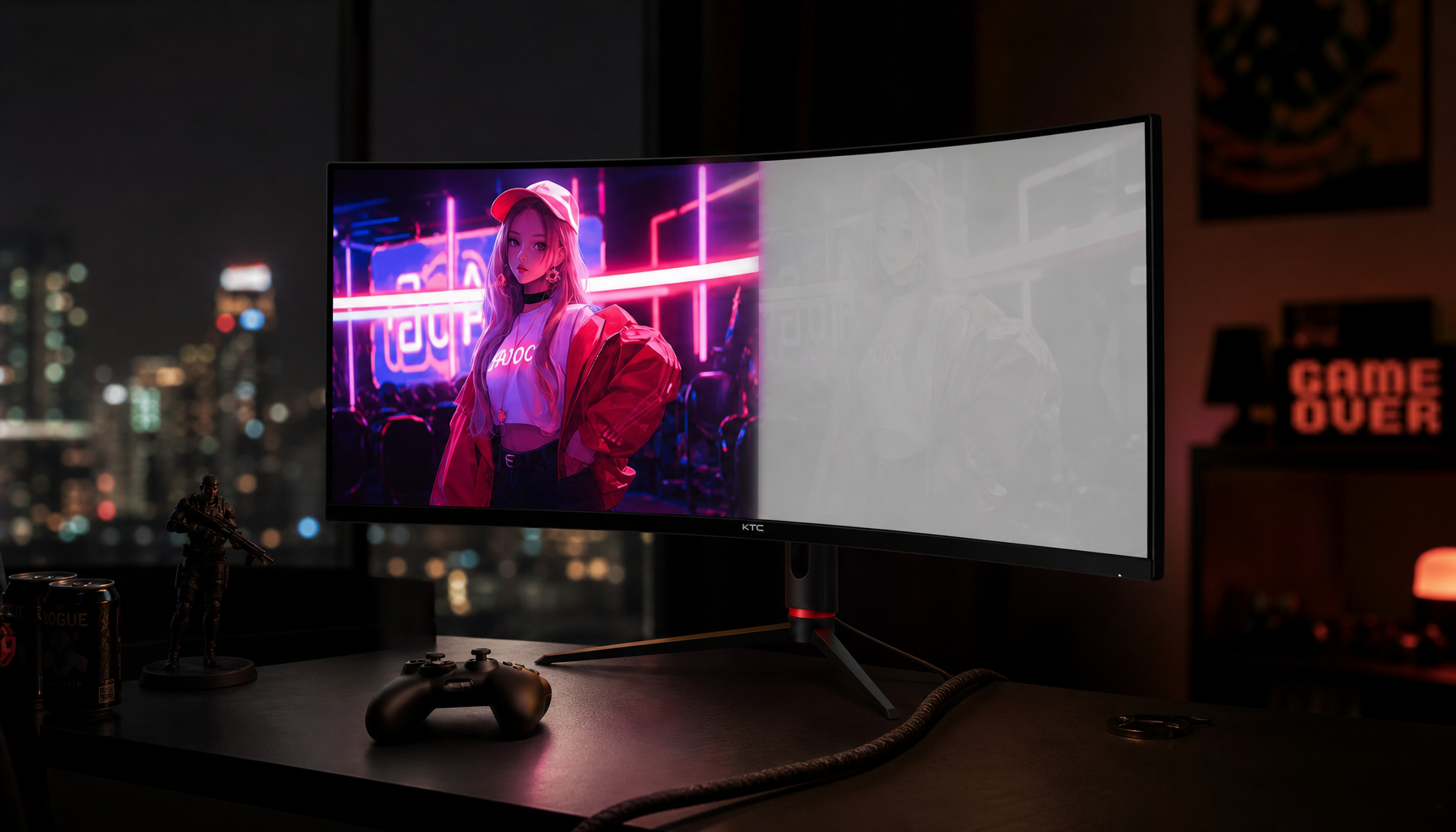
That softness matters because color is not only hue and saturation. On a monitor, color judgment also depends on edge contrast, local detail, subpixel text rendering, gamma response, and perceived brightness. A non-native resolution can look worse because scaling blends neighboring pixels, which can make sharp color transitions appear less defined even when the panel’s color gamut has not changed.
Display scaling is different. When a desktop operating system runs a high-resolution screen at 125%, 150%, or 200%, it usually keeps the monitor at native resolution while enlarging interface elements. That is normally better than lowering the output resolution. The risk comes from apps that are not scaling-aware, GPU scaling filters, game render scaling, or mixed-monitor setups where text and UI assets are resampled unevenly.
What Actually Happens to Color Accuracy?
Color accuracy can be measured with tools like Delta E, gamma tracking, white point, and color gamut coverage. Display scaling alone does not automatically reduce a monitor’s native ability to cover sRGB, DCI-P3, or other wide-gamut RGB color spaces. A factory-calibrated panel with strong sRGB coverage remains the same panel.
The visible problem is perceptual accuracy. When scaling blends pixels, a red edge beside a gray background may become a small band of pinkish transition pixels. A black-to-white edge may lose crispness and look lower contrast. Fine gradients can show banding or uneven steps if the GPU, app, or cable path changes output format. For creators, that means you may over-sharpen, over-saturate, or misjudge subtle contrast because the screen is showing a softened version of the file.
Calibration is the second layer. Monitor-to-output matching depends on profiles and predictable display behavior. Color calibration uses display profiles and adjustment routines to make screen color more consistent with other devices, especially printers. If you calibrate at one mode, then switch refresh rate, HDR, color format, or resolution, you may not be viewing under the same conditions the profile was built for.
Why Non-Native Resolution Looks Less Accurate
The main culprit is interpolation. If you send 1920 x 1080 to a 2560 x 1440 display, the math is uneven. One source pixel cannot become a clean block of physical pixels, so the scaler has to approximate. That approximation can blur fine texture, soften typography, and blend color boundaries.

Integer scaling is cleaner because each source pixel becomes an equal block. For example, 1920 x 1080 scales perfectly to 3840 x 2160 because each source pixel can become a 2 x 2 block. That keeps pixel art, UI edges, and game HUD elements much cleaner than awkward fractional scaling. By contrast, 1280 x 720 to 1920 x 1080 is a 1.5x scale, which often looks soft unless the content is video or viewed from farther away.
The effect is more obvious on large screens. A 13-inch 1080p laptop can hide scaling artifacts because pixels are dense and viewed close, while a 32-inch display makes the same softness easier to see. Pixel density is one reason a 27-inch QHD monitor is often a practical sweet spot: about 109 PPI gives sharp text, broad compatibility, and less scaling friction than some larger 4K setups.
Setup Choice |
Color Accuracy Risk |
Visual Impact |
Best Use |
Native resolution, 100% or OS scaling |
Low |
Sharpest edges and most predictable profile behavior |
Editing, office work, esports |
Native resolution with 125% to 200% OS scaling |
Low to moderate |
Usually sharp, but older apps may blur |
4K productivity, laptop docking |
Non-native fractional resolution |
Moderate to high |
Soft edges, blended color transitions |
Temporary performance fix |
Integer-scaled lower resolution |
Lower than fractional |
Chunkier but cleaner image |
Retro games, low-power gaming |
Game render scaling below native |
Moderate |
UI may stay sharp, 3D scene softens |
FPS gains on demanding games |
Does Scaling Change Gamut, Delta E, or HDR?
In a strict technical sense, ordinary desktop scaling does not shrink a monitor’s physical color gamut. A 99% sRGB IPS panel or a wide-gamut OLED does not lose its panel chemistry because the UI is enlarged. Modern OLED monitors are valued for high contrast, fast response, and wide color performance, and the OLED monitor market has grown around gaming, creator, and premium productivity demand for those advantages.
However, the signal path can change what you see. Dropping resolution for higher refresh may switch chroma subsampling, disable HDR, change bit depth, or trigger a different GPU scaling mode. On some systems, 4K at high refresh over the wrong cable or adapter may fall back to a compromised mode. That can hurt text color edges, gradient smoothness, and HDR tone mapping more than the resolution change itself.
HDR deserves extra caution. If you judge color in HDR mode while editing SDR content, or if a game switches between exclusive full-screen modes, the tone curve can change dramatically. The display may look more vivid, but not more accurate. For color-critical work, SDR calibration at native resolution is still the cleaner reference unless your whole workflow is HDR-managed.
The Office Productivity Angle
For spreadsheets, documents, dashboards, and coding, the first symptom is usually not “bad color.” It is tired eyes from gray text that looks fuzzy, thin strokes that shimmer, or UI contrast that feels inconsistent. Office users often blame panel quality when the real issue is running a 4K monitor at a lower desktop resolution instead of using OS scaling.
A practical example is a 32-inch 4K display. Running it at 2560 x 1440 may make buttons larger, but it forces the monitor or GPU to stretch the image. Keeping it at 3840 x 2160 and using 125% or 150% scaling usually preserves sharper text and cleaner UI color separation. For role-based setups, office, coding, design, and photography displays should be chosen around the workload rather than treated as interchangeable panels.
Brightness compounds the issue. If the screen is too bright, pale interface colors can look washed out. If it is too dim, subtle grays collapse together. Before blaming scaling, set brightness so a white document looks like lit paper, not a desk lamp. Then confirm native resolution and only after that adjust contrast or color mode.
The Gaming Angle
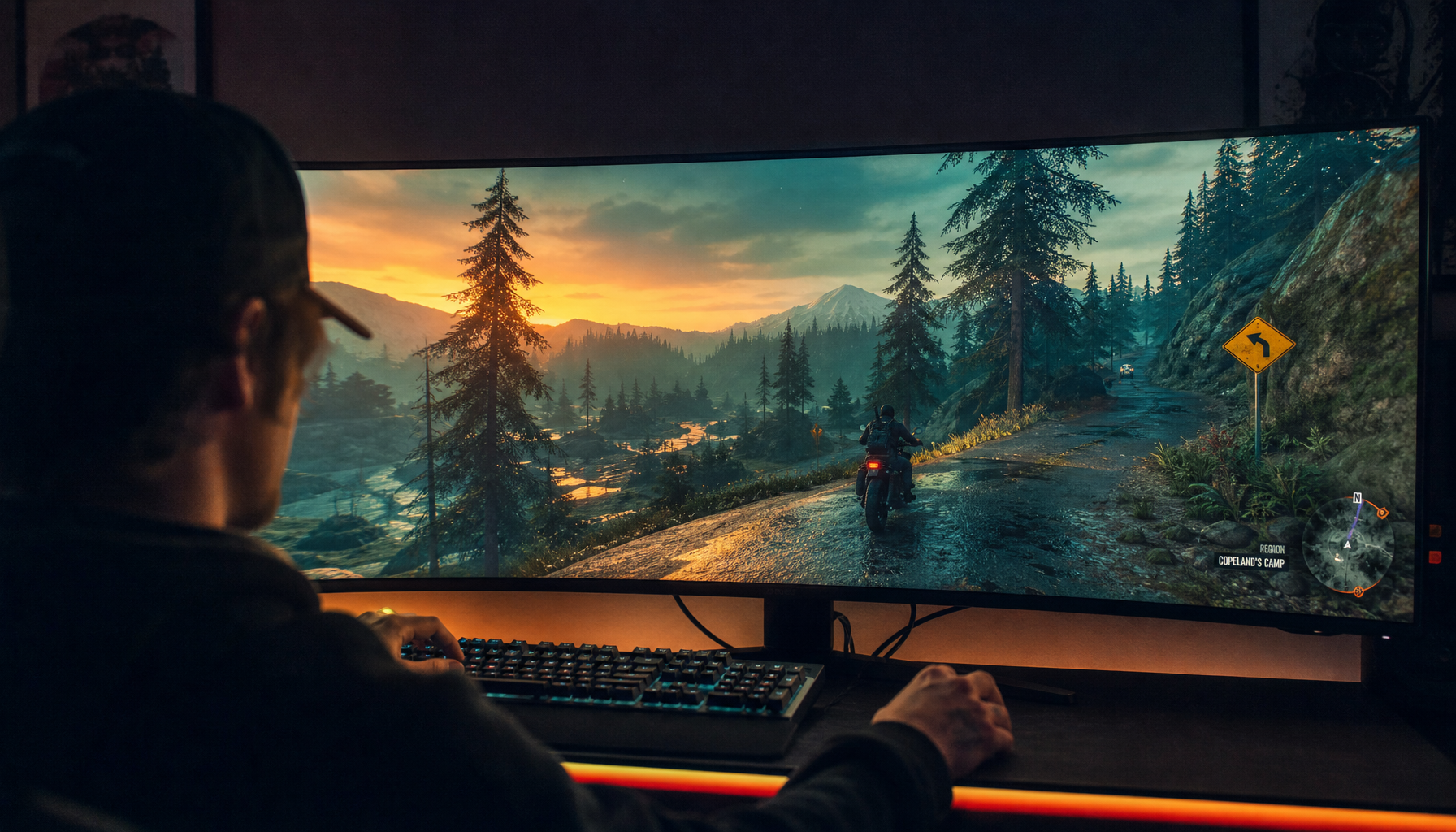
Gamers often lower resolution to gain frame rate. That tradeoff is legitimate, especially when competitive smoothness matters more than fine color boundaries. But non-native resolution can make enemy outlines, HUD colors, and distant textures less distinct because the scaler blends detail before the image reaches your eyes.

A better option is often in-game render scaling with native output. Many games let the 3D scene render at 80% or 90% while menus and HUD stay native. That can preserve sharper UI color and text while still improving FPS. Upscaling technologies can help too, but quality varies by game, motion, sharpening, and display size.
For esports monitors, test the whole chain. Native resolution, the intended refresh rate, and the correct cable matter together. A monitor error or blank screen can appear when a display receives an unsupported combination, and an out-of-range condition is commonly tied to resolution, refresh rate, or timing the monitor cannot display. If the screen looks wrong after a game launch, reset the game to windowed mode, return the desktop to native resolution, then reapply refresh rate deliberately.
The Creative Work Angle
Photo, video, and design work are less forgiving. When editing skin tone, product color, logo gradients, or print previews, you want the image pixels to be as direct and predictable as possible. A scaled preview can hide halos, soften masks, and make small hue transitions harder to judge.
For photographers, strong hardware still matters because high-resolution editing stresses the whole system, not only the monitor. Practical photo workstation advice often favors a 27-inch or larger display and notes that 4K or 5K can be useful when resolution scaling remains readable. The key phrase is “remains readable”: if scaling makes the UI comfortable while the image preview stays crisp, it is useful; if it makes the preview soft, it is working against you.
For print matching, use hardware calibration when accuracy matters. Let the monitor warm up for 20 to 30 minutes, stabilize room lighting, clean the panel, and calibrate in the same resolution, refresh rate, brightness, and color mode you actually use. Recalibration every few weeks is reasonable for serious work, while mission-critical environments may need a tighter cadence.

Practical Setup Rules That Preserve Color
Start by setting the monitor to its native resolution in the operating system. Then adjust UI scaling, not desktop resolution, until text is comfortable. If a 27-inch 4K screen feels too small at 100%, use 150% scaling rather than dropping to 1440p. If a 32-inch 4K monitor feels oversized at 150%, try 125% before changing resolution.
Next, confirm the active signal resolution. Some systems can show a desktop resolution that differs from the active signal resolution, especially with TVs, docks, capture devices, or unusual GPU settings. The active signal should match the panel’s native mode for the cleanest output.
Then check GPU scaling. For general work, let the display run native and avoid forced scaling filters unless you need them for a specific game. For pixel-art or older titles, integer scaling can be sharper than smooth scaling. For modern games, compare native with render scaling against lower desktop resolution; the best-looking option is often native output plus moderate render scaling.
Finally, calibrate after the physical setup is stable. A monitor buying process should prioritize factory calibration, low Delta E, strong sRGB coverage, and appropriate DCI-P3 coverage for professional work. Treat weak HDR claims and unverified gamut marketing with skepticism. Calibration cannot rescue a heavily blurred non-native signal, but it can lock in white point, gamma, and color response once the signal path is clean.
Pros and Cons of Using Scaling
Display scaling has real advantages. It makes high-PPI screens comfortable, keeps text readable, improves accessibility, and lets compact 4K displays deliver both sharpness and usable interface size. For laptop users docking into external displays, it is often essential.
The downside is inconsistency. Some older apps blur. Mixed-DPI multi-monitor setups can make windows change sharpness when moved between screens. Games may ignore desktop scaling or launch in a different mode. Portable smart screens and USB-C displays can add another variable because one cable may carry video, power, touch, and hub data, so mode negotiation becomes more fragile.
Non-native resolution has a clearer downside: it usually sacrifices sharpness and perceived contrast. Its advantage is performance or compatibility. If your GPU cannot drive a demanding game at native resolution, lowering render resolution may be acceptable. If your office monitor is used for text all day, it is usually the wrong compromise.
FAQ
Is 125% or 150% scaling bad for color accuracy?
Usually no. If the monitor stays at native resolution, OS scaling mainly changes interface size. The risk comes from apps or games that render at lower resolution and get resampled, which can make color edges and text look softer.
Should I use 1440p on a 4K monitor for better performance?
For gaming, test native 4K with in-game render scaling before switching the whole monitor to 1440p. For office or creative work, keep 4K native and adjust OS scaling because text, UI contrast, and image previews usually stay cleaner.
Does calibration fix blurry scaling?
No. Calibration improves white point, gamma, and color consistency, but it cannot restore detail lost through poor scaling. Fix resolution and signal settings first, then calibrate.
Is OLED less affected by non-native resolution?
OLED’s contrast and pixel response can make images look more vivid, but it still has a fixed pixel grid. Non-native scaling can still soften edges and blend fine color transitions on OLED just as it can on LCD.
Bottom Line
For the most reliable color, run the monitor at native resolution, use OS scaling for comfort, keep the signal path within supported bandwidth, and calibrate only after those settings are stable. Lower resolution is a performance tool, not a color-accuracy tool; use it deliberately, test it visually, and return to native whenever sharp judgment matters.