Skin tones can still look too red, orange, yellow, or waxy after calibration because calibration is only one part of the color chain. The display, app, content color space, HDR mode, and the complex way skin reflects light all have to agree.
Does a creator’s face look sunburned in one app, gray-pink in another, and perfectly normal on your phone? A well-set display can give you a reliable starting point: consistent white, controlled saturation, and fewer false edits. The goal here is to help you separate poor calibration from poor color handling, then choose the right display mode for gaming, editing, office work, and streaming.
The Short Answer: Calibration Does Not Automatically Mean Correct Color
A calibrated monitor is measured and adjusted to hit a target, usually a white point, brightness level, tone response, and color space. That does not guarantee every app will send the right kind of color data to the display.
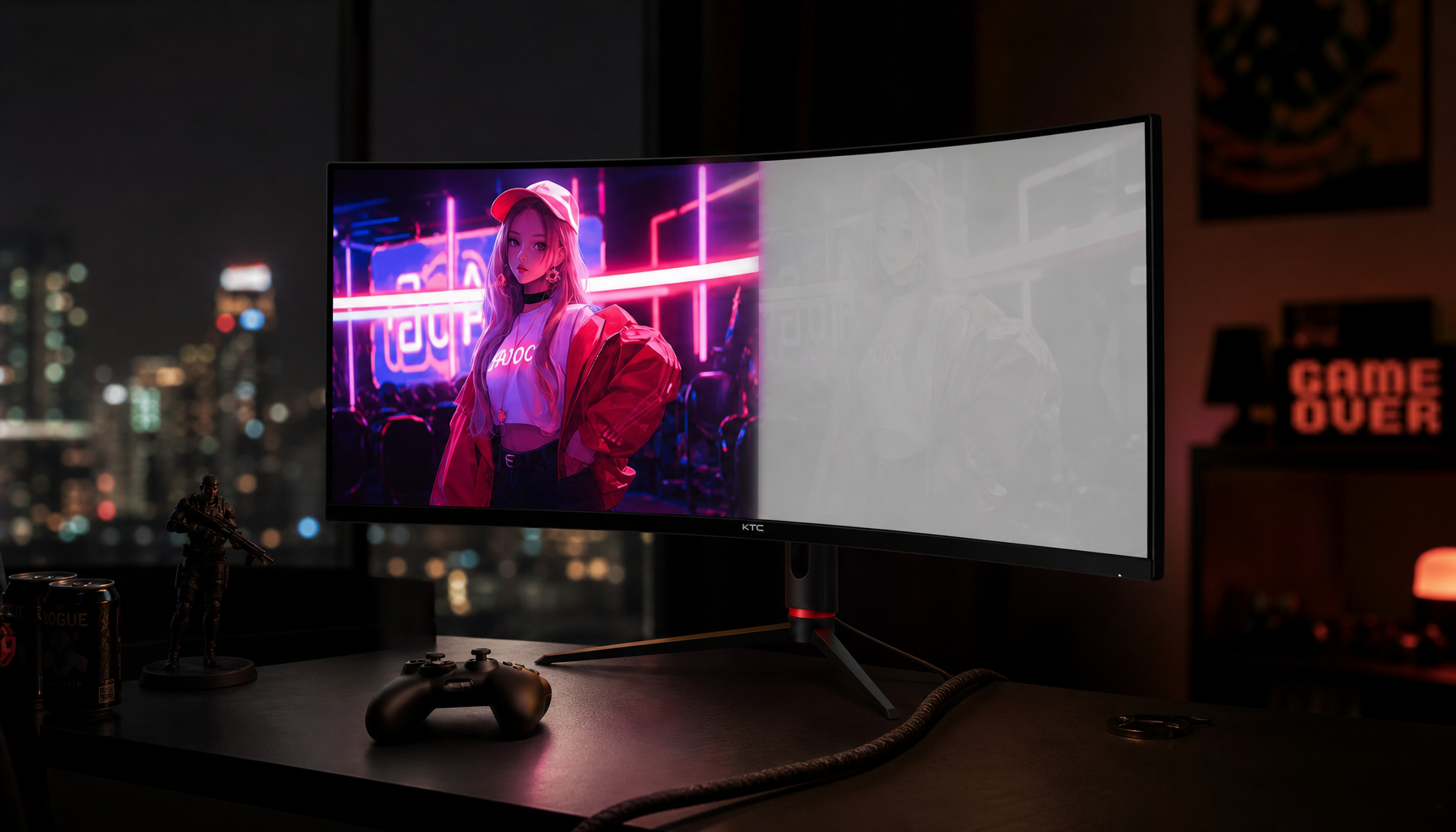
Most web images, SDR videos, UI elements, and game assets are still prepared for sRGB or Rec.709. When that content is shown directly on a wide-gamut panel without proper color management, the monitor may stretch ordinary colors into its larger color range. Consumer digital content is commonly mastered for sRGB/Rec.709, so a wider gamut does not create extra real color detail; it can simply exaggerate what was already there.
That exaggeration is especially obvious on faces. Grass can look punchy. Neon signage can look vivid. Skin looks wrong immediately because human vision is highly sensitive to memory colors such as faces, skies, and neutral grays.

What Wide Gamut Actually Changes
A wide-gamut display can reproduce colors outside the smaller sRGB color space. Common wide-gamut targets include Display P3, DCI-P3, large-gamut RGB working spaces, and sometimes partial Rec.2020 coverage. For gaming monitors, creator displays, and portable smart screens, this can be a genuine advantage when the content and software pipeline are built for it.

The problem appears when the input signal assumes sRGB but the display behaves as if the signal should fill a larger gamut. A red blush, lip tone, or warm studio light can become oversaturated. On a calibrated wide-gamut monitor, this can feel confusing because measurement software may report good accuracy under one target while daily apps still look aggressive.
The browser comparison of tagged and untagged content illustrates this practical difference by comparing tagged, untagged, SDR, HDR, and wide-gamut behavior in the browser. If a browser or app mishandles tags, two images that should match may not match on screen.
The Real-World Example
Imagine a 27-inch gaming monitor set to its native gamut mode. You open a streaming thumbnail, a game launcher, a web store image, and a portrait in a non-color-managed viewer. All four may be treated as ordinary RGB values, then pushed through the display’s larger color capacity. The result is not more accurate. It is often a stronger red-orange face, especially around cheeks, lips, and shadows.

Why Skin Tones Are the First Thing to Break
Skin is not a flat paint chip. It has texture, oil, moisture, subsurface scattering, highlights, blood flow, and local color variation. Even with correct white balance and a color chart, skin can shift under different lighting angles and light softness. Skin is not a flat color surface, which is why a technically calibrated setup can still produce a face that feels slightly off.
This matters for both creators and everyday users. A webcam feed under a desk lamp, a streamer’s face under RGB lighting, and a portrait shot near a window all contain mixed cues. Calibration can align the display, but it cannot make every capture setup, lighting setup, camera profile, and editing app agree.
The practical target is believable skin, not mathematically perfect skin. For photo and video work, a white balance card and color chart can get you into a dependable range, but final skin judgment still requires visual review on a controlled display.
The Calibration Trap: Native Gamut vs. sRGB Clamp
Many wide-gamut monitors offer several modes. Native gamut usually shows the panel’s full color range. sRGB mode restricts output closer to standard web and SDR content. Some monitors also offer DCI-P3, large-gamut RGB, or HDR modes.
The tradeoff is control. Built-in sRGB modes can be accurate, but they often lock brightness, RGB gain, gamma, or other on-screen display controls. That is frustrating for a performance desk where one monitor has to handle ranked games at night, spreadsheets in the morning, and color checks in between.
A practical workaround discussed by display enthusiasts is a GPU-level sRGB clamp. On some graphics card systems, the novideo_srgb utility can clamp wide-gamut output toward sRGB while preserving useful monitor controls. Other graphics card setups may offer similar clamp behavior through driver color settings.
Mode |
Best Use |
Main Advantage |
Main Risk |
Native gamut |
HDR, P3 content, some creative workflows |
Maximum color capability |
SDR skin tones may look oversaturated |
sRGB monitor mode |
Web, office, SDR games, most streaming |
More natural everyday color |
OSD controls may be locked |
GPU sRGB clamp |
Mixed gaming and desktop use |
Keeps wide-gamut monitor usable for SDR |
Depends on GPU, driver, and setup |
HDR mode |
HDR games and video |
Wider brightness and color expression |
SDR desktop color may become inconsistent |
White Point and Uniformity Can Still Make Faces Look Wrong
Even if gamut handling is correct, a display can have a white point or uniformity issue. A screen that is slightly green on one side and magenta on the other can make skin look healthy in the center and sickly near the edge. On larger office and creator displays, this is not rare.
Correlated color temperature is not enough by itself because different whites can share a similar Kelvin value while looking pinkish or greenish. Color uniformity is better evaluated with perceptual error metrics, and green-magenta problems may need chroma-focused checks rather than a simple brightness reading.
For a real-world check, open a neutral gray or white image full screen after the monitor has warmed up. Move a portrait window from the center to the corners. If the same face shifts from warm to cool or from pink to yellow across the panel, the issue is not your edit. It is panel uniformity, viewing angle, or both.
HDR Can Make the Problem More Confusing
HDR is not just brighter SDR. It changes brightness mapping, color volume, and tone response. A monitor may look accurate in SDR mode, then make faces too contrasty, too shiny, or too orange in HDR because tone mapping is compressing content into the display’s actual capabilities.
This is especially relevant for gaming monitors. HDR games, system HDR settings, monitor HDR modes, and in-game calibration sliders can all apply their own mapping. If two systems try to tone-map the same content, faces can lose natural midtone detail or highlights can clip.
For a dependable setup, choose the monitor’s most accurate HDR mode first, then run system HDR calibration. Keep SDR and HDR workflows separate. If you use the same vivid HDR preset for office work, competitive games, and video editing, skin tone accuracy will be the first casualty.
How to Fix Unnatural Skin Tones Without Chasing Your Tail
Start by deciding what you are actually viewing. For everyday web, office, SDR video, and most non-HDR games, use an sRGB mode or GPU sRGB clamp. For HDR movies and HDR games, use the display’s HDR mode and calibrate within that pipeline. For photo, video, or digital painting work, use the color space required by the project and make sure the app is color-managed.
Next, check the app. A color-managed editor, modern browser, and unmanaged image viewer may not render the same file identically on a wide-gamut display. If skin looks natural in a color-managed editor but radioactive in a basic viewer, the monitor is probably not the root problem.
Then check brightness. Many people calibrate too bright for their room. A face that looks acceptable at high brightness can look harsh and glossy during long work sessions. For office productivity and editing, match brightness to ambient light instead of defaulting to the highest usable setting.
Finally, verify with known references. Use a trusted portrait, a neutral gray ramp, and a wide-gamut browser test. ICC color profiles should be handled correctly by your browser and operating system; if the test shows mismatches, fix the pipeline before judging skin tone by eye.
When Wide Gamut Is Worth It
Wide gamut is not the enemy. It is a higher-performance tool that needs the right operating mode. For HDR gaming, cinematic P3 content, photo editing, digital painting, and modern creator workflows, it can deliver richer color and better creative control. For unmanaged SDR content, it can make ordinary colors less honest.
Professional display users have long favored hardware calibration, strong LUT support, and repeatable monitor behavior for color-sensitive work. Factory hardware calibration and regular checks are valuable because a serious display setup is not only about gamut size; it is about repeatability, comfort, and confidence over long sessions.
For a hybrid desk, the best monitor is not always the one with the largest advertised gamut. It is the one that lets you switch cleanly between accurate SDR, controlled HDR, and your preferred gaming mode without hiding the controls you need.
FAQ
Why does my calibrated wide-gamut monitor make streaming faces look red?
Most likely, SDR video or browser content is being shown through the monitor’s wider native gamut instead of being constrained to sRGB/Rec.709. Use the monitor’s sRGB mode or a GPU-level sRGB clamp for normal desktop viewing.
Should I leave my monitor in DCI-P3 all the time?
No. P3 is useful for P3 content and some HDR workflows, but it can oversaturate sRGB content when color management is incomplete. For office apps, web browsing, SDR video, and many games, sRGB is usually the safer daily mode.
Can a colorimeter fix skin tones completely?
A colorimeter can improve white point, gamma, brightness, and profile accuracy, but it cannot fix unmanaged apps, poor HDR tone mapping, bad lighting, camera color shifts, or panel uniformity defects. It gives you a controlled baseline, not a universal guarantee.

The Performance-Minded Bottom Line
Unnatural skin on a calibrated wide-gamut display usually means the display is capable, but the pipeline is not disciplined. Use sRGB for SDR, reserve wide gamut and HDR for content that supports them, verify app color management, and treat skin tone as a final reality check rather than a single calibration score.