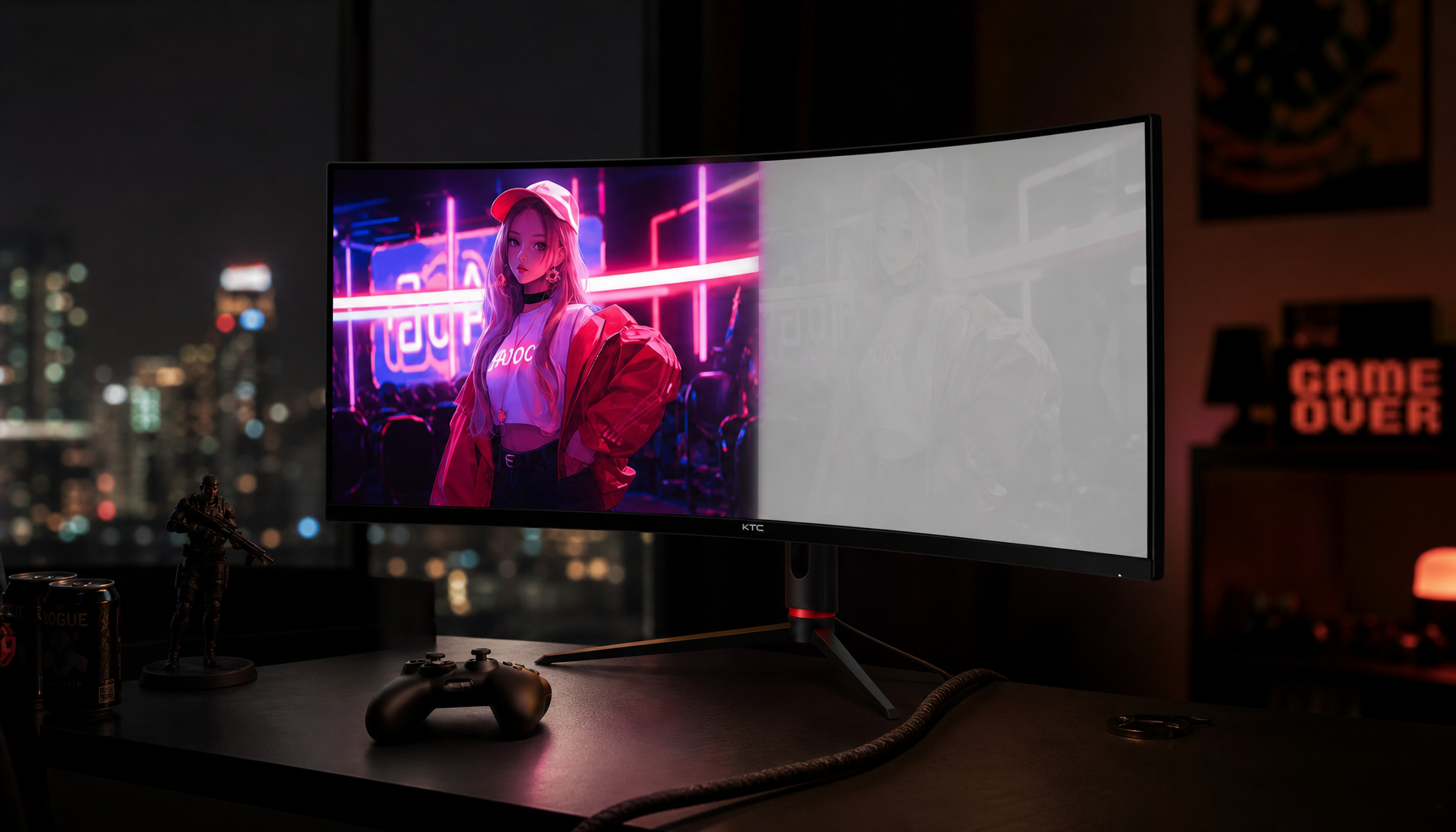
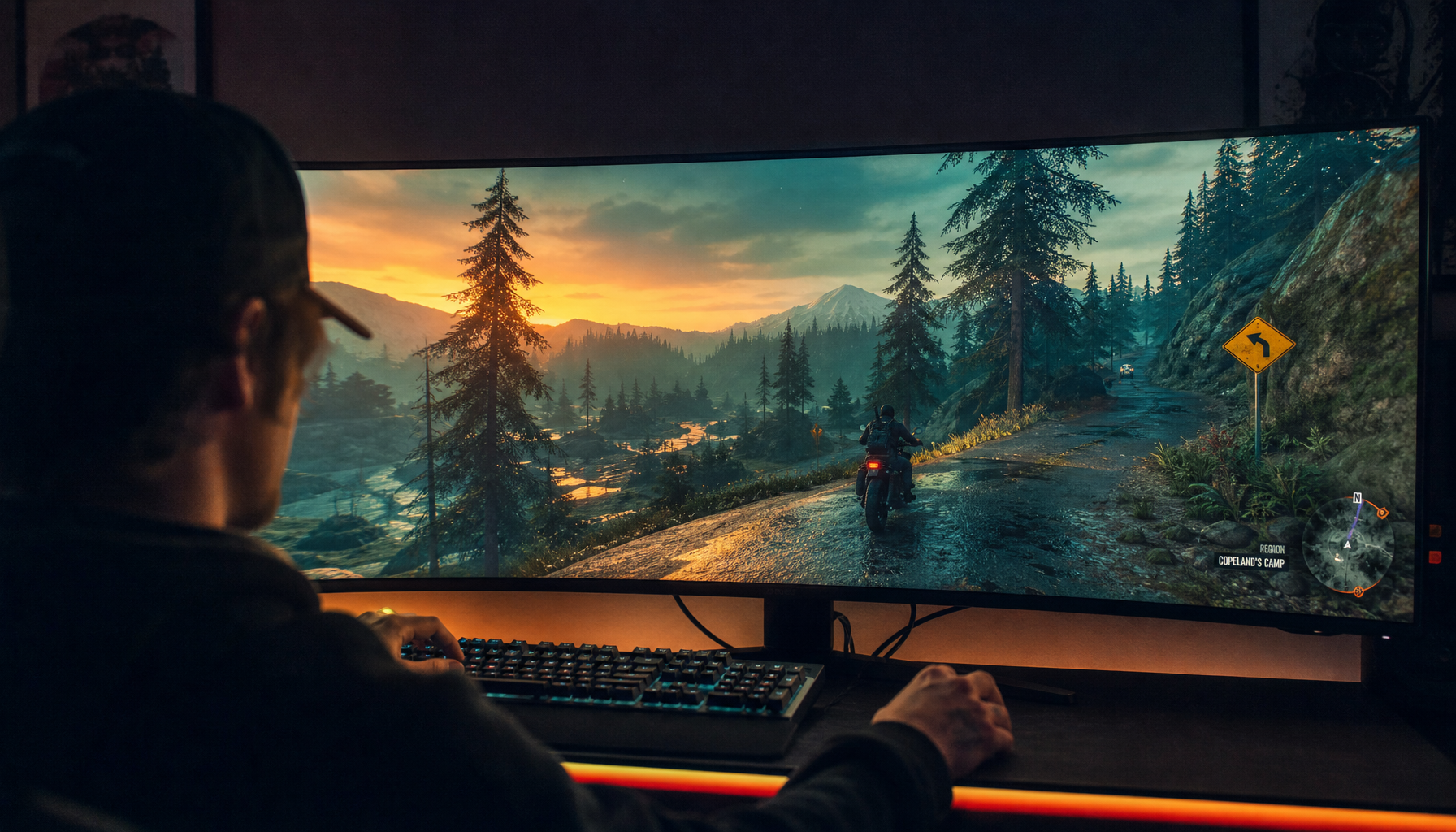
Display contrast ratio changes how accurately you judge shadows, highlights, bounce light, and depth in a 3D scene. For artists, gamers, and display buyers, higher native contrast makes lighting decisions feel more dimensional and less like guesswork.
Why Contrast Ratio Matters in 3D Lighting
Contrast ratio describes the gap between the brightest white and darkest black a screen can show; a 1000:1 display makes white 1,000 times brighter than black. That range affects whether a 3D render reads as flat, dramatic, realistic, or overly crushed.
In lighting evaluation, the black floor is just as important as peak brightness. If blacks look gray, contact shadows under a character, ambient occlusion in corners, and night-scene gradients can appear weaker than they really are.

A monitor with strong native contrast gives you a more stable read because it measures dark and bright output under consistent conditions, not with scene-by-scene tricks.
Shadow Detail: The First Place Weak Contrast Fails
3D lighting often lives in subtle darkness: soft falloff, indirect light, fog density, and material roughness. Low contrast can compress those cues, making a shaded wall look muddy instead of layered.
For example, a 1000:1 IPS monitor may be fine for modeling, UI work, and general layout checks. But a 3000:1 VA panel can reveal deeper black separation, which helps when balancing moonlight, cave interiors, horror-game levels, or cinematic product renders.

That is why VA panels are often associated with stronger dark-scene performance, while many IPS and TN panels sit closer to 1000:1 and VA panels can reach around 3000:1.
Highlights, HDR, and Perceived Depth
Contrast is not only about darkness. A bright rim light, polished metal glint, or sunlit window needs enough separation from midtones to feel convincing.
When contrast is limited, highlights can look pasted on rather than physically motivated. When contrast is stronger, the same scene gains depth because your eye can read a wider distance between shadow, midtone, and specular intensity.
For practical work, treat contrast and brightness as a pair. A display can be bright but still lack deep blacks, especially in a dim room where elevated black levels become obvious. Conversely, OLED-style pixel control can make blacks feel nearly perfect because individual pixels can turn off.
Dynamic contrast claims can look huge on a spec sheet, but static or native contrast is usually more dependable for evaluating mixed 3D scenes.
Practical Targets for Artists, Gamers, and Reviewers
For 3D lighting evaluation, your contrast target should match the risk of the work. Office productivity and asset organization do not need the same screen behavior as cinematic look development or dark fantasy level design.
A 1000:1 contrast ratio is acceptable for modeling, layout, spreadsheets, and casual review. A range of 2000:1 to 3000:1 is better for game lighting, dark scenes, and visual depth, while 3000:1 or higher is a strong target for immersive gaming and shadow-sensitive work. OLED or high-end local dimming can be best for black-level judgment, though each comes with workflow caveats.
For office-first setups, 1000:1 can still be reasonable because text clarity and ergonomic features may matter more than cinematic depth. For visual review, higher contrast supports clearer dark-to-light gradation, and 3000:1 contrast is commonly positioned as a better fit for gaming, movies, and HDR-style content.
How to Evaluate 3D Lighting More Reliably
Start by disabling aggressive dynamic contrast when doing serious lighting checks. It can shift brightness during playback and make your scene look better or worse depending on the frame.
Check lighting in three conditions: a neutral gray studio scene, a dark interior, and a high-brightness exterior. If shadow edges disappear in the interior or highlights clip in the exterior, your display may be steering your creative decisions.

Also control room lighting. Ambient light raises perceived black levels, so a glossy portable screen in a bright room may show less usable contrast than its spec sheet suggests. For portable smart screens, anti-glare behavior and brightness can matter as much as the published ratio.

The best workflow is simple: trust native contrast first, calibrate brightness for your room, and verify critical lighting on more than one display before final delivery.