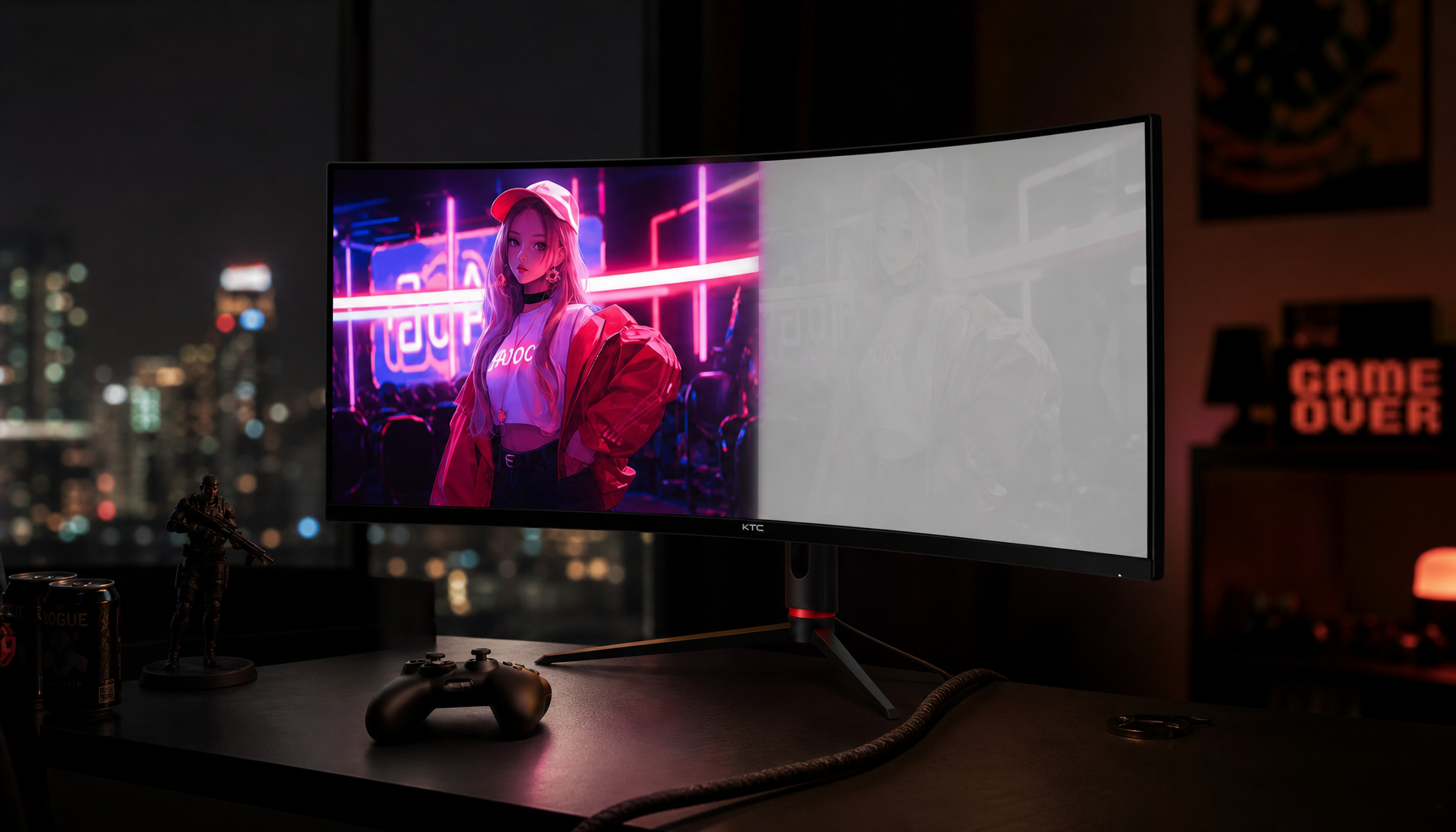
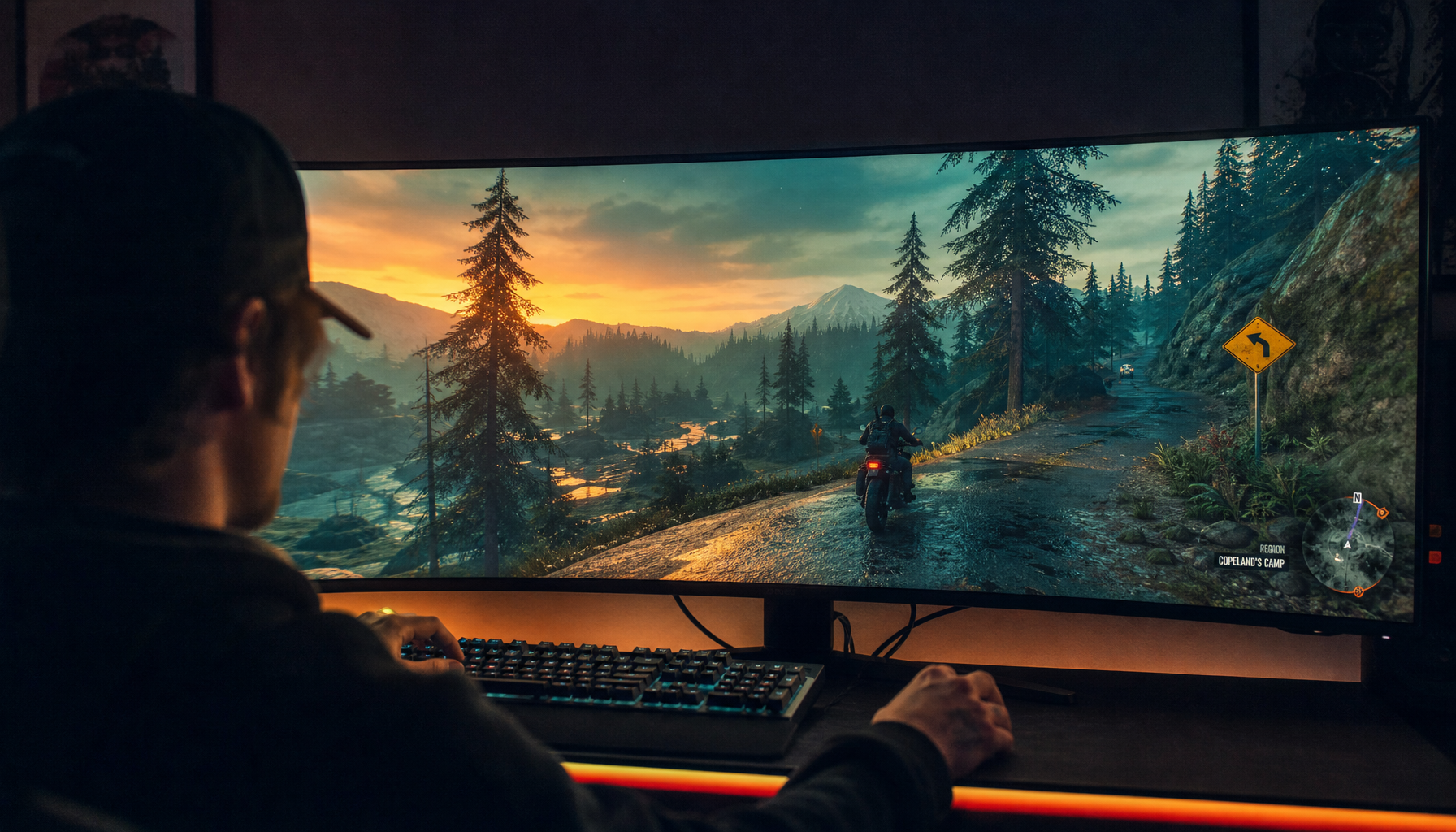
Display coating affects what competes for your attention during long sessions. Matte and anti-glare finishes usually reduce reflections and help sustain focus, while glossier finishes can look richer but demand tighter lighting control.
Do your eyes start chasing ceiling lights or window reflections right when a ranked match gets tense? In real desk setups, the biggest focus gains usually come from reducing reflected light before touching refresh rate settings, and a well-chosen coating often delivers an immediate, testable benefit: fewer visual interruptions on bright maps, white menus, and text-heavy HUDs. You’ll leave with a practical way to choose between matte, semi-gloss, and glossy screens, plus setup fixes that matter more than marketing.
Why Coating Matters More Than Many Gamers Expect
A display coating is the outer optical treatment that changes how external light behaves when it hits your screen. On a glossy panel, that light tends to bounce back more directly, which is why overhead fixtures and windows can show up like a mirror. On a matte or anti-glare panel, the surface scatters that reflected light so it becomes less defined and less intrusive, which is why matte anti-glare screens are commonly favored for bright workspaces and long sessions.
That matters because focus in competitive play is not only about motion clarity. When glare rides across a minimap, crosshair area, or recoil pattern, your eyes keep re-checking the wrong signal. KTC makes this practical: high refresh alone does not solve daylight glare, and in bright rooms screen finish, monitor placement, and usable brightness matter more than simply jumping beyond 144 Hz for bright-room monitor placement.
Matte, Glossy, and the Real Tradeoff

Matte and Strong Anti-Glare
For most competitive setups, matte is the safer performance choice because it lowers the odds that a lamp, LED strip, or late-afternoon window becomes a second image on top of the game. That is why anti-glare monitor options are commonly positioned for long screen use and better viewing comfort. In practice, matte coatings are especially useful for players who scrim during the day, stream with room lighting on, or play near a shared office window.

The tradeoff is image character. Anti-glare treatments can soften perceived sharpness slightly, reduce some contrast or color punch, and on lower-quality panels may introduce a faint sparkle on bright backgrounds. Another common downside is that brightness can feel lower with anti-glare layers, which is worth remembering if you play in a very bright room and rely on raw panel brightness during long periods of computer use.
Glossy and Low-Reflection Glossy
Glossy finishes can look excellent when the room is controlled. Blacks appear deeper, colors can feel more vivid, and fine detail can look a touch cleaner. That is why some players prefer glossy OLED panels in dark rooms. But the downside is severe in mixed lighting: real-world glare problems often ruin usability more than image quality itself, especially when you move between desk lighting, daylight, and overhead fixtures.
If your sessions happen at night with blackout curtains, dim wall lighting, and no lamp pointed toward the panel, glossy can work. If your desk faces a window at 2:00 PM, glossy becomes a tax on attention.
How Glare Breaks Focus Over Long Sessions

Glare is not just annoying; it changes how hard your visual system has to work. KTC’s ergonomics notes connect glare, poor angle, and awkward posture with headaches, blurred vision, dry eyes, and neck or shoulder pain when those issues combine. During a 3-hour session, that often shows up as slower target reacquisition, more squinting during bright scenes, and a constant urge to shift in your chair.
The problem gets worse when the room invites visual noise. One office redesign example is useful here because it treats focus as a line-of-sight problem, not just a mental one. Raising the monitor and controlling what the user could see around it reduced interruptions and made the workspace calmer for a calmer workspace. The same logic applies to gaming: if your screen coating reduces reflections and your monitor placement blocks stray visual clutter, your brain has fewer competing inputs to process.
The Best Coating for Different Competitive Environments
The right answer depends less on brand and more on your room, schedule, and tolerance for reflections.
Setup |
Best coating fit |
Why it usually works |
Bright room with windows or overhead lights |
Matte or stronger anti-glare |
Reflections are diffused, so your eyes stay on the image instead of the room |
Mixed-use desk for gaming and office work |
Matte or lighter anti-glare |
Better comfort for text, menus, browsing, and daytime sessions |
Dark room, controlled lighting, mostly evening play |
Glossy or low-reflection glossy |
Better perceived contrast and punch when reflections are not present |
Portable screen used in changing light |
Matte |
More consistent readability across locations |
A real buying clue shows up in the market itself. Large product listings for anti-glare computer monitors span office panels, travel displays, and high-refresh gaming models, which tells you anti-glare is not a niche office-only feature. It is a practical fit wherever lighting conditions are unpredictable.
Placement Often Beats Upgrading the Monitor

Before replacing your panel, fix the geometry. The strongest default is to keep the screen perpendicular to the window, centered in front of you, with the display about 20 to 30 inches away and the top edge at or slightly below eye level to reduce glare from windows. If a window sits behind you, even a 15- to 20-degree desk rotation can dramatically cut the worst mirror-like reflections.
This is where many upgrades go sideways. A player buys a brighter or faster monitor, keeps the same bad angle, and still loses focus every time sunlight moves across the room. Practical office guidance and KTC’s setup advice point in the same direction: ergonomics, screen finish, and placement work together, and QHD on a 24- to 27-inch screen is often the practical sweet spot because it balances clarity, desk fit, and positioning flexibility for sharper text and better multitasking.
When an Anti-Glare Filter Helps, and When It Hurts
An add-on anti-glare filter is the fallback option when you already own a glossy display you otherwise like. It can help if replacing the monitor is not in the budget and your main issue is direct reflections from a window or ceiling light. The downside is familiar: reduced clarity, lower perceived brightness, and sometimes a slight hit to contrast when repositioning is not enough.
That means filters make more sense for office productivity, side monitors, or a portable smart screen than for a primary competitive panel where you care about the cleanest possible image. If you do use one, clean it gently with a microfiber cloth, since anti-glare surfaces can wear down with rough cleaning over time.
The Focus Stack: Coating, Brightness, Breaks, and Room Control

Coating is not magic on its own. The best results come from matching brightness to the room instead of leaving one fixed preset all day, using blinds or drapes when sunlight shifts, and keeping ambient lighting balanced rather than playing in a bright room with a dim screen or a dark room with one harsh lamp. KTC also recommends short posture resets and the 20-20-20 rule for eye strain, and that matters because even the right coating cannot compensate for hours of unbroken tension.
Focus also depends on energy management outside the display itself. Basic workplace advice is useful here: steady meals, real breaks, and avoiding constant desk snacking support sustained concentration better than trying to power through on caffeine alone for sustained concentration. If your eyes are already tired and your posture is collapsing, glare becomes more disruptive than it would be earlier in the session.
What to Buy if You Want Reliable Performance, Not Just Hype
For most competitive players who also use the same setup for work, streaming, or browsing, a 24- to 27-inch matte or anti-glare IPS monitor is the safest long-session choice. That size is easier to position well, less likely to catch side light than a huge ultrawide, and more forgiving when your room is less than perfect. A buyer discussion is a good reality check here: once flicker sensitivity, room conditions, desk dimensions, and anti-glare needs enter the picture, flashy specs stop being the whole story for a budget 27-inch anti-glare G-SYNC monitor.
If your room is controlled and you care deeply about contrast and visual punch, glossy can still be the right call. Just make that choice on purpose, with your lighting in mind, not because the showroom image looked richer.
The best competitive display is the one that keeps your eyes on the game instead of on the room. If reflections keep stealing your attention, choose a stronger anti-glare coating, fix the monitor angle, and tune the light around the screen first; that usually returns more focus per dollar than chasing one more spec bump.