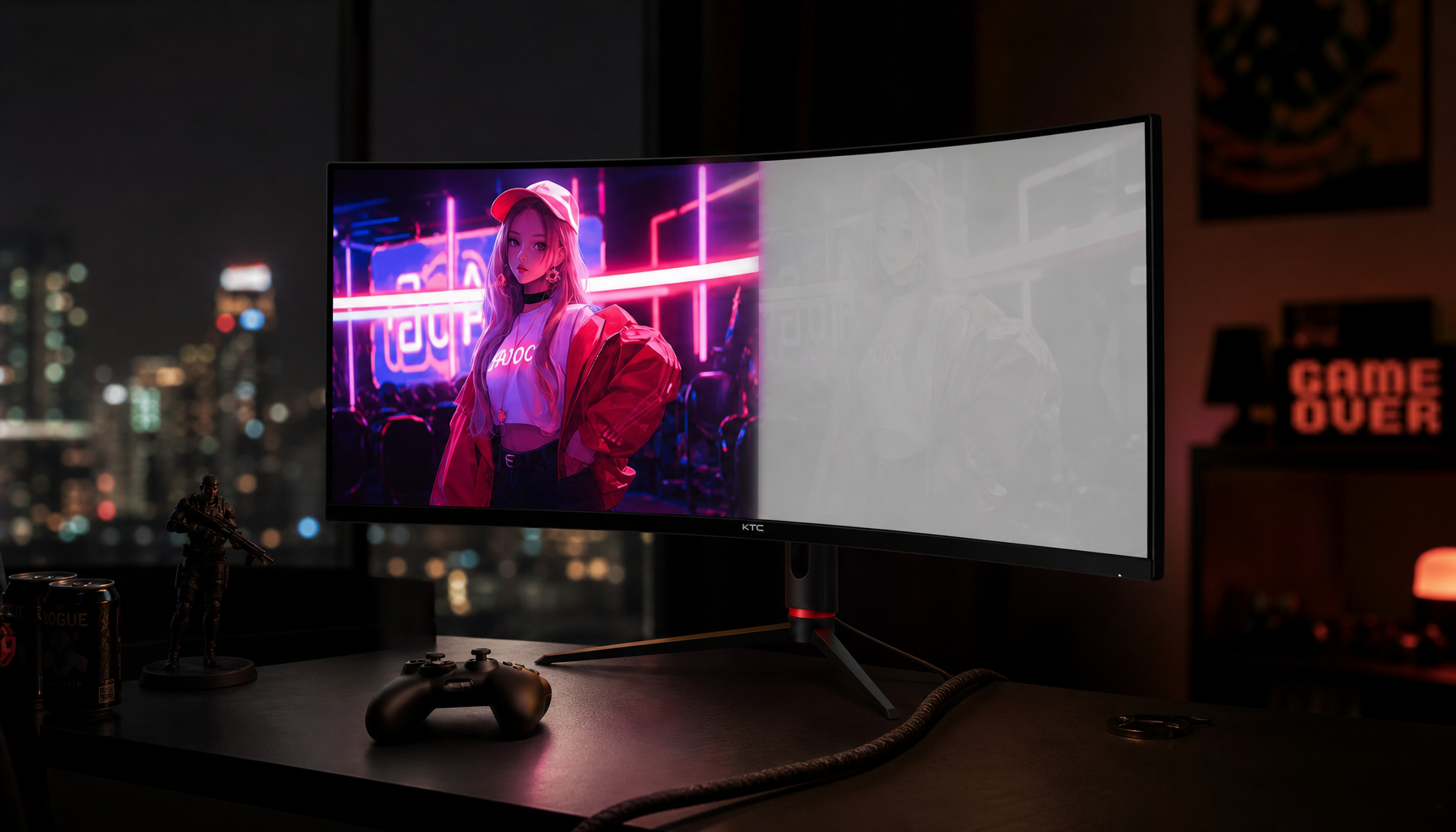
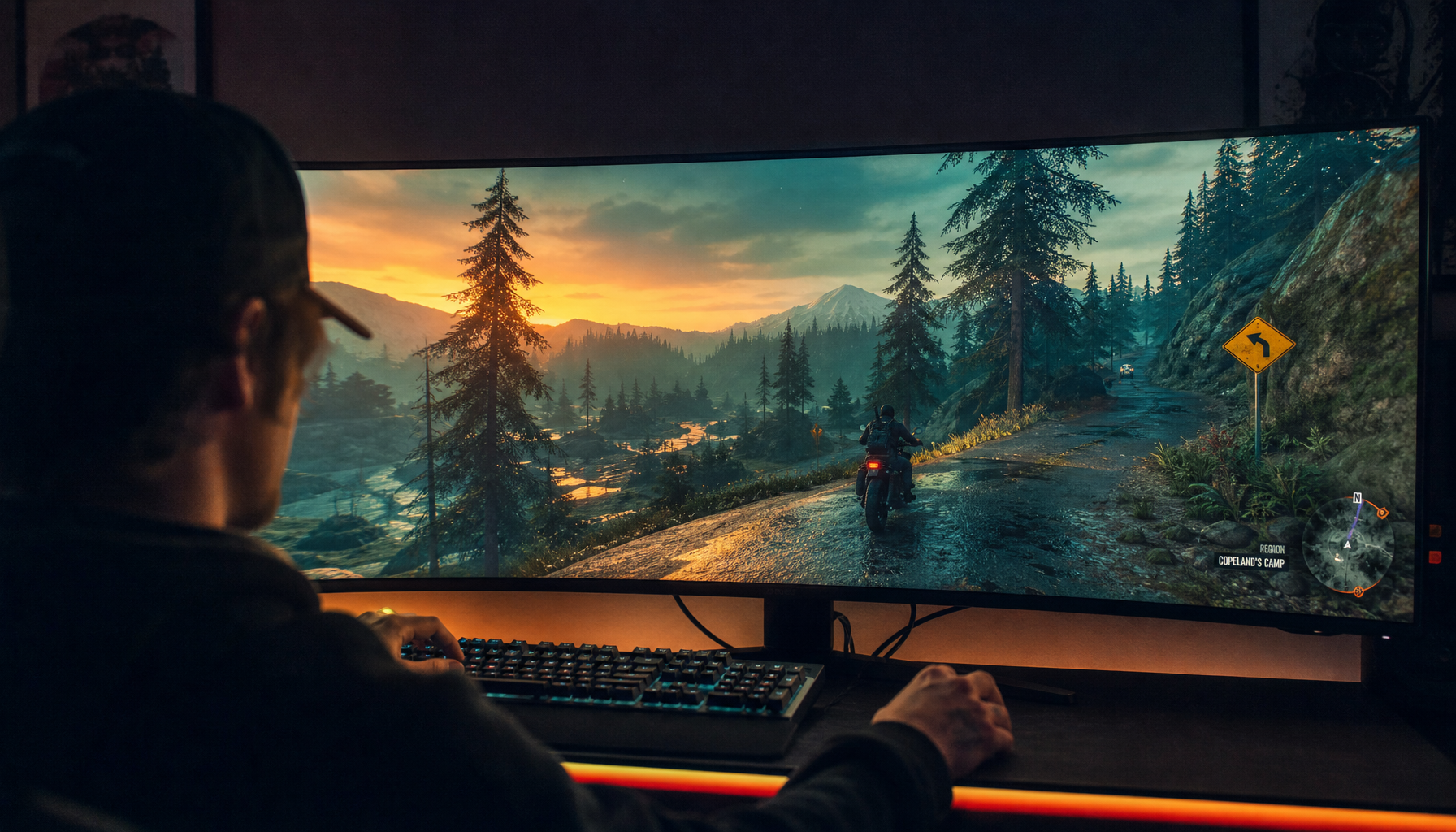
Colors can change between full-screen and windowed mode because the app, operating system, GPU driver, monitor preset, HDR state, or multi-monitor setup may treat the image differently. The fix is usually not a new monitor first, but a controlled check of display mode, color profile, HDR, refresh rate, cable path, and monitor settings.
Does your game look rich in full-screen but washed out in borderless mode, or does a photo editor look neutral in a window and too saturated once expanded? A practical display check can usually isolate the cause in minutes: match the same resolution, refresh rate, picture mode, brightness, and color mode before judging the panel. You’ll leave with a clear way to make colors more consistent across gaming, office, creative, and portable-screen setups.
The Core Reason: Full-Screen Can Trigger a Different Display Path
Full-screen mode often gives an application more direct control over how frames are presented, while windowed and borderless modes are managed alongside the desktop, other windows, overlays, and secondary displays. That difference can affect perceived color because the image may pass through a different mix of operating-system composition, GPU processing, HDR behavior, and monitor-side picture settings.
The most important point is simple: “full-screen” is not one universal mode. Exclusive full-screen, borderless full-screen, and ordinary windowed mode can behave differently depending on the game engine, GPU driver, system settings, and monitor firmware. A forum discussion on PC display modes shows how even performance tuning conversations around games can quickly become system-specific, which is why one blanket answer rarely fits every title.
For a real-world example, a 27-inch 1440p gaming monitor may run a game in exclusive full-screen at 165 Hz with one HDR or color behavior, then return to a borderless desktop at a different refresh setting or SDR desktop color state. The display did not magically become inaccurate; the chain feeding it changed.
Color Accuracy Is Not the Same as “Vivid” Color
A display can look more colorful in full-screen and still be less accurate. Color accuracy means the monitor reproduces intended color values, while vividness is simply how bold or saturated the image appears. A wide-gamut monitor can make standard web, office, and game content look punchier than intended if the monitor is not using a suitable sRGB or standard mode.

Monitor buying notes emphasize that wide-gamut monitors may oversaturate everyday sRGB content if factory presets, calibration, or sRGB modes are poorly handled. In practice, that is why a red health bar, a brand logo, or skin tone may look controlled in a browser window but intense in a full-screen app using a different output path.
For gaming, extra saturation may feel immersive, especially in racing, fantasy, and cinematic titles. For office work, design review, product photos, or video editing, it can become a liability because the screen stops being a reliable reference.
Monitor Presets Can Change Automatically
Many displays store separate settings by input, refresh rate, HDR state, or picture mode. A gaming monitor might use “Racing,” “FPS,” or “HDR” for full-screen play, then “Standard” or “sRGB” on the desktop. Portable monitors and office displays may do the same more subtly through brightness, contrast, color temperature, or low-blue-light settings.
Panel type also influences how obvious the change feels. IPS panels are known for stable colors and wide viewing angles, VA panels usually deliver stronger contrast, TN panels prioritize speed and cost, and OLED panels provide deep blacks with premium contrast. Monitor buying notes frame panel type as a direct driver of color, contrast, viewing angles, and motion behavior, so mode changes become more visible on some screens than others.
If your monitor has a joystick or on-screen display, check the active preset while the app is full-screen, then check it again in windowed mode. If the preset name, HDR indicator, color temperature, or black equalizer setting changes, you have found a likely cause.
HDR and SDR Mismatch Is a Common Culprit
HDR can make highlights brighter and contrast more dramatic, but it can also make colors look wrong when an SDR desktop, HDR game, streaming app, or monitor tone-mapping mode is not aligned. Monitor guidance notes that HDR is most convincing on stronger displays, with HDR 600 or higher generally closer to the experience users expect from modern HDR TVs. Entry-level HDR support may still accept an HDR signal while delivering a flatter or less predictable result.
A common scenario is a game launching in HDR full-screen while the desktop remains SDR, or the reverse. The image may look brighter, dimmer, grayer, or more saturated depending on the app. This is especially noticeable when moving between a game, a browser, a chat app, a video player, and a second monitor.

The practical move is to choose one testing baseline. Turn HDR off everywhere, compare full-screen and windowed, then turn HDR on everywhere and compare again. If the issue appears only in one HDR state, the monitor is probably reacting to tone mapping rather than suffering a hardware fault.
Multi-Monitor Setups Add Another Layer
Dual and triple displays are powerful, but they make color consistency harder. Set each monitor to its native resolution and adjust scaling so windows behave consistently across mixed displays, while also tuning brightness and color through system settings or monitor controls. That advice matters because a full-screen app may launch on one monitor while references, screenshots, or tools sit on another.
A productivity workstation might pair a 4K IPS primary monitor with a 1080p secondary screen or a USB-C portable display. The same spreadsheet, photo, or game menu can look different across those panels because resolution, panel type, gamut, brightness, finish, and viewing angle differ. Productivity notes recommend matching monitor models or calibrating displays for creative work because color and brightness consistency matters when screens sit side by side.
If full-screen color looks wrong, drag the same app window to the target display before launching full-screen. Then confirm that the operating system has the monitors arranged correctly, that the app is not launching on a different panel, and that each display is running its native resolution.
Brightness, Glare, and Viewing Angle Can Fool Your Eyes
Sometimes the software path is not the problem. Your eyes may be reacting to room light, screen angle, or brightness. Eye-fatigue guidance recommends matching display brightness to the room and notes that office lighting around 300 to 500 lux often pairs with roughly 100 to 150 nits screen brightness. When a full-screen app fills your field of view, that same brightness can feel stronger than it did in a smaller window.
Viewing distance matters too. A 32-inch display placed too close can show edge shifts, especially on panels with weaker viewing-angle consistency. On an ultrawide, the corners may sit at a different angle from your eyes than the center, so full-screen content can appear uneven even when a centered window looks fine.
For a simple check, open a neutral gray or white test image in a window, then view it full-screen. Sit centered, dim reflections, and compare the center to the edges. If the color shift mostly appears near corners, sides, or from a slouched position, ergonomics and panel behavior are likely part of the problem.
Pros and Cons of Each Display Mode
Mode |
Color Consistency Potential |
Strengths |
Tradeoffs |
Exclusive full-screen |
Can be excellent, but app and driver may take more control |
Strong for performance-focused gaming and direct display control |
May switch HDR, refresh rate, gamma, or monitor preset |
Borderless full-screen |
Often closer to desktop behavior |
Fast alt-tabbing, easy streaming, smooth multi-monitor use |
May inherit desktop color behavior and overlay effects |
Windowed mode |
Usually easiest to compare against desktop apps |
Best for productivity, references, and quick adjustments |
Can feel less immersive and may not use the same game settings |
The best mode depends on what you value. Competitive players may prefer the mode that delivers the most stable motion and input feel. Creators should prioritize the mode that preserves predictable color. Office users benefit from consistency across windows, especially when comparing documents, dashboards, and video calls.
A Practical Fix Workflow
Start by making the comparison fair. Set the app to the monitor’s native resolution, such as 1,920 by 1,080, 2,560 by 1,440, or 3,840 by 2,160, and use the same refresh rate in both full-screen and windowed mode. Monitor buying guidance repeatedly stresses that cable and port versions matter for high-resolution or high-refresh setups, especially when using HDMI, DisplayPort, or USB-C.
Then lock the monitor into one neutral preset. Use sRGB, Standard, Custom, or a calibrated mode instead of FPS, Movie, Dynamic, or Vivid. Set the same brightness, contrast, gamma, and color temperature before testing again. If your display has black equalizer, dynamic contrast, local dimming, or automatic HDR enhancement, disable those features temporarily.
Next, check the GPU control panel. Look for output color format, bit depth, dynamic range, and refresh settings. If one mode is using limited range and another is using full range, blacks and colors can shift dramatically. There is no universal GPU setting because vendors and operating systems label these controls differently, so the reliable rule is to compare like with like.
Finally, test the app itself. Many games and creative tools have their own brightness, gamma, HDR, and color-space controls. Reset those settings, relaunch the app, and compare exclusive full-screen, borderless full-screen, and windowed mode one at a time.
When the Monitor Itself Is the Limiting Factor
If color still shifts after settings are aligned, the panel may be exposing its limits. Budget gaming monitors can prioritize refresh rate and response time over factory calibration and uniformity. Monitor selection notes point out that 144 Hz to 165 Hz and higher refresh rates mainly benefit gaming and fast motion, while color-critical workflows benefit more from stable panel quality, resolution, and calibration support.
A photographer, designer, or video editor should lean toward a strong IPS, OLED, or well-calibrated professional display, especially at 27 inches or larger. Photography monitor recommendations suggest that most photographers do not need the most expensive print-focused display, but they do need a dependable screen and consistent editing environment; consistent editing matters more than chasing maximum vividness.
For portable smart screens, prioritize full sRGB coverage, IPS quality, stable off-angle color, and reliable USB-C video support. KTC’s portable monitor notes recommend USB-C with DisplayPort Alt Mode because one cable can carry video, power, and touch data, but buyers still need to verify that the laptop’s port supports video output. A weak adapter chain can create more confusion than the screen itself.

FAQ
Should I use full-screen or borderless for better color?
Use whichever mode matches your calibrated desktop behavior most reliably. If both look different, standardize HDR, refresh rate, monitor preset, and in-app gamma before deciding. For competitive games, also judge motion and input response, not color alone.
Why does my second monitor look different from my main monitor?
Different panels, brightness levels, color gamuts, finishes, and viewing angles can all change the image. Matching models helps, but calibration and consistent brightness settings are usually the practical fix.
Can a cable make colors look different?
Yes, indirectly. The cable or port can limit resolution, refresh rate, HDR support, or color format. For 1440p high-refresh, 4K, USB-C, and portable monitor setups, use a cable rated for the display’s actual capability.
Final Word
Color shifts between full-screen and windowed mode are usually a setup mismatch, not a mystery defect. Treat the display chain like a performance system: align the app mode, HDR state, refresh rate, GPU output, monitor preset, and room lighting, then judge the panel. A monitor that stays consistent across those conditions is the one that earns your trust for play, work, and immersive screen time.