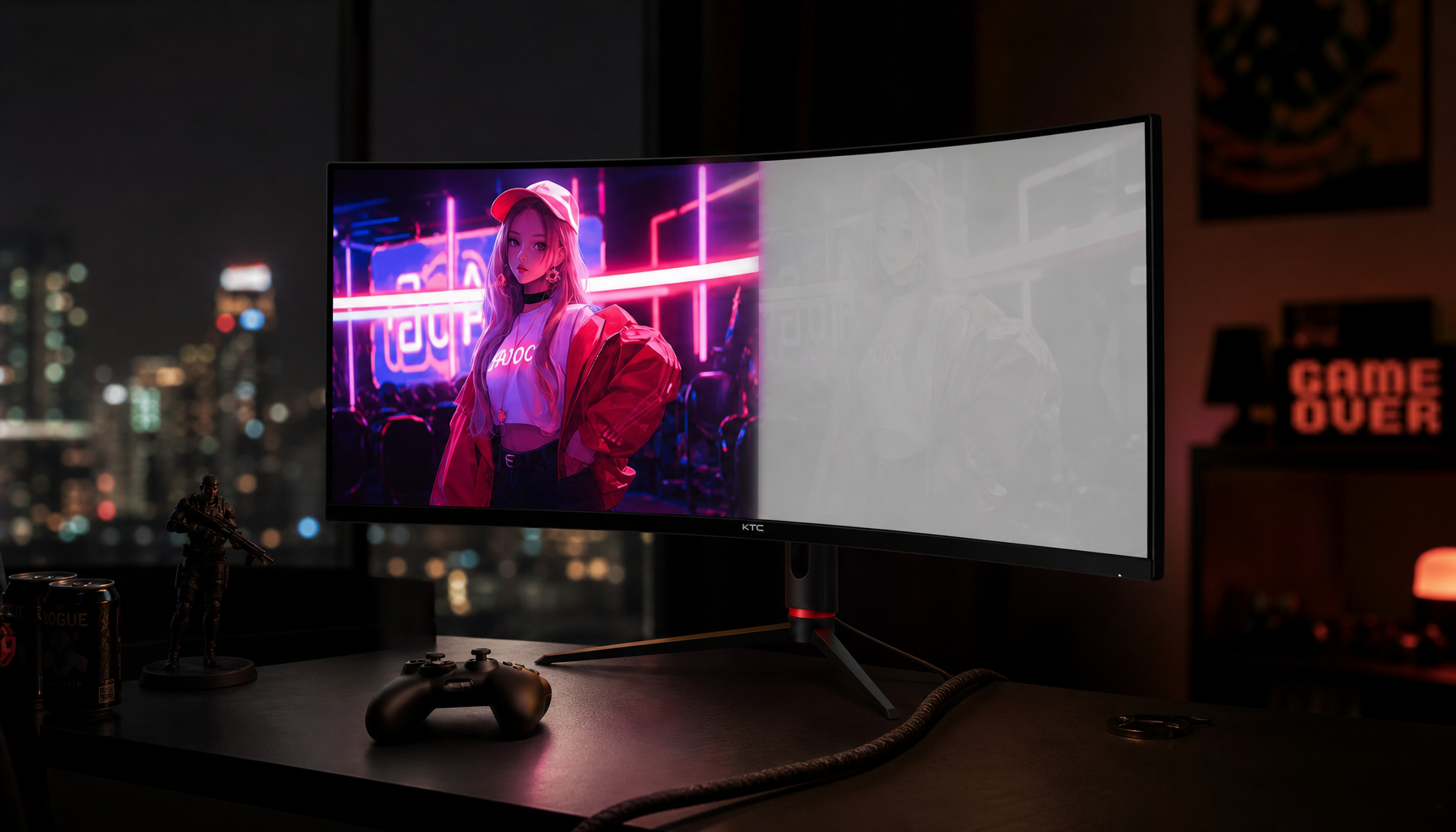
Black levels change between display presets because each mode can alter brightness, gamma, contrast, color processing, HDR tone mapping, local dimming, and visibility enhancement. The panel may be the same, but the signal processing is not.
Does your monitor look inky in Cinema mode, gray in Standard mode, and strangely washed out in FPS mode? A few controlled setting checks can usually identify whether the issue is calibration, preset processing, room lighting, or the panel’s native limits. You can then choose the right preset and stabilize blacks for gaming, office work, creative review, and portable-screen use.

Why Black Level Changes When You Switch Presets
A display preset is not just a color “look.” It is often a bundle of hidden decisions: backlight level, black level, gamma curve, contrast ceiling, color temperature, dynamic contrast, HDR handling, overdrive behavior, and sometimes local dimming behavior. That is why two modes on the same monitor can make the same dark scene look completely different.
Black level is not controlled by one setting. Brightness and contrast calibration can affect dark images, washed-out colors, and hard-to-read text even before professional calibration enters the conversation. In practical terms, a Movie preset may lower brightness and use a darker gamma curve, while an FPS preset may lift shadows so opponents hiding in dark corners are easier to see.
For a gaming monitor, that shadow lift can be useful. For photo editing, it can be damaging. For office productivity, it can make dark mode feel cloudy and reduce the separation between panels, charts, and text. The inconsistency is not random; it is usually the preset doing exactly what its target use case demands.
The Main Causes of Black Level Inconsistency
Brightness Changes the Floor
Brightness on most LCD monitors controls the backlight or perceived black floor, not just how bright the screen feels. If one preset runs the backlight harder, black areas may look lighter because the LCD panel still leaks some light even when showing black.
That is especially visible in a dark room. A 27-inch IPS QHD monitor that looks acceptable at 35% brightness during the day may look gray and uneven at 80% brightness at night. The image did not change; the room made the leakage obvious.
Portable monitors add another layer. Many are used beside laptops, powered through USB-C, and moved between hotel rooms, offices, and coffee-shop lighting. Portable monitor adjustment guidance commonly ties brightness, contrast, color temperature, native resolution, and refresh rate together because a portable screen’s perceived black level changes quickly as lighting and power conditions change.
Gamma Reshapes Shadows
Gamma is the tone curve between black and white. It controls how quickly dark tones rise out of black, which is why gamma can make shadows look rich, crushed, or milky without changing the actual panel hardware.

For most computer work, gamma 2.2 is the reliable baseline because it aligns with common SDR desktop and web expectations. A darker gamma such as 2.4 can make movies feel more contrast-rich in a dim room, but it may hide shadow detail in a bright room. A lighter effective gamma can reveal more detail in games, yet it often weakens depth and makes blacks look elevated.
This is where preset naming gets messy. A Standard mode may sit close to gamma 2.2. A Cinema mode may target a darker curve. A Game or FPS mode may raise near-black tones intentionally. If your black level jumps when switching modes, gamma is one of the first suspects.
Contrast and Black Stabilizers Can Override Accuracy
Gaming monitors often include features with names like black equalizer, shadow boost, dark stabilizer, dynamic contrast, or visibility enhancer. These tools are designed to separate dark objects from dark backgrounds. They are performance tools, not accuracy tools.
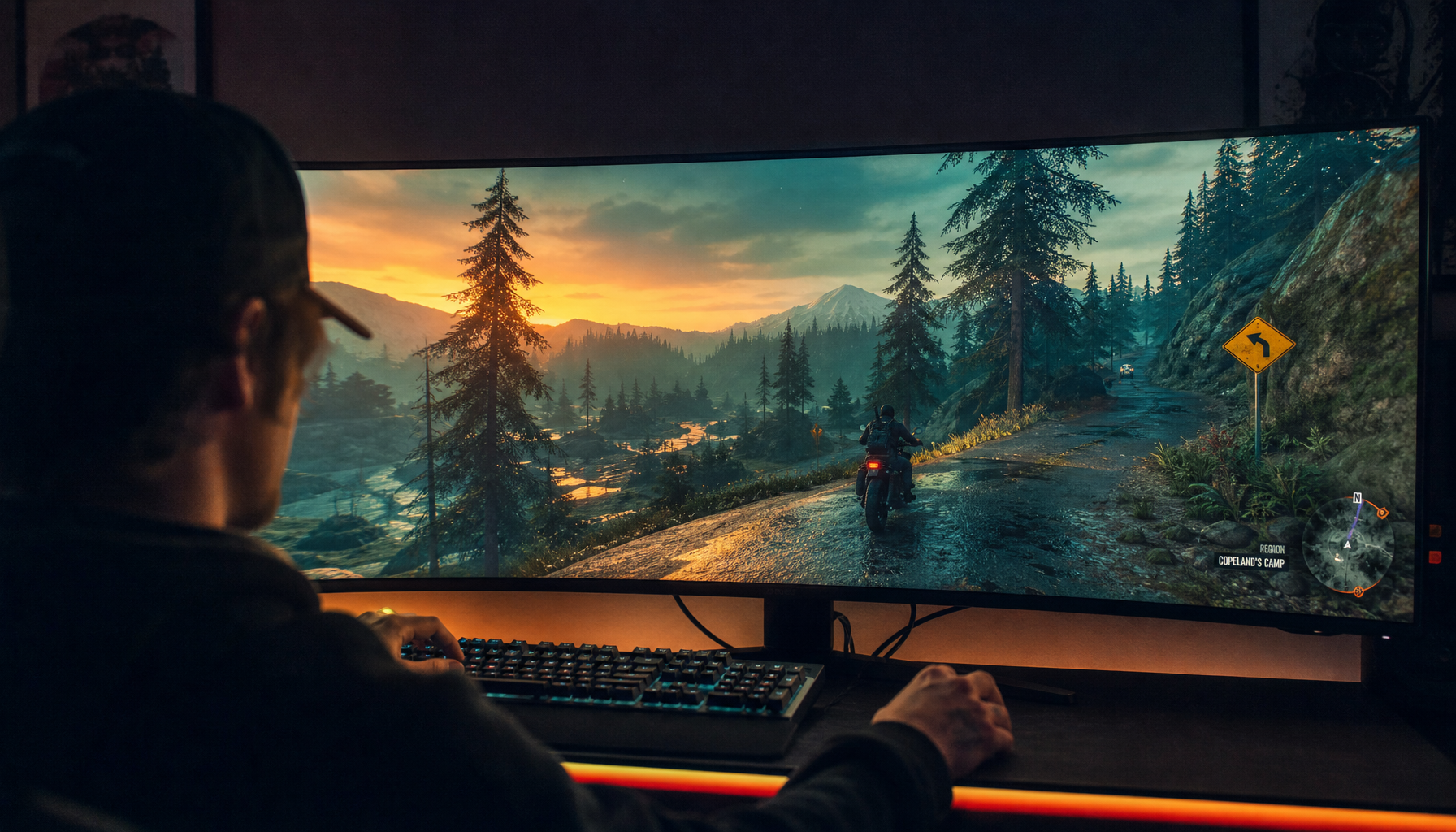
The upside is obvious in competitive play. In a tactical shooter, lifting near-black detail can make a doorway, character model, or weapon outline easier to track. The downside is equally real: the whole scene can lose depth, night maps can look foggy, and cinematic HDR games can lose the lighting mood the developer intended.
This is why the same monitor can feel better in one game and wrong in another. Competitive presets often trade immersion for information. Story games, RPGs, horror titles, and HDR showcases usually benefit from more neutral black handling.
HDR Tone Mapping Changes the Rules
HDR presets can behave very differently from SDR presets because the display is mapping a wider luminance range into the panel’s actual capability. A 400-nit monitor cannot reproduce a 1,000-nit HDR master at full intensity, so the display has to decide what to preserve and what to compress.
HDR tone mapping affects brightness, contrast, shadow detail and highlights. One HDR mode may protect bright highlights and leave midtones darker. Another may lift shadows to keep games readable. A dynamic tone-mapping mode may shift from scene to scene, which can make black levels feel unstable even when the monitor is functioning normally.
For console and PC gaming, the cleanest approach is to run the platform’s HDR calibration after choosing the monitor’s HDR mode. Set peak brightness to what the display can actually sustain, not to a marketing number. If blacks look raised in HDR but stable in SDR, the issue is likely tone mapping, not basic panel failure.
Panel Type Sets the Limit
Preset tuning matters, but the panel still sets the ceiling. IPS, VA, TN, OLED, and QD-OLED do not create black in the same way.
Panel Type |
Black Level Strength |
Common Preset Behavior |
Best Fit |
IPS |
Consistent color and viewing angles, weaker native black depth |
Presets often lift blacks in game modes or emphasize color accuracy in creator modes |
Office, creator work, general gaming |
VA |
Deeper native blacks than most IPS panels, but slower dark transitions and angle sensitivity |
Movie modes can look rich; off-center viewing can shift shadow tone |
Dark-room entertainment, centered solo play |
OLED/QD-OLED |
Per-pixel black with exceptional contrast |
Presets vary more in tone mapping, ABL, brightness protection, and HDR roll-off |
Immersive gaming, HDR, premium media |
TN |
Fast and affordable, weaker viewing angles and color |
Esports presets often prioritize speed and visibility over depth |
Budget competitive play |

IPS remains the balanced workhorse because it offers color consistency and viewing-angle stability, but native black depth is not its strongest trait. Discussions of IPS black levels often compare LCD behavior with self-emissive or strobing display types, which can feel more convincing in dark scenes. That expectation gap can disappoint users coming from displays with stronger dark-room contrast.
VA can look deeper head-on, especially in movies, but a large VA screen may show different shadow tone at the edges because your eyes view those edges at an angle. OLED avoids LCD backlight leakage almost entirely, which is why OLED is widely valued for gaming when contrast, response time, and black level matter. The tradeoff is price, burn-in management, and sometimes aggressive brightness behavior with static desktop elements.
Why Presets Differ by Use Case
Gaming Modes Prioritize Visibility and Speed
Gaming presets are tuned for reaction, tracking, and input feel. They may raise black levels, increase saturation, sharpen edges, alter overdrive, and push refresh-dependent settings. For competitive gaming, that can be rational. A darker, more accurate picture is not always the best tactical picture.
A 1440p 165 Hz or faster monitor can feel excellent for gaming only when the GPU can feed it properly, and monitor choice should match PC hardware rather than chase the largest spec sheet. The same logic applies to presets: use the one that matches the job. Choose FPS mode for ranked play, a neutral or RPG mode for cinematic games, and calibrated SDR or HDR mode for content review.
Office Modes Prioritize Comfort and Text
Office and productivity presets often reduce brightness, use a neutral or slightly warmer white point, and avoid extreme contrast. That helps with spreadsheets, dashboards, documents, and long sessions in dark mode.
For example, if your monitor’s FPS preset makes dark spreadsheet gridlines look too pale, switch to Standard or sRGB, set brightness for the room, and adjust OS scaling rather than lowering resolution. Modern monitor buying advice commonly points office users toward balanced IPS QHD displays with USB-C and factory-calibrated sRGB because stability matters more than dramatic image punch.
Creator Modes Prioritize Repeatability
Creator, sRGB, DCI-P3, and factory-calibrated presets usually aim for controlled color and tone. They may lock certain settings to protect accuracy. That can frustrate gamers who want more shadow visibility, but it helps prevent editing mistakes.
If a photo looks correct only in your monitor’s vivid mode, it may look oversaturated or too dark elsewhere. For color-sensitive work, choose the most accurate preset first, then calibrate brightness, contrast, gamma, and color balance. Monitor calibration should start by inspecting presets and choosing the one closest to correct before making adjustments.
How to Diagnose the Cause
Start with one familiar image or test pattern that includes deep black, near-black shadow detail, neutral gray, and bright white. Use the same image in every preset. If the black floor rises while shadow details become easier to see, the preset is lifting near-black tones. If the entire screen gets brighter, brightness or backlight changed. If highlights clip while blacks look punchier, contrast or dynamic contrast is likely involved.

Next, compare SDR and HDR separately. Do not judge HDR behavior from an SDR desktop, and do not judge SDR accuracy with HDR forced on at the operating-system level. HDR mode can remap the whole luminance curve, especially on monitors without strong local dimming or high sustained brightness.
Then check viewing position. Sit centered, keep your eyes near the center of the screen, and tilt the panel toward you. If the corners brighten or darken as you move your head, the issue may be viewing angle, IPS glow, VA gamma shift, or panel uniformity rather than preset logic alone.
Finally, record the useful values. Write down brightness, contrast, gamma, color temperature, black equalizer, local dimming, HDR mode, and dynamic contrast for the presets you actually use. This turns display tuning from guesswork into a repeatable setup.
Best Practical Settings by Scenario
Scenario |
Recommended Starting Point |
Why It Works |
Everyday office work |
Standard, sRGB, or Custom with gamma near 2.2 |
Keeps text, gray UI, and dark mode predictable |
Competitive gaming |
Game or FPS mode with restrained shadow boost |
Improves visibility while limiting gray blacks |
Cinematic gaming |
Standard, RPG, Cinema, or accurate HDR mode |
Preserves depth, lighting intent, and atmosphere |
Photo or video work |
sRGB, Creator, or hardware-calibrated preset |
Reduces the risk of editing against a distorted display |
Portable second screen |
Native resolution, room-matched brightness, neutral color |
Keeps blacks stable across changing lighting and power |
For ultrawide users, consistency across the panel matters as much as the center measurement. A large 34-inch or wider display naturally places the edges farther off-axis, and ultrawide monitor testing often values even backlighting, uniform color, and measured contrast because big workspaces make inconsistencies easier to notice.
Pros and Cons of Using Multiple Presets
Multiple presets are useful when they are treated as purpose-built tools. A competitive gaming preset can make dark targets easier to see. A creator preset can keep color and tone restrained. A movie preset can improve perceived depth at night. A low-brightness office preset can reduce fatigue during long document sessions.
The downside is drift. If you constantly switch presets without knowing what each one changes, you may blame the panel for what is really a mode-specific gamma or black stabilizer setting. You may also make poor creative decisions, such as editing shadow detail in a lifted gaming mode and later finding the image too dark on other displays.
The best workflow is simple: keep one neutral baseline preset for serious work, one performance preset for competitive games, and one media or HDR preset for immersive content. Do not try to make one mode perfect for every environment.
When Preset Differences Signal a Real Problem
Preset variation is normal. Severe blotches, bright corners, flashlight-like edge glow, or black areas that look uneven in every mode may point to black uniformity or backlight bleed. LCD monitors can show clouding, bleed, or glow depending on panel type, assembly pressure, and unit variation. OLED avoids most backlight-uniformity issues because pixels can turn off individually, but it has its own ownership concerns around static content and brightness protection.
If only one preset looks wrong, reset that preset or disable dynamic features. If every preset looks wrong, test another cable, another input, native resolution, and a second device. If the defect remains visible on a black screen in a dim room at reasonable brightness, it may be a hardware issue worth documenting with photos for warranty support.
FAQ
Should I Use the Black Equalizer Setting?
Use it when visibility matters more than image accuracy. It is valuable for competitive gaming, but it can make movies, single-player games, and dark-mode office work look flat.
Why Does HDR Make Blacks Look Worse on Some Monitors?
HDR depends on tone mapping, peak brightness, local dimming, and the panel’s native contrast. If the monitor lacks enough brightness or dimming control, HDR may lift shadows or compress contrast in a way that looks worse than well-set SDR.
Is OLED the Only Way to Get Consistent Blacks?
No, but OLED and QD-OLED are the strongest options for true black depth because they do not rely on a backlight. A good VA panel can deliver strong dark-room contrast, while IPS remains excellent for consistency, color, and productivity even if its blacks are not as deep.
Black level inconsistency between presets is usually a settings stack, not a mystery defect. Choose the preset by job, lock in a neutral baseline, and treat shadow-boosting modes as performance tools rather than accuracy modes. That gives you a screen that works harder for the way you actually play, build, edit, and focus.