Portable monitor battery drain is real, but it is not one simple number. The laptop is usually carrying part of the load, brightness changes power use fast, and USB-C behavior can change how much drain you see in a real setup.
Why Portable Monitors Drain Laptop Batteries
A portable monitor can drain a laptop battery because the laptop is doing more than just sending an image. It may also be driving the display signal, handling extra graphics work, and supporting any power path the monitor needs. That is why the same screen can feel easy on one laptop and more demanding on another.
Bright rooms make the issue show up faster. If you push brightness higher for coffee shops, airports, or daylight-adjacent travel, the display side of the setup tends to use more power. Lower brightness on LED and LCD displays is still one of the quickest ways to cut that draw.
Connection type matters too. USB-C Power Delivery is a negotiation system, so one cable can behave very differently depending on the port, cable, and device. In other words, portable monitor battery drain is partly a cable-path question, not just a screen question.
For most shoppers, the useful judgment is simple: if your laptop battery is already small, your work is heavy, or your display must stay bright, expect the monitor to shorten runtime more than you first hoped. If your setup is light and the panel stays dim, drain may be manageable but still not negligible.

The Main Drivers of Laptop Battery Drain
| Factor | How It Affects Drain | When It Matters Most | Easiest Mitigation |
|---|---|---|---|
| Brightness | Higher brightness usually raises display power use quickly. | Bright cafés, airports, outdoor-adjacent seating, long sessions. | Start lower and raise only if readability suffers. |
| Workload | Video calls, streaming, and heavy spreadsheets generally ask more of the laptop than email or notes. | Meetings, editing, multitasking, and sustained dual-screen work. | Close unused apps and simplify what stays visible. |
| Connection path | USB-C, HDMI, and battery-equipped displays can change how power is negotiated and moved. | When one cable is expected to handle both signal and power. | Check the laptop port behavior before relying on it away from an outlet. |
| Laptop battery health | Older batteries can lose usable runtime faster under the same load. | Refurbished laptops, older work machines, high-cycle systems. | Test the exact machine before a long travel day. |
| System behavior | Some laptops drain or charge differently depending on the port, adapter, and graphics load. | Mixed-brand setups and devices with strict USB-C rules. | Verify whether the laptop can run the display reliably without extra strain. |
The main takeaway is that portable monitor battery drain comes from the whole setup, not just the panel. Brightness and workload are usually the fastest levers you can control, but the laptop itself can still change the result in a noticeable way.

If you want a deeper brightness-focused setup note, separate brightness profiles are worth using so you are not running the screen brighter than your work actually needs.
Ways to Cut Drain During All-Day Use
- Start with lower brightness than you think you need. If the text is still readable, keep it there. Brightness is one of the fastest ways to stretch runtime, and it usually matters more than cosmetic display settings.
- Match the screen to the task. Email, docs, and note-taking usually need less GPU effort than video calls, media playback, or complex spreadsheets. A lighter workload helps the laptop carry the external screen with less strain.
- Use the cable path your laptop handles best. USB-C can be convenient, but it is not automatically the most efficient route in every setup. Check whether your laptop port charges, outputs display, or does both cleanly.
- Watch the background load. If the laptop is already running hot or the battery is aging, a portable monitor can push runtime down sooner than expected. The drain is often more visible when you stack several demanding tasks at once.
- Test the exact setup before you travel. A setup that looks fine at home can feel different in an airport or café, especially if you raise brightness to compensate for glare.
- If you routinely need long sessions away from outlets, consider whether a battery-powered display fits better than a standard portable monitor. That is not because every battery display is perfect, but because it changes the dependency on the laptop battery itself.
Portable desk setup tips can also help if your travel workspace is temporary, since a stable position often keeps you from cranking brightness higher than needed.
For a related setup check, real-world runtime testing can show how brightness and workload change endurance in everyday use.
When a Battery-Powered Display Makes More Sense
A battery-equipped display is usually the better fit when the monitor itself needs to be less dependent on the laptop. That matters most for long meetings, mixed entertainment, travel days with weak outlet access, or touch-first use where convenience matters as much as size.
A standard portable monitor can still be the better pick if you want the lightest possible second screen and do not mind managing cable and power trade-offs. But if your real problem is avoiding laptop drain over a long session, a self-contained display changes the decision path.
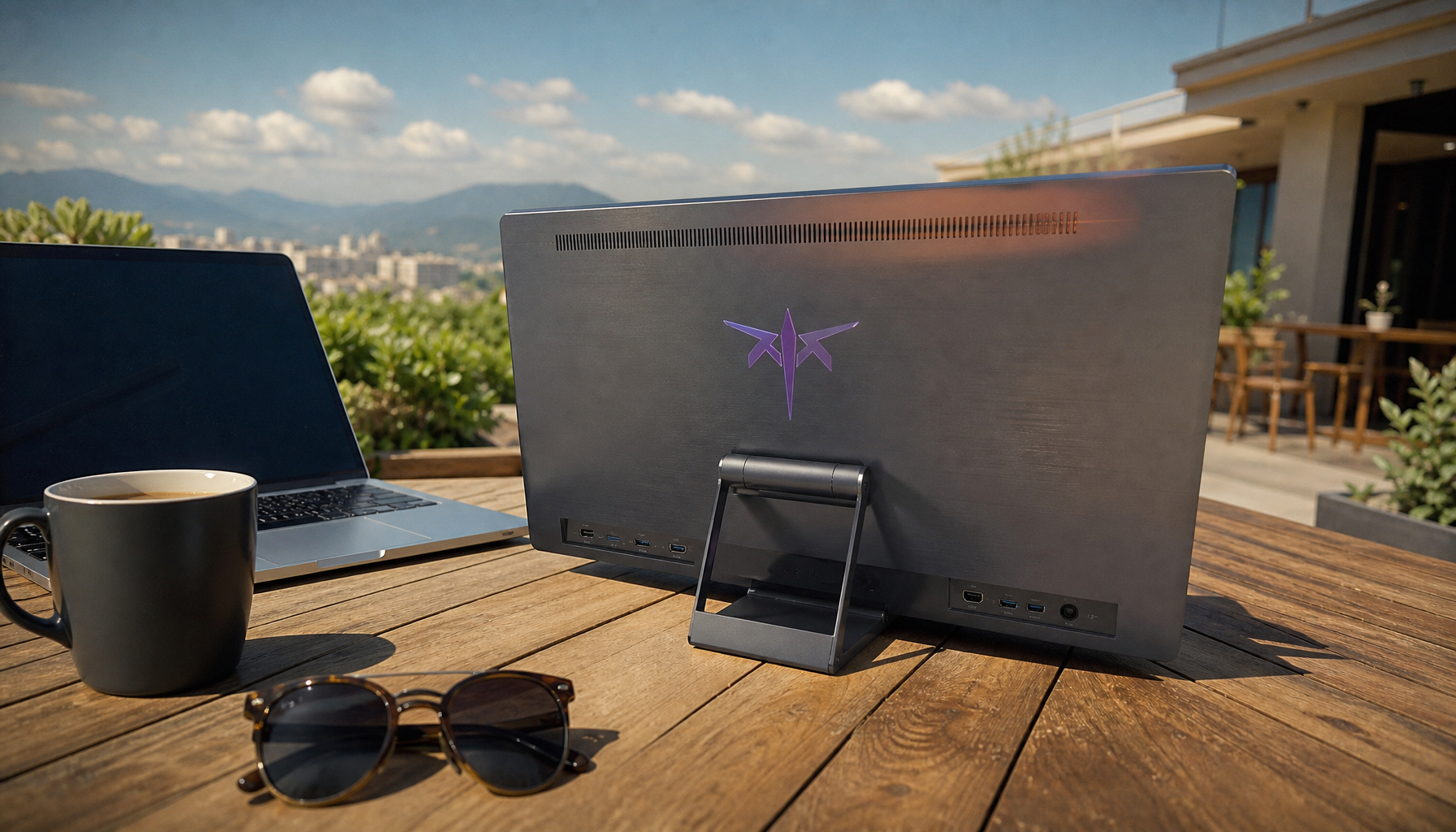
The battery-equipped touch display example below is useful to check if you want a built-in battery, touchscreen support, Android 14, and a 32-inch 4K class layout instead of a bus-powered portable monitor. It is a neutral fit-for-need option for readers who care more about independence from laptop power than about the smallest travel footprint.
If you want to compare that style of device against other portable touch options, the Mobile Touch Screen collection is the easier browsing path.
For readers weighing a different form factor, the portable smart display vs tablet comparison is a useful next step when the real question is whether a screen should stay tied to a laptop at all.
Portable Monitor Battery Drain Checklist
- Check whether your laptop's USB-C port supports the display and power behavior you expect. USB-C can be convenient, but not every port behaves the same.
- Lower brightness before you judge battery life. If the image is still comfortable, you may recover more runtime than by changing other settings first.
- Keep the workload realistic. Heavy multitasking, video calls, and streaming will usually shorten runtime more than text-only work.
- Decide whether you need a standard portable monitor or a battery-equipped display. If you will be far from outlets for hours, that choice matters more than minor spec differences.
- Test your exact laptop, cable, and monitor combination at home before you rely on it at an airport, hotel, or café.
- If your travel setup is a table, hotel desk, or shared workspace, portable desk setup guidance can help you keep the screen in a position that stays readable at lower brightness.
The safest rule is not to assume all-day use will happen automatically. If you need a second screen and battery life is tight, start by testing brightness, then verify the connection path, then decide whether a self-contained display is the better fit.
FAQs
How Much Extra Battery Does a Portable Monitor Use?
It varies a lot. Brightness, workload, connection type, and laptop behavior all change the result, so the safest way to think about portable monitor battery drain is in ranges and tests rather than a single universal number.
Can a Portable Monitor Run All Day Without Draining My Laptop Fast?
Sometimes, but not as a guarantee. A larger laptop battery, lower brightness, lighter work, and a favorable USB-C path can help, yet the same monitor may feel much less efficient on a different machine.
What Connection Type Is Best for Lower Power Draw?
It depends on the laptop and display. USB-C may be the most convenient, but HDMI or a separate power path can make more sense when the port behavior is clearer or when you need to protect laptop battery life.
Does Lowering Brightness Really Help Laptop Battery Life?
Yes, usually. Lower brightness is one of the quickest practical ways to reduce display power use, and it often gives more noticeable savings than changing minor visual settings.
When Is a Battery-Powered Portable Display a Better Choice?
Choose it when outlet access is uncertain and you need long sessions away from power. That is especially true for travel, long meetings, and touch-first use cases where laptop drain is the main complaint.
Final Takeaway
Portable monitor battery drain is mostly a setup problem, not a mystery. If you want the best chance at a long workday, start with brightness, workload, and the laptop's USB-C behavior. If you keep running out of battery anyway, a battery-powered display may be the more practical choice. Test your exact setup before a trip, then buy for the way you really work.