Sitting too close to a large screen can make gaming-related motion sickness more likely. The main issue is how much of your field of view the screen fills and how strongly that amplifies visual motion.
Yes. Sitting very close to a large screen can make motion sickness in games more likely because the display fills more of your field of view and strengthens the mismatch between what your eyes see and what your body feels.
Does your stomach turn after a fast camera pan even though you are sitting perfectly still? In real gaming setups, simply moving a large monitor farther back, lowering camera speed, and improving posture often makes symptoms noticeably easier to manage. Here is why it happens, how to tell whether screen distance is part of the problem, and how to tune your setup without giving up immersion.
Why a big screen up close can make you feel sick

Motion sickness can happen when visual input conflicts with balance signals, which is why players can feel dizzy, nauseated, sweaty, or unusually tired even while sitting at a desk. A large display viewed from too close can intensify that conflict because more of your visual field is dominated by motion, especially in first-person games with quick turns, sprinting, head bob, or narrow corridors rushing past the edges of the screen.
That is the key distinction: the screen itself is not the problem, but the combination of screen size, distance, game camera behavior, and your own sensitivity can push a comfortable setup into an uncomfortable one. Sitting farther back can help reduce simulator sickness, because it gives the brain more evidence that your body is not actually moving. In practical terms, a 32-inch or 34-inch display at roughly arm’s length usually feels very different from the same screen at an unusually close desk position.
What “too close” usually looks like in a gaming setup

“Too close” is less about a single magic number and more about whether the display overwhelms your natural viewing zone. Ergonomic monitor guidance recommends about an arm’s length, and larger screens generally need more space than smaller ones. Another ergonomic source aimed at desk users places 32-inch-and-larger screens at roughly 31 to 39 inches for comfortable viewing rather than the shorter distances many players default to on shallow desks. Comfortable viewing distance matters more on larger panels.
A simple reality check helps. If you cannot see the whole HUD without darting your eyes around, if the side edges feel like they are flying by, or if you lean back during fast scenes because the image feels overwhelming, you are probably too close for that game and that screen size. On a 27-inch monitor, many players tolerate a tighter distance well. On a 32-inch display or ultrawide, the same desk position can suddenly turn a smooth title into a nausea trigger.
Why some games trigger it more than others
Video-game nausea is especially common in visually aggressive titles, and first-person games are usually the biggest offenders because they maximize apparent self-motion. Fast field-of-view shifts, camera acceleration, motion blur, weapon sway, and head bob all tell your eyes that you are moving through space. Your inner ear disagrees. The bigger and closer the image, the stronger that disagreement can feel.
This is why sitting too close does not bother everyone in every game. A turn-based strategy game on a 32-inch screen may feel fine, while a fast FPS on the same monitor can feel awful within minutes. Steam’s support advice for nausea during gameplay also points to practical performance factors: higher refresh rates, VSync, and keeping frame rate from dropping below about 30 FPS can reduce discomfort. When motion is jerky, inconsistent, or tearing across the screen, the sensory load gets worse.
Large-screen immersion has benefits, but there is a tradeoff
A big display is not the enemy. It can improve target visibility, reduce squinting, and create strong immersion when the setup is balanced. Ergonomic display guidance supports larger screens for visual comfort, and that same logic carries into gaming. More screen area can feel more natural than a cramped laptop or tiny portable panel.
The tradeoff is that immersion can become overload when the screen takes up too much of your visual field. That is also why a very small screen is not a perfect fix. Reducing size too much can create eye strain, force squinting, and contribute to headaches. The goal is not to make the image tiny; it is to keep motion believable, readable, and easy to track.
How to adjust your monitor so immersion stays comfortable

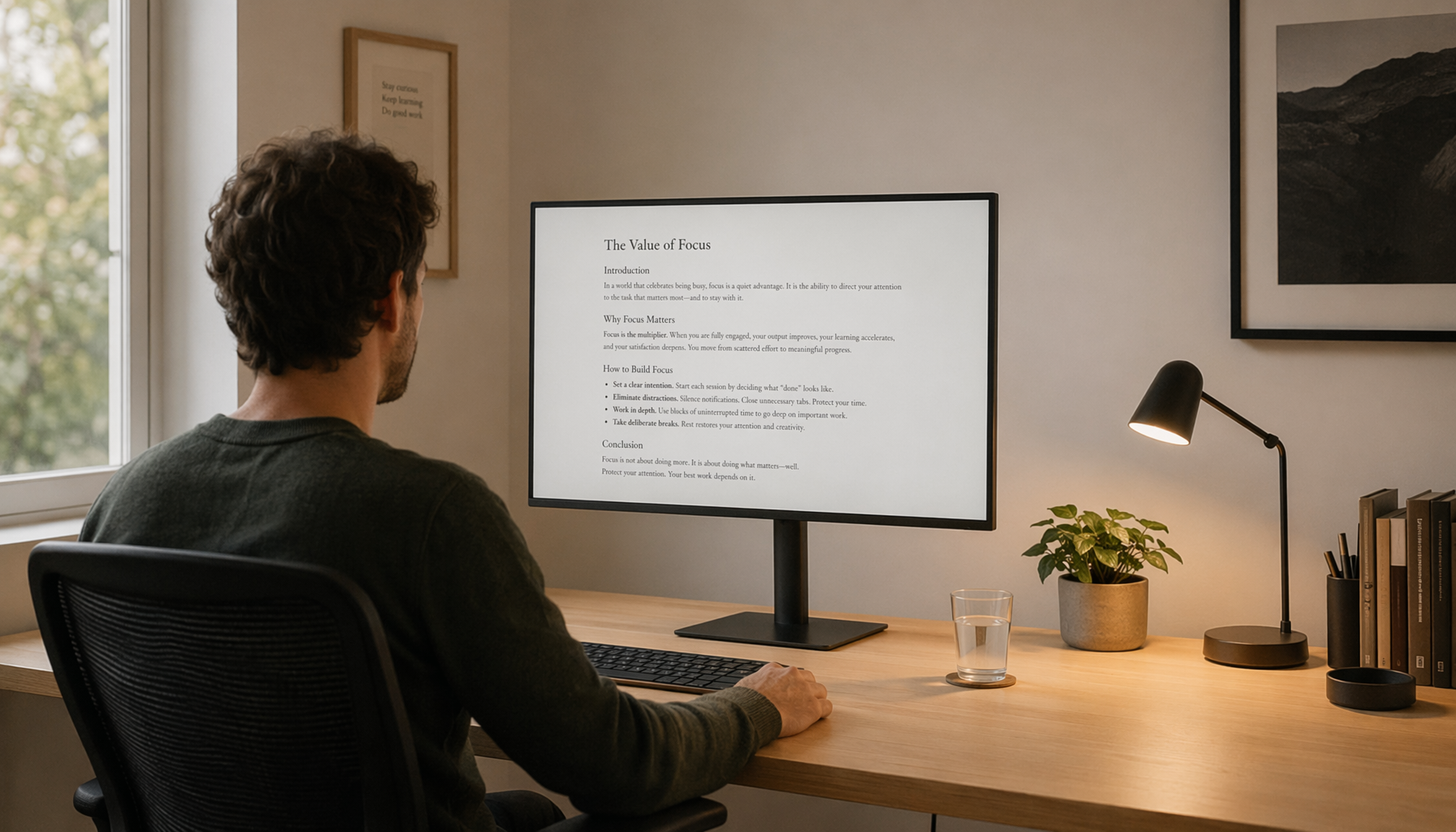
Monitor height and angle matter because a neutral posture helps you tolerate long sessions more comfortably. For most gaming desks, the top portion of the active image should sit around eye level or slightly below it, with a slight backward tilt rather than a perfectly upright posture. If the monitor is too high, your chin lifts. If it is too low, you crane forward. Either posture makes long sessions harder to tolerate, and discomfort can blend into nausea faster than many players realize.
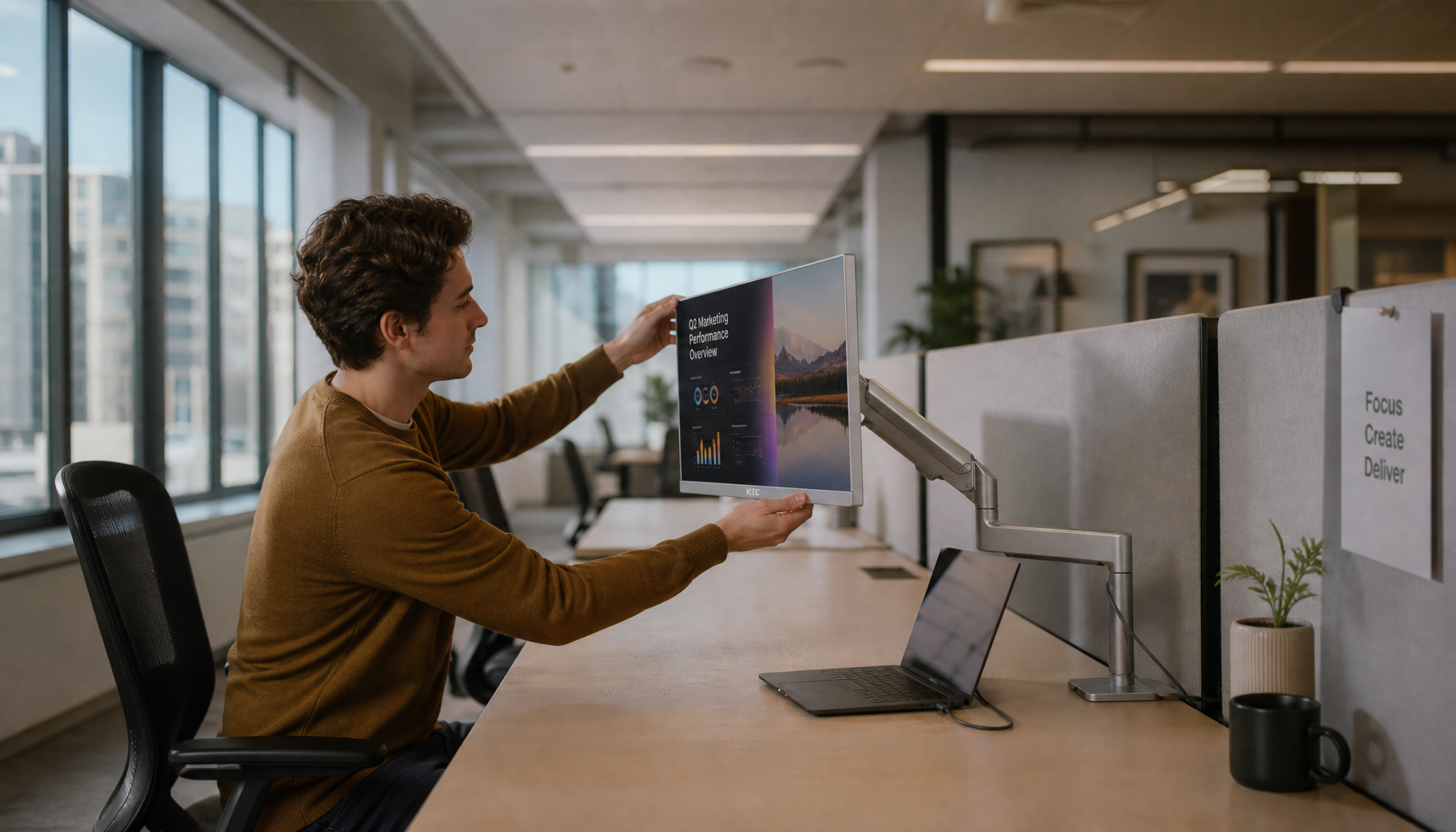
A useful rule in real setups is to fix the chair first, then the screen. Set your feet flat, relax your shoulders, and place the display directly in front of you. If you are using a 32-inch screen, try moving it back until you can see the corners without effort. If the desk is too shallow, a monitor arm often solves more than a settings menu ever will.
The room matters too. Moderate lighting and visible, stable surroundings can reduce symptoms, while a glowing screen in a dark room makes visual contrast harsher and can make your brain feel more locked into the moving image. A fan, some fresh air, and short sessions are practical ways to reduce the load on your system.
What to change in the game before you blame the monitor
If you suspect distance is part of the problem, change one variable at a time. Start by sitting farther back and reducing camera sensitivity. Then turn off motion blur, reduce head bob, and test a third-person camera if the game offers it. Shorter sessions and stopping when symptoms begin also help, because pushing through usually prolongs the problem instead of fixing it quickly.
There is one useful nuance to keep in mind. Research on immersive displays shows that headset-based viewing can provoke much stronger sickness than a standard 2D screen, while other visual studies suggest that stable real-world cues around the image can help settle the conflict. Stable real-world cues can reduce visual conflict. That helps explain why a monitor across the desk may be tolerable even when a headset is not. If you feel sick on a monitor, that does not automatically mean you will never tolerate games again; it may mean your current combination of screen fill, motion style, and distance is a poor match.
When medication and symptom aids make sense
Medical first-aid guidance supports options such as dimenhydrinate, but medication is not the first display-side fix to try for ordinary gaming discomfort. For many players, the better first move is to adjust distance, smooth out frame delivery, and shorten sessions before reaching for pills that may cause drowsiness.
If nausea is strong, new, or paired with unusual neurological symptoms, do not assume it is just gaming sickness. Motion-sickness-like symptoms can have other causes, and persistent or atypical episodes deserve proper medical evaluation.
A quick way to judge your own setup
The comparison below is a practical starting point for large-screen gamers.

Setup factor |
Lower-risk direction |
Higher-risk direction |
Screen distance |
Around arm’s length or more |
Unusually close for the panel size |
Field of view feeling |
You can see the HUD and edges comfortably |
Edges feel dominant or rushing |
Game camera |
Smooth, predictable, lower sensitivity |
Fast turns, head bob, motion blur |
Performance |
Stable frame pacing, adequate refresh |
Stutter, tearing, unstable frame rate |
Room lighting |
Moderate light with visible surroundings |
Dark room with only a bright screen |
Session length |
Short sessions with breaks |
Long uninterrupted play |
A high-performance display should pull you into the game, not push your balance system past its limit. If a large screen makes you feel off, do not give up on the panel too quickly. Move it back, lower the visual chaos, keep the top of the image slightly below eye level, and let comfort set the distance before spectacle does.