Value monitor buyers should check monitor arm compatibility in this order: VESA pattern, weight and load fit, then desk and clearance fit. A matching VESA plate is the starting point, not the finish line. For posture, OSHA's computer workstation guidance and CCOHS's monitor positioning guidance both point toward a neutral, slightly downward viewing angle, which is why an arm can help when a stock stand is too low or too fixed.## Start With The Three Fit Checks
A good arm decision starts with three checks that should all pass together. If one fails, the setup usually stops being a safe buy and becomes a return, adapter, or desk-work problem.
Check the VESA Pattern First
Look for the VESA pattern in the monitor spec sheet or manual before you compare arms. On two current value-display examples, the KTC H32D6 and the H27P22S both support 100 x 100 mm VESA mounting, so they can be candidates for a third-party arm.
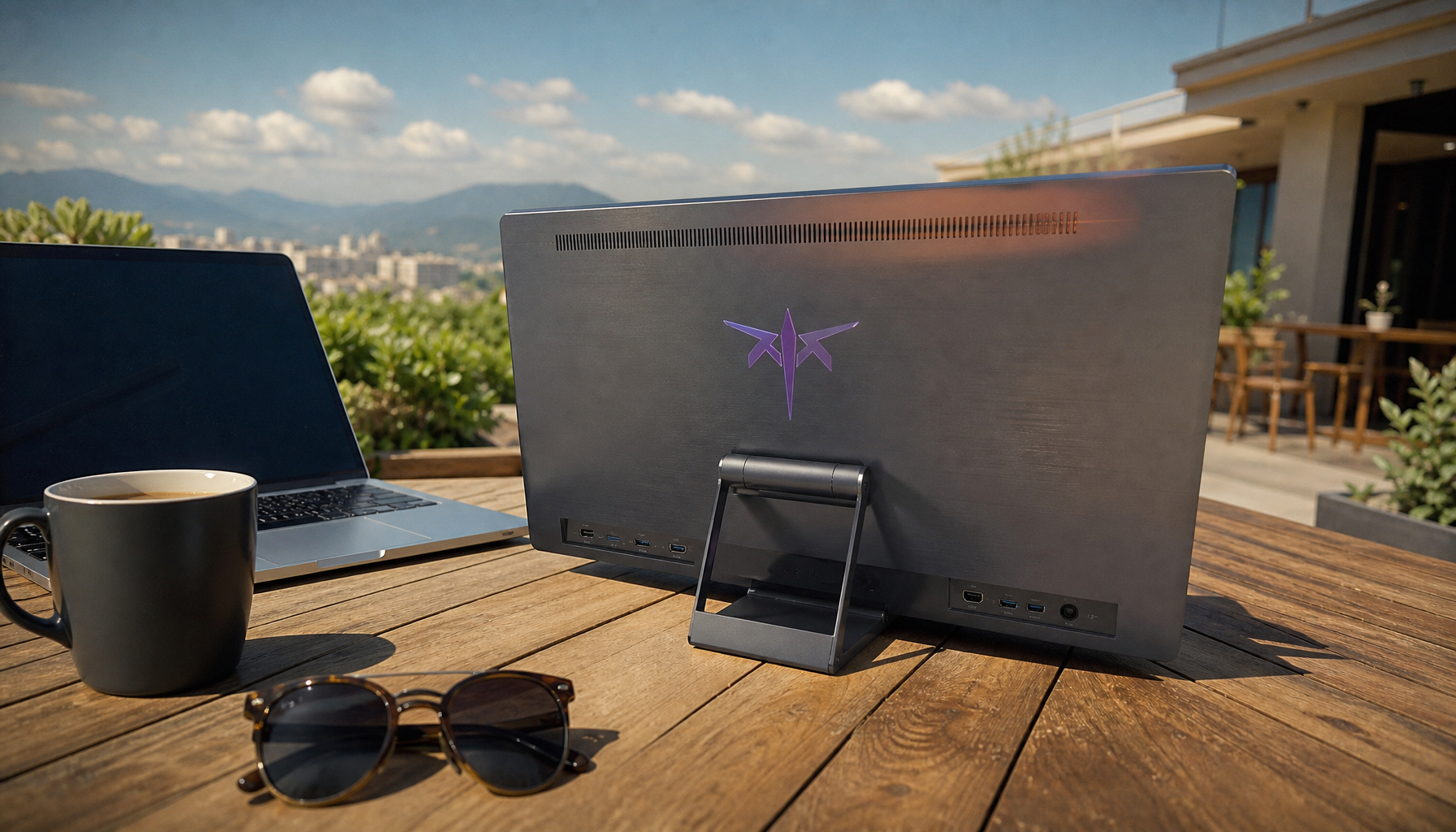
That said, VESA only tells you the bracket layout matches. It does not prove the arm will clear the monitor shell, accept the right screw length, or leave room for ports. If the back of the display is deeply recessed, curved, or crowded by connector plugs, the fit can still get awkward.
Match Weight and Screen Size Together
Do not let screen size make the decision for you. A 27-inch panel and a 32-inch panel can behave very differently on an arm depending on the stand, shell depth, and actual mass.
A safer rule is simple: compare the arm's stated load range to the monitor's real weight, not to the diagonal size on the box. If the numbers are close, treat that as a caution sign, not a green light. For a value display, a little extra margin is usually more forgiving than a barely matched arm.
Confirm Desk Clamp or Through-Desk Fit
Desk fit fails more often than buyers expect. Thin tops, rounded edges, thick lips, cable trays, drawers, and crossbars can block a clamp even when the monitor itself is VESA-ready.
If your desk has a rear brace or very little open space behind it, check clamp depth and grommet path before ordering. This is one of the most common ways a monitor arm compatibility plan breaks down: the arm may fit the monitor, but not the desk.
Use Arm Clearance to Plan the Desk
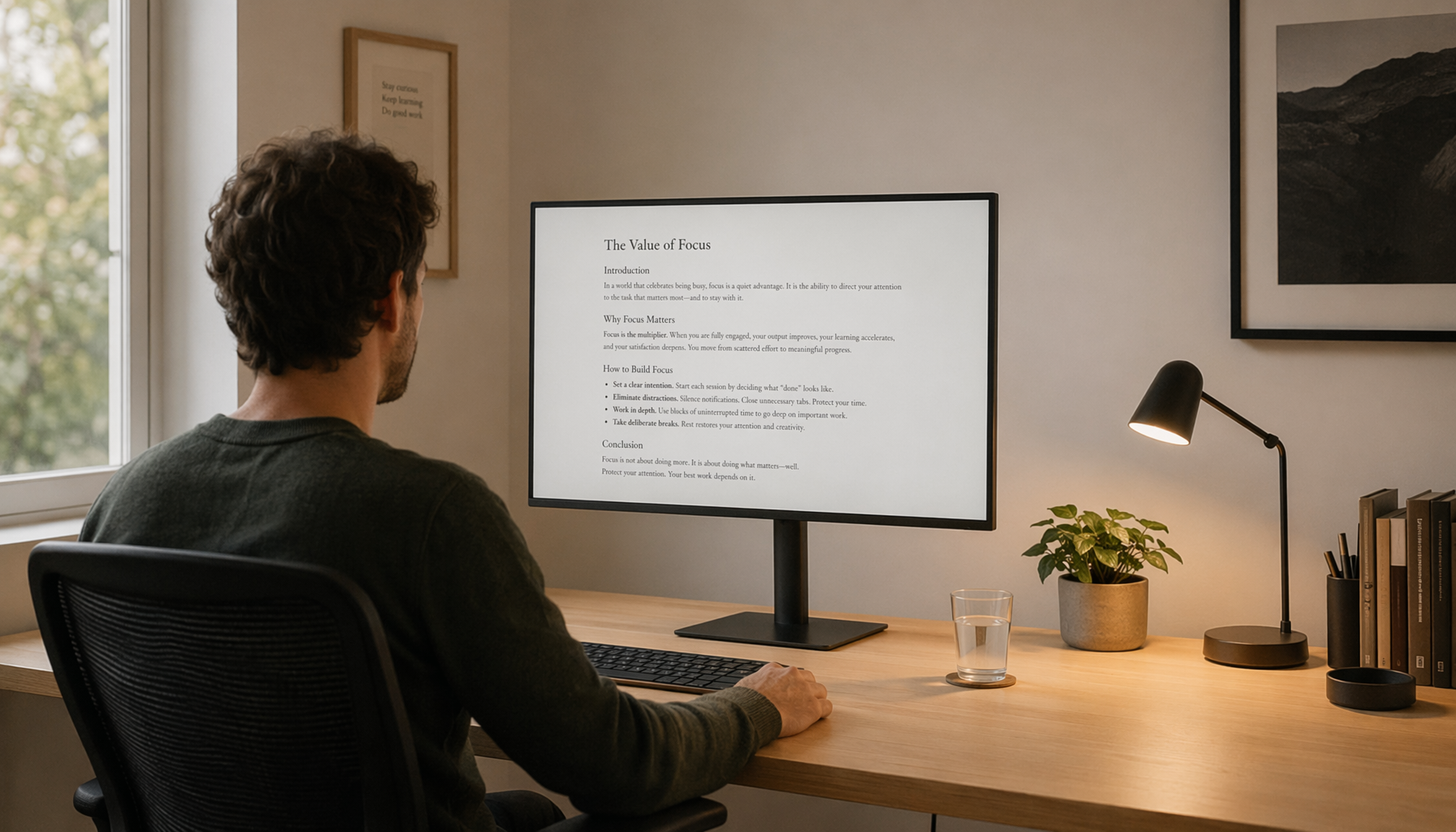
For most home office desks, the real question is not only "will it mount?" but "will it sit where I actually need it?" Mayo Clinic's office ergonomics guidance is a useful reminder that the screen should sit roughly arm's length away, while CCOHS recommends a position about 15 degrees below horizontal eye level.
That means shallow desks need more planning. If the screen sits too close, too high, or too far back, you may end up with neck strain, poor keyboard space, or cable tension.
A compact compatibility table is the safest way to think about this: VESA pattern, load fit, and desk clearance all need to say yes before the arm is a real fit.
| Check | What "Yes" Looks Like | What Can Still Break It |
|---|---|---|
| VESA pattern | Monitor and arm share the same bracket layout | Recessed or curved back, blocked ports, wrong screw length |
| Load fit | Arm rating comfortably covers the monitor | Borderline capacity, weak tilt hold, sag over time |
| Desk mount fit | Clamp or grommet matches the desk shape | Lip, brace, drawer, tray, or thin top interference |
| Clearance | Screen can move without hitting wall or gear | Shallow desk, short reach, tight rear cable space |
How VESA Changes the Decision
VESA makes the first compatibility check easy to understand because it gives you a common mounting language. If the arm and monitor share the same pattern, the mount is possible in principle. If they do not, the setup needs an adapter or it is simply not a fit.
That is why a VESA match should be treated as a gate, not a guarantee. The H32D6's 100 x 100 mm mount and the H27P22S's 100 x 100 mm mount are good examples of value displays that clear the first hurdle, but the physical back of the monitor still matters.
Why Rear Shape Matters Even With VESA
A monitor can have the right holes and still be a messy arm install if the rear shell is recessed, curved, or interrupted by port housing. Connector depth matters too, because a thick HDMI or DP plug can steal the space the arm plate needs.
That is where many buyers overestimate what VESA means. If the mount plate sits too close to a cable plug or the screws need an adapter spacer, the setup can become harder to center and harder to move cleanly later. In practice, a clean mount is better than a technically compatible one that fights the desk every time you adjust it.
Compare Arm Needs by Display Type
Different display types create different levels of arm friction. The goal is not to rank every monitor, but to show where an arm is optional, where it becomes useful, and where it is close to necessary for a usable desk layout.
| Display Type | Arm Priority | Common Friction | What To Verify |
|---|---|---|---|
| 27-inch fixed-stand office monitor | Medium | Better height and desk space, but the stand may already be usable | VESA pattern, arm load fit, desk clearance |
| 27-inch value gaming monitor | Medium to high | Larger shells, more cables, and a stronger need for center positioning | Rear shell depth, screw length, cable bend room |
| 32-inch office or mixed-use monitor | High | More desk depth pressure and less forgiveness for poor reach | Clamp strength, wall clearance, monitor weight |
| Ultrawide or curved panel | High | Wider footprint and more reach stress on the desk | Arm reach, desk rigidity, swing path |
For a budget 27-inch screen, an arm is often about comfort and desk space. For a 32-inch display, the arm may also be about making the setup usable at all on a shallow desk. If you want a fuller browse path for those categories, the Office Monitor and Gaming Monitor collections are useful starting points.
When the Recommendation Flips
If the desk is deep, the stock stand is already height-adjustable, and the monitor sits at a comfortable eye level, an arm may be optional rather than necessary. But if the desk is shallow, the stand is fixed or tilt-only, or you want portrait rotation, the arm becomes the more practical choice.
That flip matters most on value monitors because the stand often saves cost at purchase time but creates friction later. In those cases, the arm is not an upgrade for looks. It is a fix for desk fit, posture, or both.
Set Up the Arm for Real Desk Use
The install sequence matters because a good-looking mount can still feel wrong if the arm is not balanced or the cables are too tight. A careful setup is usually faster than a rushed re-do.
- Clear the desk and check the clamp or grommet path first.
- Attach the arm base to the desk before hanging the monitor.
- Mount the display with the correct bracket and screw length.
- Set the tension or balance so the screen holds position without drifting.
- Adjust height and reach until the top edge is comfortable and the screen stays centered.
- Route power and video cables with slack for full arm motion.
- Move the arm through its full range and watch for port strain, wall contact, or cable pull.
That last step is the one buyers skip most often. A monitor arm can look finished while the cable is still under tension, which causes strain later when you swivel or raise the screen. For a practical cable-routing reference, see the off-center monitor strain discussion and the second monitor positioning guide.
Cable Routing and Final Checks
Before you call the setup done, do one last pass with the monitor centered and the desk in its real working state. The screen should move smoothly, hold position, and leave the ports unbent.
- Check that the clamp or grommet is firm and does not shift when the arm moves.
- Confirm the monitor stays where you place it instead of slowly sagging.
- Make sure the power and video cables have slack through the full swing range.
- Verify that connectors are not bent hard against the shell or the wall.
- Sit at the desk and confirm the display is easy to read without reaching your neck forward.
- Recheck centering after the keyboard, laptop, or dock is back in place.
If those checks pass, the arm is doing its job. If they do not, the problem is usually clearance, cable slack, or load fit, not the monitor label itself.
FAQs
How Do I Know If My Monitor Supports a VESA Arm?
Check the spec sheet or manual for a VESA pattern such as 100 x 100 mm. If the pattern is listed, the monitor is a candidate for an arm. If it is missing, recessed, or blocked by the back shell, you may need an adapter or a different mounting plan.
What Weight Limit Should I Use for a 27-Inch or 32-Inch Monitor?
Use the monitor's actual weight, not the size label. A 27-inch monitor can be heavier than expected, and a 32-inch display can still be within range for some arms. The safest rule is to choose an arm with clear headroom rather than a barely matching rating.
Can a Desk Clamp Work on a Thin or Rounded Desk?
Sometimes, but not always. Thin tops, rounded edges, lip molding, drawer rails, and cable trays can block the clamp or leave it unstable. If your desk has any of those features, check the clamp depth and the space under the surface before you buy.
Why Does My Monitor Still Feel Awkward After I Mount It?
The most common reasons are height, reach, and centering. If the screen sits too high, too close, or too far off-center, the arm has not fixed the ergonomics yet. Cable tension can also pull the display slightly out of position and make the setup feel hard to use.
Can Monitor Arm Cable Management Improve a Tight Desk Setup?
Yes, but only if the arm already fits the monitor and desk properly. Cable routing can reduce clutter and help the screen move cleanly, but it cannot solve a bad clamp fit, a shallow desk, or a monitor that is already too close to the wall.
Final Takeaway
The safest monitor arm compatibility check is simple: match the VESA pattern, confirm the arm can hold the real weight, and make sure the desk and rear clearance leave room for movement. Value displays often work well on arms, but only when the mount, the desk, and the cable path all agree. If you are comparing candidates, start with the fit checks above before you shop by size or price.
If you already have a 27-inch or 32-inch display in mind, verify the mount details first and then choose the arm. That order saves money and prevents most setup regret.