Console audio delay usually comes from the output path, not the game itself. The fastest fix is often a direct wired route, uncompressed stereo audio, and fewer processing layers.
Is your gunfire, jump sound, or dialogue landing a split second after the action on screen? In real gaming setups, the fastest practical win is often a simple route change: console to monitor by HDMI, then wired headphones or monitor speakers, with surround effects and wireless links removed. Here is how to isolate the delay, choose the lowest-latency path, and keep your monitor setup sharp without giving up reliability.
Why Console Audio Delay Happens With Monitor Audio

Audio delay is the gap between an on-screen event and the moment you hear it. In a console-to-monitor setup, that sound may travel through HDMI, the monitor’s internal audio processor, a 1/8-inch headphone jack, built-in speakers, a USB headset, a soundbar, or a wireless link before it reaches your ears.
The most common trap is assuming the monitor is only passing audio through. Many displays decode, downmix, control volume, or process the HDMI audio signal before sending it to speakers or the headphone jack. That extra processing can be small, but in fast games it becomes obvious. At 120Hz, each frame lasts about 8.3 ms, while 60Hz frames last about 16.7 ms, so small sync errors become easier to notice when the visual feedback is faster; 120Hz console gaming often exposes weak links in the signal chain rather than creating delay by itself.
There is also a difference between fixed delay and drift. A fixed delay means the sound is always late by roughly the same amount, such as every reload click sounding a fraction behind. Drift means the delay grows over time, which points more toward buffering, unstable routing, firmware issues, or a device clock mismatch. Fixed delay can sometimes be corrected with an audio delay control, but drift usually requires simplifying the setup.
Start With the Baseline Test

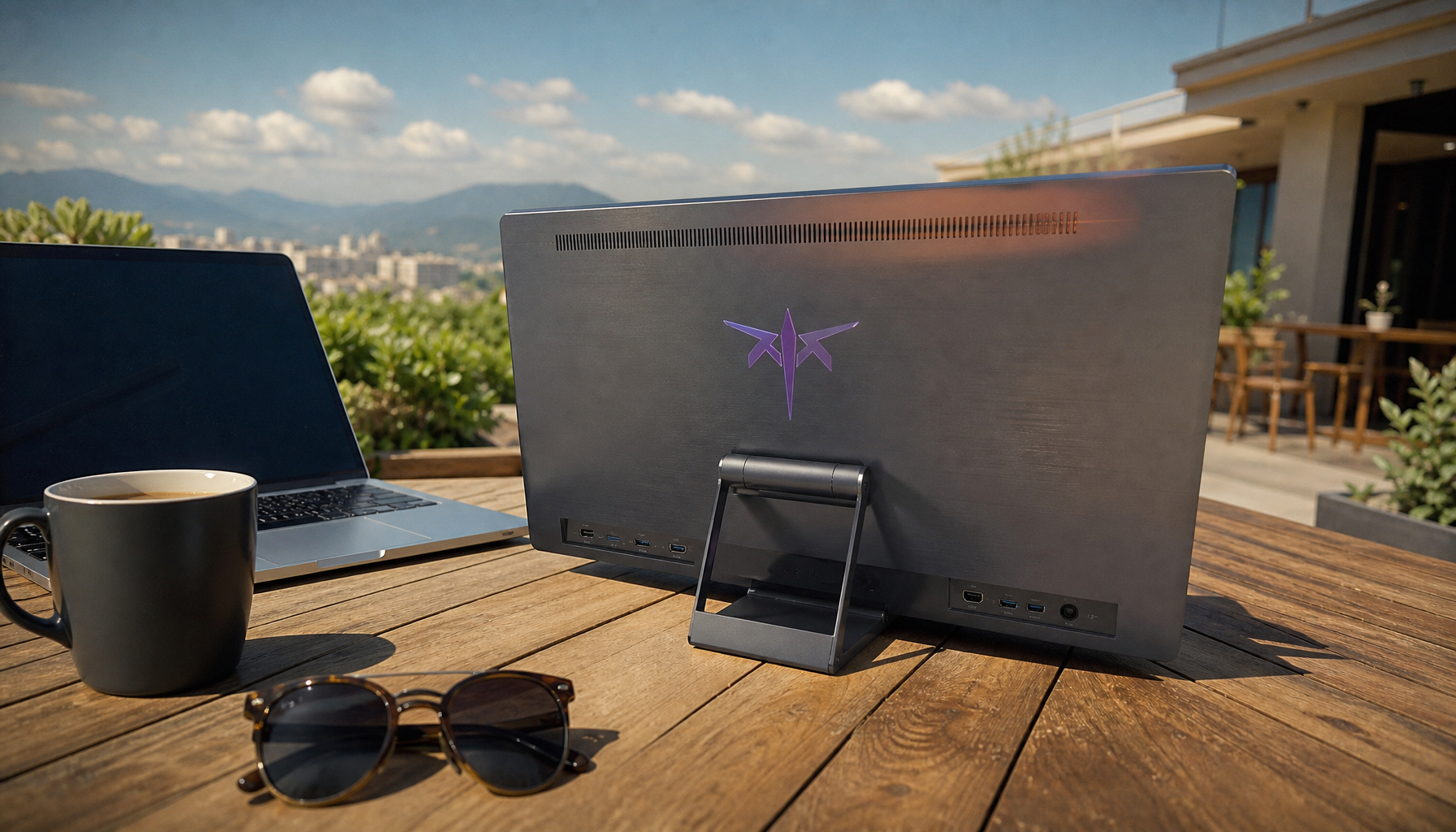
Before changing five settings at once, build a clean baseline. Connect the console directly to the monitor with one HDMI cable. Use the monitor’s built-in speakers or a wired headset plugged into the monitor’s 1/8-inch jack. Remove HDMI switches, capture cards, receivers, soundbars, wireless speakers, wireless headphones, and audio extractors for the first test.
Play a game or video with obvious timing cues. A rhythm game, menu click sound, weapon fire, or dialogue scene works well. If the audio is now aligned, the monitor path is not your main problem; the removed device or routing method is adding delay. If delay remains, the issue is likely the console audio format, monitor audio processing, firmware, cable behavior, or the headphone jack path itself.
A practical test sequence is to confirm sync at 60Hz first, then try your preferred resolution at 60Hz, then 1080p 120Hz, then your final 120Hz mode with VRR off and on. This step-by-step approach matters because audio sync problems often appear when bandwidth-heavy features such as HDR, VRR, 1440p, 4K, or 120Hz change how devices negotiate the signal.
Set Console Audio to PCM or Uncompressed Stereo
For most monitor-speaker and monitor-headphone-jack setups, PCM or uncompressed stereo is the right first choice. It reduces the need for the monitor, TV, soundbar, or receiver to decode compressed surround formats before playback.
This is especially important if your console is sending compressed surround, virtual surround, or bitstream audio into a monitor that only has basic speakers or a simple headphone amp. The monitor may need to convert that signal before outputting it, and conversion adds processing time. Console latency advice for rhythm games makes the same core point: set console audio to Linear PCM and use the most direct audio path because audio latency depends heavily on the output route.
The tradeoff is simple. PCM stereo may sacrifice simulated surround or object-based effects, but it usually improves timing and predictability. For competitive shooters, fighting games, rhythm games, and any title where button-to-sound timing matters, reliable stereo often beats delayed surround.
Disable Audio and Video Processing
Monitor speakers are rarely designed like low-latency gaming headsets or studio monitors. Their advantage is convenience; their weakness is limited amplification, small drivers, and sometimes hidden processing. Turn off anything that tries to enhance sound before you test latency.
Disable virtual surround, bass boost, dialogue enhancement, night mode, spatial audio, automatic volume leveling, and cinematic audio modes. If your monitor has multiple sound presets, use Standard, Stereo, or Direct. If your console has 3D audio or headset virtualization enabled while using the monitor jack, test with it off.
Video processing also matters because sync is relative. If the monitor delays video with motion smoothing, dynamic contrast, noise reduction, or cinematic enhancement, the audio may seem early or late depending on the chain. Enable the monitor’s Game Mode or low-latency mode. Display latency guidance commonly notes that image processing and non-gaming modes can increase delay, while Game Mode reduces latency by bypassing some processing.
The pro and con are clear. Processing can make movies louder, smoother, or more spacious, but it is usually the wrong priority for controller response and audio sync. Competitive play rewards immediacy over polish.
Choose the Right Audio Output Path
The fastest path is usually wired and direct. A wired headset connected to the controller, console USB DAC, or monitor headphone jack can be very low latency when the device path is clean. Dedicated 2.4 GHz gaming headsets can also perform well, but standard wireless audio is the risky option because it can add large delays; wired headset connections are commonly recommended for the lowest latency, while standard wireless headset audio is less suitable for timing-sensitive play.
Here is the practical comparison for console gamers using a monitor.

Audio path |
Latency outlook |
Best use |
Main drawback |
Monitor speakers |
Fair to variable |
Casual play, desk setups |
Small drivers and possible monitor processing |
Monitor headphone jack |
Good if processing is minimal |
Simple wired headset setups |
Quality depends on monitor audio circuit |
Controller headphone jack |
Often good |
Console-native headset use |
Battery, controller processing, headset compatibility |
USB DAC or wired USB headset |
Often strong |
Competitive play and cleaner headphone output |
Console compatibility varies |
2.4 GHz headset dongle |
Good when supported |
Cable-free gaming |
Interference and battery can affect performance |
Standard wireless headset |
Weak for sync-sensitive play |
Casual use only |
Delay can be very noticeable |
If you use wireless audio, keep the transmitter close, avoid USB hubs when possible, and reduce interference from routers or other 2.4 GHz devices. If delay persists, re-pair the headset and update firmware. These fixes are not glamorous, but they remove common hidden buffering and connection problems.
Inspect the Headphone Jack and Cable
If the delay feels inconsistent, or the audio cuts in and out when you move, the issue may not be digital latency at all. A loose or dirty 1/8-inch connection can create intermittent sound, channel imbalance, crackle, or a false impression that the audio system is lagging.
Test with two different wired headsets. If both behave the same way in the monitor jack, inspect the port with a flashlight and gently clean it with compressed air or a small soft brush. Dust, wear, repeated plugging, and bent plugs can cause unstable contact, and a loose headphone jack often reveals itself when sound cuts out while the plug is moved.
Do not force the plug, wrap foil around contacts as a long-term fix, or attempt soldering inside a monitor unless you are equipped for electronics repair. A damaged jack is a hardware issue, not a settings issue, and replacing the output path is usually faster and safer than fighting a failing port.
Update Firmware, Drivers, and Display Settings
On consoles, check for system updates, controller firmware updates, headset firmware updates, and monitor firmware where your model supports it. Audio bugs are often ordinary software problems: device handshakes, unsupported formats, or stale firmware profiles.
On a Windows PC used with the same monitor, confirm that the monitor is selected as the active output device and that app volume is not muted. Monitor support guidance usually starts with mute status, output-device routing, volume level, and graphics drivers before assuming a monitor failure; monitor troubleshooting is a useful reminder that HDMI and DisplayPort audio are often tied to the graphics driver path.
Cable quality is worth checking too, especially at 120Hz. USB-C, HDMI, and adapter labels do not always guarantee the bandwidth or features you expect. A methodical signal-chain approach is better than blaming the display first: test one known-good cable, one input, one mode, and one audio path at a time. Troubleshooting case studies make the same practical point about verifying every link, because cable quality and compatibility can decide whether a display system behaves correctly.
When a Soundbar or Receiver Is in the Chain
If your console sends video to a monitor but audio routes through a soundbar, receiver, ARC/eARC link, extractor, or HDMI switch, delay becomes more likely. Every extra device can decode, buffer, resample, or convert the signal.
For lowest latency, connect the console directly to the audio device only if that device fully supports your target video mode, such as 1440p 120Hz or 4K 120Hz with HDR and VRR. If it does not, send video directly to the monitor and use a low-latency wired audio path instead. If your soundbar or receiver has a lip-sync setting, use it only for fixed delay. If the delay grows over several minutes, a manual offset will not solve the underlying drift.
ARC and eARC are convenient for home theater, but they are not always ideal for fast console play. ARC may involve more format limitations and sync friction, while eARC improves bandwidth and synchronization support. For a gaming monitor desk setup, simplicity usually wins: console, monitor, wired audio, PCM.
The Fastest Fix Path for Most Players

Start with direct HDMI from console to monitor, set the console to PCM or uncompressed stereo, enable Game Mode, and turn off audio enhancements. Then test monitor speakers and the monitor headphone jack separately. If the headphone jack is late but controller audio or USB audio is tight, the monitor’s audio circuit is your bottleneck.
If you want the best balance of speed, reliability, and value, use a wired headset through the controller or a console-compatible USB DAC/headset. If you want wireless audio, use a dedicated 2.4 GHz gaming headset instead of standard wireless headset audio. If your setup is built around a soundbar or receiver, confirm it supports the exact resolution, refresh rate, HDR, and VRR mode you are using before routing the console through it.
FAQ
Why does audio delay get worse at 120Hz?
The delay may not actually be larger, but it is easier to notice because the screen updates more often. At 120Hz, visual feedback arrives in smaller time slices, so a sound that was tolerable at 60Hz can feel disconnected.
Are monitor speakers bad for console gaming?
They are convenient, but they are rarely the best performance option. Monitor speakers are fine for casual play, menus, and compact desks, while wired headphones or a low-latency headset are better for competitive timing, positional cues, and immersion.
Should I use the monitor headphone jack or the controller headphone jack?
Test both with the same headset. If the controller jack sounds tighter, use it. If the monitor jack is equally synced and cleaner or louder, it is a practical desk-friendly option.
Does a better HDMI cable fix audio delay?
Sometimes, but only when the current cable is unstable, under-specified, too long, or causing handshake issues at high refresh rates. A better cable will not remove delay caused by wireless audio, surround decoding, monitor processing, or a slow soundbar path.
The performance-first answer is direct, wired, and unprocessed. Once your console, monitor, and audio device are synced in a clean baseline, add features back one at a time; the moment delay returns, you have found the link that is costing you immersion.