Tandem OLED vs Micro-LED is less a race than a fit check: if you care most about dark-room contrast, motion feel, and refined desktop image quality, Tandem OLED is usually the better starting point; if bright-room visibility and sustained highlight headroom matter more, Micro-LED is the promise to watch, but implementation and availability still matter. The real decision is your room, your workload, and how long the screen stays on each day.
Why Endgame HDR Now
“Endgame HDR” in 2026 means the point where spec chasing stops being the main question. At that level, brightness, contrast, motion handling, and long-term behavior all matter at once, so the right panel depends on what you actually do with it. For enthusiasts, Tandem OLED vs Micro-LED is really a choice between two premium answers to the same problem.
In practice, test the panel under your actual lighting and with the apps you leave open for hours. Room lighting and static UI time predict satisfaction more reliably than peak-nit claims.

For most buyers, the first filter is not peak number bragging. It is whether the screen spends its life in a dim room, mixed light, or a bright office, and whether it stays on static desktop apps for hours. That decision layer usually predicts regret better than the headline spec sheet.
Tandem OLED and Micro-LED at a Glance
| Decision Factor | Tandem OLED | Micro-LED | What It Means In Practice |
|---|---|---|---|
| Black depth | Excellent, with per-pixel light control | Excellent in principle, but product behavior depends on implementation | Dark scenes usually favor OLED-style emissive control. |
| Brightness headroom | Improved over older OLED stacks, but still bounded by emissive design | Expected to offer higher sustained peak brightness | Bright rooms tilt the comparison toward Micro-LED if a real monitor proves it. |
| Longevity profile | Better than older single-stack OLED designs, but not immune to wear | Inorganic emitters should age differently, but cooling and current density still matter | Long desk sessions should be judged by usage pattern, not label alone. |
| Motion and response feel | Usually a strong point for emissive panels | Can be excellent, but market reality is still uneven | Fast gaming is not won by brightness alone. |
| Burn-in risk | Reduced by mitigation, not eliminated | The category is often framed as burn-in resistant | Static UI exposure still deserves attention either way. |
| Bright-room suitability | Good only when the room is controlled or the panel is bright enough for the setup | The stronger candidate when ambient light is high | Window light can change the answer more than a refresh-rate jump. |
| Ownership confidence | Strong when the product is well supported and the workflow is mixed-use | Promising, but still implementation-dependent in consumer monitors | Availability and actual product specs matter more than category hype. |
The practical takeaway is simple: Tandem OLED is the safer known quantity for contrast-first buyers, while Micro-LED is the category with the biggest brightness upside. Background reading on emissive display paths shows the difference lies in how each approach handles brightness, heat, and lifetime trade-offs.

Where Tandem OLED Fits Best
Dark-Room Cinema and Mixed Gaming
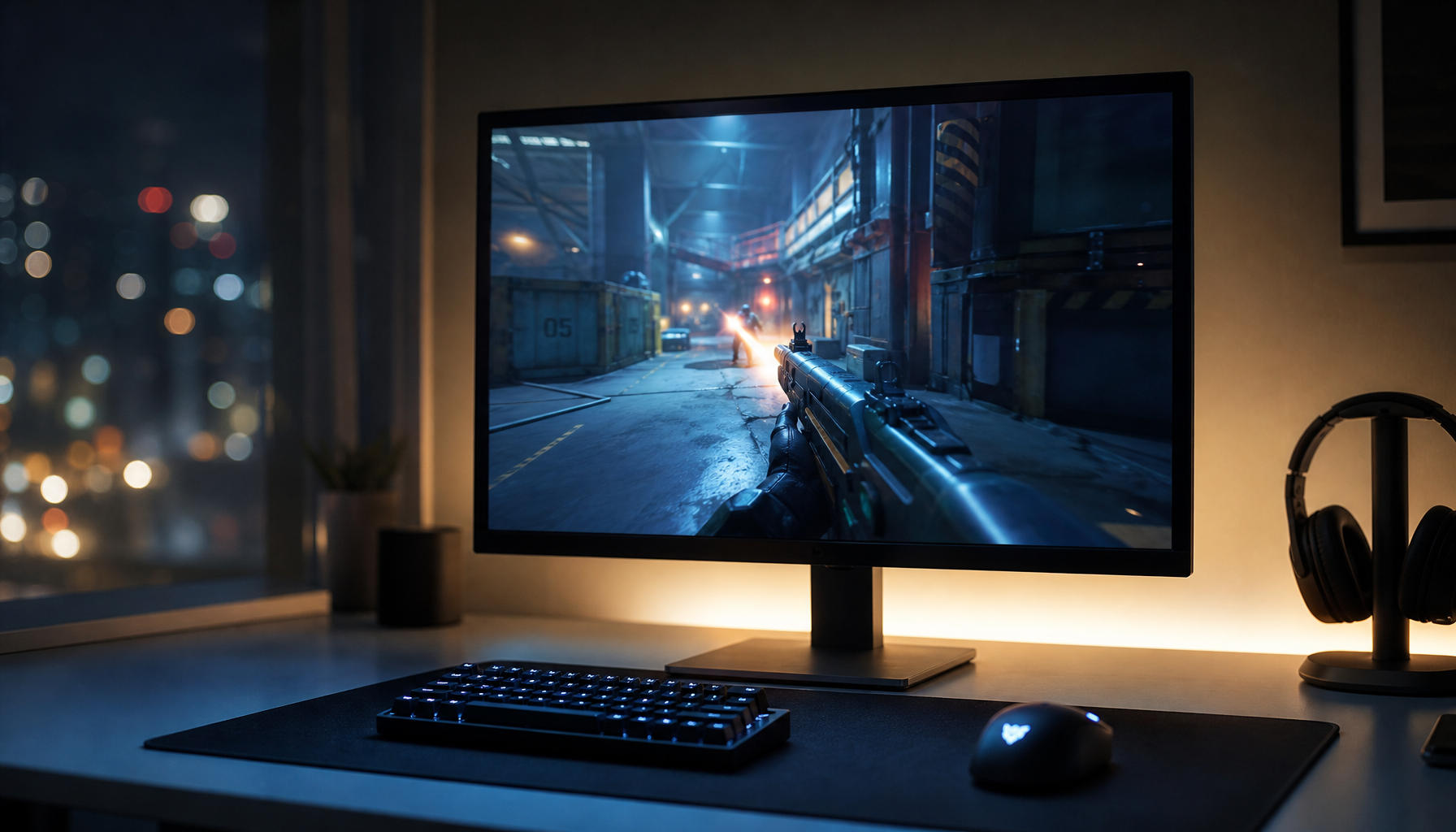
Tandem OLED makes the most sense when black depth and shadow detail are the reason you are upgrading. In a dim room, those qualities usually matter more than chasing the last bit of peak brightness, because the eye notices contrast before it notices a theoretical spec advantage. That is why Tandem OLED vs Micro-LED often starts with lighting, not technology tribalism.
The useful question is whether your room is controlled enough to let OLED-style contrast do its job. If the answer is yes, Tandem OLED tends to deliver the most convincing HDR feel for games, films, and high-contrast content. For a broader explanation of panel wear habits, Busting OLED Burn-In Myths: Panel Protection Facts and Prevention Strategies is the right follow-up when you expect lots of static HUDs or desktop time.
Desktop Longevity With Static UI
Long desk sessions are where enthusiasm can turn into regret. Toolbars, timelines, taskbars, and always-on widgets create the kind of repeated static exposure that buyers should not ignore, even when a newer OLED stack improves longevity. The practical decision is not “is it safe,” but “how much static UI will I leave in place every week?”
If you spend most of the day in documents, browsers, or creative tools, Tandem OLED is strongest when you value image quality enough to manage the usage pattern. If you want to leave the same interface on all day with minimal thought, another panel type may fit better. That boundary is why the category is attractive to enthusiasts but still not universal.
Creator Color Work and Fine Detail
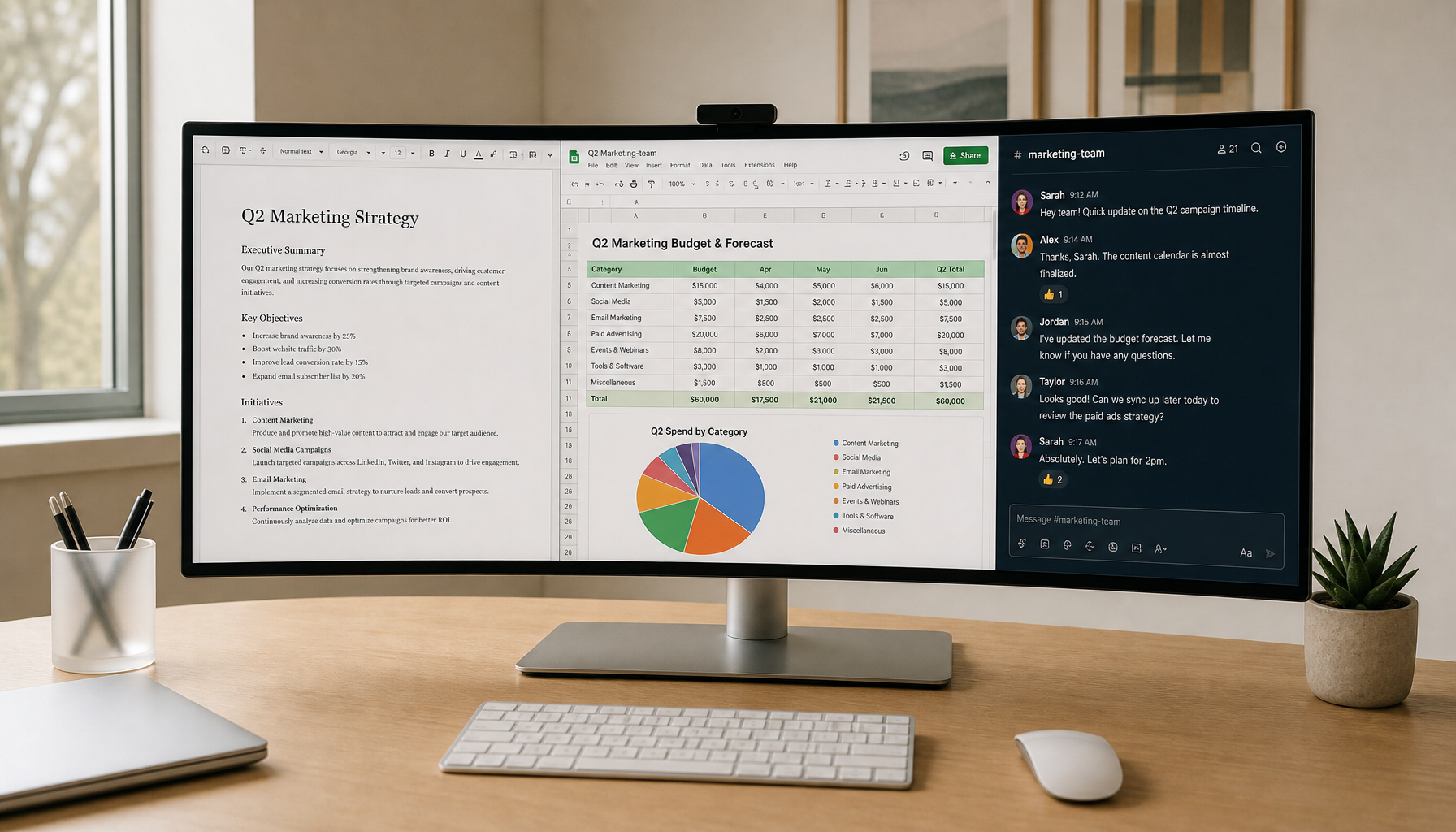
Creators often care about a different mix of traits than gamers do. In a controlled environment, contrast can make grading and image review feel more immediate, while color tuning and calibration habits decide whether the display feels trustworthy. That is also where Tandem OLED vs Micro-LED becomes a workflow question, not just a tech one.
If your desk is dim and your content is image-heavy, Tandem OLED can be a compelling choice. If your room is bright or your work is dominated by bright UIs and long timelines, the brightness side of the equation begins to matter more than the contrast side. The display does not need to be “better” in the abstract; it needs to match the way you work.
Where Micro-LED Earns Its Keep
Bright Rooms and Mixed Lighting
Micro-LED earns attention when the room itself fights the display. In bright offices or mixed-lighting setups, the ability to hold perceived HDR impact in ambient light is a major advantage, or at least the promise that buyers are chasing. That is why the category keeps showing up in endgame HDR monitor discussions even before consumer products are widespread.
The boundary is important: Micro-LED is not automatically the right answer just because it sounds newer. Comparative display literature explains that brightness, efficiency, lifetime, and contrast all depend on implementation. So if a monitor does not show clearly stated thermal design and real sustained behavior, the name alone does not settle the decision.
Sustained HDR Highlights
If you want a screen that can hold bright highlights for long stretches, Micro-LED is the platform enthusiasts are watching most closely. That is especially relevant for daytime gaming, mixed content, and media where peak highlights should stay visible instead of collapsing once the panel warms up. The appeal is not just raw brightness, but brightness that can persist without obvious compromise.
Still, “sustained” is the important word. Thermal design, current density, and encapsulation all influence how far a panel can go in practice. In other words, cooling and engineering decide how close the real product gets to the promise.
Long-Term Ownership With Static Content
Micro-LED is often discussed as the long-horizon option because inorganic pixels are expected to age differently from OLED emitters. That makes it attractive for buyers who keep bright content on-screen for many hours and want to minimize the sense of wearing out a premium panel too early. But the category should still be judged by actual product implementation, not by the logo on the box.
This is the point where Tandem OLED vs Micro-LED flips for some buyers. If your priority is less about cinematic contrast and more about leaving a bright workspace open all day, Micro-LED becomes the more logical direction, even if the consumer-monitor market is still thin.
How to Choose for Your Room and Workload
-
Start with the room. In a dark or controllable room, contrast and black depth matter more, so Tandem OLED is usually the more satisfying fit. In a bright room, the brightness question gets louder, and Micro-LED becomes more attractive if the implementation is real.
-
Decide what fills the screen. Games and films reward contrast and motion feel; spreadsheets, timelines, and dense interfaces reward readability under ambient light. If your day mixes both, you should judge the display by the less forgiving half of the workload.
-
Count static UI hours. If you leave taskbars, HUDs, or toolbars visible most of the day, the longevity discussion matters more than most buyers want to admit. That does not ban OLED, but it does make mitigation habits part of the purchase.
-
Check the brightness story, not just the peak number. A headline 2000-nit claim means little if the display cannot hold that behavior in your actual room or under thermal load. The safer rule is to ask whether the panel can stay convincing in your lighting, not whether it wins a marketing chart.
-
Choose by ownership horizon. If you plan to keep the monitor for years and use it heavily, the panel’s long-term behavior matters almost as much as its image quality on day one. That is where Tandem OLED vs Micro-LED stops being a spec duel and becomes a risk-management choice.
In practice, choose Tandem OLED if you want the best chance of deep blacks, strong motion feel, and a premium dark-room image. Choose Micro-LED if your room is bright, you want sustained highlight headroom, and you are willing to wait for the right consumer implementation rather than the first announcement.
What to Check Before You Buy
- Check the room first. Dark-room cinematic setups and bright-office desks do not want the same panel behavior.
- Check how much static UI lives on-screen during a normal week. HUDs, taskbars, and timelines are not a side note.
- Check thermal design and airflow if the monitor is expected to hold HDR brightness for long sessions. Thermal Management in Premium Displays: Why Vents Matter offers practical checks.
- Check whether the product page states the actual panel type and performance behavior instead of relying on broad category language.
- Check warranty length, return window, and support responsiveness, because premium displays are easier to justify when the after-sale support is clear.
For buyers leaning toward Mini-LED as a practical alternative while the Tandem OLED vs Micro-LED market matures, the All-Mini-LED Monitors collection is the cleanest browse path. It is also the most direct way to compare high-brightness desktop options without assuming the future is here yet.
If you want a category-first starting point, the broader Gaming Monitor collection helps you compare refresh-rate and panel families before narrowing into OLED or Mini-LED. For 4K-centric browsing, the 4K Monitor collection is the most relevant filter set.
For a concrete Mini-LED reference with strong HDR specs, the KTC Mini LED 27" 4K 160Hz HDR1400 Gaming Monitor | M27P6 shows what a bright, high-refresh desktop implementation looks like in a current shipping model. If you prefer a 1440p option, the KTC Mini LED 27" 180Hz 2K HDR1400 Gaming Monitor | M27T6 and the KTC Mini LED 27" 200Hz 2K HDR1000 Gaming Monitor | M27T6S are useful references for browsing, but the real fit still comes down to room lighting and workload.
FAQs
Q1. How Does Tandem OLED Compare With Micro-LED for Bright Rooms?
Micro-LED is the more plausible bright-room choice because sustained visibility in ambient light is the central promise of the category. Tandem OLED can still work well, but it is easier to justify when the room is controlled and contrast matters more than raw light output. The final answer still depends on the exact monitor implementation.
Q2. What Makes Tandem OLED Appealing for Long Desktop Sessions?
It is the combination of contrast, motion quality, and refined image character. That said, long desktop sessions also raise the question of static UI exposure, so the appeal is strongest when you are willing to manage habits like hiding taskbars or varying layouts.
Q3. Can Micro-LED Replace Tandem OLED for Gaming in 2026?
Not as a universal answer. Micro-LED may win on brightness and durability expectations, but gaming value also depends on contrast, motion behavior, pricing, and whether a real product exists in the form factor you want. For now, it is best treated as a high-promise category, not a settled replacement.
Q4. Why Does Thermal Design Matter in an HDR Monitor?
Because sustained brightness is not just a panel-spec issue. Cooling and airflow influence how long a display can keep delivering strong highlights without throttling or drifting away from its peak behavior, especially during long HDR sessions.
Q5. What Is the Safest Way to Choose a Future-Proof HDR Monitor?
Match panel behavior to your room lighting, static content exposure, and ownership horizon. If the screen will live in a dark room, Tandem OLED is often the better fit. If you need bright-room confidence and sustained highlight headroom, Micro-LED is the direction to watch, assuming the product is real and well engineered.
The Better Choice Is the One That Matches the Room
Tandem OLED vs Micro-LED comes down to room lighting and static UI hours. Match the panel to how you actually use the display rather than headline specs alone.