Tandem OLED monitor upgrades are worth a look in 2026, but only if you need both OLED contrast and a better answer to burn-in anxiety or dim full-screen brightness. For bright-room mixed desktop use, Mini-LED is still the safer default; for late-night HDR gaming, OLED still has the edge. The real question is whether the premium buys enough day-to-day value to matter.
Why Tandem OLED Matters in 2026
Tandem OLED is being evaluated as a response to the two OLED complaints that matter most on a desk: brightness that can feel limited in real sessions, and anxiety about long-term wear. The idea is not that it erases those concerns, only that it can reduce stress on each emitting layer by spreading the work across two stacks, which is a meaningful design shift in principle. A recent 2026 overview of tandem OLED panels is useful background, even though desktop models still need to prove themselves in mixed-use life.
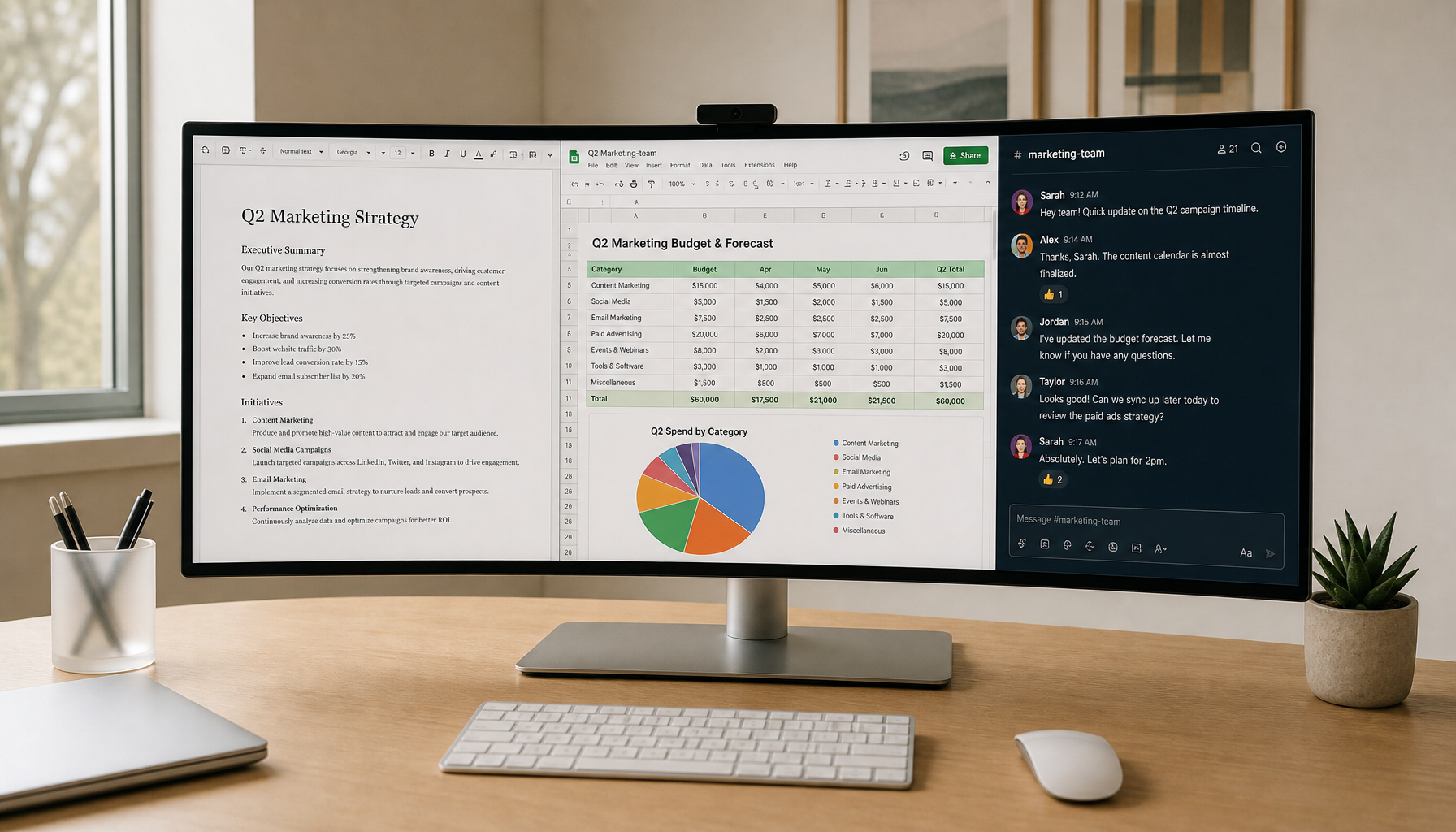
The right way to read this upgrade is as an audit, not a celebration. If your screen is mostly for HDR games in a dim room, a tandem OLED monitor may feel like a premium path toward the OLED endgame. If your day includes spreadsheets, chat panes, browser tabs, and taskbars, the question changes: does the new stack design actually reduce regret, or just raise the price?
How the Three Panel Families Differ

Here is the practical split. Tandem OLED is the OLED option that tries to be less strained at high brightness. Gen 3 QD-OLED is still the contrast-first, HDR-friendly choice, but it can be less comfortable for text-heavy desktop work, especially if you are sensitive to subpixel rendering quirks. Mini-LED is the brightness-and-stability baseline: it gives up self-emissive blacks, but it keeps full-screen brightness and static UI tolerance in the conversation.

| Panel Family | Brightness Behavior | Black Levels | Burn-In Exposure | Desktop UI Tolerance | Best Fit |
|---|---|---|---|---|---|
| Tandem OLED | Better OLED brightness headroom, but still session-dependent | Excellent | Lower stress than older OLED, not immunity | Better than typical OLED, still a maintenance panel | Mixed HDR gaming and premium desktop use |
| Gen 3 QD-OLED | Strong hero brightness, less ideal for sustained white screens | Excellent | Still workload-dependent | Great for gaming, more cautious for text-heavy work | Late-night gaming and media |
| Mini-LED | Strong sustained brightness, especially in bright rooms | Very good, but not OLED-black | No OLED-style burn-in concern | Easiest for long static sessions | Bright-room productivity and mixed use |
If your main need is a display that can sit through long workdays without making you think about panel care, Mini-LED still wins the default choice test. If your main need is the most immersive picture for games, OLED still wins the contrast test. Tandem OLED sits between them, which is exactly why it is interesting.
For readers comparing the whole category, the All-Mini-LED Monitors collection is the cleanest place to start when brightness and static-content tolerance matter more than absolute black levels. The All-OLED Monitor collection is the better browsing path if you already know you want self-emissive contrast and are willing to manage the trade-offs.
Desktop Panel Fit by Use Case
| Panel | Bright-room mixed desktop use | Late-night HDR gaming |
|---|---|---|
| Tandem OLED | Strong fit | Moderate fit |
| Gen 3 QD-OLED | Moderate fit | Strong fit |
| Mini-LED | Strong fit | Moderate fit |
What Burn-In Means in Daily Use
Burn-in is not a random event. It is a workload problem, shaped by static content, brightness settings, and how long the same interface stays on-screen. That is why standardized OLED lifetime testing matters, but also why hour counts alone can mislead if your own desktop habits are different. Standardized testing frameworks exist for OLED lifetime and image-sticking measurements.
A good mental model is this: the panel is stressed by what you leave on it, not just by what it is made of. Research into OLED materials has also pointed to nanoscale hotspots as one reason localized wear can build unevenly over time. That does not make every OLED panel fragile, but it does explain why static UI patterns still matter.
Compensation cycles help by evening out wear. KTC’s own compensation-cycle explainer is a useful reminder that OLED maintenance is part of ownership, not a sign that the panel is failing. If you are fine with that routine, a tandem OLED monitor may feel less demanding than older OLED generations. If you want a screen you can ignore, Mini-LED is still the lower-maintenance route.
A 6,000- to 10,000-hour headline is only meaningful when the content mix looks like yours. A gaming-heavy test tells you less about a taskbar-heavy workday than many buyers assume. In practice, the bigger risk is not a dramatic failure, but the slow accumulation of uneven wear that makes the panel feel less uniform over time.
Brightness Gains That Matter on a Desk
The number that matters most for desk use is not peak brightness in a tiny window. It is sustained full-screen brightness, especially when a white document, browser window, or spreadsheet stays open for hours. That is where OLED panels still run into thermal limits and automatic brightness limiting, which is why a monitor can look brilliant in a spec sheet and softer in real work. TFTCentral’s write-up on how thermal management limits OLED brightness captures that gap well.
This is the part many buyers misread. A panel can show a dramatic HDR highlight and still feel less comfortable than an LCD in daylight because the whole screen does not hold that level for long. Tandem OLED should narrow that gap, but it is safer to think of it as reducing how quickly the panel has to back off, not eliminating the behavior.
For a bright-room desk, the practical check is simple: if you often work with blinds open, overhead lights on, or multiple white windows tiled across the screen, Mini-LED is still the safer fit. If your room is dimmer and you care more about rich HDR than all-day white-page comfort, a tandem OLED monitor becomes more compelling. If you want the most obvious brightness reserve, the KTC Mini LED 27" 4K 160Hz HDR1400 Gaming Monitor | M27P6 is a clearer match than any OLED-based compromise.
Another useful comparison is the KTC Mini LED 27" 180Hz 2K HDR1400 Gaming Monitor | M27T6, which keeps the same brightness-first logic but at a more approachable 1440p tier. For buyers who want OLED-style contrast first, the KTC OLED 27" 2K 240Hz/0.03ms USB-C Gaming Monitor | G27P6 is still a pure gaming-oriented reference point, even if it is not the best answer for bright-room productivity.
Which Panel Fits Your Use Case
-
If you spend most of the day on static apps, choose Mini-LED first. That includes spreadsheets, document editing, chat-heavy workflows, and any setup where the taskbar never really leaves the screen. Tandem OLED can still work here, but only if you are comfortable managing OLED habits and paying the premium for a softer risk profile.
-
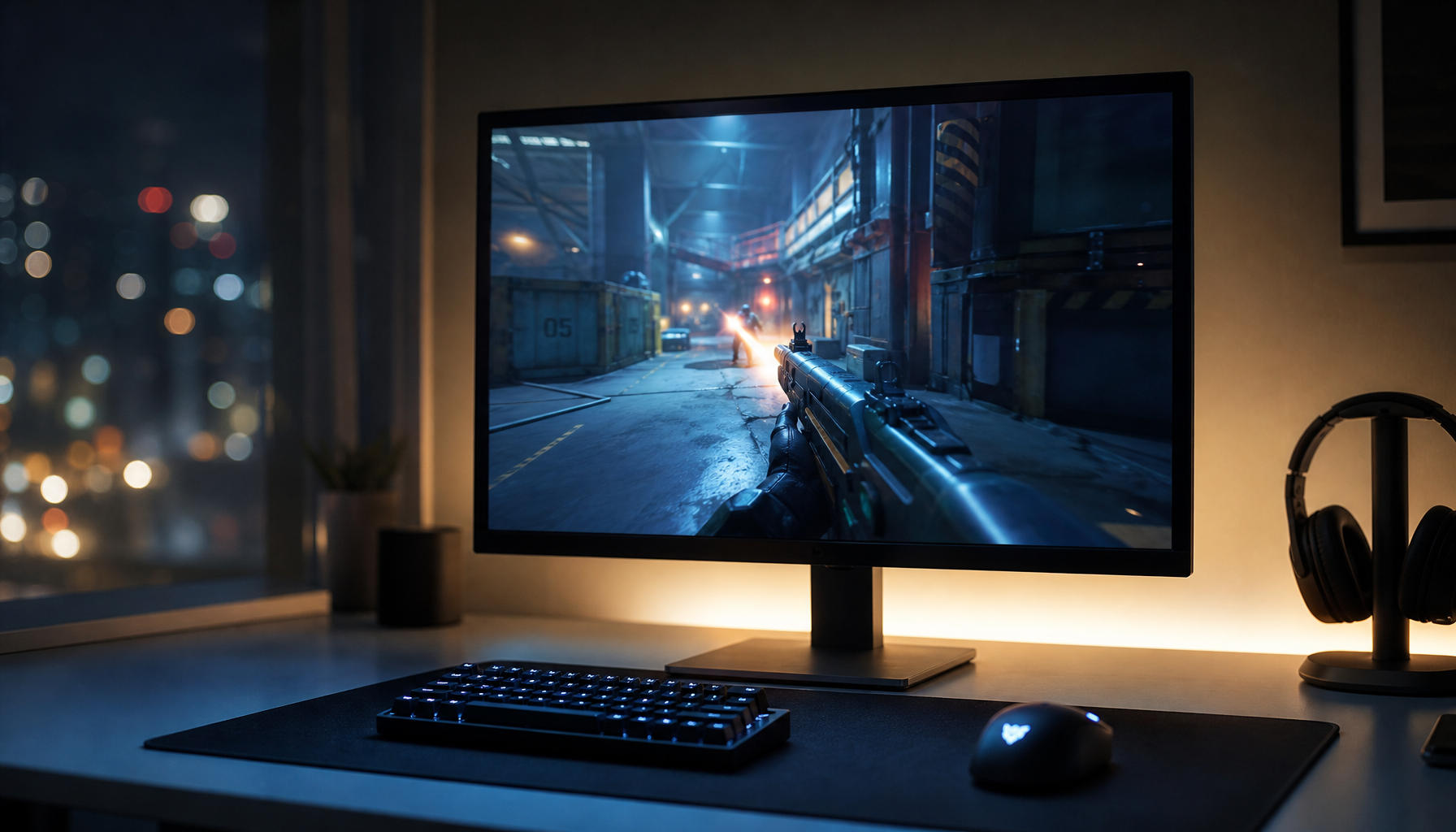
If you spend most of your time on HDR games in a controlled room, OLED remains the more natural pick. The contrast, motion clarity, and black levels still matter more here than long-session brightness. Gen 3 QD-OLED may be enough if text fringing does not bother you, while Tandem OLED makes more sense if you want the more stress-tolerant OLED path.
-
If your use is truly mixed, split the decision by room light first and workload second. Bright room plus static desktop work points to Mini-LED. Dim room plus gaming-heavy use points to OLED. Tandem OLED becomes the middle ground only when you want OLED contrast but do not want to ignore the longevity question.
-
If your main concern is value, do not buy the premium just to feel safer. A 2x higher price does not automatically mean 2x less burn-in risk, and it definitely does not guarantee 2x the lifespan. In that case, Mini-LED is still the more rational purchase.
For a ready-made bright-room path, All-Mini-LED Monitors covers the category that most clearly matches this use case. If you still want an OLED browsing path for comparison, All-OLED Monitor is the better place to look before deciding whether the trade-off is worth it.
What to Check Before Paying More
- Check your static content exposure. If taskbars, spreadsheets, launchers, or pinned browser windows sit on-screen for most of the day, burn-in anxiety is not hypothetical.
- Check your room light. If the monitor faces windows or bright lamps, sustained brightness matters more than OLED black levels.
- Check your tolerance for panel care. If compensation cycles, pixel shifting, and general OLED caution sound annoying, Tandem OLED may still be the wrong fit.
- Check whether you want a display that behaves consistently over long work sessions. If yes, Mini-LED usually wins the sanity test.
- Check whether you are buying for a measurable advantage or for the feeling of owning the newest tech. Those are different purchase reasons.
If text-heavy office use is part of the story, the Why QD-OLED Monitors Still Show Text Fringing in Early 2026 guide is a useful companion because the best panel for mixed use is not always the best panel for pure gaming. For broader browsing beyond these families, the All Monitors collection makes it easier to compare OLED, Mini-LED, and conventional options without locking in a premium choice too early.
The Bottom Line on Tandem OLED
Tandem OLED is best understood as a stress-reduction upgrade, not a burn-in shield. That makes it more interesting for buyers who want OLED contrast but do not want the oldest OLED trade-offs unchanged. If your desk is bright, static, or work-heavy, Mini-LED is still the smarter default. If your room is controlled and your priority is HDR gaming, a tandem OLED monitor becomes a real contender rather than a gimmick. Compare the Tandem OLED vs. 5000-Zone Mini-LED: The 2026 HDR Peak Brightness Battle for side-by-side HDR data before deciding.