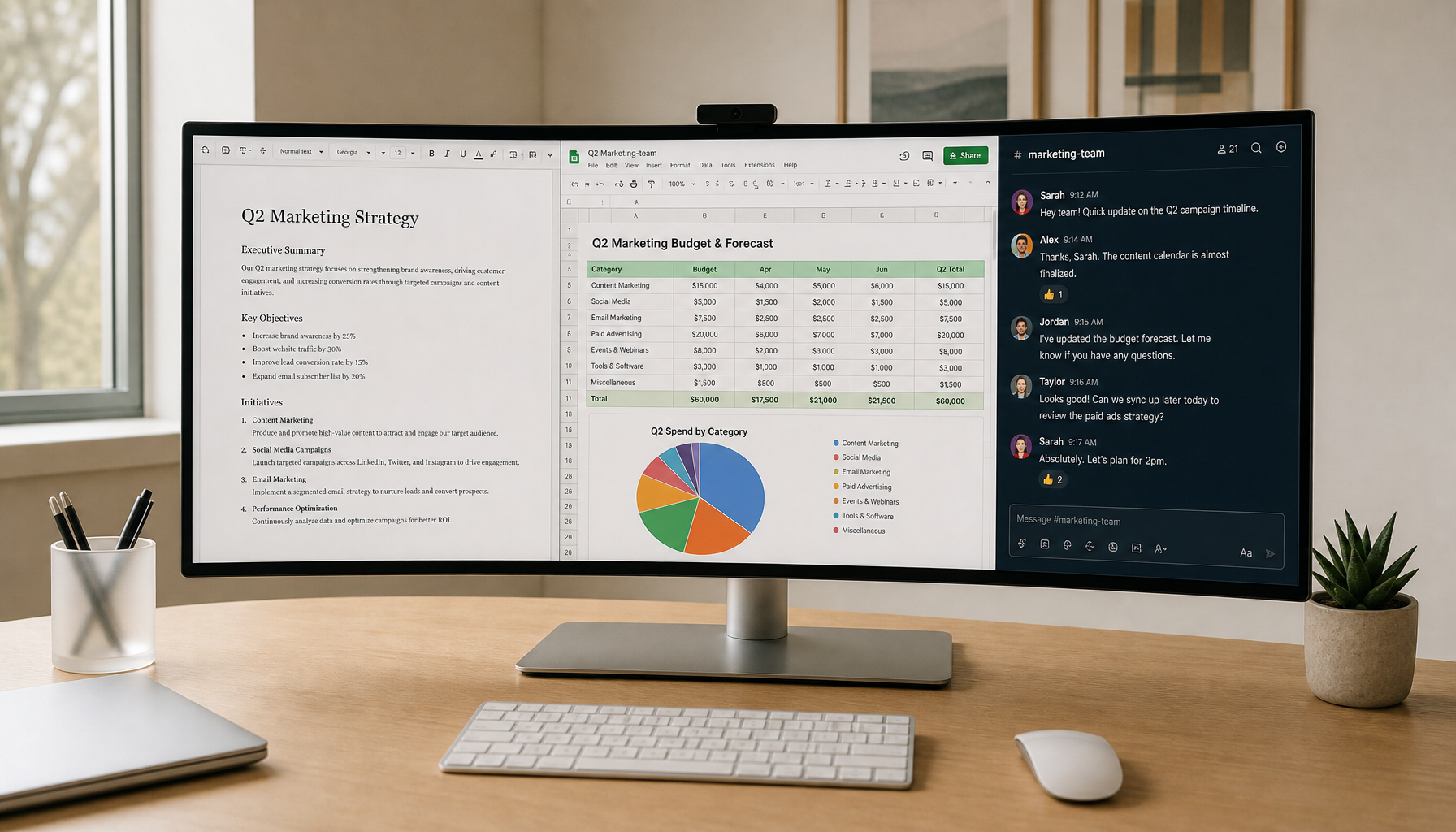
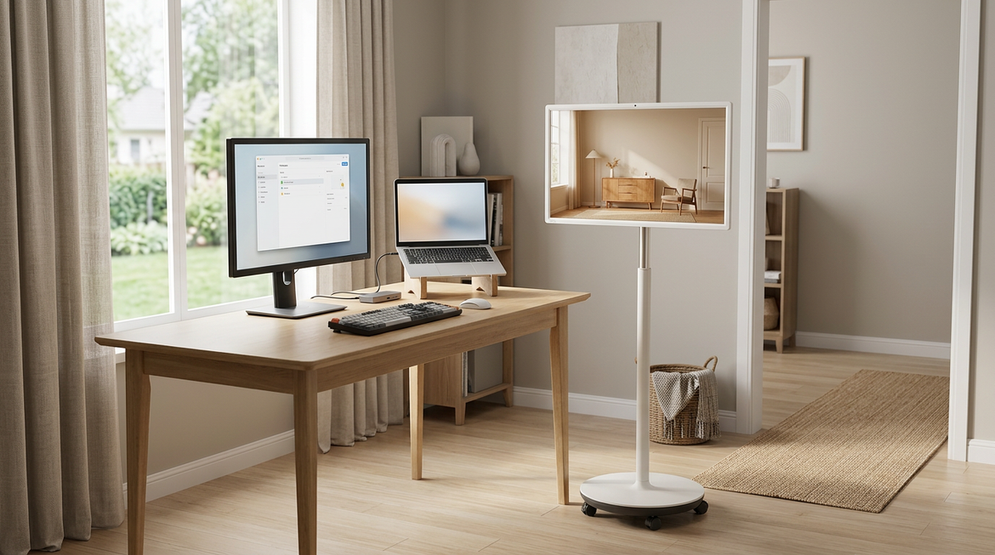
A rolling smart display kitchen hub alternative can make sense when one movable screen needs to cover recipes, timers, family schedules, and casual streaming. It can replace some tablet, small-TV, and speaker duties, but only in the right household workflow. If you want one shared display that rolls between rooms, this category is worth a closer look. If you mainly want a fixed TV or a strong speaker setup, it usually is not the cleanest substitute.

What a Rolling Smart Display Can Replace
A rolling smart display is best understood as a hybrid shared-screen device, not a novelty gadget. Ars Technica's look at giant tablets on wheels captures the category well: it sits between a large tablet, a smart display, and a portable TV. That matters because the replacement question is not "is it cool?" but "which daily jobs can it cover well enough to reduce clutter?"
For a kitchen-centered home, the strongest case is usually shared visibility. KTC's tablet comparison for kitchens argues that a 27- to 32-inch screen gives you far more room for recipes and timers than a standard tablet, which is useful when more than one person needs to read the screen at once. That makes the core keyword, rolling smart display kitchen hub alternative, a practical question about visibility, not novelty.
The useful boundary is simple: it can replace small, glanceable screens and some casual media habits, but it does not automatically replace every dedicated device in the house. Think of it as a shared-room screen first, and a full electronics replacement only in a narrow set of routines.
Where It Fits in Daily Family Routines
The best-fit households are the ones that keep moving between cooking, cleanup, and shared living space. A rolling screen helps when the display needs to follow the work instead of staying pinned to one wall or corner. In open-plan homes, that can make it easier to keep a recipe, calendar, or stream in view without juggling a phone.
Meal Prep and Recipe Viewing
This is the clearest replacement case. A larger display is easier to read from across a counter, and touch control can be less annoying than handling a phone with messy hands. The manufacturer comparison above is still the right kind of evidence here: treat the larger screen as a visibility advantage, not as proof that every recipe app will feel better.
When the screen stays visible while you chop, stir, and check timings, the category starts to feel more like a kitchen helper than a second gadget. That is why kitchen command center setup guides tend to focus on recipes, meal timing, and shared household planning instead of feature checklists.
Family Coordination and Calendars
For families, the value often comes from making one schedule visible to everyone who passes through. A mobile dashboard can be useful for school pickups, sports, reminders, and meal planning, especially when the screen can move from the kitchen to the family room. If the household already uses a shared board-style workflow, a dashboard display setup is a natural next read.
The important judgment here is that visibility beats cleverness. If a calendar only works when it is easy to see, a rolling display may be more useful than a fixed tablet mounted out of the way. If nobody looks at shared schedules, the extra hardware does not add much.
Streaming and Casual Audio
This is where the category can replace a secondary TV only in a modest sense. It is usually fine for cooking shows, background music, podcasts, and light sports viewing. It is not the same thing as a living-room TV plus a real speaker system, and it should not be bought with that expectation.
That is the main friction point: convenience often improves before quality does. You gain a bigger, easier-to-share screen, but you do not automatically gain TV-grade sound or a theater-like viewing experience. If your family mostly wants casual background media while doing other things, the tradeoff is favorable. If the screen is supposed to anchor movie night, the fit gets weaker.
Room-To-Room Flexibility
Mobility matters only if the screen actually moves. In an open-plan kitchen and living area, wheels can make the display feel genuinely shared. On thicker carpet, though, Ars Technica notes that mobile bases can get a lot less pleasant to move, which creates a real-world "caster tax." That means the convenience of a rolling smart display drops fast if the floor plan is awkward.

Tablet, TV, and Speaker: What Changes
The easiest way to judge the category is to separate the roles instead of blending them together. The matrix below shows where a rolling smart display tends to make sense and where a dedicated device still wins.
| Household need | Rolling smart display fit | Better dedicated option | Quick read |
|---|---|---|---|
| Recipes and timers | Strong | Tablet or countertop screen | Larger shared view helps at a distance |
| Family calendars and reminders | Strong | Wall-mounted tablet | Mobility helps when schedules move with the room |
| Casual video and shared viewing | Moderate | TV | Good for light watching, not a full TV replacement |
| Dedicated audio | Weak | Speaker system | Built-in speakers are fine for casual use only |
| Carpeted-floor mobility | Conditional | Fixed placement | Wheels help less when the floor resists movement |
This comparison makes one thing clear: replacement strength is strongest for recipes and family coordination, moderate for casual viewing, and weak for audio-system replacement. That is also where the decision flips. If your current tablet already handles kitchen tasks and stays in one place, the rolling version is mostly a luxury. If your household wants one screen that moves, the category becomes more interesting.
Setup Factors That Decide the Fit
App support is one of the first things to check. Google's EDLA certification is a meaningful compatibility gate because it affects official Google services and Play Store access, and that matters a lot in a device you expect to use like a shared tablet. The safe reading is not "EDLA fixes everything," but "EDLA helps avoid a compatibility surprise." What Google EDLA means is worth checking before you buy.
The second check is whether the room layout matches the hardware. A big mobile display can feel perfect in an open kitchen, but awkward in a small apartment if it crowds the floor or has nowhere sensible to park. Floor type matters too. If the screen will spend most of its time on carpet, the mobility benefit shrinks faster than many shoppers expect.
Audio and battery are useful, but they are not automatic replacement proof. Built-in speakers can be fine for casual listening, yet they should not be mistaken for a dedicated speaker system. Battery runtime also depends on brightness, volume, and how often you move the screen, so treat it as a convenience feature instead of a universal promise.
If you want a real-world example of the category's kitchen role, this command-center workflow is a better fit than a generic smart-display pitch. It keeps the focus on placement, family routines, and visibility, which are the factors that actually decide whether the setup feels worth it.
Who Should Buy One and Who Should Skip It
Buy a rolling smart display if your household wants one shared screen for kitchen routines, casual streaming, and easy room-to-room placement. It makes the most sense when multiple people need to see recipes, schedules, or a video at the same time, and when moving the display is part of the daily routine. If you want a browsing path, mobile touch screen options are the broader category to compare.
Skip it if you really want a fixed TV, a stronger speaker setup, or a cheaper tablet-based workflow that already works. In those cases, the extra size and rolling base can add cost without changing the job enough. If you are still deciding between shared-screen categories, smart monitor choices are worth a look, especially if you want a more TV-like living-room role.
Two featured models from the mobile category are useful to check if you want a larger shared screen with EDLA support, but the fit still depends on how you use the room. The 32-inch models can make sense when visibility and shared use matter more than compact size. As always, verify app needs, room space, power access, and audio expectations before buying. If you want a closer look at a featured 32-inch model, it can help narrow the comparison.
Final Takeaway
A rolling smart display is most convincing as a kitchen and shared-space hub, not as a universal replacement for every tablet, TV, or speaker. It works best when one visible screen needs to move with the household routine. If you want a cleaner setup without losing shared access, it is worth comparing. If your current devices already cover the same jobs well, the upgrade may be easier to skip.
FAQs
What Can a Rolling Smart Display Replace in a Kitchen?
It can often replace a kitchen tablet, a small secondary TV, and a casual speaker role for families that want one movable screen. The fit depends on how well the apps work, how loud you need the audio to be, and whether the household actually uses shared screens day to day.
What Should a Rolling Smart Display Not Replace Well?
It usually should not be treated as a full TV replacement or a dedicated sound system substitute. Those categories still win when you want stronger audio, more consistent media quality, or a setup that stays in one place most of the time.
How Does a Rolling Smart Display Help Family Routines?
It can make schedules, recipes, timers, and casual streaming easier to share across the kitchen and nearby rooms. The value is highest in homes where people pass through the same space and need the same information visible at once.
How Do I Decide If the Upgrade Is Worth It?
Use one simple rule: buy it if you need one shared movable screen more than you need separate devices. Before ordering, check room size, floor type, app support, and whether the speakers are good enough for the kind of media you actually watch.
Does a Rolling Smart Display Need a Fixed Mount?
No. The point of the category is that it can move. What matters more is whether the stand, power access, and room layout make that movement easy enough that you will actually use it often.
Is a Rolling Smart Display Better Than a Tablet for Kitchen Use?
Often yes, if the household needs a larger shared view for recipes or timers. A tablet can still be better when you want something smaller, cheaper, and easier to carry around individually. The choice flips based on whether the screen is personal or shared.