OLED vs Mini-LED for work and gaming comes down to what you do most hours on the desk, not which spec looks best on paper. If your oled monitor has to handle gaming, documents, and everyday desktop work, the better panel is usually the one that matches your room light and static-UI habits. If gaming impact and dark-scene contrast matter most, OLED stays compelling. If you spend more time in bright rooms, spreadsheets, timelines, or long office sessions, Mini-LED is usually the safer fit.

The Real Choice in Mixed Workflows
The useful question is not "which panel is better?" It is "which tradeoff will I notice every day?" For mixed gaming and creator work, the big three are contrast and HDR impact, text clarity on the desktop, and how the panel handles color-rich content across different lighting conditions.
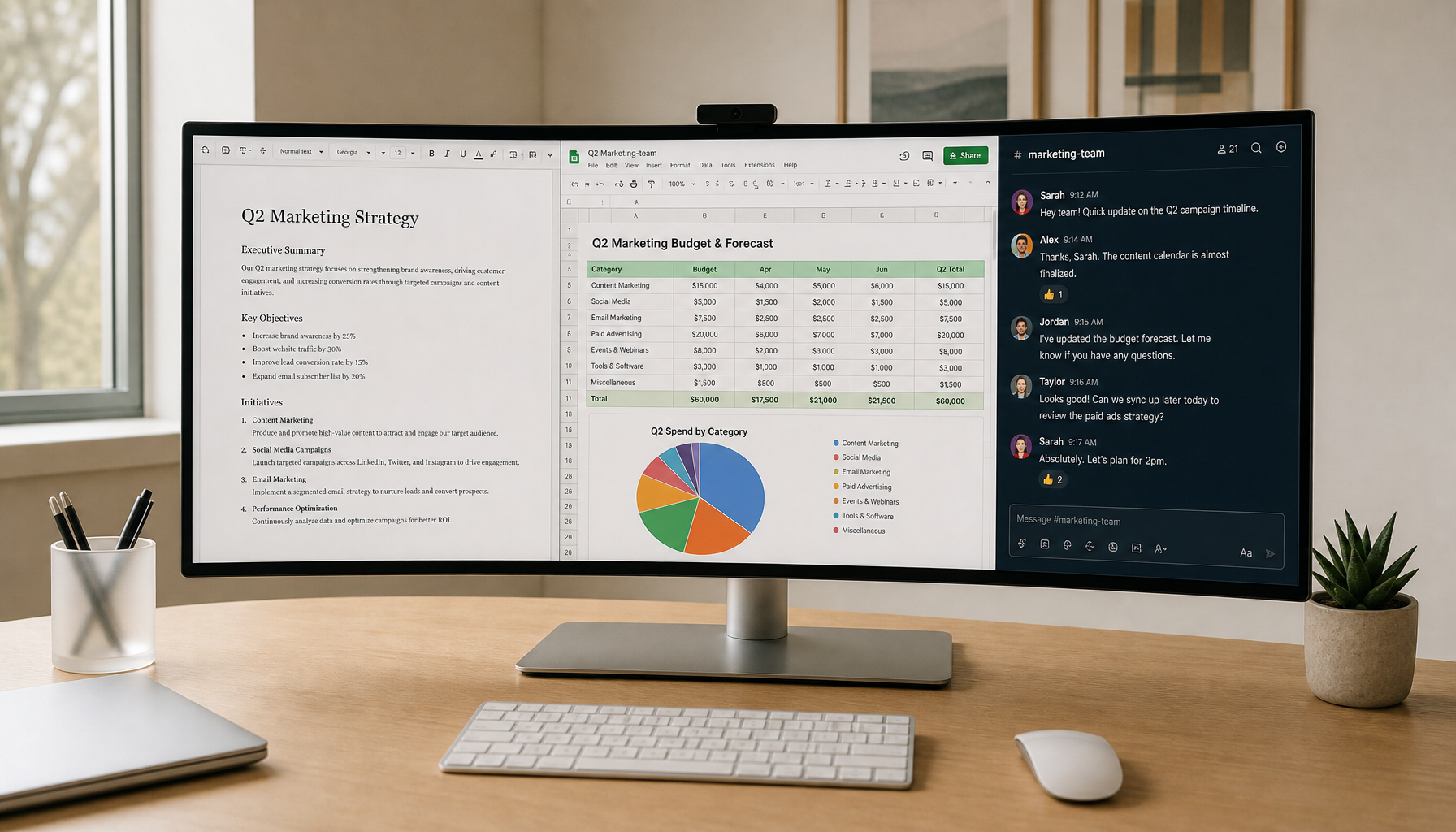
That is why OLED vs Mini-LED for work and gaming is really a workflow choice. A monitor can look excellent in a game trailer and still feel annoying in docs, code, or spreadsheets. Likewise, a panel can feel dependable for productivity and still look less cinematic when the room goes dark.
A good first filter is simple: if the monitor will spend more time showing static windows than games, lean conservative; if the gaming session is the reason you are upgrading, lean toward the more contrast-forward option. The OLED monitor lineup and the Mini-LED monitor lineup both make more sense once you know which daily habit you are optimizing for.
Where OLED Pulls Ahead and Where It Compromises
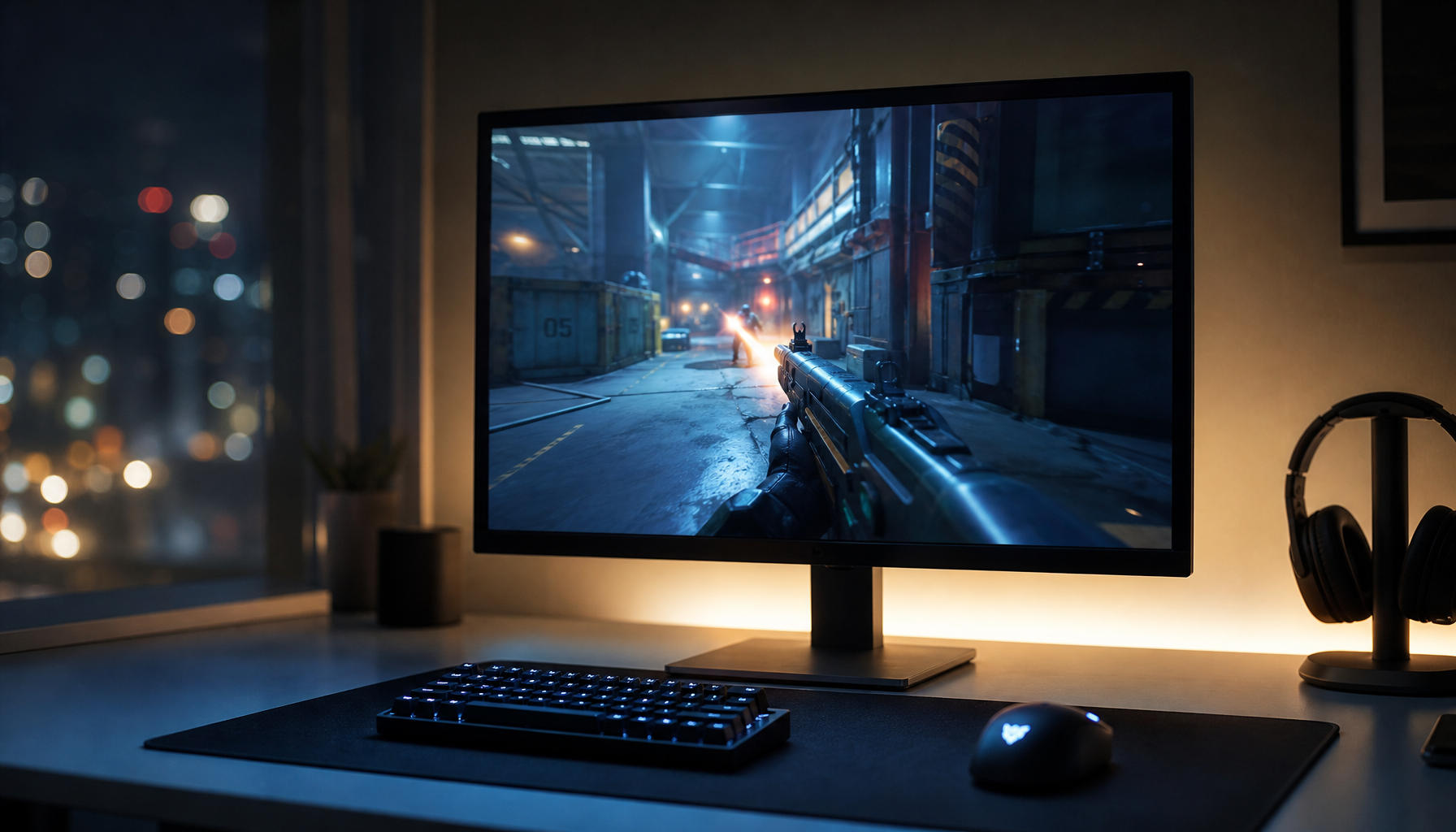
OLED usually wins on perceived contrast. Because each pixel can light independently, dark scenes can look deeper and more dramatic, and the black floor can make HDR feel more immersive in the right content. DisplayHDR True Black is built around that kind of pixel-level control, which is why OLED can still feel punchy even when peak brightness is not the highest number on the sheet.
That said, HDR numbers do not settle the decision by themselves. A brighter LCD-style panel can look more visible in daylight, while OLED can look more convincing in a dim room with games, movies, or dark creative work.
For fast games, OLED is attractive because motion blur is often less distracting than on many backlit panels. For a mixed desk, though, the downside is practical: OLED text fringing can make Windows text, UI edges, and small interface elements feel less crisp depending on subpixel layout, scaling, and viewing distance. If you want a second perspective on the same desktop issue, text rendering on OLED monitors is worth a look.
That is the main OLED compromise. If your week includes a lot of static taskbars, browser tabs, code, timelines, or documents, the panel can be a great gaming display and a less forgiving productivity display. Burn-in is best treated as a use-pattern risk, not an automatic outcome, but the static UI question still matters.

For readers who want the OLED side of the decision, the G27P6 OLED monitor is a neutral example of the type of display that fits gaming-first mixed desks. Its 27-inch 1440p, 240Hz class setup and USB-C support make sense only if you are comfortable trading some desktop caution for better gaming contrast and motion feel.
Where Mini-LED Earns Its Keep
Mini-LED usually makes more sense when the monitor has to stay useful all day, not just look good at night. RTINGS notes that Mini-LED monitors are generally better for bright rooms because they can sustain higher brightness than OLED, which helps visibility in daylight or mixed lighting. That makes a real difference if your desk sits near a window or under office lighting.
Mini-LED also fits mixed productivity better when your screen stays full of toolbars, timelines, charts, and other static elements. The practical reason is simple: you get a conservative long-session choice without having to think as much about image retention behavior. That does not mean every Mini-LED display looks identical, only that the usage risk is lower for static desktop routines.
Mini-LED can also hold up well in HDR scenes, especially when local dimming helps bright highlights stand out against darker backgrounds. The tradeoff is that it may not deliver the same inky black look as OLED in a dark room. If you care most about bright-room usability, Mini-LED options are usually the better starting point than chasing the most cinematic black level.
If you want a concrete example, the M27P6 Mini-LED monitor is a reasonable checkpoint for buyers who want 4K, HDR-focused brightness, and a desktop-friendly mixed setup. It is the kind of monitor to examine when the main concern is how the display behaves across work, play, and daylight hours.
Match the Panel to Your Workspace
| Scenario | OLED Fit | Mini-LED Fit | Best Fit Reason |
|---|---|---|---|
| Gaming-heavy mixed desk | Strong fit if you want dark-scene contrast and motion feel | Good fit if the room is bright | OLED usually gives the more dramatic game image |
| Creator-heavy with frequent static UI | Possible, but desktop comfort depends on text and UI habits | Stronger fit for long static work | Mini-LED is the safer all-day desktop choice |
| Bright-room productivity plus gaming | Less ideal unless you mostly game at night | Strong fit | Mini-LED is easier to live with in daylight |
| Balanced generalist use | Good if gaming matters most | Good if work comfort matters most | The winner depends on which task dominates |
The table is the fastest way to turn OLED vs Mini-LED for work and gaming into a shortlist. If you read it and still feel torn, the usual tie-breakers are room brightness and how often static UI stays on-screen.
For a neutral catalog-style starting point, compare the OLED example with the Mini-LED example only after you have decided which row fits your desk most closely.
How to Choose in Five Minutes
- Name the task that dominates your week. If gaming is the main reason you are upgrading, OLED stays in play. If work and browsing dominate, Mini-LED deserves a closer look.
- Check your room lighting. Bright rooms usually push the choice toward Mini-LED, while darker rooms make OLED easier to justify.
- Count static UI hours. More spreadsheets, code, timelines, and dashboards make Mini-LED the more conservative option.
- Decide what you value more: HDR contrast and motion feel, or desktop comfort and visibility.
- Use one OLED example and one Mini-LED example before checkout, rather than comparing ten specs that do not change the decision.
That is the cleanest shortcut for OLED vs Mini-LED for work and gaming. If the desk is gaming-first and you can live with more careful desktop habits, OLED fits. If the desk is bright, static, or work-heavy, Mini-LED is usually the better all-day compromise. For shoppers still comparing premium tiers, the Above $400 Monitors collection is a useful place to narrow the field.
Final Takeaway
If gaming impact is the priority and you mostly work in darker or more controlled lighting, OLED is the stronger fit. If your desk is bright, static-heavy, or work-first, Mini-LED is usually the safer choice. For most buyers, the right answer is the panel that matches the biggest weekly habit, not the one with the flashiest headline spec. Compare one OLED and one Mini-LED option side by side, then buy the one that fits your real desk routine.