Mini-LED vs OLED monitor choices come down to three things: how bright your room is, how often you leave static content on-screen, and whether you care more about punchy HDR brightness or perfect black levels. If you game at night in a controlled room, OLED often makes more sense. If you work in mixed light or keep desktop apps open for hours, Mini-LED usually fits better.
Start With Your Room and Use Case
For most value shoppers, the panel label matters less than the room and the workload. Brightness is how well the screen fights daylight and lamp glare. Contrast is how separated bright and dark parts of the image feel. Longevity, in this comparison, mostly means how comfortable you are with static UI being on-screen for long stretches.
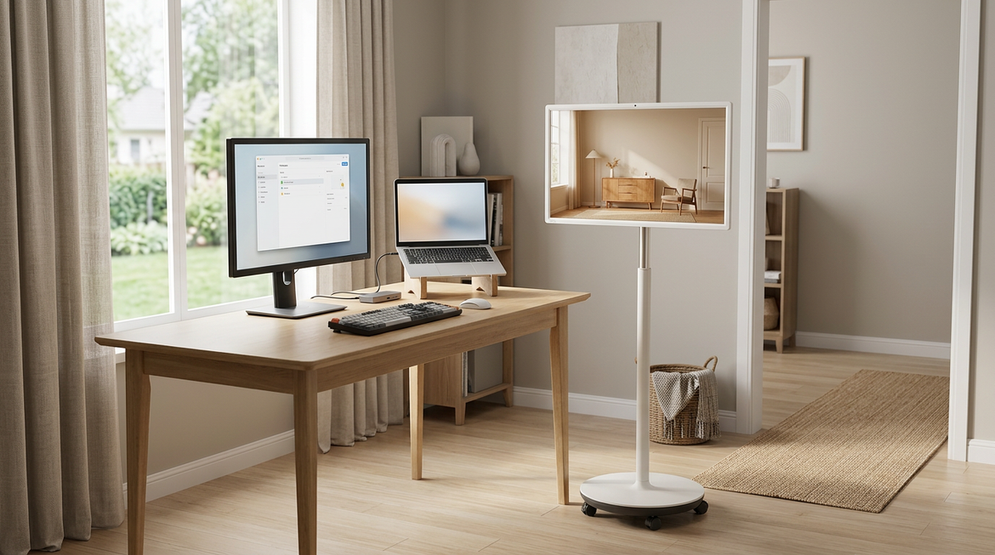
A bright desk setup can make a display feel very different from the same panel in an evening gaming room. That is why mini LED vs OLED monitor shopping should start with your environment, not the spec sheet.
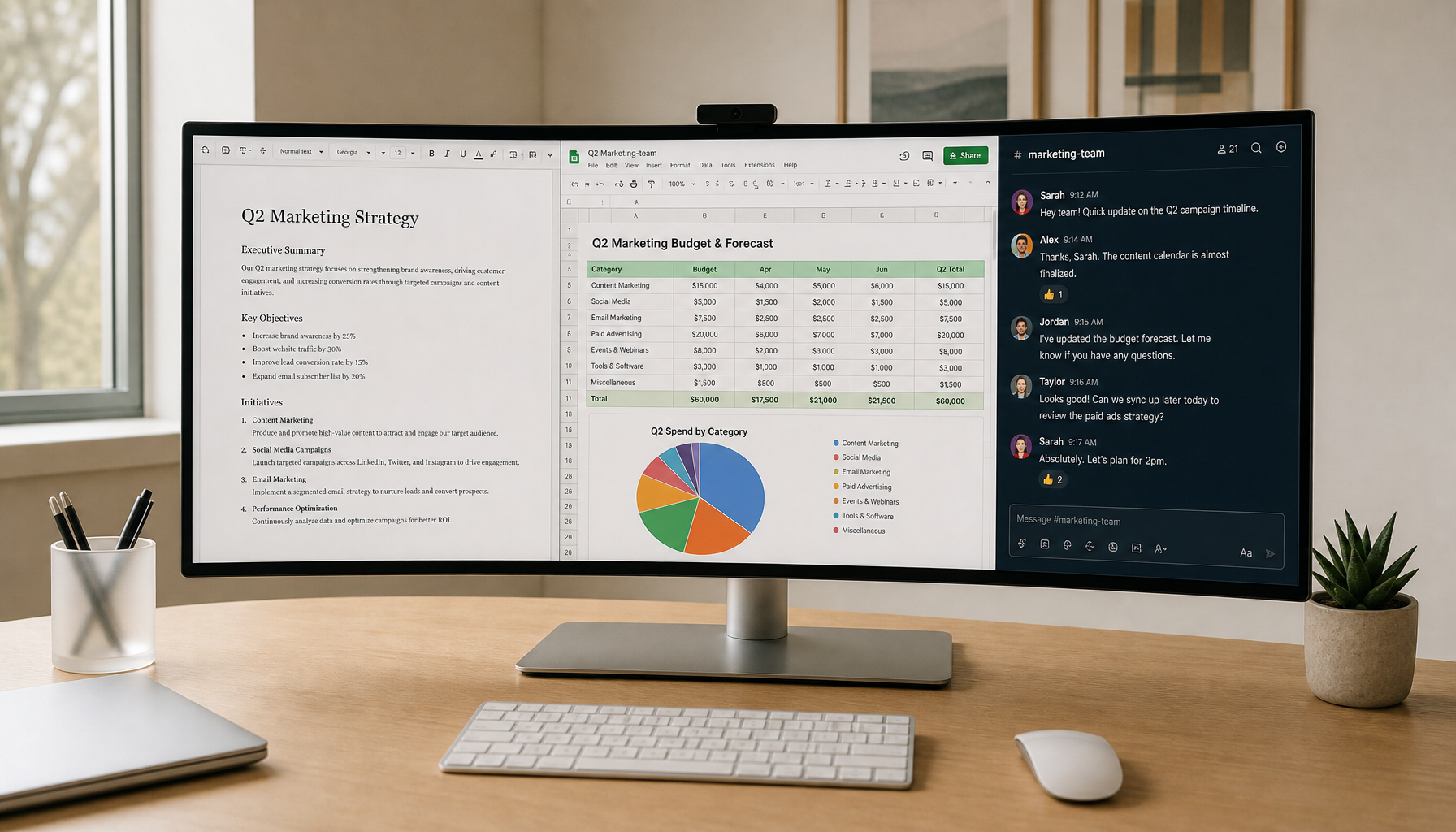
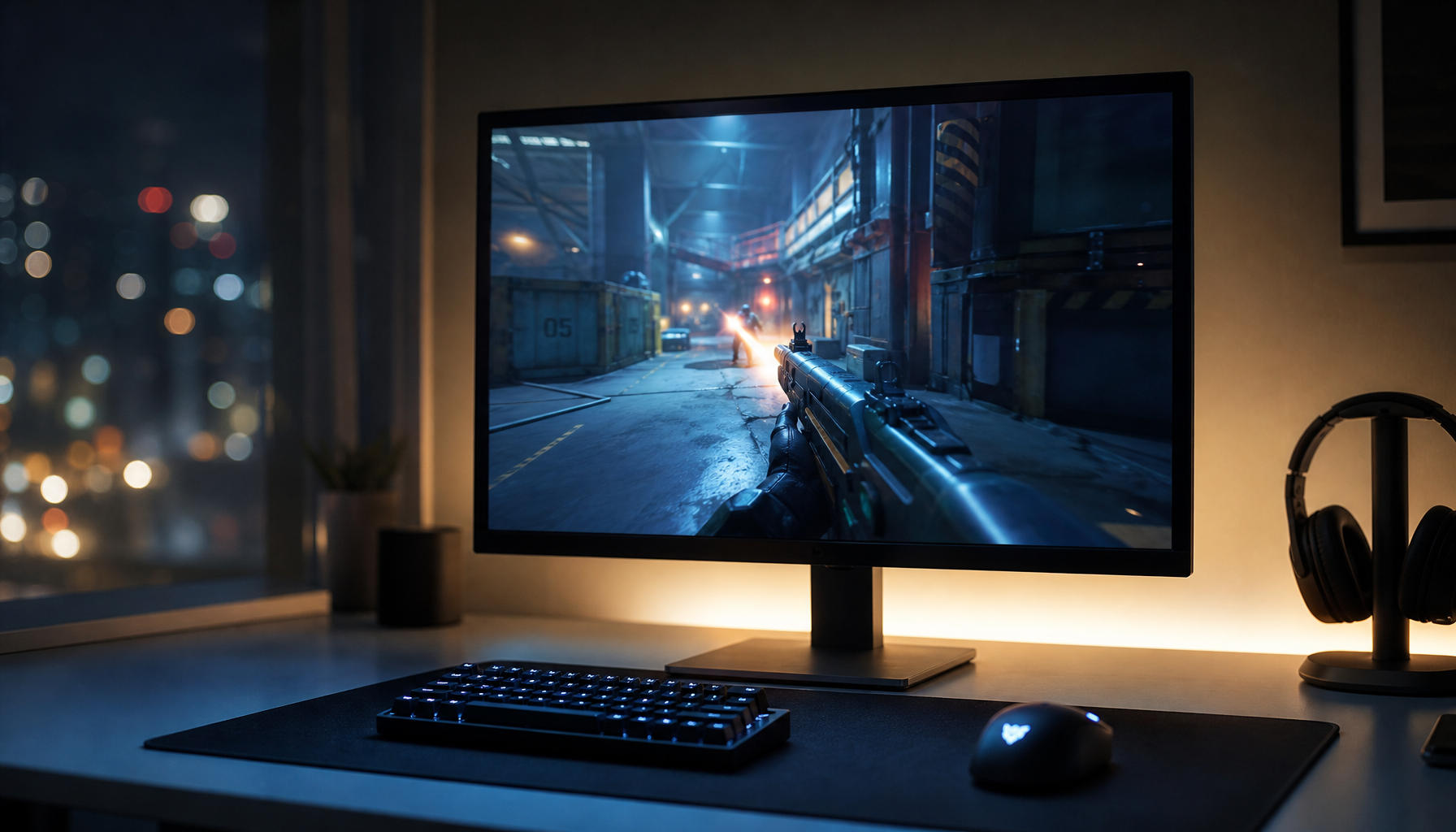
If your desk gets window light during the day, Mini-LED usually deserves a closer look. If you mainly play at night and can control reflections, OLED becomes more attractive. The wrong choice is usually the one that fights your routine every day.
Gaming Monitor is a useful browsing path if you are still sorting panel type from the broader monitor category.
Mini-LED and OLED in Plain English
Mini-LED is still an LCD monitor, but it uses many small backlight zones to control brightness in different parts of the screen. As RTINGS explains in its Mini-LED vs. OLED guide, that zone control can raise peak brightness and improve local contrast compared with older backlights.
OLED works differently. Each pixel makes its own light, so dark areas can turn off almost completely. That is why OLED often looks cleaner in dark scenes and why its blacks tend to feel deeper.
What that means at a desk is simple. Mini-LED is usually easier to see in bright rooms, while OLED usually looks more dramatic in dim rooms. If you want one panel to do both jobs well, room light becomes the deciding factor.
For buyers who want a Mini-LED example with clear brightness headroom, the KTC Mini LED 27" 4K 160Hz HDR1400 Gaming Monitor | M27P6 shows how this category is often positioned: high HDR brightness, local dimming, and a flat 27-inch layout that can work for mixed-use desks.
Brightness, Blacks, and HDR Trade-Offs
| What You Notice | Mini-LED | OLED |
|---|---|---|
| Bright-room visibility | Usually stronger | Can look dimmer in tougher lighting |
| Black depth | Good, but not perfect | Excellent, with very deep blacks |
| HDR highlights | Often more noticeable | More about contrast than raw brightness |
| Dark-scene artifacts | Can show blooming | Usually avoids blooming |
| Mixed-light desk use | Often the safer fit | Better if reflections are controlled |
| Value at similar price | Strong when brightness matters | Strong when contrast matters |
The visual trade-off is easy to see once you know what to look for. Mini-LED can show blooming, which is a halo around bright objects on dark backgrounds. OLED avoids that because each pixel is independently lit.
On the other hand, OLED's black level can make HDR scenes feel more cinematic even when peak brightness is lower. For RTINGS' Mini-LED vs. OLED comparison, the key takeaway is not that one wins every scene, but that each one spends its strengths differently.
In practical buying terms, Mini-LED is often the better value if you want visible HDR impact in a brighter room. OLED is often the better value if your room can be dimmed and you care more about dark-scene contrast than headline brightness.
Burn-In Risk Versus Blooming Reality
- OLED burn-in concerns matter most when the same static elements stay on-screen for hours. Taskbars, spreadsheets, browser bars, and HUDs are the usual triggers people worry about.
- Mini-LED blooming matters most when a bright object sits on a dark background. It is most obvious in menus, subtitles, space scenes, and other high-contrast content.
- Neither issue should be treated as automatic deal-breakers. The more important question is how you actually use the monitor day to day.
For long desktop sessions, the warning sign is not just "OLED." It is "OLED plus lots of static UI." That is where the risk feels more real for hybrid workers and spreadsheet-heavy users.
For dark-room gaming, the warning sign on Mini-LED is not just "Mini-LED." It is "bright highlights on a dark scene." That is where blooming becomes easy to notice.
If you want the broad behavior explained in more detail, a deeper look at Mini-LED monitors can help you separate local-dimming behavior from marketing language.
Best Value for Gaming, Work, and Mixed Use
Budget PC Gaming Under $500
Mini-LED usually offers the safer value buy if you want obvious HDR impact without pushing into OLED pricing. The extra brightness helps in mixed light, and the panel tends to be less stressful for people who keep desktop apps open between games.
OLED is still compelling if your main use is evening gaming and you care more about black depth and motion feel than about daytime visibility. In a controlled room, it can look more premium than the price suggests.
Hybrid Work and Evening Play
This is the most important split for many buyers. If you work all day and game at night on the same screen, Mini-LED usually gives you fewer compromises. It is easier to live with when the same monitor has to handle spreadsheets, chat windows, and games in the same week.
OLED becomes the better fit when your work use is lighter, your lighting is controlled, and your gaming sessions are the main event. The recommendation flips when contrast matters more than keeping the screen comfortable for all-day desktop use.
Text, Windowed Apps, and Mixed Lighting
Productivity buyers should judge the panel by how it behaves with windows, menus, and static UI, not just by contrast ratios. Mini-LED is usually the more forgiving choice for long document sessions under office light.
If your desk is bright and you keep many small windows open, OLED's contrast advantage becomes less important than readability and comfort. That is the point where the mini LED vs OLED monitor decision usually stops being abstract and starts becoming personal.
For shoppers who want an OLED example after filtering by use case, All-OLED Monitor is a cleaner browsing path than jumping straight to a model page.
Price-Per-Spec at Real Purchase Points
| Purchase Point | Mini-LED Usually Delivers | OLED Usually Delivers |
|---|---|---|
| Entry to midrange | More visible HDR brightness for the money | Strong contrast if you can accept trade-offs |
| 1440p value tier | A strong balance of speed, brightness, and price | Still attractive if dark-room gaming is the priority |
| 4K value tier | Better if you want sharpness plus HDR headroom | Best if contrast is the reason you are paying more |
| Productivity-heavy use | Better long-session practicality | Better only if burn-in trade-offs feel acceptable |
At real purchase points, 1440p Mini-LED often looks like the value sweet spot. It gives shoppers a clearer step up in HDR behavior without forcing them into the highest price bands.
OLED can still be worth it when the display is mostly for gaming and media in darker spaces. But if you are comparing sticker price alone, you can miss the more important question: what will you actually notice every week?
A relevant example is KTC OLED 27" 2K 240Hz/0.03ms USB-C Gaming Monitor | G27P6. Its 27-inch 1440p format, 240Hz refresh rate, and OLED contrast make it a clearer fit for buyers who prioritize speed and black depth over brighter-room flexibility.
Choose the Right Panel Before You Buy
- Match the panel to your room first. If your desk stays bright, Mini-LED usually deserves priority. If you can control light, OLED gets stronger.
- Match the panel to your workload second. Long static apps and taskbars push the decision toward Mini-LED. Mostly gaming and media push it toward OLED.
- Check the resolution and refresh rate on the exact model, not just the panel type. A great panel in the wrong size or speed tier is still the wrong buy.
- Compare warranty, returns, and price as part of the value call. A panel technology only matters if the specific monitor fits your setup.
- If you want to stay in the Mini-LED lane, start with KTC Mini LED 27" 4K 160Hz HDR1400 Gaming Monitor | M27P6, then compare it against the broader All-Mini-LED Monitors collection.
The simplest rule is this: choose Mini-LED if you want brightness, mixed-room flexibility, and less worry about static desktop use. Choose OLED if you want the strongest black levels and your room setup lets that advantage show up. That is the real mini LED vs OLED monitor decision for value shoppers.

Mini-LED vs OLED: Scenario Fit for Value Shoppers
A quick scenario map to show where each display type tends to fit better, based on room lighting and usage patterns rather than exact superiority.
View chart data
| Scenario | Bright-room mixed use | Darker-room gaming | Long static productivity |
|---|---|---|---|
| Mini-LED | 2.0 | 1.0 | 2.0 |
| OLED | 1.0 | 2.0 | 1.0 |
Frequently Asked Questions
Q1. How Do I Test Mini-LED and OLED in My Room?
Test the monitor in daylight, in the evening, and with your usual apps open. The goal is to see whether glare, blooming, or dimming becomes annoying in the conditions you actually live with.
Q2. What Should I Watch for on a Productivity Desk?
Look at the apps you keep open for hours, especially taskbars, toolbars, and split-screen layouts. That is where OLED burn-in worries tend to feel more relevant, while Mini-LED haloing may show up around bright windows on dark themes.
Q3. Can a Value Buyer Ignore HDR Specs?
Yes, if most of your use is office work or casual gaming, HDR numbers matter less than panel fit and price. If you actually play HDR content, the way the panel handles highlights and dark scenes matters more than the label.
Q4. Why Does OLED Brightness Look Different in Real Use?
Scene size and screen layout change how bright it feels, so a spec number is only part of the story. Check it in a bright room and with the same kind of content you normally use, not just a showroom demo.
Q5. How Do I Reduce Long-Term Image Issues?
Vary your content, let the monitor sleep normally, and avoid leaving static images on-screen for long periods. It also helps to keep brightness and HDR settings matched to your room instead of running maximum settings all day.
The Value Choice Comes Down to Fit
The best panel is the one that matches your room, your workload, and the kind of trade-off you can live with. Mini-LED is usually the safer value choice for bright rooms and mixed-use desks. OLED is usually the better choice for darker-room gaming and deep contrast. If you start with that filter, the spec sheet becomes much easier to read.