Mini-LED vs OLED for editing comes down to workflow, room light, and how much static UI you leave on-screen. If your desk is bright and you want steadier visibility for timelines, scopes, and mixed productivity, Mini-LED is often the safer lean. If you work in a controlled-light room and care most about contrast and perceived image depth, OLED stays strongly in the running. For buyers who want color accuracy and comfort without panel drama, a creator IPS monitor can still be the calmer middle path.
What Editors Should Compare First
Before you compare specs, compare the parts of the job you actually feel every day: color accuracy, contrast behavior, HDR handling, and comfort during long sessions. Mini-LED vs OLED is not really a "which is better" question. It is a "which trade-off fits your desk" question.
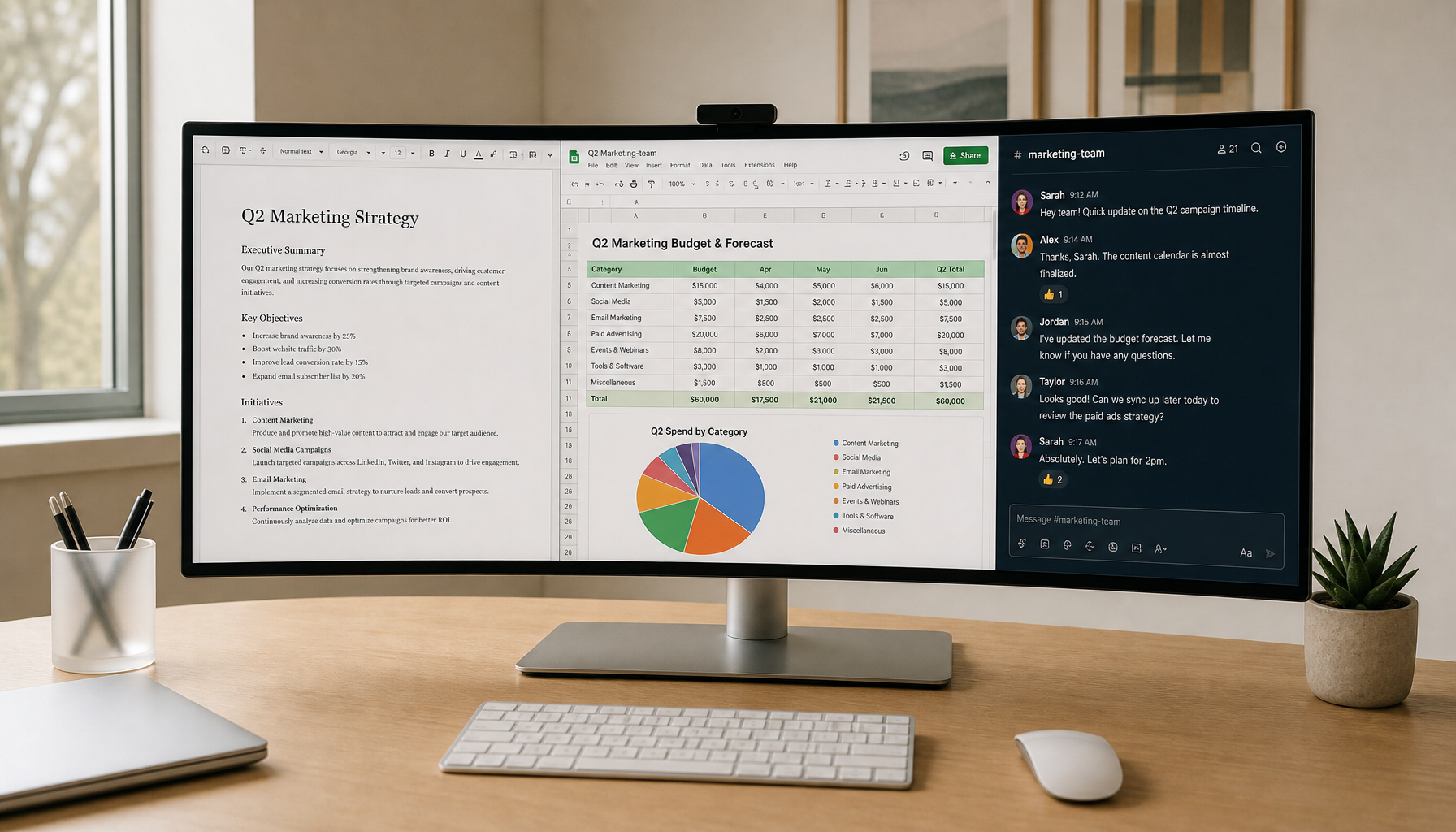
Room lighting changes the answer fast. So does how often your apps leave static panels, toolbars, or timelines parked on screen. If your work is mostly photo review or controlled-light grading, contrast may matter more. If your desk looks like a bright office all day, visibility and stable brightness can matter more than deep blacks. For a broader work-oriented browse path, the Office Monitor collection is a clean starting point.
Where Mini-LED Helps and Where It Can Distract
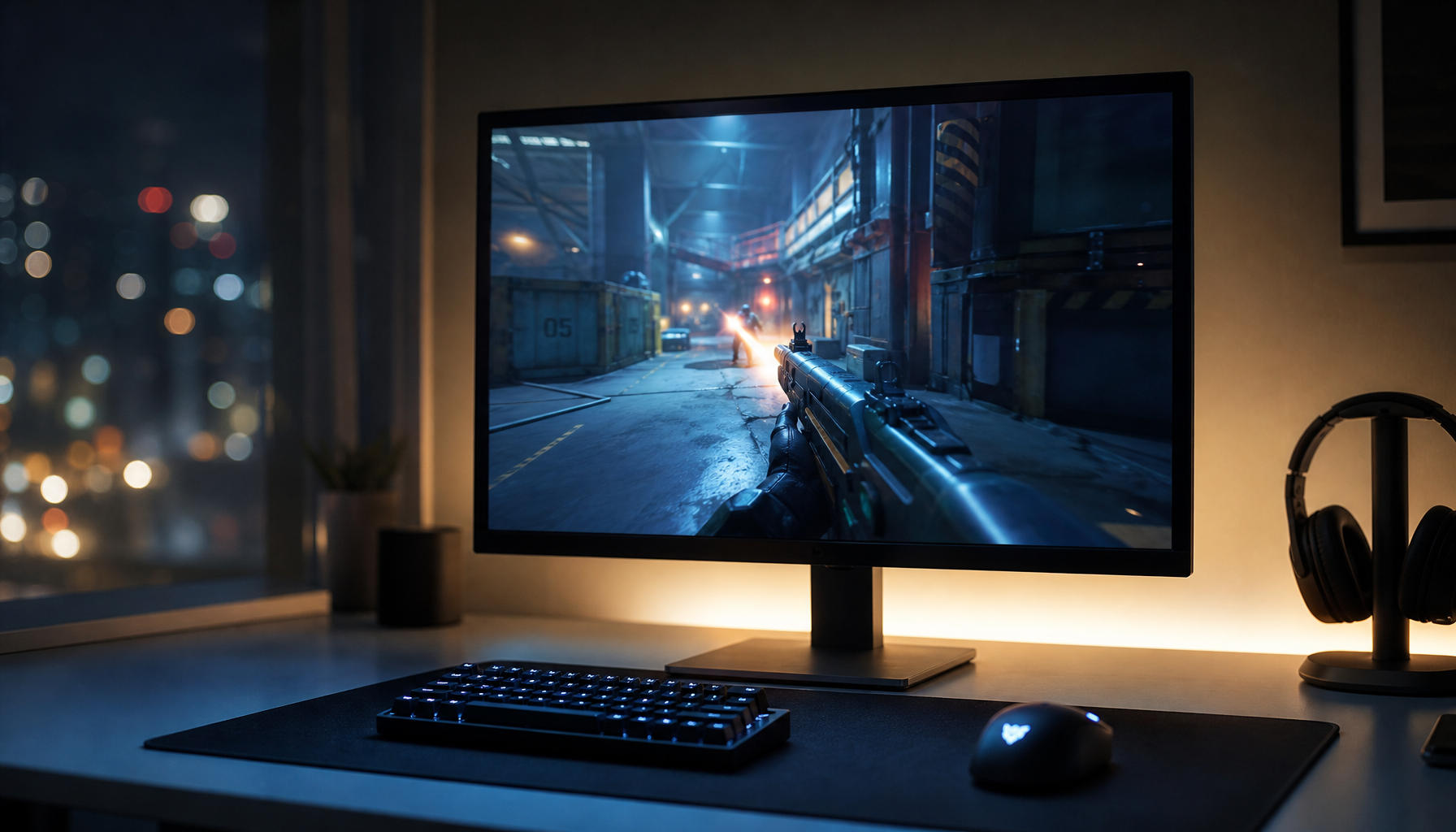
Mini-LED is often attractive when you want stronger visible punch in bright rooms and more convincing HDR-style highlights. That can make it feel easier to work across a mixed desk, especially when the room light stays up and you do not want the image to look flat.

The catch is local dimming behavior. On the Mini-LED local dimming behavior side, blooming and haloing can show up around bright UI elements on dark backgrounds, including subtitles, timelines, shadow detail, and small panels. In other words, the very thing that helps contrast can also become visible during editing.
That is why Mini-LED vs OLED for photo editing is not a simple quality contest. Mini-LED can be the better practical fit when bright-room visibility and HDR previewing matter more than perfectly clean dark interfaces. It is less compelling if you spend hours staring at dark UI overlays and are sensitive to the way dimming zones shift around them.

A good rule of thumb is this: if your editing day includes a lot of mixed desk work, bright ambient light, and review passes on vivid footage, Mini-LED tends to feel more forgiving. If your workflow depends on very clean dark-background rendering around small interface elements, check the specific model carefully before you buy.
Where OLED Fits Editing Work Better
OLED's biggest draw is simple: deep blacks and strong contrast can make image depth feel more natural, especially in controlled-light rooms. For photo and video review, that can make shadows, gradients, and dark scenes easier to judge at a glance. That is the main reason many editors still consider OLED when they want a more premium visual feel.
The trade-off is that OLED asks more of your habits. The editor concern is not abstract, it is the reality of static UI exposure from toolbars, timelines, scopes, and repeated workspace layouts. The OLED burn-in anxiety question is really a workload question: how long do those elements sit in the same place, and how do you use the screen day after day?
That is why OLED is best treated as a fit-for-habits choice, not a fear-based no-buy. If you work mostly in a dimmer room, switch content often, and can manage your UI setup, OLED can be a strong editing panel. If you keep the same panels visible for long stretches and want a lower-anxiety all-day desk display, Mini-LED or IPS may be easier to live with.
For long-session comfort, the decision usually comes down to whether you prefer image depth or peace of mind. OLED can feel more cinematic, but some editors still prefer a panel that fades into the background during long workdays. In practical terms, that means the "best monitor for editing no burn in" search often leads not to a perfect answer, but to the display you trust most with your actual habits.
Mini-LED vs OLED for Photo and Video Work
The comparison below keeps the decision centered on editor priorities rather than on raw panel hype.
| Editor Priority | Mini-LED Tends To Lean Toward | OLED Tends To Lean Toward | What To Check Before Buying |
|---|---|---|---|
| Bright-room visibility | Easier to live with when ambient light is high and the screen needs more punch | Can still work, but contrast benefits may matter less in bright rooms | Check your desk light, window glare, and whether you edit with bright surroundings |
| Image depth and black levels | Strong, but can depend on zone tuning | Usually the stronger pick for deep blacks and perceived depth | Ask whether you care more about shadow feel or bright-room stability |
| Subtitles, timelines, and small UI elements | May show blooming or haloing around bright items on dark backgrounds | Usually cleaner around individual pixels, but static UI is the durability concern | Look at how often your UI stays fixed on screen |
| HDR preview use | Often appealing when you want visible punch in bright scenes | Can look very convincing when contrast is the priority | Check whether your workflow needs HDR all day or only for occasional review |
| Long editing sessions | Often feels safer when the desk is bright and the UI is busy | Can be comfortable in controlled-light rooms if static elements are managed | Judge your real app layout, not just the panel type |
| Best fallback if neither fits | A creator IPS monitor can be the calmer compromise | A creator IPS monitor can be the calmer compromise | If you want color accuracy plus comfort, compare IPS first |
For readers who want a broader color-focused fallback, the factory calibration reports article is useful background on how to read monitor claims without turning the choice into marketing math.
One useful boundary: HDR can help some visual work, but SDR may still be more predictable for office-like or mixed productivity use. That is why a panel that looks dramatic in a demo is not always the easiest monitor to live with for editing, emails, and browser tabs all day.
Choose the Right Panel for Your Editing Desk
Start with your room. If the desk is bright, Mini-LED usually deserves a look first because it gives you more visibility headroom. If the room is controlled and you want the deepest blacks for review work, OLED stays in play. If neither description feels right, move to a creator IPS monitor instead of forcing a panel trade-off you will resent later.
Next, count your static UI time. If timelines, scopes, toolbars, and palettes sit on screen for hours, OLED deserves a more careful habits check. If you switch layouts often and the screen does not stay parked on one interface, the concern drops a bit. That is where the choice flips for many editors.
Then think about what matters more in your day: image depth or predictability. Mini-LED usually wins on bright-room practicality. OLED usually wins on perceived contrast. A broader All Monitors browse path can help if you are still sorting categories rather than models.
If you want a practical creator-first fallback, a monitor like the H27P3 5K creator display is worth a look when your priority is color coverage, sharp text, and long-session comfort over panel extremes. If you are still leaning toward contrast-heavy review work, a Mini-LED 4K option may fit a bright desk better. If you want the OLED route, the OLED 2K option is the one to compare against your static UI habits and room light.
Before checkout, check four things: your room lighting, your static UI exposure, your need for HDR previewing, and whether you want image depth or low-friction all-day use. If you can answer those clearly, Mini-LED vs OLED gets much easier to decide.
FAQs
Which Is Better for Photo Editing, Mini-LED or OLED?
Photo editors usually care most about contrast, tonal consistency, and how the display behaves in their actual room. OLED can feel more satisfying in controlled light because blacks look deeper, while Mini-LED can be easier to live with in brighter spaces. The better choice is the one that matches your lighting and tolerance for panel behavior.
Is Mini-LED Better for Video Editing With Static Timelines?
It can be, especially if you keep timelines and toolbars on screen for long stretches. The reason is not that Mini-LED is "perfect," but that it avoids the same static-UI anxiety some editors have with OLED. You still need to check the specific monitor for how it handles dimming around dark UI layouts.
Does OLED Burn-In Matter for Editors?
It matters most when the same interface elements stay in place for long periods. That means timelines, scopes, menus, and toolbars are more relevant than occasional full-screen viewing. The right response is not panic, but matching the panel to your habits and being honest about how static your workspace really is.
Can Mini-LED Replace an OLED for Color-Critical Work?
Sometimes, yes, but not as a universal answer. Mini-LED can be a strong choice when HDR punch and bright-room visibility matter more than perfect dark-scene cleanliness. OLED still has an edge when perceived contrast and black depth are the main goal. The deciding factor is your workflow, not the label on the box.
What Should I Prioritize If I Edit in a Bright Room?
Prioritize visibility, glare control, and comfort before chasing the deepest blacks. In bright rooms, a panel that stays readable and stable during long sessions often matters more than the most dramatic contrast spec. That is why Mini-LED or a good creator IPS monitor can feel more practical than OLED in many daylight setups.