The fixed living room TV is losing its dominance as families seek more flexible, interactive displays that move with them. A portable smart monitor on wheels offers the mobility and touch capabilities that traditional TVs lack, making it a compelling alternative for multi-room use, recipes, social media, and casual entertainment in many households.

The Death of the Fixed Screen: Why Your Living Room TV is Holding You Back
Traditional TVs lock you into a single viewing spot, creating dead zones throughout the home where family members can't easily share content. This lean-back design works for evening movies but struggles with today's lean-forward needs like following recipes while cooking, taking video calls, or scrolling vertical social media.
The rise of portable smart monitors signals a broader shift toward multi-room, interactive displays. Market data shows the global portable monitor market is projected to grow at a CAGR of approximately 18.4%, reaching over $2 billion by 2035, driven by demand for flexible solutions.
Industry observers describe these devices as giant tablets on wheels that bridge wireless private viewing with high-productivity tablet features, according to an Ars Technica report.
Why Mobility and Touch Redefine the Living Room Experience
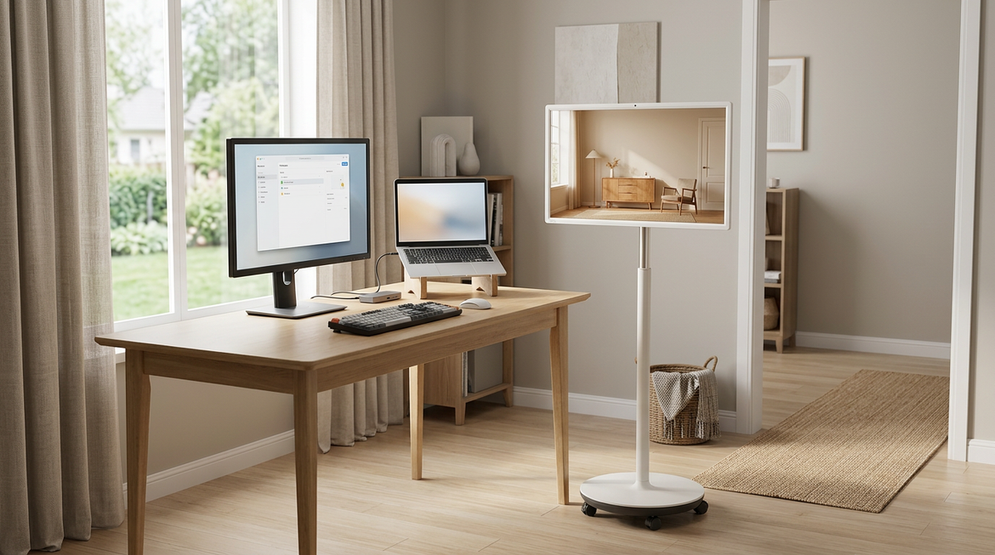
A smart monitor on wheels removes the one-room constraint by letting the screen follow you from living room to kitchen or bedroom. Its wheeled base and battery power enable effortless repositioning without cables or wall mounts.
The 10-point touch interaction turns a passive screen into an active tablet. You can swipe, zoom, and tap directly on content, which proves far more intuitive for tasks like browsing recipes or controlling smart home devices than using a remote.
Eye comfort becomes essential when using the display close up. TÜV Rheinland certified Low Blue Light and Flicker-Free technology helps reduce digital eye strain during these lean-forward sessions, a consideration many TVs overlook for distant viewing.
This mobility flip removes daily friction points. In the kitchen it eliminates squinting at a phone by providing an eye-level, touch-ready recipe hub. For social media it solves letterboxing by pivoting to portrait mode for TikTok and Reels. During fitness it rolls directly to your yoga mat and tilts for floor-level viewing.

Portable Smart Monitor vs. Traditional TV: Navigating the Trade-offs
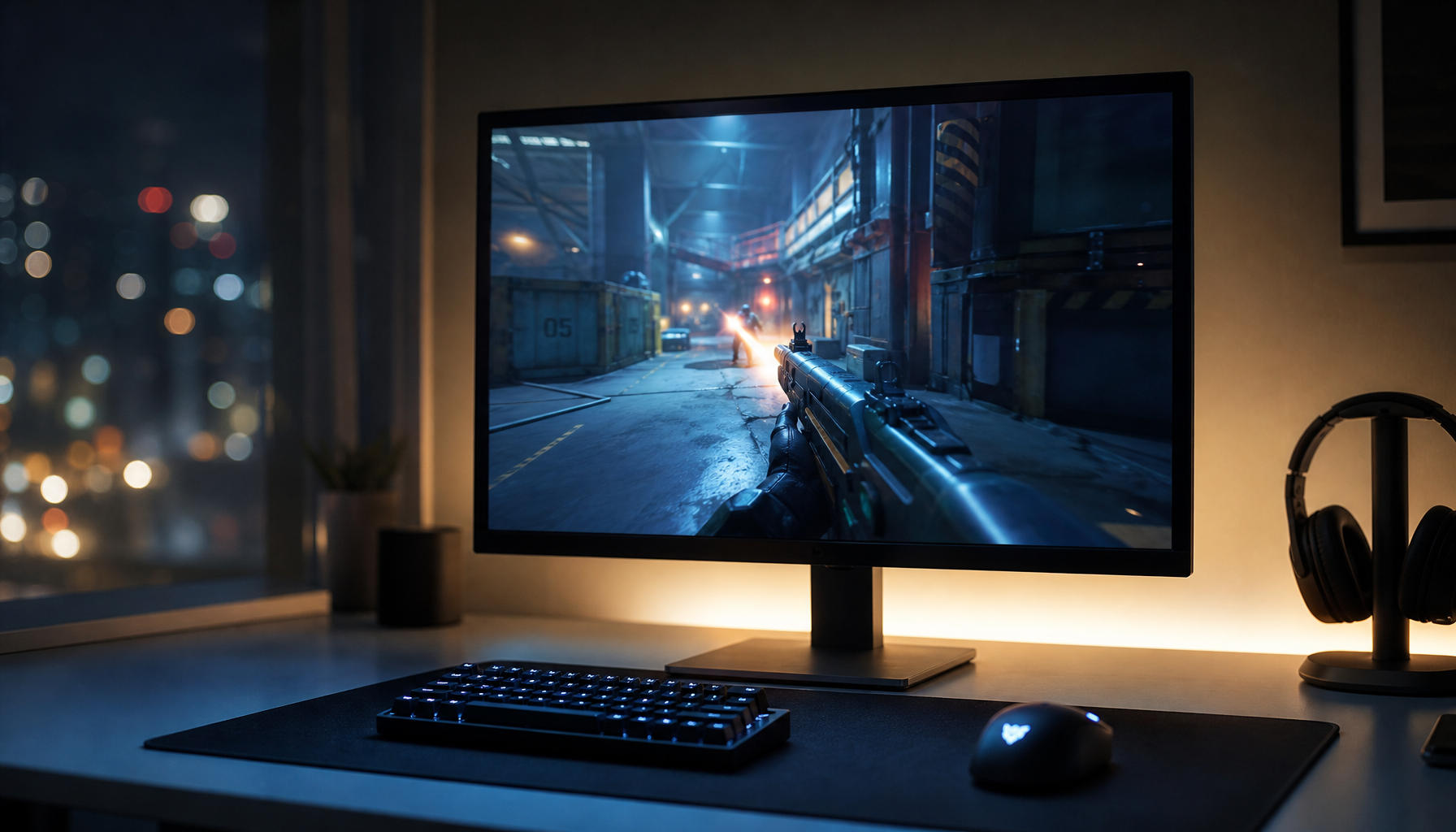
Switching from a TV to a portable smart monitor involves clear compromises. Brightness typically peaks around 400 nits on these mobile units, lower than the 1000+ nits found on high-end HDR TVs, which reduces impact for dark-room cinematic viewing.
Software presents another key difference. Google EDLA certification on many portable smart monitors grants full Play Store access, enabling productivity apps like Zoom or Slack that restricted Smart TV operating systems often block.
Audio output usually comes from modest integrated 12W speakers. While functional for casual use, this setup falls short of dedicated TV soundbars or higher-wattage systems, though Bluetooth pairing allows easy expansion.
The portrait advantage stands out for vertical content. Traditional TVs force letterboxing on TikTok or Instagram Reels, while a pivoting portable monitor delivers full-screen viewing in the natural orientation.
A decision-threshold view helps clarify these choices.
When a Portable Smart Monitor Is the Better Fit Than a TV
A decision-threshold view of the use cases where portability, touch input, and portrait mode can outweigh a fixed TV’s higher brightness and more cinematic setup.
View chart data
| Category | Portable smart monitor fit | Traditional TV fit |
|---|---|---|
| Bright living-room movie watching | 1.0 | 4.0 |
| Mixed use: shows, browsing, light work | 3.0 | 2.0 |
| Vertical video / social content | 4.0 | 1.0 |
| Room-to-room use or limited space | 4.0 | 1.0 |
| Long sessions away from power | 1.0 | 4.0 |
This chart illustrates the pattern in typical setups. Portable options excel in mobility-focused and interactive scenarios while TVs maintain advantages for dedicated cinematic use.
Battery runtime typically delivers 3 to 4.5 hours of 4K streaming in real-world conditions. This suffices for a movie or several tasks but requires planning around recharging, unlike plugged-in TVs.
Room-by-Room: How a Mobile Touchscreen Fits Your Daily Routine
In the kitchen a portable smart monitor serves as an eye-level recipe assistant that keeps counters clear of phones or tablets. Its touch interface lets you scroll instructions hands-free while maintaining hygiene.
For bedroom or gym use it rolls directly to your workout space and tilts downward for comfortable floor-level viewing during yoga or stretching routines.
In office or social areas the portrait mode transforms it into an ideal hub for vertical feeds and video calls. The mobility lets you reposition it easily for different family members or activities.
These practical applications highlight how one device can serve multiple roles without the permanence of a wall-mounted TV.
Our guide to essential specs for portable touch screen monitors provides additional details on evaluating these features for home use.
Choosing Your Mobile Hub: What to Look for in a Smart Monitor on Wheels
Resolution matters significantly at arm's length. A 4K panel on a 32-inch screen delivers sharp details for close viewing, whereas lower resolutions may appear pixelated during touch interaction.
Google EDLA certification ensures broad app compatibility and security updates, making the device function more like a full Android tablet than a limited Smart TV.
Battery capacity directly impacts usability. Look for models offering at least 3-4 hours of mixed 4K use to cover typical room-to-room sessions before needing a charge.
Size selection depends on your mobility needs. A 32-inch model provides substantial screen real estate yet remains manageable to move between rooms, while 27-inch versions offer easier handling in tighter spaces.
Energy efficiency features, such as those meeting Energy Star standards, help extend runtime during battery operation.
Check our collection of mobile touch screen monitors to compare available options.
Is the Fixed Screen Dead? Making Your Final Decision
A portable smart monitor suits you best if you prioritize interaction, multi-room flexibility, and lean-forward activities like social media, video calls, and cooking assistance. Families who move frequently between tasks or live in smaller spaces often find this versatility outweighs traditional TV strengths.
Stick with a fixed TV if your primary use involves long, dark-room movie sessions where maximum brightness, immersive audio, and stationary placement matter most. The higher peak brightness and dedicated sound systems still deliver superior cinematic results in those scenarios.
The KTC MegPad series bridges this gap as a high-performance Android hub on wheels. Models like the 32" 4K Android smart touch monitor combine mobility, touch, and full app access while acknowledging the practical limits around battery and brightness.
Consider your dominant use patterns before deciding. Test the device in your actual rooms if possible, and remember that Bluetooth speakers can address audio needs while strategic charging handles battery constraints.
For holiday inspiration on integrating such flexible displays, read why the MegPad makes a perfect Christmas gift.
Frequently Asked Questions
How long does the battery last on a portable smart monitor? Real-world testing typically shows 3 to 4.5 hours of 4K streaming or mixed use. This covers most room-to-room sessions but requires returning to a charging station for all-day operation.
Can a portable smart monitor replace a TV for movie nights? It works well for casual viewing and smaller groups but may not match the brightness or audio impact of a dedicated home theater setup. Pairing with Bluetooth speakers helps close the gap for better sound.
Is touch functionality useful on a large 32-inch screen? Yes, especially for lean-forward tasks within 1-3 feet such as recipes, browsing, or video calls. The 10-point touch turns the display into an interactive tablet rather than a passive screen.
What makes Google EDLA certification important? EDLA provides full Google Play Store access and regular updates, allowing productivity and social apps that many Smart TV platforms restrict. This makes the device more versatile as a family hub.
Does a smart monitor on wheels work on carpet? Most models roll smoothly on low to medium pile carpets, though high-pile or uneven surfaces may require more effort. Check wheel design and weight distribution for your specific flooring.
How does portrait mode benefit vertical content? It eliminates letterboxing on platforms like TikTok or Instagram, allowing full-screen viewing in the content's native orientation. This creates a more immersive experience than forcing vertical videos onto a fixed horizontal TV.
Is a portable smart monitor suitable for bright rooms? It performs adequately in moderate lighting but may struggle against direct sunlight or very bright environments compared to high-nits TVs. Positioning away from windows helps maintain visibility.