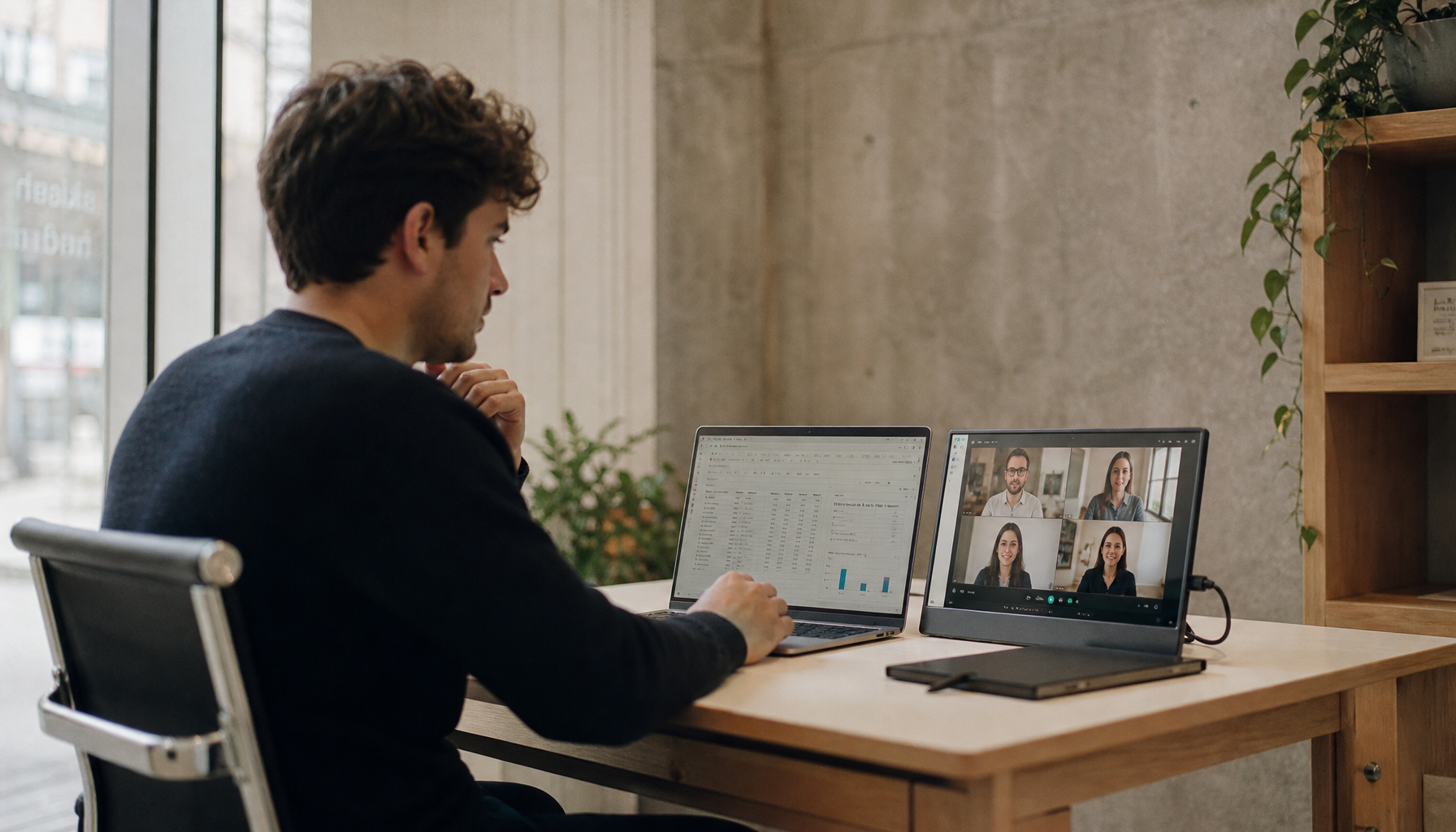
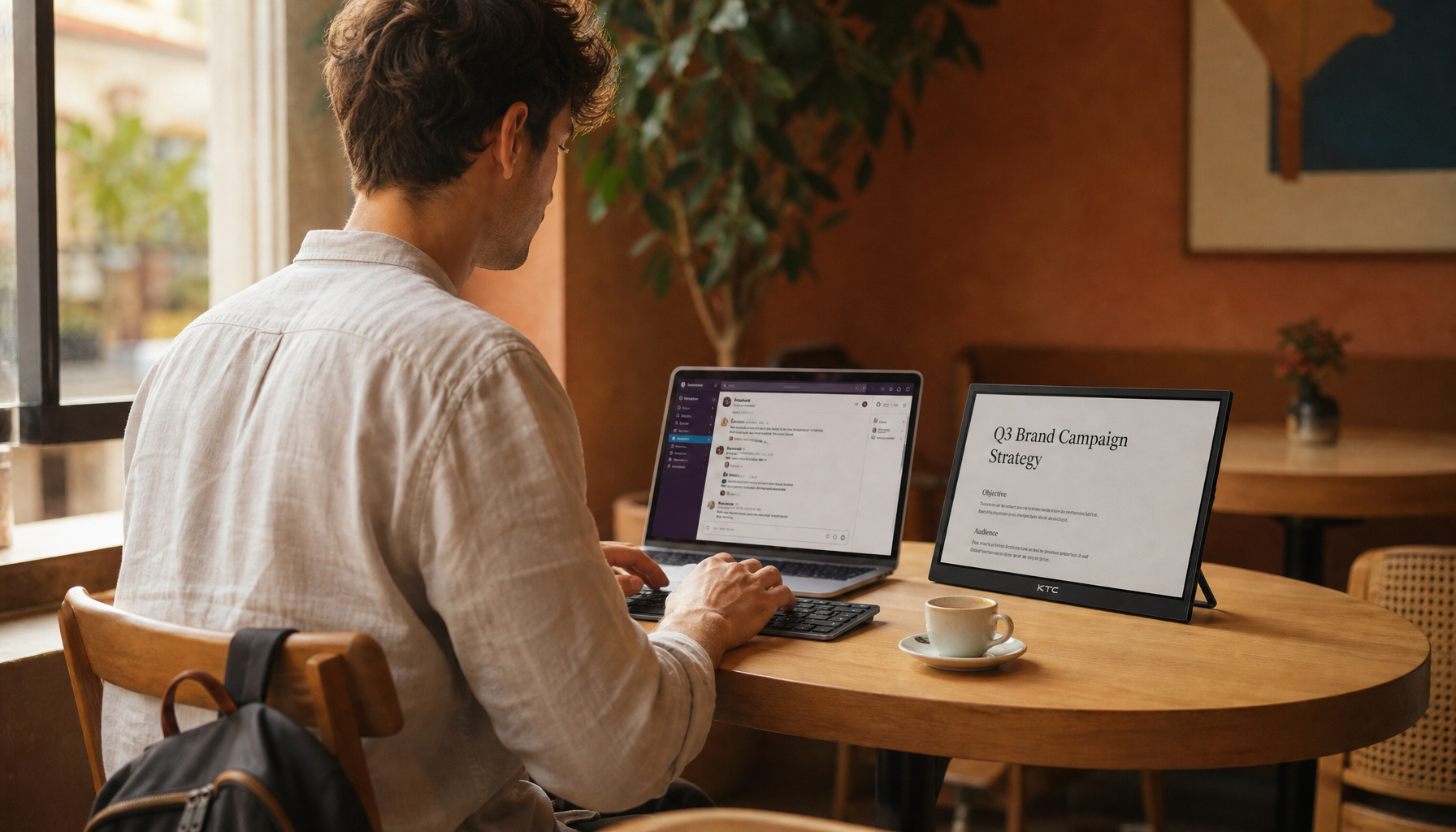
The cleanest way to share one home office monitor is to choose a switching method based on how many devices need the screen, keyboard, mouse, and camera. For most households, a monitor with multiple inputs works for light sharing, while a KVM switch is better for daily remote work.
Start With the Right Sharing Method
If each worker has a separate laptop or desktop, first check the monitor’s ports. Many displays let one computer use HDMI and another use DisplayPort or USB-C, then you switch sources from the monitor menu.

That low-cost path is fine when people use their own keyboards and mice. But if the goal is one desk, one display, one keyboard, one mouse, and maybe one webcam, a KVM switch is the more reliable control hub.
Use monitor inputs for occasional laptop swaps. Choose a KVM for two daily users sharing peripherals, USB-C docking if both laptops support it, and remote desktop only when network-based control is acceptable.
Match the Monitor to Real Workloads
A shared home office monitor should favor readability, switching stability, and desk comfort over flashy specs. For most remote workers, a 27-inch QHD display is the value sweet spot because it gives enough room for calendars, documents, chat, and browser windows without overwhelming a smaller desk.
A 27-inch screen also offers about 26% more display area than a 24-inch model, which makes side-by-side multitasking easier on one shared screen. If one worker edits visuals or handles dense spreadsheets, consider 4K; if both mainly use email, documents, and meetings, QHD is usually the sharper value.
For laptops, prioritize USB-C with power delivery when possible. One cable can carry video, data, and charging, reducing the “who unplugged what?” friction that kills shared-desk flow.

Build a Fast Switching Workflow
The shared monitor should feel like a tool, not a negotiation. Label each cable, set both computers to the same resolution and refresh rate, and save display settings on each operating system.
A practical setup looks like this: Worker A connects through USB-C, Worker B connects through HDMI or DisplayPort, and the shared keyboard and mouse connect through the KVM or USB switch. If the monitor supports picture-by-picture, you can view two computers side by side, though each half has less usable workspace.
Screen sharing still matters when two people need to collaborate without taking over the desk. Real-time screen visualization helps remote teammates review files, workflows, and data while keeping the physical monitor available for the person at the workstation.
Software sharing is useful for collaboration, but hardware switching is better for low-lag daily control.
Keep the Shared Desk Ergonomic
Because multiple people will use the same screen, adjustability is non-negotiable. The monitor should sit about an arm’s length away, with the top edge at or slightly below eye level; use a monitor arm if users have different heights.

A good shared desk also needs a repeatable reset. Put the keyboard centered under the monitor, keep the mouse area clear, and route cables behind the desk so switching devices does not pull the workspace apart.

A laptop-and-monitor setup can reduce window switching and improve comfort when ports, cables, and screen placement are planned before buying accessories.
For a high-value shared setup, spend first on the switch, cables, and adjustable stand. The monitor is the main work surface, but the switching system is what makes it fair, fast, and reliable for everyone using it.