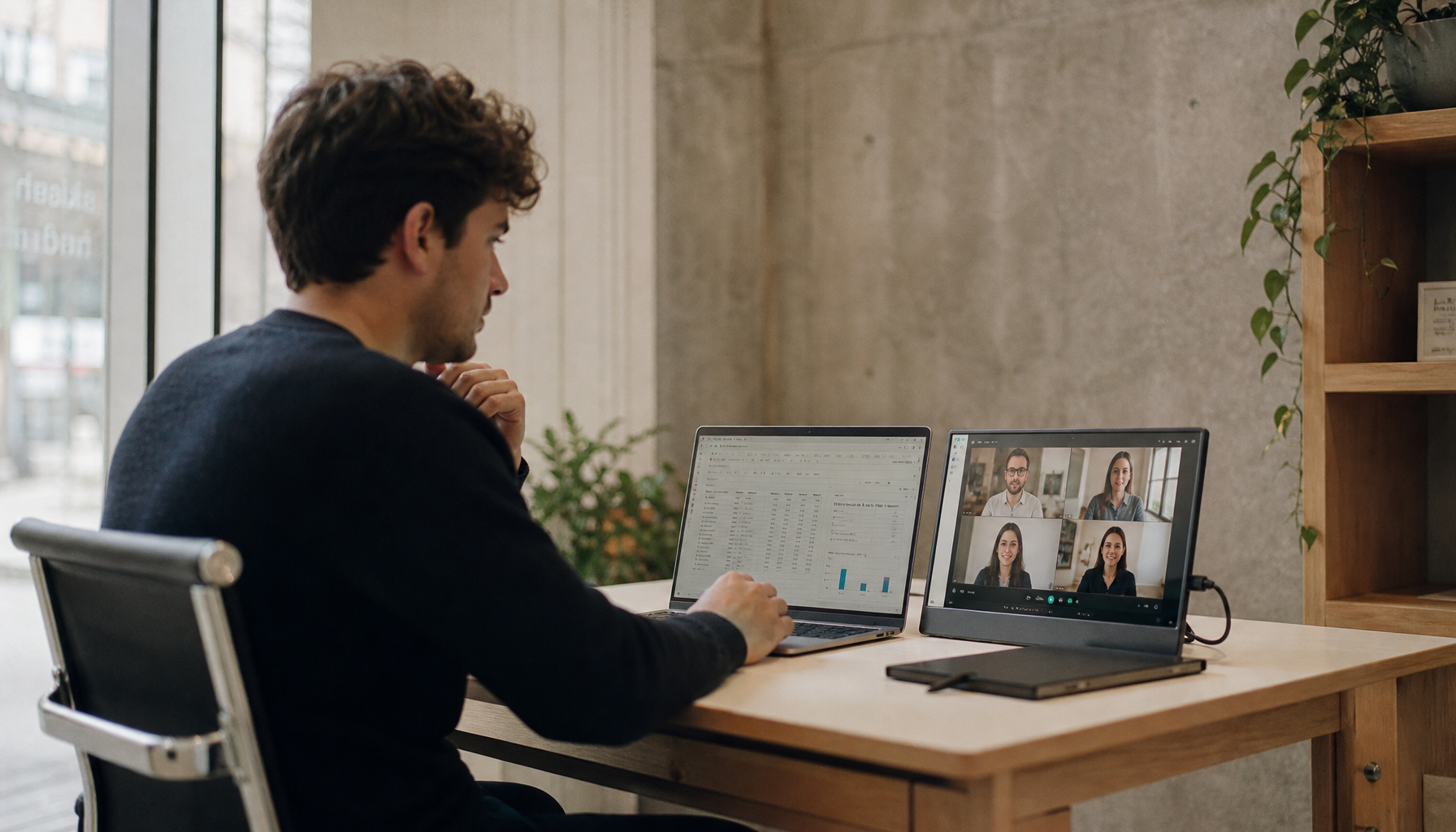
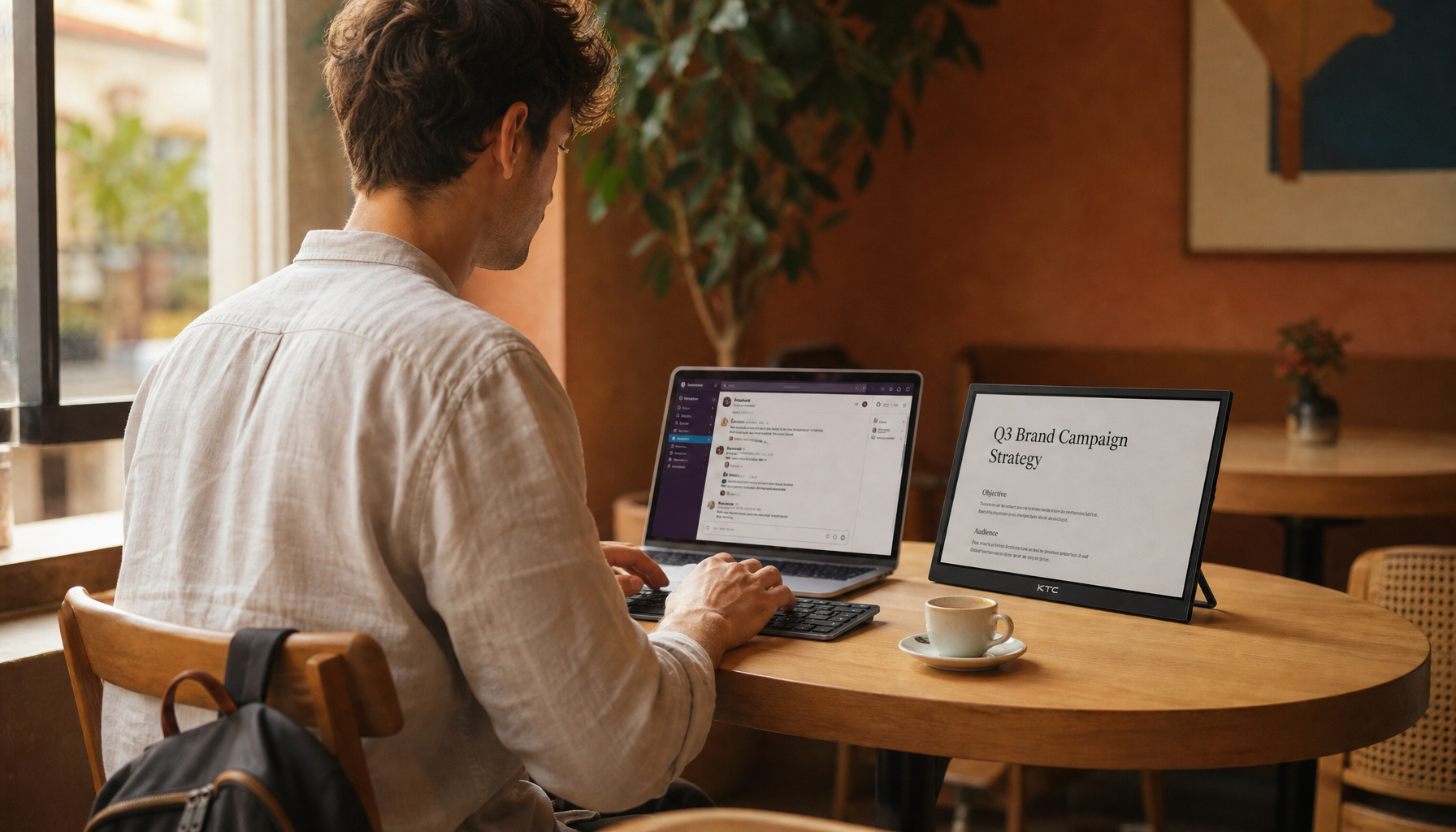
Desk reservation systems simplify hybrid seating, but they also turn once-stable monitor setups into shared workstations where cables are pulled, misplaced, mislabeled, and overhandled.
Is your “dual-monitor desk” booked, but the USB-C cable is missing, the DisplayPort lead is too short, and the power brick is hanging behind the chair? A better routing plan can make the same desk faster to claim, safer to adjust, and less likely to trigger monitor flicker or port damage. Here’s how to design hot-desk display stations that stay reliable after dozens of users rotate through them.
Booking Software Optimizes Seats, Not Signal Paths
Desk reservation platforms help people reserve workspaces, find colleagues, and match desks to needs such as standing desks or dual-monitor stations. Modern desk booking software also tracks utilization, no-shows, peak demand, and office attendance patterns, which is useful for hybrid teams trying to reduce wasted real estate.
The cable problem starts because the software sees the desk as a reservable resource, while the user experiences it as a performance station. A monitor setup is not just a surface with two screens. It is a chain of power, USB-C, HDMI, DisplayPort, Ethernet, webcam, keyboard, mouse, charging, and sometimes audio. When 10 people use that same station in a week, every weak link can become a support ticket.

Why Hybrid Hot Desking Breaks Traditional Cable Management
In assigned seating, cable management can be tuned once around one laptop, one monitor height, and one work style. In hot desking, the same desk may serve a finance analyst with a USB-C laptop at 9:00 AM, a designer with HDMI at noon, and a sales lead using a portable smart screen at 3:00 PM. Desk systems that promote dual-monitor desks as bookable amenities raise user expectations, but the physical setup has to support those expectations every time.
The failure mode is usually simple. A cable was cut to the shortest clean-looking route, then a user raised the standing desk, rotated a monitor arm, or pulled the dock closer. The connector starts carrying mechanical stress. That stress can show up as intermittent display dropouts, loose USB-C charging, or a monitor that only works when the cable sits at one awkward angle.
The Real Cause Is Movement
Cable management in reserved desks is less about hiding wires and more about controlled movement. The monitor arm moves. The sit-stand desk moves. The laptop position changes. The user changes. The cleaning team moves chairs. The IT team swaps docks. A static bundle that looked polished on installation day can become unreliable once the workspace becomes dynamic.

This is why reusable ties, trays, sleeves, and labels matter more than cosmetic perfection. Cable management is the practice of organizing, routing, securing, and maintaining cables so the workspace stays safer, cleaner, and easier to troubleshoot. In a desk reservation environment, “maintaining” is the key word.
The Hidden Monitor Cable Load Behind One Reserved Desk
A “two-screen hot desk” rarely has only two monitor cables. A practical setup may include two power cords, two video cables, one USB-C dock connection, one laptop charger fallback, Ethernet, a webcam, keyboard, mouse receiver, speaker or headset lead, and a power strip. Add a portable smart screen, and the station may need another USB-C or mini-HDMI path.
Reserved Desk Type |
Typical Cable Risk |
Best Physical Fix |
Fixed dual-monitor desk |
Similar-looking display cables get swapped or unplugged |
Label both ends and route through one under-desk tray |
Sit-stand monitor station |
Height movement pulls on ports |
Leave a controlled service loop and test full travel |
USB-C docking desk |
Users borrow or remove the main cable |
Use a clipped, labeled, desk-tethered USB-C lead |
Shared creator or analyst desk |
Adapters and power bricks multiply |
Mount power and dock hardware under the desk |
Portable smart screen desk |
Cables must stay reachable |
Use front-edge clips with clear return positions |
The decision is not whether the desk should look clean. The decision is whether the next user can connect in under a minute without guessing which cable does what.
Booking Features Can Accidentally Increase Cable Friction
Reservation tools often encourage employees to filter by amenities. That is useful because people should be able to book a station with dual monitors, ergonomic seating, or a quiet zone before commuting. Platforms with interactive floor plans and coworker visibility can make hybrid attendance smoother, especially when teams coordinate office days.
The mismatch appears when the software inventory is more precise than the physical standard. If one “dual-monitor desk” has USB-C DisplayPort Alt Mode, another has HDMI only, and a third uses a dock that supports just one external display on some laptops, the booking label becomes misleading. Users may blame the reservation system, but the root cause is hardware inconsistency.
Standardize the Display Experience Before You Scale Reservations
A reliable hot-desk monitor station should have a defined connection standard. For most productivity displays, that means a primary USB-C dock path with enough power delivery for common laptops, plus clearly labeled HDMI or DisplayPort fallback where needed. For high-refresh performance displays, wired DisplayPort or HDMI remains important because wireless peripherals do not replace stable display bandwidth.
Monitor selection also matters. A multi-monitor setup can improve workflow by keeping calls, documents, dashboards, and messages visible without constant window switching. But every additional screen adds power, signal, and routing complexity, so the cable plan has to be part of the monitor plan, not a cleanup task after installation.
Pros and Cons of Desk Reservation Systems for Display Workstations
Desk reservation systems give workplace teams better visibility into demand. If certain monitor stations are always booked while plain desks sit empty, that data supports smarter investment in display-equipped neighborhoods. It can also prevent commute frustration because employees know whether a properly equipped desk is available before they arrive.
The downside is that shared ownership often becomes no ownership. A fixed employee usually protects their setup because they depend on it daily. A rotating user may unplug a cable, borrow an adapter, or leave a dock buried behind the monitor because there is no personal accountability. The reservation system can tell you who booked the desk, but it cannot physically stop cable drift unless the workstation is designed for rotation.
Practical Fixes That Work
Start with topology planning. Before mounting anything, map the outlet, desk leg, monitor arm, dock, keyboard zone, and cable exit path. Office table cable management works best when power needs, data needs, desk placement, and device usage are planned during the workspace design stage, not patched later with random clips.
Build the desk around three zones. The first is the user-access zone, where USB-C, HDMI, or charging leads are reachable without crawling under the desk. The second is the under-desk zone, where the power strip, dock, adapters, and excess cable live in a tray. The third is the movement zone, where monitor arms and sit-stand frames need slack that is deliberate, not dangling.

For standing desks, leave a service loop of roughly 16 to 24 inches where the desk changes height, then raise and lower the desk several times before locking down the route. If the cable tightens, brushes a motor housing, or drags across a sharp edge, fix it before employees use the station. A clean setup that fails at full height is not a professional setup.
Use hook-and-loop ties rather than permanent zip ties for shared display desks. Permanent ties look disciplined, but they punish the IT team when a dock changes or a monitor is replaced. Labels should sit on both ends of every similar cable, especially HDMI, DisplayPort, USB-C, and power leads. A label that only appears behind the monitor is useless when the user is holding the other end.
What to Ask Before Adding More Bookable Monitor Desks
The first question is whether employees need dual monitors, ultrawide monitors, or portable screens for the actual work being booked. A 34-inch ultrawide may reduce cable count compared with two separate displays, but it may not suit users who need physical separation between apps. Dual 27-inch screens can be excellent for individual productivity, but they introduce more cables and more monitor-arm movement.
The second question is whether the reservation label matches the hardware. “Dual monitor” should mean the desk has two working displays, the correct dock or input path, sufficient power, and a visible connection cable that users are expected to return to position. If some laptops require adapters, the reservation description should say so in plain language.
The third question is who owns reset quality. Facilities may own furniture, IT may own docks, and workplace operations may own the booking platform. Users only care whether the screen lights up. Assigning one team to inspect cable labels, trays, slack, and missing adapters every few weeks prevents slow decay.
A Better Standard for Hot-Desk Display Stations
A high-performance reserved desk should feel boring in the best way: book it, sit down, connect, and work. The monitor height should be easy to adjust. The primary cable should be visible and labeled. The tray should hide bulk without blocking access. The power strip should be mounted, not kicked around the floor. The setup should survive a different laptop every hour without becoming a troubleshooting exercise.

Desk reservation systems did not create cable clutter by themselves. They exposed the gap between digital workplace planning and physical display infrastructure. Treat every bookable monitor desk as a shared performance endpoint, and cable management becomes a reliability system rather than a cosmetic afterthought.