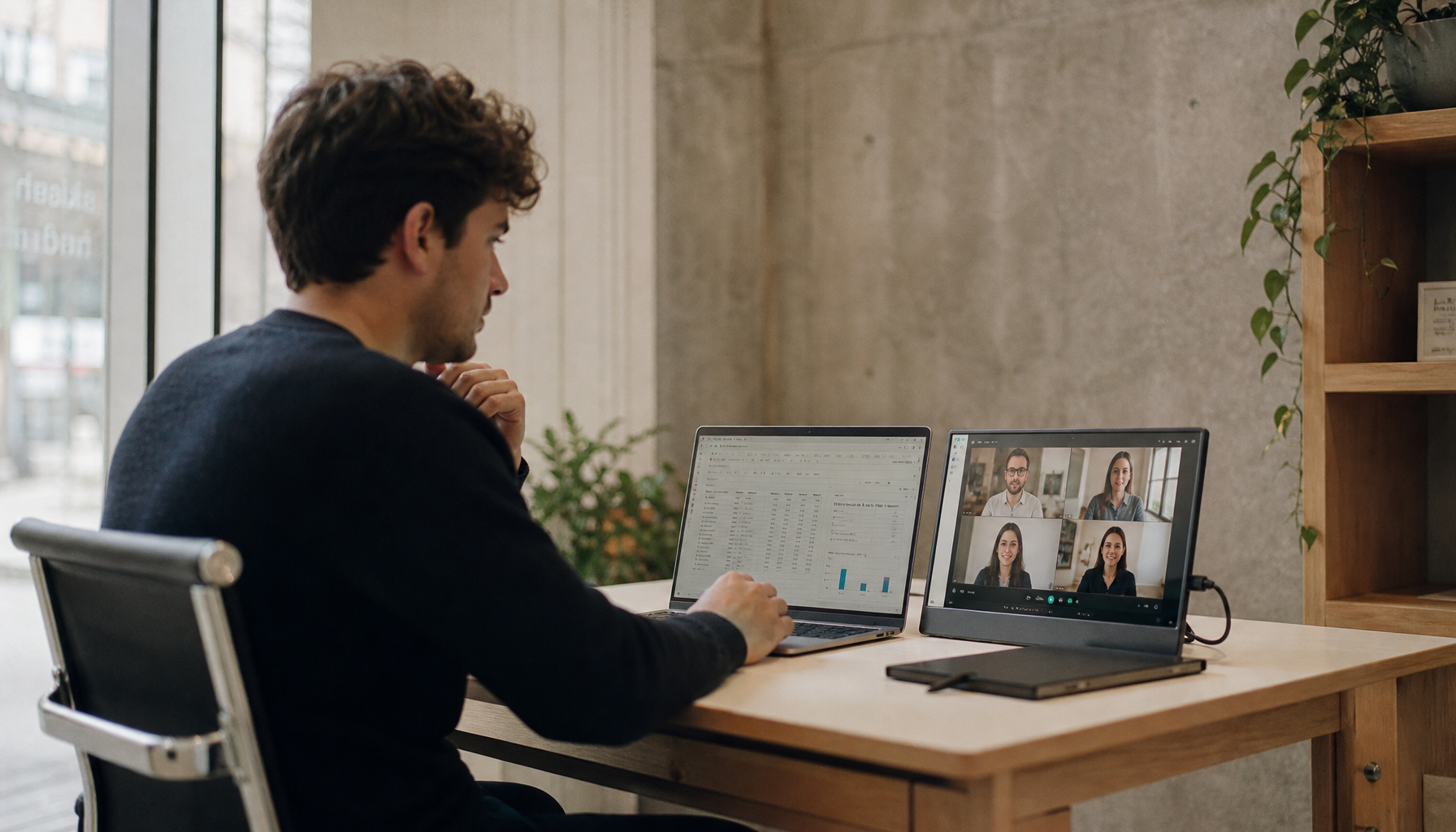
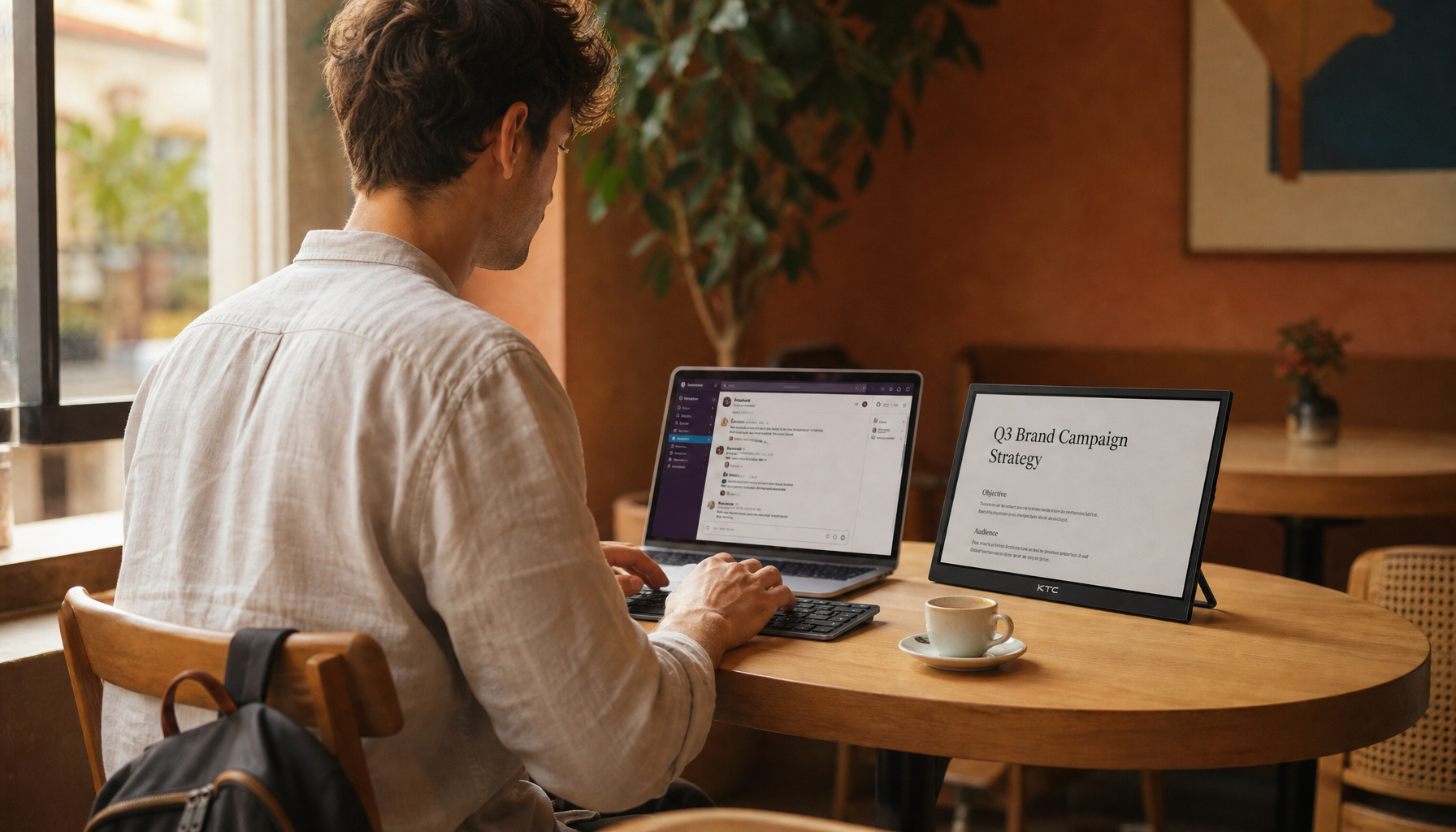
A mobile office cart built around a battery-powered smart display delivers the cable-free flexibility many 2026 hybrid workers need. It lets you roll your full workstation from a quiet corner for focused tasks to a patio for calls or brainstorming, matching your environment to the work rather than forcing one fixed desk. The key is choosing the right display size, brightness, wireless stack, and cart stability so the setup stays productive without constant recharging or dropped connections.

The Rise of the Activity-Based Mobile Office
Activity-based working (ABW) recognizes that different tasks thrive in different environments. Deep focus may suit a quiet nook while creative calls benefit from natural light on a patio. Traditional fixed desks lock you in one spot, and laptops often deliver cramped screens or poor ergonomics during extended use. A mobile office cart bridges this gap by combining a large smart display, wireless peripherals, and rolling mobility into one system that moves with you.
This approach reduces the friction of packing up a laptop or hunting for outlets. In open-plan homes or multi-use family spaces, it supports quick transitions without sacrificing screen real estate or setup time. The result is higher productivity through environment-task matching, provided the hardware and workflow address real-world constraints like battery life and stability.
Selecting Your Core Hardware: Smart Display vs. Standard Screen
The display forms the heart of any mobile office cart. Two strong options stand out depending on your primary environment. The 32-inch 4K model with integrated wheels and Wi-Fi 6 works best for indoor room-to-room movement. Its larger screen supports split-view productivity, built-in Android OS eliminates laptop tethering for many apps, and the rolling stand allows height and portrait adjustments.
For brighter or outdoor-adjacent work, the 24.5-inch FHD portable model with 400 nits brightness offers better visibility in sunlit areas. Its lighter weight and higher brightness make it more practical for shaded patios, though the smaller screen trades some multitasking space. Both run Android for native apps, reducing the need for a connected laptop in lighter workflows.
The zero-cable advantage comes from the integrated smart OS, battery, and wireless connectivity. Still, real-world use shows that heavy video editing or color-critical design often still benefits from a tethered laptop. Test your typical apps first to confirm the built-in platform meets your needs.

Ergonomic Blueprint: Setting Up Your Rolling Workstation for Neutral Alignment
Neck and back pain often appear when mobile carts encourage poor posture during movement or typing. The goal is a neutral body position where joints stay naturally aligned. According to OSHA workstation guidance, this means keeping the neck straight, elbows near 90 degrees, and back supported to reduce musculoskeletal strain.
Position the top of the smart display at or slightly below eye level, roughly 20 to 40 inches from your face. The Mayo Clinic office ergonomics guide emphasizes these measurements to minimize neck tilt and eye strain, especially important on a moving cart where wobble can disrupt focus.
Choose a cart with a low center of gravity and at least two locking casters. This prevents drifting or vibration while typing. Adjust the stand height so your elbows rest comfortably at keyboard level without hunching. Many users regret skipping this step when the “convenient roll” leads to daily discomfort.
Use this chart as a quick self-check: if your current setup lands in the strained zone on multiple axes, small stand or chair adjustments often restore neutral alignment.
The Wireless Stack: Optimizing Peripherals and Connectivity
True mobility requires eliminating cables that snag during rolls or drain battery through constant connections. Bluetooth 5.2 serves as the recommended baseline for keyboards, mice, and headsets because it offers stable reconnection and minimal power draw on Android-based smart displays. USB-C hubs can introduce phantom drain of roughly 10-15% and create handshake issues on wake, making Bluetooth-native peripherals the lower-friction choice for daily movement.
Wi-Fi 6 further improves reliability during room transitions. It handles congestion better than older standards, reducing video call drops when moving between floors or zones. For most hybrid schedules, this stability matters more than raw speed.
The built-in Android interface includes shortcuts for brightness, volume, and app switching. Many users create home-screen toggles or use the included remote to avoid menu diving. Pairing standard office peripherals works smoothly, though some specialized devices may need driver checks on Android 13/14. Start with widely supported Bluetooth models to minimize setup surprises.
For deeper guidance on ergonomic monitor selection in home offices, see our Home Office Setup Guide: How to Choose the Right Ergonomic Monitor. If your workflow also involves dual screens, the Vertical vs. Horizontal: How to Build the Ultimate Dual Monitor Productivity Setup offers useful layout ideas.
Runtime Realities: Managing Your Workday Without an Outlet
Battery claims often list optimistic figures at moderate settings. Real runtime depends on brightness, volume, and workload. A practical formula is (battery watt-hours × 0.8 efficiency factor) ÷ average power draw. This typically yields 4 to 11 hours depending on conditions, with high brightness and full volume cutting runtime significantly.
Expect shorter sessions at maximum brightness. Reserve 100% brightness for short outdoor presentations or well-lit calls, and drop to 55% for email and document work to stretch the battery across a full day. Many users adopt a power workflow: indoor focus at lower brightness, quick outdoor bursts at higher levels, and opportunistic top-ups when near outlets.
Wi-Fi stability and background apps also affect drain. Closing unused programs and using airplane mode for pure offline tasks can add meaningful time. Track your own patterns for a week to set realistic expectations rather than relying on marketing numbers.
The 5 Essential Specs to Check Before Buying a Portable Touch Screen Monitor provides additional detail on balancing battery, brightness, and portability.
Is a Mobile Office Cart Right for Your Workflow?
This setup fits best when your work involves frequent room changes, open-plan spaces, or occasional outdoor productivity on a shaded patio. Single-floor homes with good Wi-Fi coverage see the largest gains from reduced setup time and environment matching. The larger 32-inch 4K rolling model with Wi-Fi 6 suits executive-style room-to-room users who value screen size and built-in apps for lighter tasks.
It is often not a fit if your role demands color-critical accuracy, heavy video editing, or consistent outdoor sun exposure. The 220-nit brightness on the larger model limits patio readability, while the smaller 400-nit portable model trades screen real estate. In those cases a fixed ergonomic desk with a traditional monitor may deliver better long-term comfort and performance.
Check your typical day: count room transitions, note brightness needs, and estimate daily unplugged hours. If those factors align with moderate battery demands and Bluetooth peripherals, a mobile office cart can meaningfully improve flexibility. Otherwise, refine your current fixed setup first.
For related smart display options, explore the Mobile Touch Screen or Smart Monitor collections. The KTC MEGAPAD 32" 4K Android 14 Google EDLA Smart Touch Monitor with 8550mAh Battery and KTC MEGAPAD 25" FHD Google EDLA Portable Touch Monitor built in Camera represent practical starting points once your workflow needs are clear.
How Long Does a Battery-Powered Smart Display Last in Real Remote Work?
Runtime varies by brightness and tasks. At moderate 55% brightness and typical office volume, expect 7–9 hours for mixed document and call work. Full brightness for outdoor sessions often drops this to 3–5 hours. Use the (Wh × 0.8) ÷ wattage formula with your specific model’s capacity to forecast your schedule more accurately.
What Wireless Setup Minimizes Dropouts on a Rolling Cart?
Bluetooth 5.2 peripherals paired with a Wi-Fi 6 display provide the most reliable experience. Avoid USB hubs that add power draw and potential handshake failures. Place your router centrally and test transitions between rooms; most users report stable Zoom calls when using modern Wi-Fi 6 hardware.
Which Peripherals Work Best With Android Smart Displays?
Standard Bluetooth keyboards, mice, and headsets designed for office use pair reliably. Android 14 generally supports common HID devices well. Avoid gaming mice with heavy macro software, as they can introduce compatibility quirks or higher battery drain.
How Do I Maintain Ergonomics When Moving the Cart Frequently?
Lock the casters before each work session and verify screen height remains at or below eye level. A quick daily check of elbow angle and viewing distance prevents gradual posture drift. Many users add a small footrest or adjustable chair to compensate for varying floor heights across rooms.
When Does a Mobile Office Cart Become Less Practical?
It becomes less practical for users needing consistent high-brightness outdoor work beyond shaded areas, or for color-accurate creative tasks. If your space has frequent multi-floor movement with weak Wi-Fi or if battery top-ups are inconvenient, a traditional fixed desk with a high-quality office monitor may reduce daily friction more effectively.