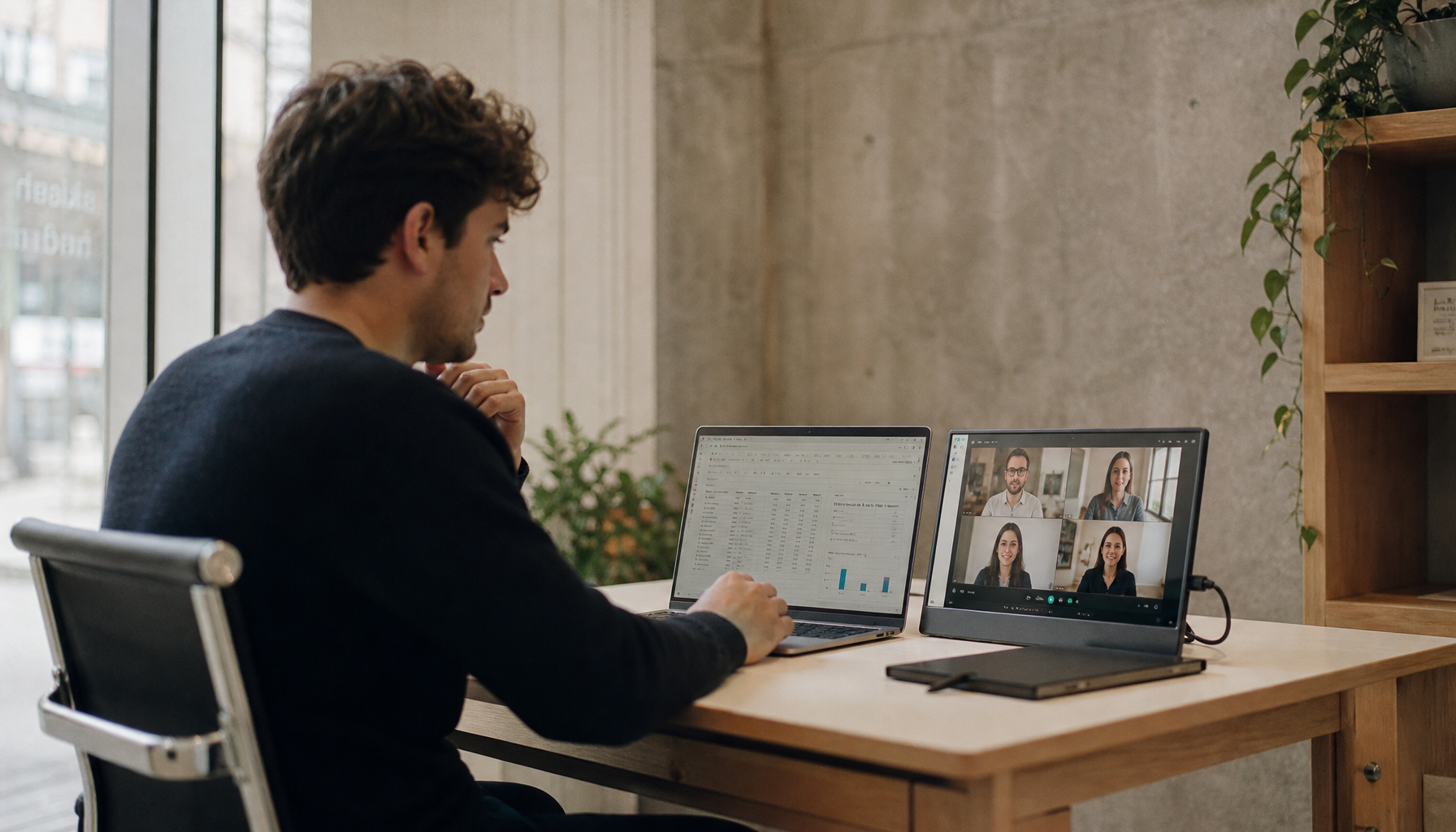
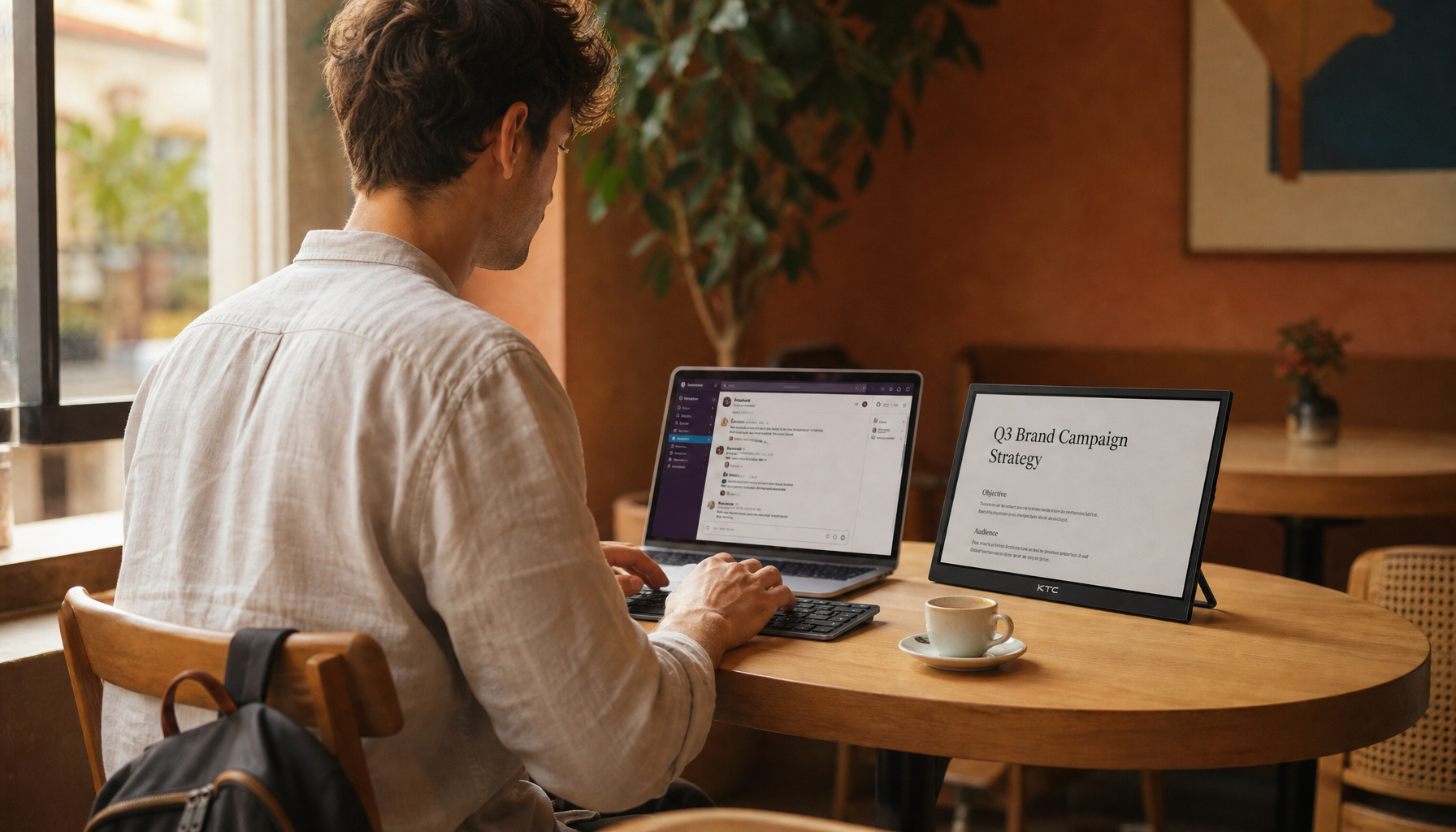
A reliable dual monitor setup improves productivity for multitasking and adds immersion for gaming, but the right cables, ports, and OS-specific settings are essential to avoid mirrored screens, resolution mismatches, or refresh rate caps. Windows users can often daisy-chain monitors with a single cable through MST, while Mac users typically need separate connections or a Thunderbolt dock to achieve an extended desktop. Checking your laptop ports, monitor inputs, and Apple Silicon display limits first prevents most common failures.

Hardware Requirements: Ports, Cables, and the MST Trap
Before buying cables or adapters, list every video output on your laptop or desktop and every input on your monitors. Most modern laptops offer HDMI 2.0 or 2.1, DisplayPort 1.4, and USB-C with DisplayPort Alternate Mode. High-refresh 4K (160 Hz) or 1440p (300 Hz) setups need HDMI 2.1 or DisplayPort 1.4 with Display Stream Compression (DSC) to carry the full bandwidth without dropping to 60 Hz.
The choice of cable directly affects reliability. Premium HDMI 2.1 or DisplayPort 1.4 cables certified for the required bandwidth prevent flicker and signal loss at high resolutions and refresh rates. USB-C cables that support video, power delivery, and data simultaneously simplify setups but vary in capability; only those with DisplayPort Alt Mode or Thunderbolt 3/4 deliver video reliably. As this DisplayPort Alternate Mode Over USB-C: How Video, Data, and Power Share the Same Lanes guide explains, lane allocation determines whether your USB-C port can drive two monitors at full performance.
The MST Trap catches many buyers. Multi-Stream Transport allows Windows PCs to drive two or more extended displays from one DisplayPort or USB-C output by daisy-chaining compatible monitors. macOS does not support MST for extended desktops over standard DisplayPort, so daisy-chaining two monitors will usually mirror them instead. This DisplayPort Multi-Stream Transport (MST) Explanation from the official organization clarifies the protocol differences that explain why the same cable works differently across operating systems.
For many users a Premium Display Signal Cables for Gaming & Productivity Monitors collection provides the necessary HDMI 2.1, DP 1.4, and certified USB-C options matched to high-spec monitors.
The 'One-Cable' Daisy-Chain Threshold
Whether you can drive two extended monitors with one cable depends on your operating system and connection type. Windows PCs with DisplayPort 1.2 or higher generally support MST daisy-chaining, letting the single cable carry independent desktops to both monitors. macOS lacks native MST support for extended displays, so a standard DisplayPort daisy-chain produces mirrored output regardless of cable quality.
One-Cable Dual Monitor Setup: Where It Works and Which Screen Should Lead
A quick decision guide for using one cable with two external monitors and choosing the primary display. It highlights the safest setup by connection type and operating system, so you can avoid mirrored output, wrong hub purchases, and blurry or capped refresh settings.
View chart data
| Scenario | Windows | macOS |
|---|---|---|
| MST Daisy-Chain | 2 | 0 |
| Thunderbolt Dock | 1 | 2 |
Mac users seeking a true one-cable solution must use a Thunderbolt 3 or 4 dock or a monitor that functions as a Thunderbolt hub with downstream ports. Many KTC monitors with 90 W USB-C power delivery serve as convenient single-cable anchors for Windows laptops, supplying video, data, and charging in one connection. The chart above summarizes the practical thresholds so you can decide before purchasing hubs or extra cables.
Configuring Dual Monitors on Windows 11
Windows 11 makes basic dual-monitor configuration straightforward. Press Win+P to instantly switch between PC screen only, Duplicate, Extend, or Second screen only modes. For permanent arrangement, open Settings > System > Display, drag the numbered rectangles to match your physical monitor positions, and select which screen is the primary display.
Independent per-monitor settings are one of Windows 11’s strongest advantages. You can assign different refresh rates, resolutions, and scaling to each display so a 300 Hz gaming monitor is not capped at 60 Hz by a secondary office screen. This Microsoft support article on using multiple monitors in Windows walks through the exact steps and keyboard shortcuts.
When mixing a high-refresh gaming panel such as the H27E6 with a productivity monitor, set the gaming screen as primary to ensure Adaptive Sync initializes correctly. For help eliminating screen tearing in these mixed setups, see our guide on What Is Screen Tearing And How Do You Fix It?.
Setting Up Dual Displays on macOS: Limits and Layouts
On macOS, go to System Settings > Displays and click the Arrangement tab to drag the virtual screens into the correct physical layout. You can also designate the primary display by moving the white menu bar between the two rectangles.
Apple Silicon chips impose strict limits. Base M1, M2, and M3 models officially support only one external display with the lid open; the M3 supports two in clamshell mode with a power adapter, keyboard, and mouse connected. Newer base M4 and M5 chips raise that to two external displays with the lid open. This Apple support page on connecting external displays details the official procedure, while the bounded observations from Plugable’s technical summary on M-series limits explain why many users see only one monitor detected.
Clamshell mode on a MacBook requires the laptop to be powered, closed, and paired with an external keyboard and mouse or trackpad. USB-C monitors that combine video and power delivery simplify the cable count. Our article on How a USB-C Monitor Can Streamline Your Workspace shows practical ways to reduce desk clutter with these all-in-one connections.
Optimization: HiDPI Scaling and Mixed Refresh Rates
macOS HiDPI (Retina) scaling works best at native 4K or 5K resolutions. A 27-inch 1440p monitor often looks blurry because macOS renders at a lower effective scale. Setting a 5K professional monitor such as the H27P3 as primary forces macOS into proper HiDPI mode for crisp text while the secondary high-refresh gaming screen handles chat or reference windows. Third-party utilities like BetterDisplay can help force better scaling on non-Retina panels, but results vary by monitor and macOS version.
Windows handles mixed refresh rates more gracefully. Setting the 300 Hz H27E6 as primary prevents the desktop compositor from interfering with G-Sync or FreeSync on the gaming screen. The decision of which monitor leads therefore flips by operating system. Our guide on Vertical vs. Horizontal: How to Build the Ultimate Dual Monitor Productivity Setup explores layout options that complement these scaling and refresh priorities.
For users who frequently travel, adding a compact portable monitor expands the setup without sacrificing desk space. The article on How to Build a Mobile Dual-Screen Gaming Setup with a Portable Monitor covers practical integration of models such as the H15F9.

Managing the 'Toggle Tax' on Dual Mini-LED Displays
Mini-LED panels deliver excellent contrast and HDR impact, yet they often bloom around bright text on dark backgrounds in SDR desktop use. Many users therefore toggle local dimming or HDR mode multiple times daily. On Windows the Win+Alt+B shortcut quickly turns HDR on or off without opening the OSD. Keeping SDR content brightness relatively low in the Windows HDR settings reduces blooming while leaving local dimming active.
When pairing a Mini-LED gaming monitor with a standard IPS productivity screen, expect to manage modes separately. The friction is real for hybrid workflows that alternate between spreadsheets and games several times a day. Software shortcuts reduce the annoyance compared with repeated OSD navigation, but the need to toggle remains a practical consideration rather than a set-and-forget experience.
Troubleshooting: No Signal, Flicker, and Wake Failures
“No Signal” usually traces to the wrong input selected on the monitor, a loose cable, or an incompatible adapter. Power-cycle both the computer and monitors, then reseat cables. On Windows, Win+P can force detection. macOS sometimes requires opening System Settings > Displays after connection.
Flicker at high refresh rates often improves by using a higher-certified cable, disabling DSC in the monitor menu if available, or temporarily lowering the refresh rate to test stability. USB-C wake-from-sleep problems on MacBooks are a known handshake issue with certain display controllers. Replugging the cable or restarting the laptop usually restores the signal, but the behavior can recur. Community reports suggest the issue appears more often with budget USB-C implementations; a dedicated Thunderbolt dock frequently improves reliability at the cost of an extra device.
Matching monitor bandwidth to your graphics card prevents many of these symptoms. Our guide on How to Choose the Perfect Monitor to Match Your Graphics Card helps align resolution, refresh rate, and connection type before purchase.
Dual-Screen Workflow Checklist
Use this checklist to verify your completed setup:
- Confirm both monitors appear in the OS display settings and are set to Extend mode.
- Match physical placement to the virtual arrangement and choose the correct primary display for your OS and tasks.
- Set independent refresh rates and scaling on Windows; use Default for Display or 2× scaling on macOS where possible.
- Test wake-from-sleep and cable stability over several days.
- Organize cables with sleeves or clips to keep the desk clean.
- For travel or extra portability, verify that a model such as the H15F9 integrates smoothly as a third temporary screen.
Running through these steps after initial configuration catches most oversights and confirms that your dual-monitor investment is delivering the expected productivity or gaming gains.
Do I Need Different Cables for Windows Versus macOS Dual Monitor Setups?
Windows users can often share a single high-quality DisplayPort 1.4 or HDMI 2.1 cable across both monitors when MST is supported. macOS users typically require separate cables or a Thunderbolt dock for true extended desktop, because standard MST daisy-chaining is not supported. Always check the exact Thunderbolt version on your MacBook before purchasing a dock.
Why Does My 1440p Monitor Look Blurry on a MacBook?
macOS applies HiDPI scaling most effectively at 4K or 5K resolutions. On a 27-inch 1440p panel the operating system often renders at a scale that produces soft text. Setting a 5K monitor as primary or using a utility such as BetterDisplay to force custom Retina scaling can improve sharpness, though results depend on the specific monitor and macOS version.
Can I Daisy-Chain Two Monitors With One USB-C Cable on a Mac?
Only if the first monitor or dock is Thunderbolt 3 or 4 capable and provides downstream ports. Standard USB-C with DisplayPort Alt Mode alone will usually mirror the second screen on macOS. A Thunderbolt dock or a monitor with built-in Thunderbolt hub functionality is the practical one-cable route for extended desktop.
What Refresh Rate Should I Set When Mixing Gaming and Office Monitors?
Windows allows independent refresh rates, so set the gaming monitor to its native 144 Hz, 240 Hz, or 300 Hz while leaving the office monitor at 60 Hz or 100 Hz. On macOS the primary display often influences overall scaling behavior, so prioritize the screen used for critical text or color work as primary.
How Do I Fix a Second Monitor That Stops Waking From Sleep?
On MacBooks with USB-C connections, manually unplugging and replugging the cable or restarting the laptop often restores the signal. Using a Thunderbolt dock instead of direct USB-C reduces the frequency of the issue. On Windows, updating graphics drivers and ensuring the monitor is set to the correct input usually resolves wake failures.
Is a Portable Monitor a Good Third Screen for Travel?
A compact 15.6-inch portable monitor such as the H15F9 adds a quick secondary or tertiary screen without much weight. It works well for extending a laptop during trips, though color accuracy and brightness are lower than desktop models. Pair it with a USB-C video-capable laptop for the simplest connection.