Set each monitor to an extended desktop, assign wallpapers through personalization settings, and use images that match each screen’s resolution. If the layout keeps resetting, the cause is usually duplicate display mode, virtual desktops, slideshow behavior, or a wallpaper app overriding system settings.
Does your left screen keep showing the same wallpaper as your right screen every time you reboot, dock your laptop, or switch desks? A stable setup gives you faster visual orientation across gaming, work, and portable displays because each panel becomes instantly recognizable. Here is the practical way to lock wallpapers to the right monitor and stop chasing the same setting every week.
Why Multi-Monitor Wallpapers Drift
Different wallpapers work reliably only when your computer treats each screen as its own part of one larger workspace. Extended mode spreads the desktop across displays, while duplicate mode mirrors the same content. That distinction matters because a duplicated monitor is not a separate canvas; it is a copy.
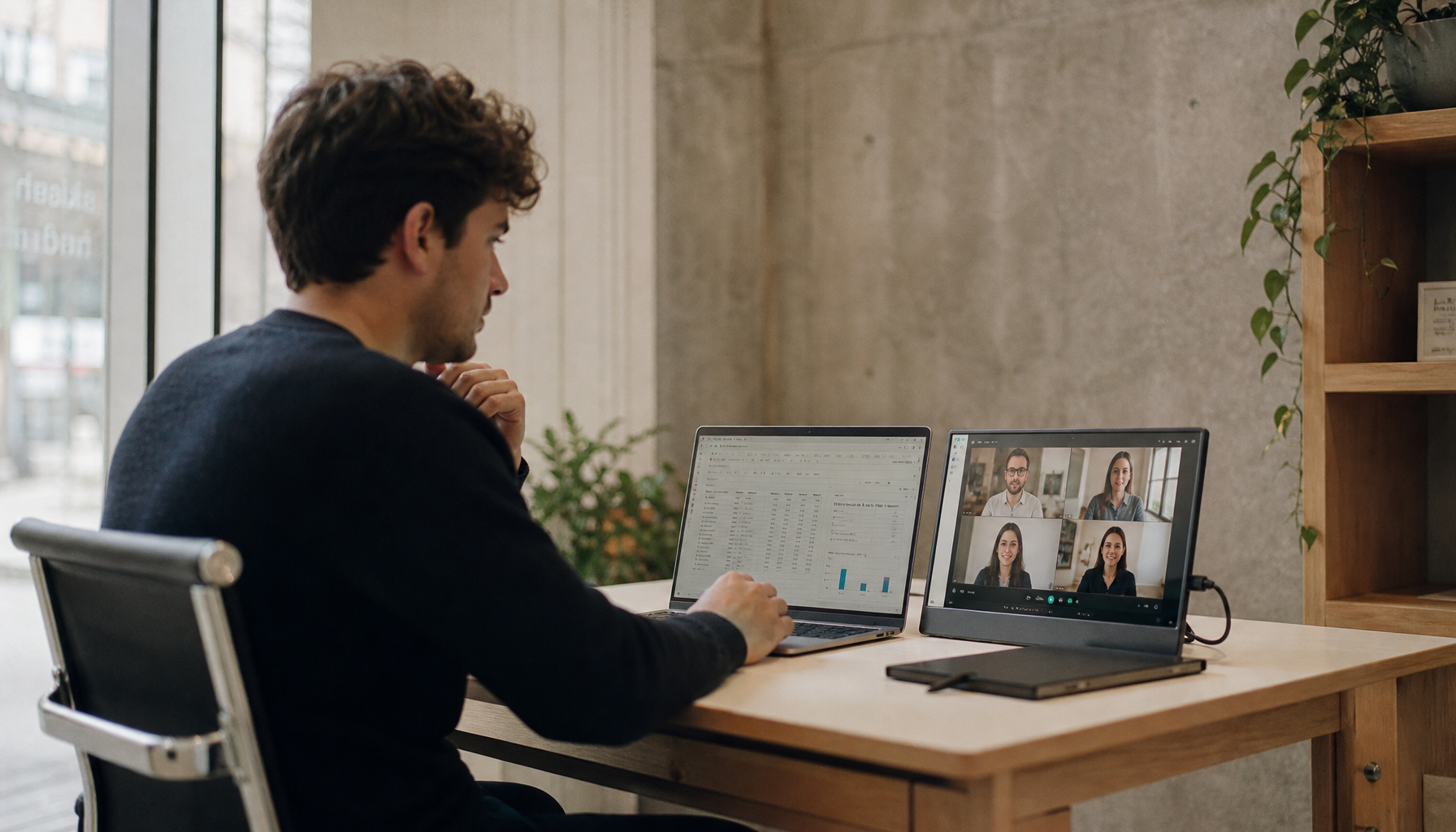
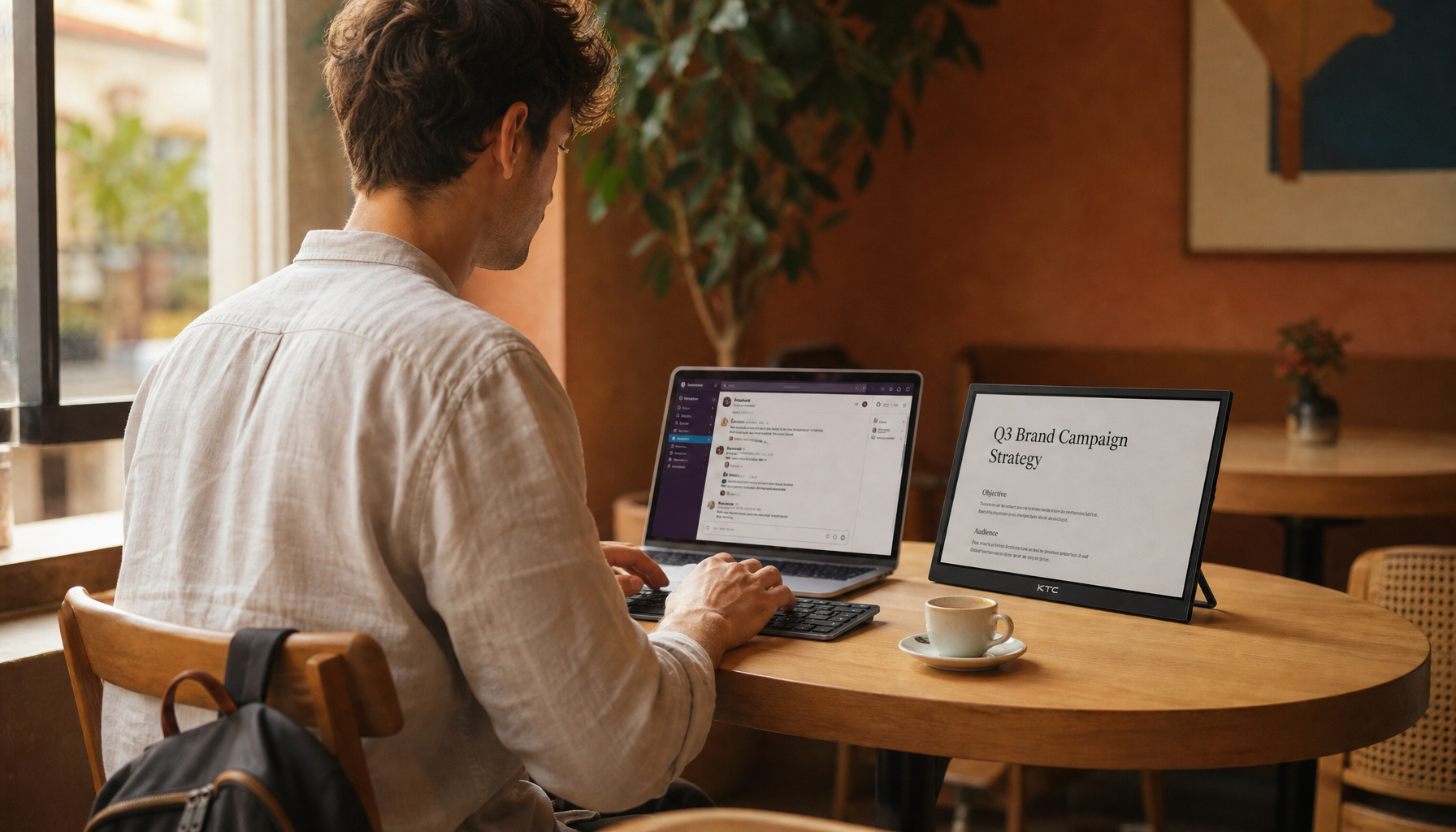
For a real-world setup, picture a 27-inch 1440p gaming monitor in the center, a 24-inch 1080p chat or browser display on the left, and a portable USB-C screen on the right for system monitoring. If the system is set to duplicate mode, all three screens fight over one background. If it is set to extended mode and the monitors are arranged correctly, each screen can hold its own image and stay predictable.

The second source of drift is image handling. A wallpaper that looks sharp on a 24-inch 1080p display can look soft on a 27-inch 1440p monitor because the system has to scale it. Picture fit settings such as Fill, Fit, Stretch, Tile, Center, and Span decide whether the system crops, preserves, distorts, repeats, or spreads the image. Stretch is often the fastest way to make a good wallpaper look cheap.
The Method That Sticks
Start by confirming the display topology before touching wallpaper. Open display settings, use Identify to match the numbered boxes to your physical monitors, drag the boxes into the same order as your desk, and choose extended display mode. This step prevents a common failure where Monitor 1 and Monitor 2 are technically correct in settings but visually reversed on your desk.

Once the monitors are arranged, open personalization settings and go to Background. Set the background mode to Picture, choose or browse to the image you want, right-click the thumbnail, and assign it to the specific monitor. Official background documentation confirms that Picture backgrounds can use different images per display, while some other modes do not offer the same control.

Recent desktop operating system releases use similar logic, but labels can differ slightly. The familiar workflow is to open personalization settings, choose Background, then right-click a wallpaper thumbnail and select the target monitor or desktop. The key is not simply double-clicking an image file or using a file manager’s “set as desktop background” command, because that can apply the image globally instead of binding it to one display.
For a performance desk, assign wallpapers with intent. Put a darker, low-distraction image on the competitive gaming monitor so your desktop does not feel visually loud between matches. Use a clean productivity image on the office display where icons and windows need contrast. For a portable smart screen, use a high-contrast image or solid visual theme so it remains readable in a hotel room, coffee shop, or shared desk.
Virtual Desktops Can Change the Rules
Some desktop systems have one important limitation that catches power users: per-monitor wallpaper control does not always behave the same way when multiple virtual desktops are active. Official background support states that with multiple desktops, per-monitor background configuration and slideshow backgrounds may not be supported.
That means a user with two physical monitors and two virtual desktops may see choices for Desktop 1 and Desktop 2 instead of Monitor 1 and Monitor 2. If your wallpapers suddenly stop sticking after you add virtual desktops, the setup is not necessarily broken. The system may be prioritizing workspace backgrounds over physical-screen backgrounds.
The practical fix is to choose which behavior matters more. If your priority is instant monitor recognition, remove extra virtual desktops, assign wallpapers per monitor, and keep the system simple. If your priority is separating workspaces, use per-desktop wallpapers and accept that both monitors may share that workspace’s background.
Image Resolution Matters More Than Theme
A wallpaper that stays put still fails if it looks blurry, cropped, or stretched. For sharp results, match the image to the display’s native resolution whenever possible. A 1920 x 1080 image belongs on a 1080p monitor; a 2560 x 1440 image is a better fit for a 1440p gaming display; two side-by-side 1920 x 1080 monitors need a 3840 x 1080 image if you want one continuous panoramic background.

Blurry wallpaper is often caused by settings or scaling rather than hardware failure, and low-resolution images are a common reason backgrounds look soft after the system enlarges them. The same principle applies to desktop monitors: if a 1280 x 720 image is stretched across a 27-inch 1440p panel, it will not look premium no matter how good the monitor is.
Monitor size also affects perceived sharpness. A 27-inch 1440p screen has stronger pixel density than a 27-inch 1080p screen, while a 24-inch 1080p display remains a practical competitive gaming size. KTC’s monitor comparison notes that pixel density is more important to perceived sharpness than size alone, which is exactly why wallpaper selection should follow resolution first and taste second.
Display setup |
Why it works |
|
One 24-inch 1080p monitor plus one 27-inch 1440p monitor |
Use separate native-resolution images |
Each screen avoids scaling blur |
Two matching 1080p monitors |
Use two 1920 x 1080 images or one 3840 x 1080 span |
Both panels share predictable geometry |
Laptop plus portable USB-C monitor |
Assign wallpapers after connecting and extending |
The system can detect the portable display as a separate screen |
Confirm display order first, then assign per monitor |
Prevents wallpapers from landing on the wrong panel |
When to Use Span Instead of Separate Wallpapers
Separate wallpapers are best when each screen has a different job. A gaming monitor, productivity monitor, and portable dashboard feel more controlled when each has its own visual identity. Span is better when you want one panoramic image to flow across a symmetrical setup.
Span is one of the common picture fit choices, and it spreads one image across multiple monitors. The catch is that the source image must match the combined desktop shape. Two 1920 x 1080 monitors arranged side by side need a 3840 x 1080 image. Three 1920 x 1080 monitors need 5760 x 1080. If one screen is vertical or has a different resolution, a simple panoramic image may crop oddly.
The advantage of Span is immersion. A wide racing-game landscape, sci-fi cockpit, or city skyline can make a multi-monitor setup feel like one broad visual field. The downside is flexibility. If you disconnect a portable monitor or rearrange your desk, the image may no longer line up correctly.

Other Operating System Notes
On desktop systems that let each display have its own background, per-display wallpaper is usually straightforward: connect the external monitor first, then assign the wallpaper while that screen is active. This matters for creators and office users moving between a laptop display and an external monitor.
Some systems also support extended and mirrored display behavior. Multiple-monitor guidance explains that Extend expands the desktop, while Mirror duplicates the primary screen. If both displays keep showing the same background, check whether the system is mirroring before assuming the wallpaper setting failed.
On Linux, behavior depends heavily on the desktop environment. Some users can solve the issue through a built-in desktop wallpaper configuration panel, while others may need an external tool such as Nitrogen or HydraPaper. The lesson is simple: on Linux, the desktop environment matters as much as the operating system name.
Troubleshooting Wallpapers That Will Not Stay Put
If the wrong image appears after reboot, first check whether the monitor numbers changed. This often happens with docks, USB-C hubs, portable displays, or graphics-driver updates. Open display settings, press Identify, rearrange the monitors, apply the layout, and then reassign the wallpapers.
If both screens keep showing the same image, verify that the system is in extended mode. Multi-monitor setup guidance defines duplicate mode as showing the same content on all displays, so a duplicate setup will naturally resist separate wallpaper behavior.
If the system changes images on its own, check whether you are using Slideshow. Some systems can show different slideshow pictures across multiple displays, but that is not the same as pinning a specific image to a specific monitor. For fixed visual zones, use Picture mode, not Slideshow.
If a wallpaper app is installed, configure the wallpaper inside that app instead of fighting it through system settings. Third-party wallpaper tools may manage advanced customization separately, which means the operating system can appear to ignore your choice when the app is simply taking control.
If the wallpaper looks blurry but stays assigned, replace the file with a higher-resolution version and avoid Stretch. Use Fill when you can accept cropping, Fit when preserving the whole image matters, Center for exact-size images, and Span only for wide multi-monitor art.
Best Practice for Gaming, Work, and Portable Screens
A stable wallpaper setup is not just decoration. On a dense workstation, backgrounds become orientation markers. The gaming panel gets a low-noise, high-contrast wallpaper. The office monitor gets a clean background that keeps spreadsheets, calendars, and browser tabs readable. The portable screen gets a simple image that remains legible under changing lighting and scaling.
For dual-monitor ergonomics, workplace guidance emphasizes thoughtful monitor placement, and dual monitors should be positioned to support comfortable viewing rather than forcing repeated neck rotation. Wallpaper will not fix bad placement, but it can reinforce a smarter layout: primary work in the center, secondary content to the side, and visual cues that match each screen’s role.
The most reliable configuration is boring in the best way: extend displays, confirm monitor order, use Picture mode, assign each image from personalization settings, and match image resolution to each panel. Once that is done, your wallpapers stop behaving like temporary decorations and start working like part of the display system.