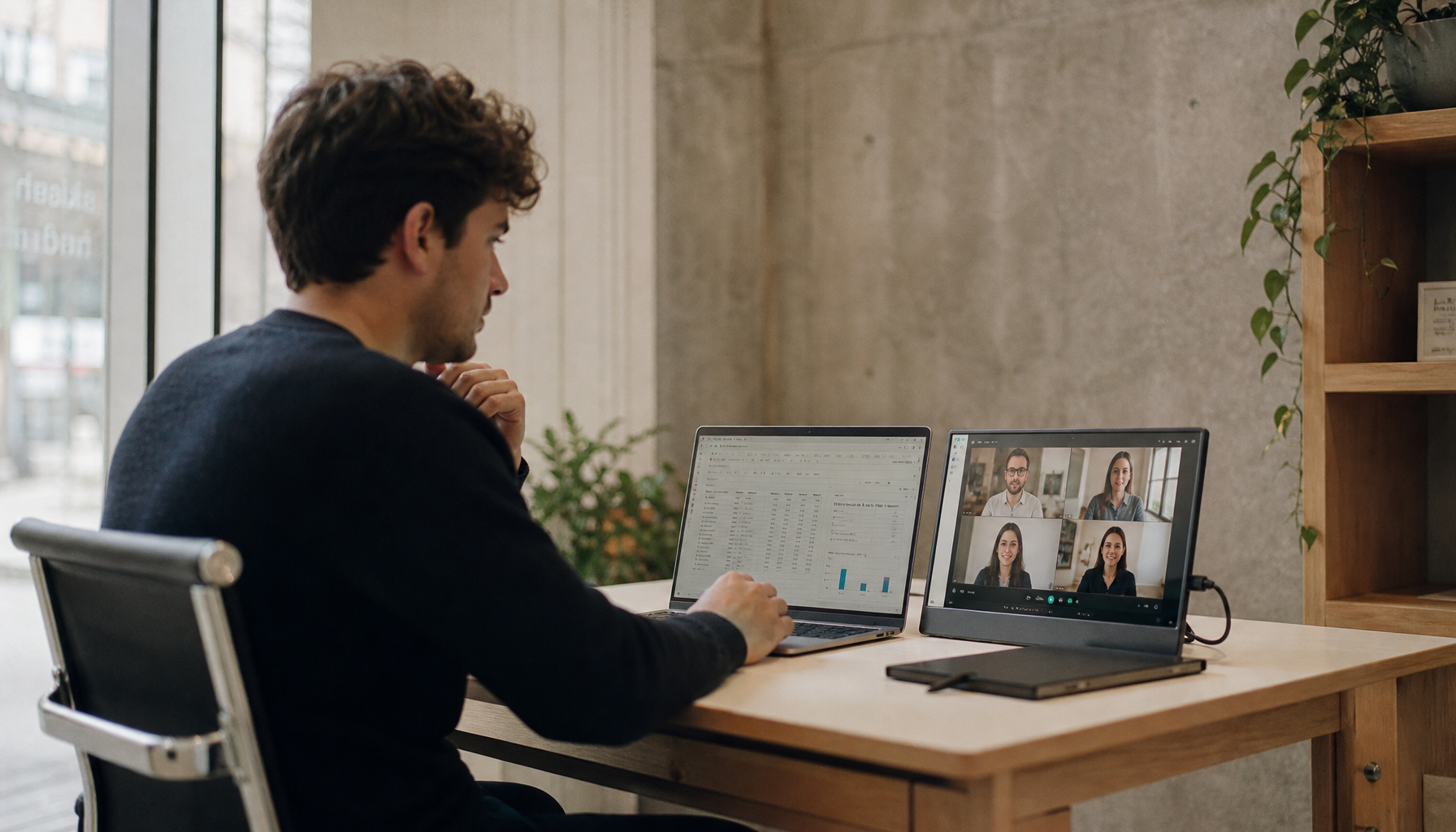
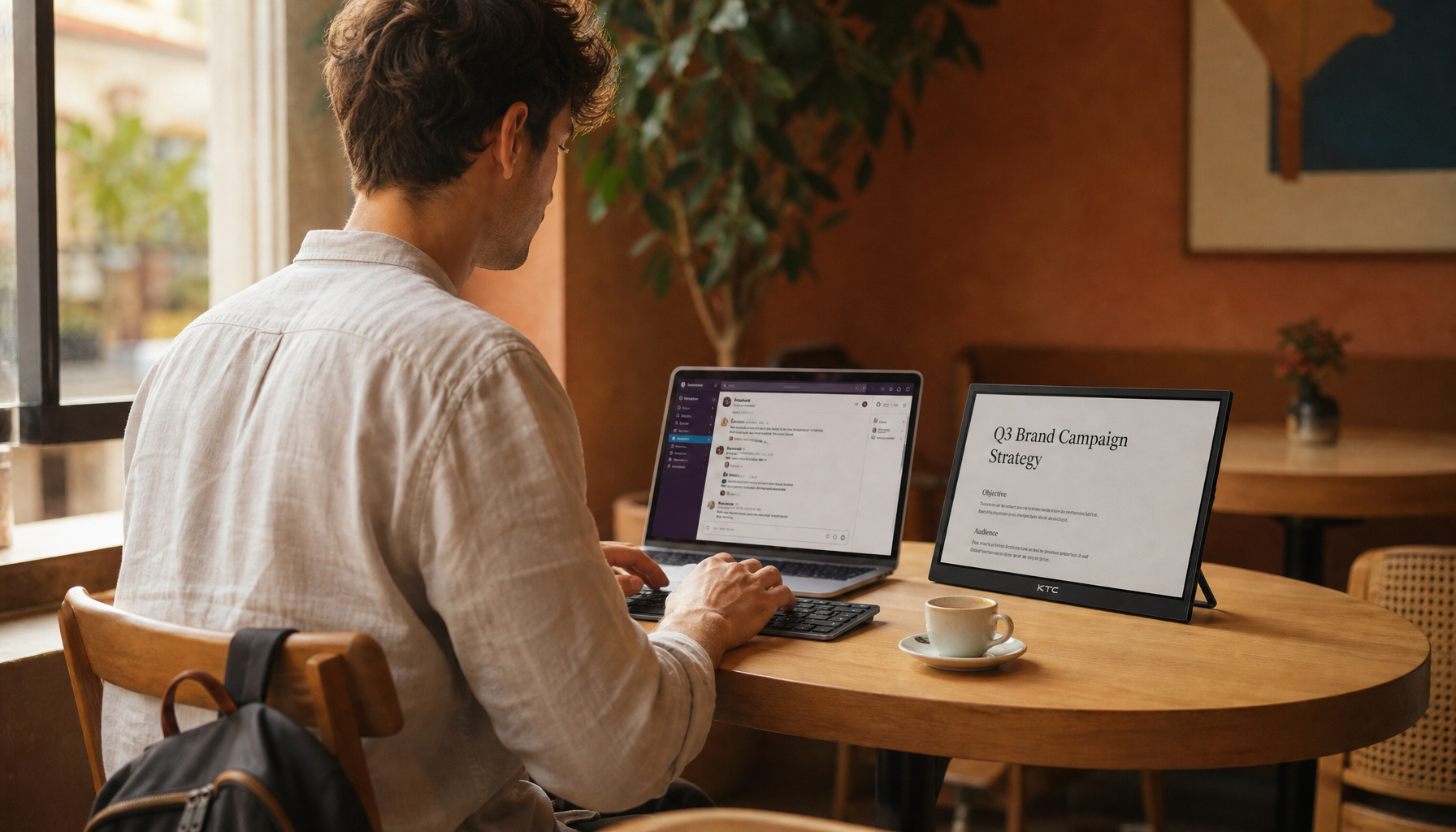
A well-designed day trading monitor setup serves as your command center, letting you track multiple financial charts, order books, news feeds, and watchlists at once with minimal window switching or eye strain. The right combination of resolution, pixel density, layout, and eye-care features can improve workflow efficiency and reduce fatigue during long market sessions, though it does not guarantee better trading outcomes.

Defining the Trading Command Center: Why Screen Real Estate Trumps Brand Prestige
Day traders succeed by maintaining constant visibility across data streams rather than relying on flashy aesthetics or gaming-oriented features. The core priority is maximizing usable screen real estate while preserving sharp text and fast visual scanning, which is why many professionals favor high-PPI panels and thin-bezel designs over RGB lighting or brand prestige.
Ergonomics form the foundation of any effective setup. Occupational safety guidelines recommend positioning monitors 18 to 28 inches from your eyes, with the top of the screen at or slightly below eye level to support a neutral neck posture during extended sessions. This distance helps reduce strain when scanning across multiple displays.
High-resolution options from value-focused brands like KTC deliver professional-grade clarity without premium pricing. Models supporting USB-C connectivity, such as the KTC H27P3, simplify cabling by handling video, power, and data over a single cable, freeing desk space for keyboards, notepads, or additional peripherals. For more on ergonomic choices, see our Home Office Setup Guide: How to Choose the Right Ergonomic Monitor and How a USB-C Monitor Can Streamline Your Workspace.
Resolution and Text Clarity: Why PPI Matters for Financial Charting
Pixels per inch (PPI) determines how clearly you can read small candlestick details, ticker symbols, and fine trend lines when multiple windows share the same physical screen. Higher PPI reduces the need to squint or zoom, directly supporting faster data interpretation.
For modern web-based platforms like TradingView, 4K (2160p) resolution offers substantial real estate, often allowing up to eight clear charts per tab without sacrificing legibility. In contrast, 1440p (QHD) frequently serves as a safer option for legacy Java-based applications such as Thinkorswim, where aggressive scaling on higher resolutions can introduce text blur. This 1440p choice represents a heuristic based on typical user reports rather than universal performance.
The 5K resolution available in select displays, including the KTC H27P3, provides retina-level sharpness that minimizes aliasing on thin lines. Our insight on display metrics shows that higher PPI generally translates to more indicators fitting comfortably on screen. For further reading on productivity displays, review The Complete Guide to Finding the Best Monitor for Productivity & a Healthier Workspace.
Multi-Monitor Setup for Trading: Comparing Triple, Dual, and Ultrawide Layouts
The optimal layout depends on your trading style, desk space, and the specific data streams you monitor most frequently. A triple 27-inch array remains popular among multitaskers because it creates natural mental separation for news, charts, and order execution. This configuration typically requires VESA-compatible mounts for proper alignment and cable management.
Standard VESA mounting specifications (75x75mm or 100x100mm) enable clean, adjustable arrays using monitor arms, reducing desk footprint and improving ergonomics. Dual 32-inch setups, particularly when one monitor is rotated vertically, suit scalpers who need deep vertical scrolling for order books or Level 2 data.
A vertical monitor orientation maximizes readable lines in watchlists, news tickers, and time-and-sales windows, as noted in various trader setup guides. Ultrawide displays deliver a seamless horizontal timeline useful for trend followers, yet edge distortion and increased neck rotation can become drawbacks during prolonged use. Our guide on Vertical vs. Horizontal: How to Build the Ultimate Dual Monitor Productivity Setup explores these trade-offs in detail.
For most day traders, a triple-monitor or hybrid vertical-horizontal arrangement provides better flexibility than a single large panel, especially when software window management tools are employed.
Eliminating Fatigue: Eye Care Technologies for Extended Market Hours
Long trading days increase the risk of digital eye strain, commonly known as Computer Vision Syndrome. The American Academy of Ophthalmology recommends the 20-20-20 rule: every 20 minutes, look at something 20 feet away for at least 20 seconds to relax eye muscles.
Flicker-free backlighting and hardware-based blue light filters help maintain comfort across the typical 6.5-hour U.S. market session. Anti-glare coatings further reduce reflections in bright home offices. However, certain panel technologies like Mini-LED local dimming can introduce blooming or halo effects around bright price lines and candles; many traders disable this feature for pure charting work to preserve data accuracy.
Our related articles on The Secret Productivity Issue: How to Remedy Digital Eye Strain and the broader productivity monitor guide provide additional strategies for maintaining focus.
KTC Monitor Fit for Day Trading Workflows
Tiered comparison of KTC monitor models for chart density, text sharpness, and software compatibility across common trading workflows.
View chart data
| Category | Chart Density | Text Sharpness | Software Compatibility |
|---|---|---|---|
| H27P3 (5K) | 3.0 | 3.0 | 2.0 |
| H27P27 (4K) | 3.0 | 2.0 | 3.0 |
| H32T13 (2K 32in) | 2.0 | 1.0 | 2.0 |
| H27D9 (2K) | 2.0 | 1.0 | 2.0 |

Choosing Your Setup: How to Build Your Trading Workstation Based on Strategy
Match your monitor selection to your primary trading timeframe, desk constraints, and software preferences rather than defaulting to the largest or highest-spec option. Budget-conscious traders often start with a triple 2K configuration using the KTC H27D9 for solid real estate at accessible pricing. Those focused on maximum clarity may prefer a dual high-resolution pairing such as the KTC H27P3 (5K) and H27P27 (4K) to achieve sharp text across web-based charting tools.
Scalpers needing deep order-book visibility frequently choose dual 32-inch panels like the KTC H32T13, with one oriented vertically for extended vertical data. All setups benefit from proper VESA mounting arms, high-quality DisplayPort or HDMI cables, and attention to cable routing.
Before purchasing, verify that your graphics card supports the desired multi-monitor resolution and refresh rate combination. Check current compatibility with your specific trading platforms, as scaling behavior can vary. Explore the full Office Monitor collection or 4K Monitor options to find models matching your needs. The KTC 27 inch Monitors range provides versatile choices across resolutions.
FAQ
How Many Monitors Do Most Day Traders Use? Three monitors represent the most common professional configuration because it allows dedicated space for charts, news, and order entry without constant overlap. Two monitors can suffice for simpler strategies, while four or more may add complexity without proportional gains depending on desk size and software window management.
Is 4K Necessary for TradingView and Similar Platforms? 4K provides clear advantages in chart density and indicator visibility on modern web platforms, yet many traders operate effectively with 1440p. The choice depends on your screen size, viewing distance, and whether you run legacy software that scales poorly at higher resolutions.
Should I Use a Vertical Monitor in My Trading Setup? A vertical (portrait) monitor excels for watchlists, news feeds, and time-and-sales data by increasing the number of visible rows. Combining one vertical unit with horizontal displays often improves workflow efficiency for data-heavy styles.
Do Eye-Care Features Make a Difference in Long Trading Sessions? Flicker-free panels and low blue light filters can reduce symptoms of digital eye strain when combined with the 20-20-20 rule and proper ergonomics. These technologies support comfort but should be viewed as one part of an overall healthy workstation routine.
What Is the Main Downside of Ultrawide Monitors for Trading? Ultrawides offer seamless horizontal views but may introduce slight edge distortion on charts and require more neck movement when scanning across a wide field. Multi-monitor arrays with thin bezels often provide more flexible window placement for traders who switch contexts frequently.
How Important Are Thin Bezels in a Multi-Monitor Trading Array? Thin bezels minimize visual interruptions between screens, helping your eyes scan data more naturally across displays. When paired with VESA arms for precise alignment, they contribute to a more cohesive command center experience.