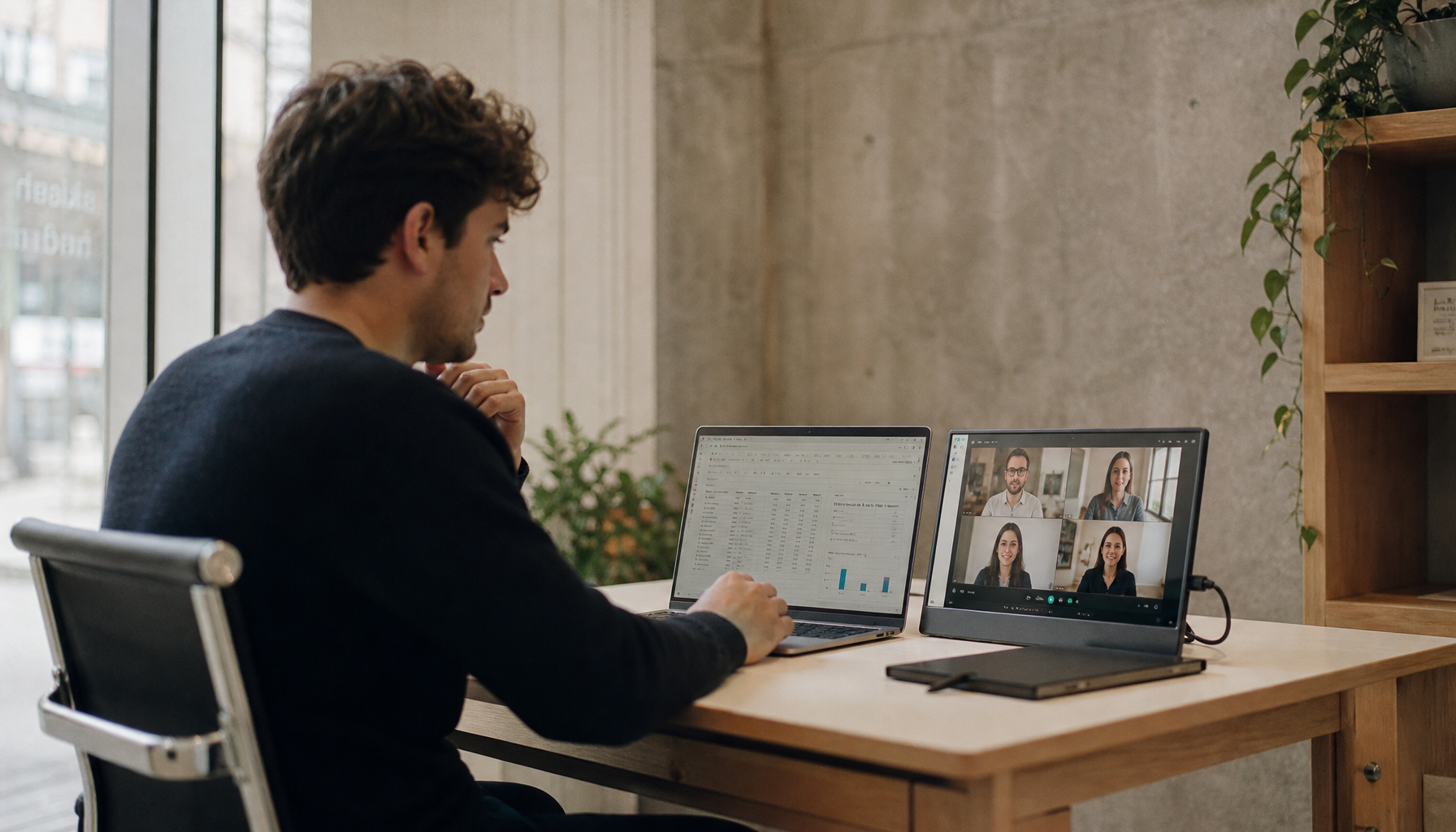
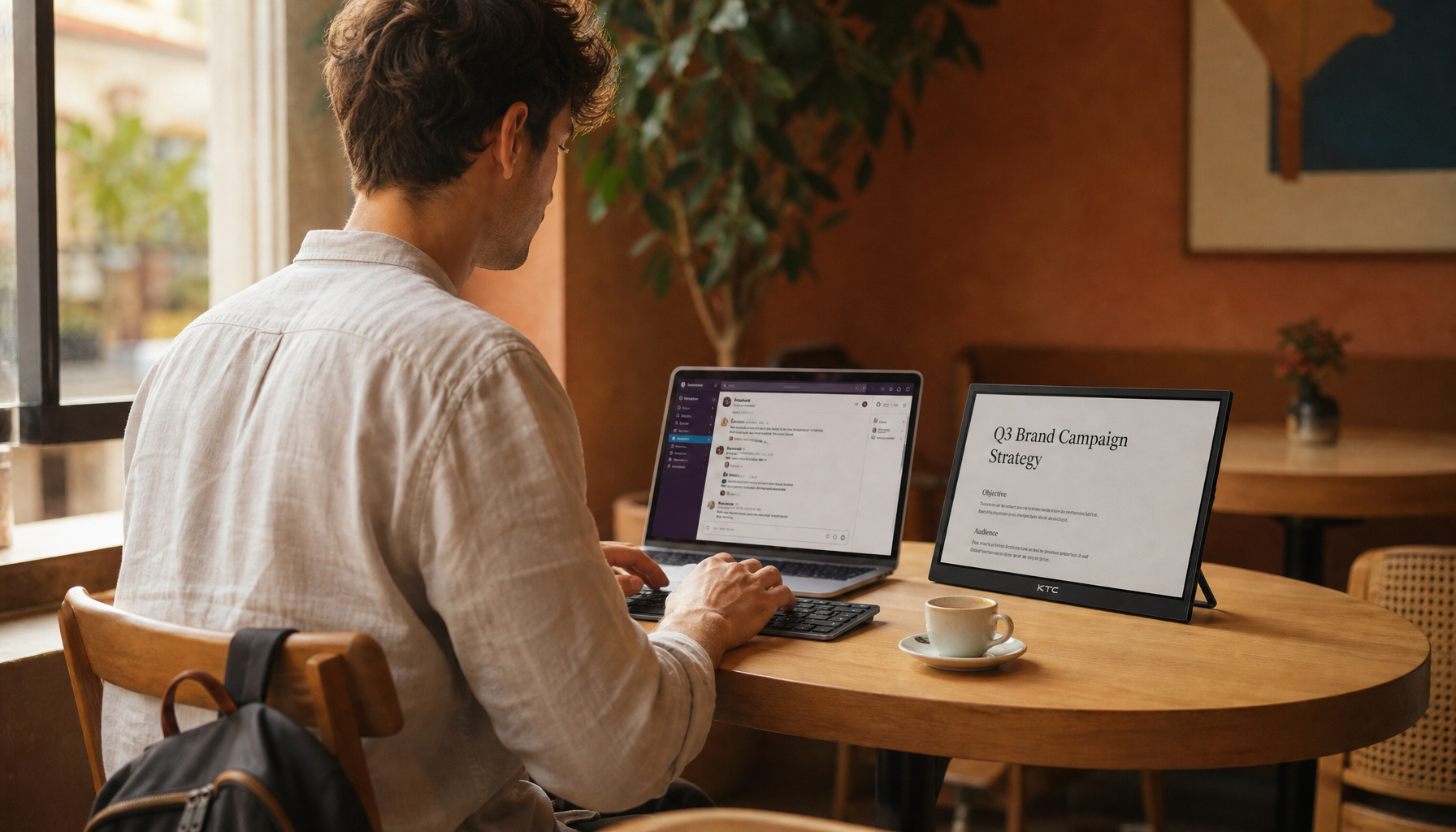
A multi-monitor taskbar should match how you actually work: one clean command center on every screen, or monitor-specific buttons that keep each display focused. The fastest fix is to align your physical displays, match the system display layout, then choose the taskbar behavior that reduces cursor travel and app hunting.
Is your pointer crossing screens cleanly, but your taskbar still feels like it belongs to the wrong monitor? A well-tuned setup can make every app feel one glance away, whether you are gaming on a 27-inch primary display, monitoring chat on a side screen, or working across documents and dashboards. Here is how to make your taskbars, screen positions, and window behavior act like one unified workspace.
Why Taskbar Alignment Matters in a Multi-Monitor Setup
A taskbar is more than a strip of icons. It is the launchpad, status bar, app switcher, clock access point, and recovery tool when a window disappears behind your workflow. On one monitor, that feels simple. Across two or three displays, the same taskbar can either shorten your actions or multiply friction.
The productivity case is strong but conditional. Multi-monitor setups are often linked with faster switching, side-by-side comparison, and reduced window shuffling, and multiple monitors have been reported as preferred by many users in cited workplace studies. The key is that extra screen space only pays off when the interface matches the desk. If your secondary monitor shows research, chat, code logs, streaming controls, or a spreadsheet, the taskbar should support that role instead of forcing you back to the primary screen every few seconds.
For gaming and streaming, the stakes are even more obvious. A centered high-refresh primary display should stay distraction-free, while the side display handles team chat, streaming software, live chat, system monitoring, or walkthroughs. A strong multi-monitor gaming setup usually treats the second screen as support, not competition. The taskbar should follow the same logic.
Start With Physical Alignment Before Changing Settings

Software cannot fully fix a poor physical layout. If your screens are at different heights, angled randomly, or placed too far apart, your taskbar will feel disconnected even if the operating system is configured correctly.
For a side-by-side setup, align the top edges of both monitors and angle the secondary display inward. A practical range is about 20 to 45 degrees for a side monitor, especially when it holds chat, alerts, browser research, or utility windows. A desk depth near 26 inches or more usually gives a 27-inch monitor enough breathing room, while shallower desks often feel better with 24-inch displays. The same principle applies to portable smart screens: keep the portable panel close enough that the mouse movement feels intentional, not like a trip across the desk.
Ergonomics sources consistently point toward neutral posture. In a long session, the primary display should sit centered in front of you, with the top third around eye level, while secondary screens should be close enough for quick glances. A dual-monitor desk that is poorly positioned can create neck rotation and eye strain even if the pixels look perfect. That is why dual-monitor setup advice often combines monitor placement, matching hardware, and software behavior rather than treating them as separate problems.
A simple real-world check works well: open a browser on the left display and a notes app on the right, then move the pointer between them ten times. If the cursor hits an invisible wall, jumps upward, or enters the other screen at the wrong height, fix the display layout before touching taskbar options.
Match the Virtual Display Layout to Your Desk

In the operating system, the virtual monitor layout determines how the pointer travels from one screen to another. If the system thinks your right monitor is higher than it is physically, the pointer will cross at the wrong vertical point. That mismatch makes the taskbar feel misaligned because your muscle memory keeps failing.
Open Settings, go to System, then Display. Select Identify so the system shows which screen is which. Drag the display rectangles until they match your desk layout as closely as possible. If your monitors are the same size and resolution, align the rectangles edge to edge. If one screen is 4K and the other is 1080p, keep each at native resolution, then adjust scaling so text and windows feel similar in size. This dual-monitor setup advice makes the same point: the on-screen arrangement should mirror the physical arrangement, or cursor movement will feel broken.
For mixed displays, perfect alignment may not be possible because the system maps by pixel dimensions, not physical inches. A 27-inch 4K display has more virtual height than a 24-inch 1080p display. In that case, align the most-used crossing area. If your taskbars are at the bottom, align the lower edges so the pointer can move cleanly between taskbars. If you often drag windows across the center, align the midlines instead.
Choose the Right Taskbar Mode for Your Workflow

The operating system gives you several practical choices, and the best one depends on whether you value visibility or focus.
Taskbar Style |
Best For |
Main Advantage |
Tradeoff |
Taskbar on all displays |
Office multitasking, streaming, support screens |
Fast access from any monitor |
More visual clutter |
Main display only |
Competitive gaming, clean dashboards, presentation screens |
Least distraction |
More mouse travel |
Buttons only where window is open |
Heavy multitasking across apps |
Cleaner app location awareness |
Requires habit change |
All buttons on all taskbars |
Users who prioritize instant access |
Maximum visibility |
Can feel crowded fast |
In version 10, you can enable taskbars on every display through Settings, Personalization, Taskbar, then Multiple displays. The useful setting is not only whether the taskbar appears everywhere, but also where taskbar buttons appear. A system knowledge base notes that taskbar buttons can be shown on all taskbars, on the main taskbar plus the window’s taskbar, or only where the window is open.
For a productivity display setup, “taskbar where window is open” is usually the most elegant mode. If a spreadsheet is on the right monitor, its button stays on the right. If team chat is on the left, its button stays on the left. This makes each monitor feel like a dedicated zone rather than a duplicated mess.
For a command-center setup, such as trading dashboards, IT monitoring, streaming, or heavy research, showing taskbars on all displays can be more efficient. You avoid dragging the cursor back to the primary screen just to open a pinned app, check the clock, or switch windows.
Version 11: Know the Main Display Limitation
Version 11 is more restrictive than many power users expect. You can show the taskbar on all monitors, but if you want the taskbar to live only on a secondary monitor, you generally need to make that monitor the main display. A walkthrough explains that moving the taskbar is done by selecting that monitor in Display settings and enabling “Make this my main display.”
That setting matters because the main display is not just a taskbar preference. It also affects default app placement and where the operating system treats the center of the desktop experience as living. If your best gaming monitor is centered and you make a side office display the main monitor only to move the taskbar, games and apps may start launching on the wrong screen. For a gaming-first setup, that tradeoff is rarely worth it.
The better approach in version 11 is to keep the premium primary monitor as the main display, enable taskbars on all displays if needed, and use monitor-specific taskbar buttons to reduce clutter. If the side screen is mostly for chat, browser reference, or monitoring tools, this feels fast without compromising where games and full-screen apps launch.
Make the Taskbar Feel Consistent Across Different Monitors

Even when the settings are correct, mismatched displays can make the taskbar feel uneven. Different resolutions, scaling levels, refresh rates, brightness, and color temperature all affect how unified the workspace feels.
Start with native resolution on each screen. A 4K monitor should run at 4K, while a 1080p portable screen should run at 1080p. Then adjust scaling so taskbar icons, text, and window controls appear similar in physical size. This is especially important when pairing a laptop with a large external monitor or a portable smart screen.
Brightness matters too. If one taskbar is bright white and the other is dim gray, your eyes will treat them as different work zones. Use monitor controls or operating system settings to bring brightness and color closer together. You do not need perfect calibration for office work, but you do need consistency. A 15-minute pass through brightness, contrast, and scaling can make a budget secondary screen feel much more integrated with a premium primary display.
When using a portable monitor, place it on the side where your taskbar interaction makes sense. A portable smart screen used for messaging, notes, or controls often works best to the left of a main display for right-handed mouse users, because the primary mouse travel remains short and the support screen stays peripheral.
When Third-Party Taskbar Tools Make Sense
Native settings are enough for most users, but advanced workflows can justify a third-party utility. One utility’s multi-monitor taskbars feature lets each monitor have its own taskbar behavior, including showing all windows or only windows on that monitor, with options such as grouping, previews, auto-hide, and pinned shortcuts.
This is most useful when you run three or more displays, keep many apps open, or need different behavior per screen. For example, a developer might keep code and terminal windows on the center monitor, documentation on a vertical left monitor, and communications on a right monitor. Monitor-specific taskbars keep each zone clean. A streamer might want pinned controls on the utility monitor while leaving the gaming display as quiet as possible.
The downside is complexity. More control means more settings to maintain, and a system update can occasionally change behavior around taskbars, snapping, or display detection. For a value-oriented setup, start with native controls first. Add a third-party tool only when a specific missing behavior is slowing you down every day.
Troubleshooting a Taskbar That Still Feels Wrong
If the taskbar appears on the wrong screen, confirm which display is marked as main. In version 11, that single choice often decides where the primary taskbar and default app launches go. If the pointer does not cross smoothly, return to Display settings and realign the monitor rectangles.
If windows open partly off-screen or the taskbar seems cut off on a large external display, suspect scaling or overscan behavior. A display maker notes that some version 11 multi-display problems with large 4K external monitors can cause the taskbar disappearing off-screen or window controls becoming inaccessible. In those cases, Display settings may not be enough; the graphics control panel may need a scaling adjustment.
If a game pulls focus away from the second monitor, keep the game on the primary display and use the second screen for low-motion support apps. Spanning a game across two monitors often places the bezel at the center of the action, which is a poor tradeoff for most shooters and action titles. One strong main screen plus a disciplined support display usually feels faster, cleaner, and more immersive.
A Practical Setup Formula
For a balanced gaming and productivity desk, center a 27-inch 1440p high-refresh monitor as the main display, place a 24- or 27-inch secondary monitor slightly angled inward, align the taskbar crossing edge in Display settings, and enable taskbars on all displays only if you frequently launch or switch apps from the side screen. For office productivity, use monitor-specific taskbar buttons. For competitive gaming, keep the primary display as the main monitor and minimize secondary-screen clutter.
The goal is not to make every monitor identical. The goal is to make every screen predictable. When your taskbar, cursor path, app buttons, and physical monitor placement all agree, the desk stops feeling like separate panels and starts behaving like one high-performance workspace.