If you're deciding when to pay more for a monitor, the real question is whether the cheaper option hides a weakness you will notice every day. A value monitor is usually fine when the tradeoffs stay in the background. Pay more when those compromises affect visibility, comfort, motion, or ownership risk in your actual setup.

When a Value Monitor Is Enough
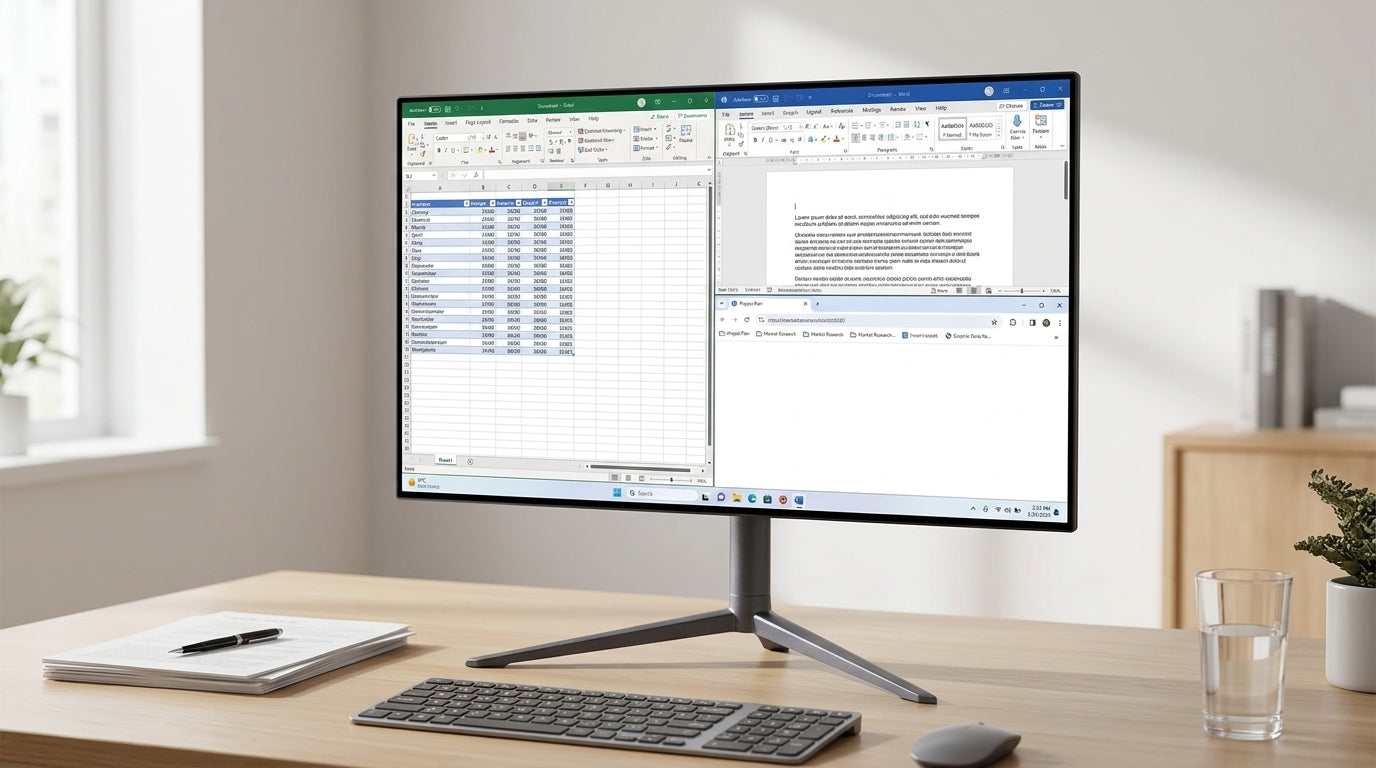
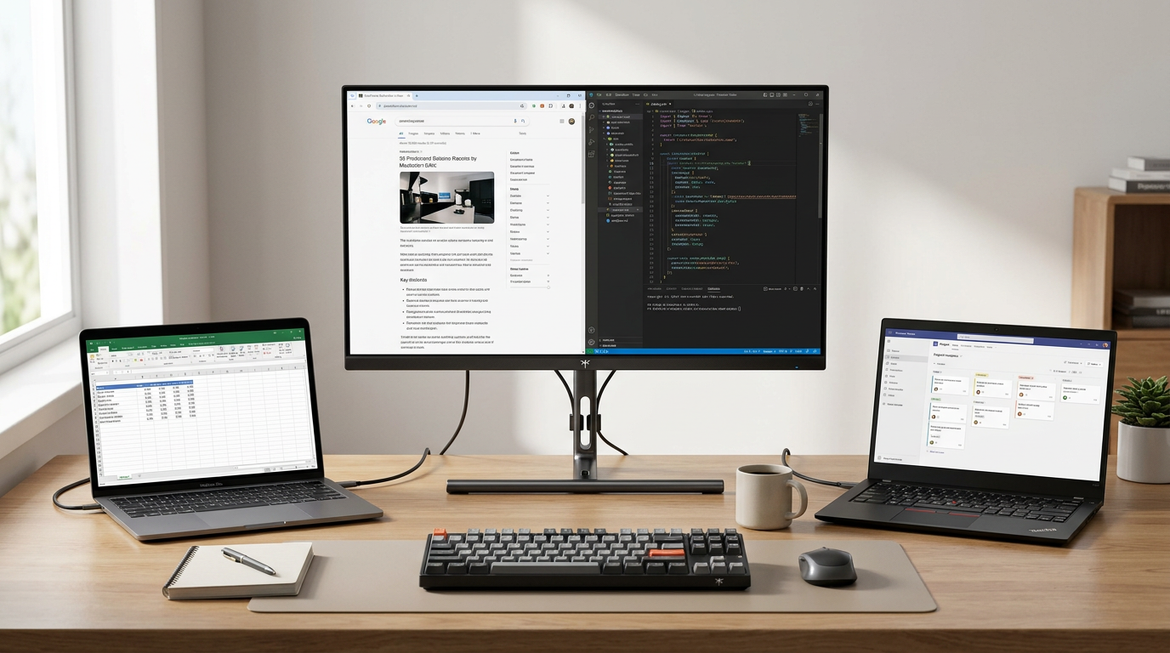
A value monitor is often the right choice for office work, casual gaming, a secondary screen, or a fixed desk where the setup already fits your posture. In those cases, the goal is not perfect specs. It is a screen that stays readable, comfortable, and predictable without inflating the cart.
The best way to judge the low-price option is to separate cosmetic compromises from functional ones. A thinner stand, a simpler menu, or less glamorous branding may not matter. But a screen that is too dim, awkwardly positioned, or annoying in long sessions can turn a bargain into a daily irritation.
The safest rule is simple: keep the lower-priced monitor if its limits do not change how you work, game, or sit at the desk. If the weakness is only visible on a spec sheet, it is usually easier to ignore. If it changes what you notice for hours at a time, the cheaper buy stops being cheap.
Tradeoffs That Usually Justify Paying More
For most buyers, the strongest reason to spend more is not prestige. It is that one compromise starts showing up in daily use. That is why it helps to judge monitor panel and support tradeoffs by the consequence, not the label.

Panel Quality and Contrast Limits
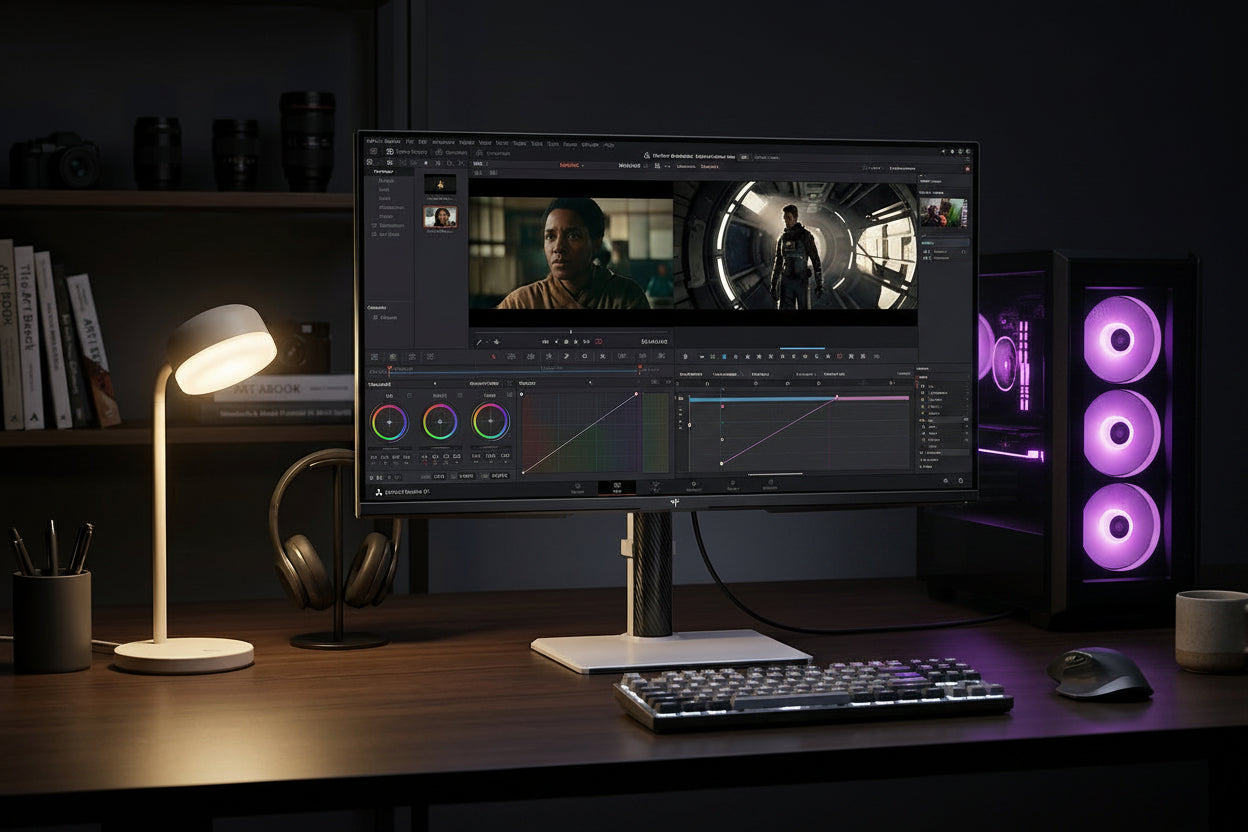
If you game in a dark room, watch a lot of movies, or care about black depth, contrast matters more than many buyers expect. A higher-tier panel can make shadow detail easier to read and reduce the washed-out look some budget screens show in darker scenes. That is why some shoppers move up a tier even when the resolution looks similar on paper.
The tradeoff flips in basic office use. If your work is mostly documents, email, spreadsheets, and web browsing, the contrast gap may be less important than price, desk space, or port layout. In that case, pay more only if the lower-cost screen visibly bothers you during normal use.
Brightness, HDR, and Room Lighting
Brightness is one of the clearest upgrade triggers. For standard office environments, the 200 to 300 nits sweet spot is often enough, but bright rooms or windows behind the desk can push buyers toward 400 nits or more. That is not about chasing a number. It is about whether the screen stays easy to read without strain.
HDR branding alone is not enough to justify spending more. If the room is bright and the panel cannot hold up, the logo will not save the experience. In real use, a brighter panel or stronger local dimming matters when glare, daylight, or reflections are part of your normal day.
That is why a Mini-LED option can make sense for buyers who want sustained brightness and stronger contrast rather than just a badge. If you want to see how that logic applies in a chart-heavy workflow, the case for sustained nits over OLED is a good example of the same visibility problem.
Color Accuracy and Creator Work
Color is worth paying for when your work depends on the screen matching reality. According to Tom's Hardware's Delta E guide, professional color accuracy is generally defined around dE below 2, while dE 2 to 3 can still be strong for gaming and casual use. That gives you a practical line: creator work deserves more caution than everyday browsing.
For photo, video, and design buyers, a better-calibrated monitor can reduce the risk of edits looking different elsewhere. For everyone else, wider gamut or "more vivid" marketing may feel nice without changing the work outcome. The question is not whether the image looks richer in the cart. It is whether color error would cost you time later.
Refresh Rate, Motion, and Input Feel
Motion upgrades follow a different rule. RTINGS notes that 144Hz is the familiar sweet spot for gaming fluidity, while returns get smaller as you move from 144Hz to 240Hz and beyond for many casual players. In plain language, faster still helps, but not always enough to justify the price jump.
That means paying more for refresh rate makes the most sense when you actually play fast-motion games and your PC can feed the panel. If you mostly play slower games, use console settings that cap frame output, or already feel fine at 144Hz, the extra money may be better spent on brightness, color, or ergonomics.
Stand Flexibility and Support Matter More Than You Think
A lower-priced monitor can become more expensive once you add a monitor arm, accept a bad viewing height, or deal with return friction after setup. Ergonomic guidance from the Canadian Centre for Occupational Health and Safety points to monitor height and angle as real comfort factors, not cosmetic extras. If the desk is not already dialed in, stand flexibility starts to matter.
Budget displays can also carry pixel-defect risk that some buyers accept and others do not. The ISO 9241-307 pixel defect classes show that acceptable defect levels vary by class, which is why "good enough" depends on how much panel imperfection you will tolerate.
Use this as a buyer-risk check:
- Choose a fixed or tilt-only stand only if your desk height and chair height already work.
- Pay more if you know you will need height, swivel, or portrait rotation from day one.
- Treat warranty and support as confidence factors, not proof of superior service quality.
- Give extra weight to returns if you are unsure about brightness, glare, or desk fit.
The same logic applies to selected monitor tiers. If you need a higher-refresh QHD setup with stronger ergonomics, the M27T6S gaming monitor is one way to pair Mini-LED brightness with full stand adjustment. If you want a sharper 4K mixed-use path, the H27P6 monitor adds dual-mode flexibility and full ergonomic adjustment. For a larger curved esports layout, the H32S25E monitor is the kind of option that makes sense when motion and screen size matter more than desk minimalism.
Which Higher-Priced Monitors Fit Each Buyer Need
| Buyer condition | Upgrade trigger | What paying more solves | Example monitor tier |
|---|---|---|---|
| Bright room or window glare | Lower brightness starts to hurt readability | Better visibility, less strain, more usable HDR behavior | Mini-LED or brighter 4K/QHD tier |
| Creator work or color-sensitive editing | Color drift would create rework | Tighter calibration and more dependable color matching | Calibrated 4K or creator-tier monitor |
| Fast-paced gaming | Motion blur or response feel becomes noticeable | Higher refresh rate and smoother tracking | 180Hz to 240Hz+ gaming tier |
| Long desk sessions | Bad height or tilt starts to feel uncomfortable | Better stand flexibility or easier arm mounting | Height-adjustable premium tier |
| Uncertain fit or picky ownership | Return hassle or defect tolerance matters | Lower regret risk, easier setup confidence | Model with stronger return/support terms |
A practical way to use this table is to ask which row matches your daily problem, not which spec looks biggest. If none of the rows describes your use case, the value option is probably fine. If two or more rows apply, paying more is easier to justify.
For shoppers comparing categories instead of single models, the under-$200 monitor range is a reasonable starting point when you want to keep compromises visible. If your setup already points toward stronger brightness, better motion, or more ergonomic hardware, the above-$200 monitor range is the cleaner place to narrow the search.
When Paying More for a Monitor Usually Makes Sense
A quick guide to the upgrade triggers that most often justify a higher monitor budget.
View chart data
| Scenario | Brightness need | Color accuracy need | Refresh-rate need | Ergonomic need | Panel-risk tolerance | Warranty concern |
|---|---|---|---|---|---|---|
| Low | 1 | 2 | 3 | 0 | 0 | 0 |
| Medium | 0 | 1 | 0 | 1 | 2 | 2 |
| High | 0 | 0 | 0 | 2 | 1 | 1 |
Final Decision Check Before You Upgrade
Before you spend more, check four things: room brightness, desk fit, how often you notice the weakness, and whether your PC or console can actually use the upgrade. If the cheaper monitor only looks worse in theory, save the money. If the limitation shows up every day, paying more is the rational move.
Frequently Asked Questions
How Do I Know a Value Monitor Is Good Enough?
It is good enough when the compromises do not change your day-to-day use. If the screen stays readable, comfortable, and stable in your room and on your desk, the lower price is doing its job.
What Monitor Tradeoffs Most Often Justify Paying More?
The biggest triggers are brightness in a bright room, color accuracy for creative work, motion performance for fast games, and stand flexibility when your desk setup is not ideal. Support and returns matter most when you are unsure about fit.
Can a Higher Refresh Rate Be Worth the Extra Cost?
Yes, but mostly for players who will notice smoother motion and can feed the monitor enough frame rate. If your games are slower, your system is limited, or 144Hz already feels fine, the extra cost can be hard to justify.
Why Does Stand Adjustability Change the Budget Decision?
Because posture and viewing height affect comfort during long sessions. If a monitor is tilt-only or fixed-height, you may need an arm or accept a worse setup, which raises the real cost of the cheaper buy.
How Should I Compare Value Monitor vs Premium Brand Tradeoffs?
Compare the actual gaps you will feel, not the logo. A premium brand is only worth it if the better brightness, color, ergonomics, or ownership terms solve a problem that matters in your own setup.
Final Takeaway
Pay more only when the monitor weakness is part of your daily experience, not just your spec comparison. Bright rooms, color-sensitive work, fast-motion gaming, and awkward desk setups are the clearest upgrade triggers. If those do not apply, a value monitor is often the smarter buy. If they do, the extra spend is easier to defend.