The best monitor for work and gaming is the one that matches your desk, not the one with the biggest spec sheet. For most buyers, that means choosing a setup that keeps text readable, the stand comfortable, and gaming smooth enough for the way you actually play. If you split time between spreadsheets, calls, and after-hours gaming, this guide helps you rank the trade-offs before you pay for extras you will not notice.

What a Mixed-Use Monitor Has to Do
A mixed-use monitor has two jobs: it needs to stay comfortable for long work sessions and feel responsive enough for gaming. The point of this guide is to help you decide which of those needs should lead, so you do not buy around a spec sheet that only looks good in isolation.
Think in terms of your real use mix first. If you spend most of the day reading text, answering email, or working in windows, clarity and comfort come first. If games matter more, refresh rate and motion handling move up the list. The right choice also depends on desk space and the devices you plug in.
For readers who want a quick follow-up, the OEM monitor buying checklist is a useful next step before you check out.
Which Spec Should Lead Your Decision?
Resolution, refresh rate, and panel type solve different problems, so they should not be treated like interchangeable upgrades. The best monitor for work and gaming usually starts with the spec that changes the experience you care about most.
4K Sharpness Versus 1440P Value
For text-heavy work, 4K usually wins on sharpness because the extra pixels make small text and dense interfaces easier to read. RTINGS notes that 1440p often hits the practical balance for 27-inch desks, while 4K becomes more attractive when you want maximum desktop clarity or a larger screen that still looks crisp at arm's length.RTINGS' 4K vs 1440p guide is a good reference point here.
For value shoppers, 1440p is often the safer middle ground. It usually leaves more budget for better refresh rate, better ergonomics, or a stronger stand. That matters if gaming performance is important and you do not want to spend on 4K when you will mostly notice it in office apps.
A good rule of thumb is simple: choose 4K when text clarity and desktop sharpness are the priority, and choose 1440p when you want a stronger mix of price, speed, and flexibility. At 27 inches, both can make sense, but the recommendation flips with your workload.
Refresh Rate Versus Everyday Comfort
Refresh rate matters most when motion smoothness is part of what you value in gaming. Higher refresh is easier to notice in camera pans, cursor movement, and fast input, but office buyers do not need esports-level numbers to benefit.
That said, smoother scrolling and pointer movement can make a workday feel less choppy, especially if you stare at screens for hours. In mixed use, the point is not to chase the highest refresh rate available. It is to avoid paying for a number that does nothing for your actual mix of work and play.
For many buyers, a moderate high-refresh monitor is enough. If you mainly play slower single-player games and spend more time in documents than shooters, very extreme refresh rates are usually lower priority than clarity and stand comfort.
Panel Type and Image Character
Panel type changes how a monitor looks and feels, but it does not replace the need for the right resolution or refresh rate. IPS-style panels usually appeal to mixed-use buyers because they keep text and color balanced across normal desk angles. VA-style panels can offer stronger contrast, which some people like for darker games or movies, but the feel can be more model-dependent.
Mini-LED-backed models can add stronger HDR impact, but that is not automatically a mixed-use win unless you actually care about brighter highlights or more dramatic game visuals. The panel family should fit the room and the content, not just the marketing label.
Best Fit by Desk Use Case
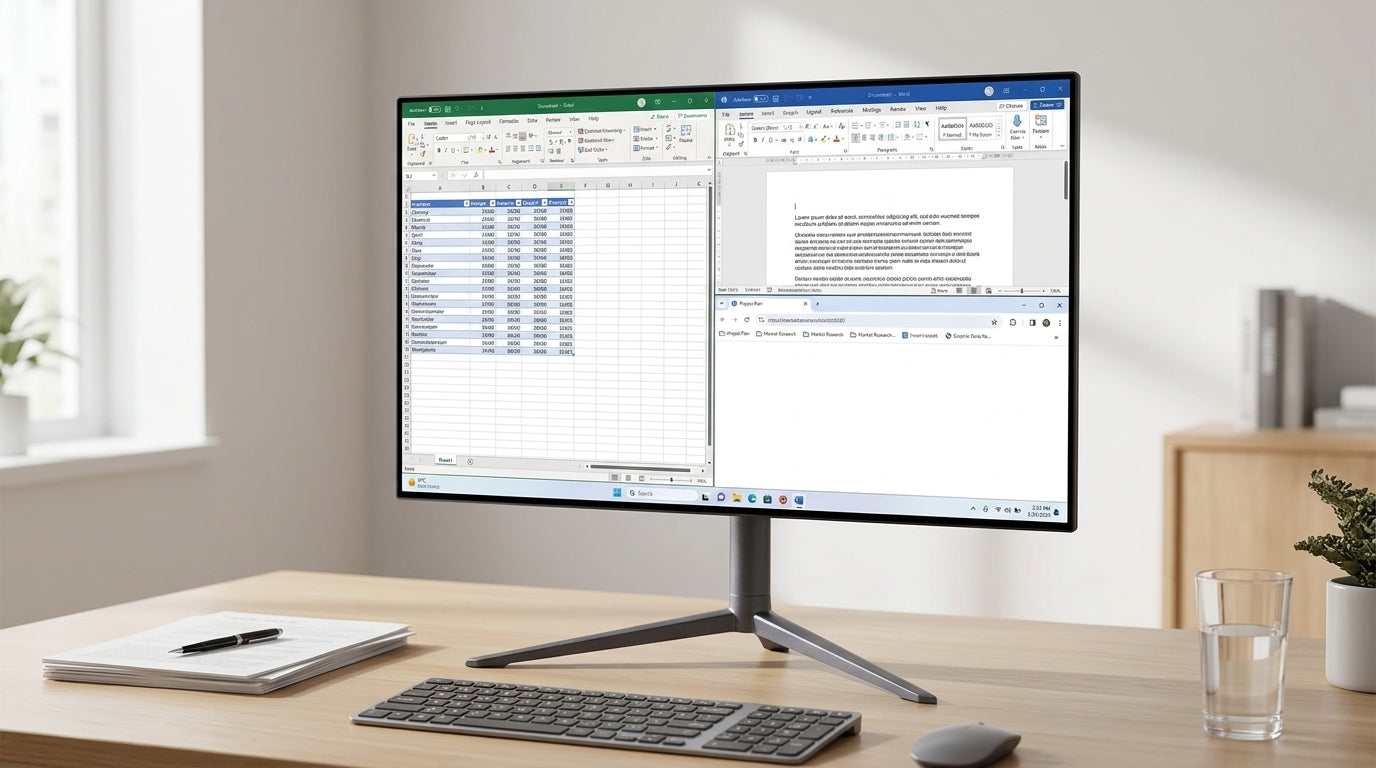
The most useful mixed-use choice is the one that fits your actual desk layout. Screen size changes readability, perceived sharpness, and how much room you have left for a keyboard, laptop, speakers, or a controller. For long sessions, the stand matters almost as much as the panel.
The 4K monitor collection is the natural browse path if you already know you want sharper desktop work, while the 2K monitor collection is the better starting point if you want more value and a looser budget.
| Desk Use Case | Spec Priority | Why It Fits | Watch-Outs | Useful Path |
|---|---|---|---|---|
| Work-first budget desk | 1440p, good stand, usable ports | Keeps text clear without overspending on premium gaming extras | Do not pay for refresh headroom you will barely use | Browse 2K monitor options |
| Balanced 27-inch mixed-use desk | 1440p or 4K, moderate-to-high refresh, full ergonomics | Good fit when work and gaming matter about equally | Fixed stands become annoying fast on shared desks | Compare 4K monitor options and 2K monitor options |
| 4K mixed-use desk | 4K, strong stand, solid USB-C or video inputs | Best when sharp text and creative work matter more | Needs a source device and desk space that make 4K worthwhile | Check the 4K monitor collection |
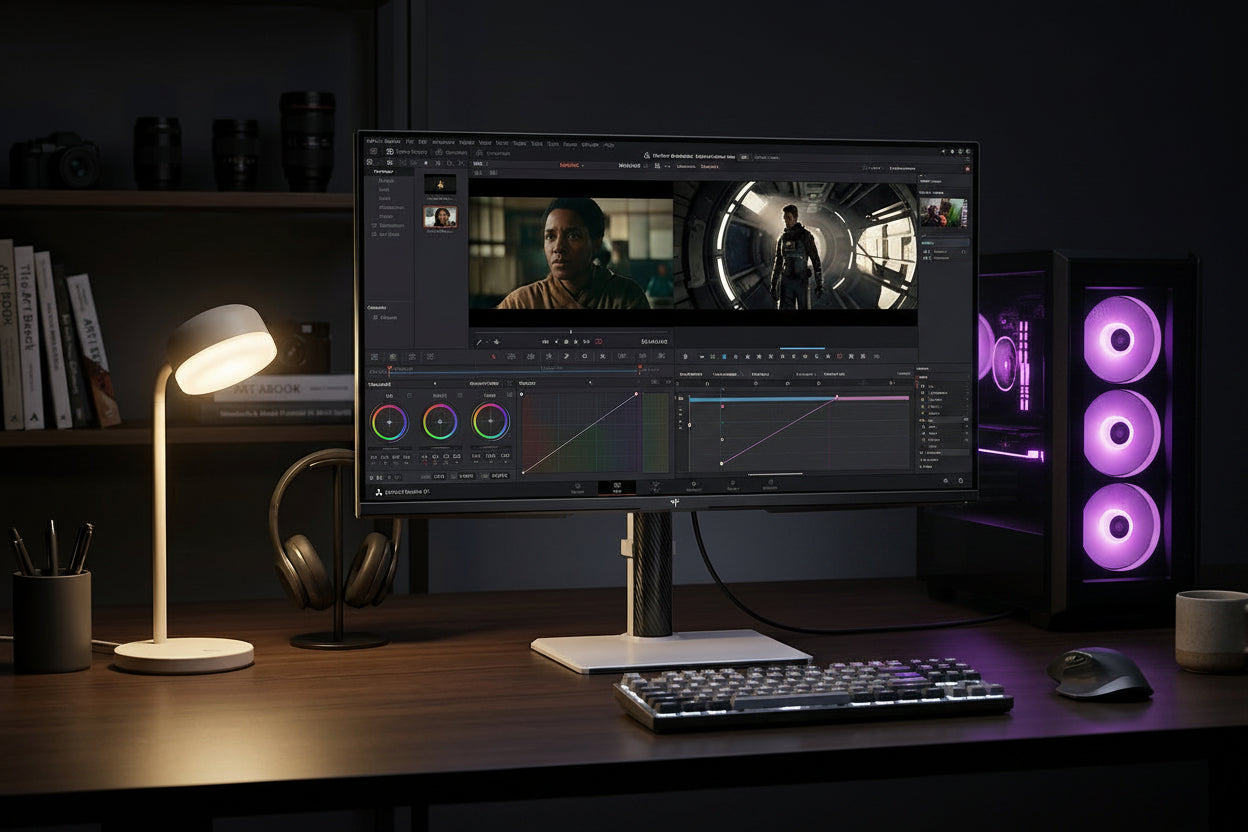
| Gaming-first desk | Higher refresh, low-friction inputs, acceptable clarity | Better when motion smoothness matters more than absolute sharpness | Overpaying for office-only features is easy here | Browse gaming monitor options |
| Ultrawide multitasking desk | Ultrawide, roomy desk, comfortable viewing distance | Helpful when multitasking width matters more than pixel-dense text | Can crowd smaller desks and complicate setup | Consider ultrawide only if the desk can handle it |
For most mixed-use buyers, 27-inch is still the safest sweet spot because it stays manageable on a normal desk without feeling cramped. Larger screens can be excellent if you have the depth for them, but they also raise the bar for stand quality and viewing distance. A monitor arm helps when your desk is shallow or your posture changes a lot during the day.
What Ergonomics and Ports Actually Matter
Comfort features should come before convenience extras. If you work at the same desk for hours, the monitor's height, tilt, and overall placement matter more than a flashy badge on the box. Official workstation guidance recommends keeping the top of the screen at or slightly below eye level and placing the display far enough away to reduce strain.
Stand Adjustability for Long Sessions
Height adjustment is the first feature to check. If the screen sits too high or too low, your neck pays for it by the end of the day. Swivel and pivot are useful if you share the desk, switch between landscape and portrait layouts, or need to angle the panel around other gear.
A basic tilt-only stand can work if you already plan to use a monitor arm. Otherwise, a better stand is often worth more than a small bump in panel specs. That is one of the easiest places to save regret later.
USB-C, Power Delivery, and One-Cable Desks
USB-C matters most when a laptop is part of the setup and you want video plus charging through one cable. USB-C Power Delivery can make a desk feel much cleaner, but only if the monitor, laptop, and cable all support the right behavior.USB-C Power Delivery is only useful when the wattage and compatibility line up.
That means USB-C is a convenience feature, not a universal requirement. If you dock a laptop every day, it can be worth paying for. If you mostly use a desktop gaming PC, it may not change your experience much.
Inputs, KVM, and Device Compatibility
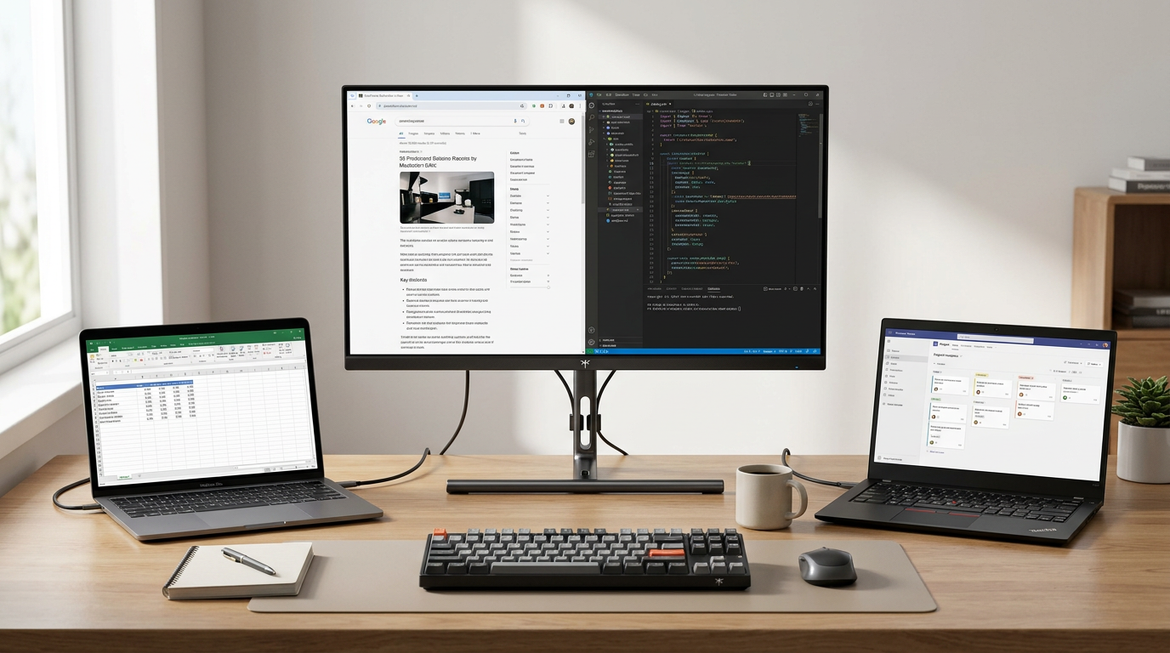
Multiple HDMI or DisplayPort inputs are useful when you switch between a work laptop, gaming PC, and console. Built-in KVM can also help on some desks, but it should be treated as a model-specific convenience, not an automatic buying reason.
That is especially true for Mac users and mixed-device desks, where some setups may need extra software or workarounds. A good place to sanity-check that kind of setup is the hybrid hot desk guide, but the real rule is still simple: verify the actual devices and cable standards before you rely on the feature.
If you want one concrete example of a mixed-use monitor with stronger flexibility, the H27P6 is worth checking because its spec set lines up with the kind of buyer who wants sharp 4K work by day and faster gaming by night. Its product facts also make the USB-C and dual-mode path clear enough to verify before buying.
Which Product Path Fits Your Budget?
Value comes from matching the monitor to your primary use, not from buying the most expensive option in the category. If you are work-first, the best monitor for work and gaming is often the one that gives you the best text clarity and ergonomics at a fair price. If you are gaming-first, choose enough refresh and motion performance to matter, then stop there.
- Decide what you do most often. If you spend more time in documents than in games, lead with resolution and comfort. If games dominate, let refresh rate move up.
- Choose the display class that fits that mix. 4K is a stronger fit when desktop sharpness matters more, while 1440p usually gives better mixed-use value.
- Check the stand before you check the brand. Height adjustment and tilt are basic; swivel and pivot are better for shared or flexible desks.
- Confirm ports against your actual devices. USB-C, HDMI, DisplayPort, and console support only matter if your laptop, PC, or console can use them.
- Sanity-check returns and warranty before you buy. If the desk fit or cable behavior is uncertain, the checkout page should not be the first place you discover it.
If you want the broadest browsing path from there, start with gaming monitor options and narrow by resolution and stand type. If your desk is mostly work and only partly play, the OEM monitor buying checklist is the faster way to avoid paying for features you will not use.
Final Takeaway
For a mixed-use desk, the best monitor is the one that keeps work comfortable and gaming responsive without overbuying. Start with your main use, then decide between 4K sharpness and 1440p value, and only after that check stand adjustability and ports. If you want the safest purchase path, verify your actual laptop, PC, or console connections before you order, then compare return terms and warranty so the setup can be corrected if it does not fit.
FAQs
Is 4K Better Than 1440P for Work and Gaming?
Usually yes for work clarity, but not always for mixed value. 4K tends to help text-heavy tasks more, while 1440p often leaves more budget for refresh rate, stand quality, or ports. If gaming matters a lot and your desk setup is not demanding, 1440p can be the smarter balance.
Do I Need a High Refresh Rate for Office Work?
No. It can make scrolling and pointer movement feel smoother, but office users usually should not pay for extreme refresh unless gaming also matters. For mixed use, a moderate high-refresh panel is often enough to feel better than a standard 60Hz office display.
Is USB-C Worth Paying for on a Mixed-Use Monitor?
Yes, if you dock a compatible laptop often and want one-cable convenience for video and charging. If your main device is a desktop gaming PC, USB-C may be nice to have but not worth a big price jump. Always check the laptop's USB-C behavior first.
Can One Monitor Handle a Work Laptop and Gaming PC?
Usually yes, as long as the monitor has the right inputs and your devices support the needed signal types. The catch is compatibility, not the idea itself. If you want a cleaner switch between devices, a model with the right inputs and a verified USB-C or KVM path is easier to live with.
What Features Should I Skip If I Want the Best Value?
Skip features that do not change your real use. That often means paying extra for extreme refresh numbers, built-in convenience features you cannot use, or a larger panel that does not fit your desk. Keep the money for resolution, ergonomics, and the inputs your devices actually need.