MegPad for content creators is most believable as a mobile screen for field shoots, not as a full desk replacement. If you need a teleprompter surface, a second screen, or a simple production dashboard on location, the real question is whether your phone, camera, and apps will cooperate, and whether you can mount and power the screen without turning a quick shoot into a setup project.

When MegPad Fits Creator Field Work
For on-location work, MegPad makes sense when the display has to move with the shoot and you want more screen presence than a small tablet can give. That makes it a possible fit for solo videographers, interview shooters, livestreamers, and small teams that need a readable screen for notes, prompts, or controls. It is less compelling if you mainly want the lightest possible travel monitor.
The useful trade-off is simple: you give up some portability to get a larger, self-contained display that can do more than mirror a laptop. The Mobile Touch Screen category is the right place to start if you are still deciding whether this type of screen is even the right class for your kit.
MegPad for content creators is a better fit when you already know where the screen will live on set, how it will be powered, and what device will feed it. If any of those are still uncertain, a simpler portable monitor or tablet may be easier to live with.
Field Workflow Requirements That Matter
Before you compare models, check the workflow, not the marketing. On location, a mobile display only works if it is readable at a glance, stable enough to sit where you need it, and connected in a way your source device actually supports.
For phone-based setups, the key check is whether the phone can send video over USB-C. KTC's own support guidance says a portable monitor workflow with smartphones requires a USB-C port with video output, which is the practical gate that keeps a setup from becoming a dead end. USB-C video output matters more than brand matching or a nice-looking spec sheet.
Wireless casting can help, but it should be treated as a convenience path, not a universal promise. KTC's casting guide for smartphone mirroring describes different paths depending on the device and app, which is exactly why creators should verify the path they plan to use before relying on it on set.
A good field setup also depends on fast placement, cable routing, and power access. If the screen moves easily but the cables or source connection are fragile, the whole workflow slows down. In practice, that is the difference between a helpful on-location display and a piece of gear you avoid after the first few shoots.
App Access, Casting, and Control Behavior
The app question is where MegPad becomes more interesting for creators, but also where it is easiest to overpromise. The safe way to judge it is to ask whether your actual creator tools run on the device path you plan to use, not whether "Android apps" sounds broad enough.
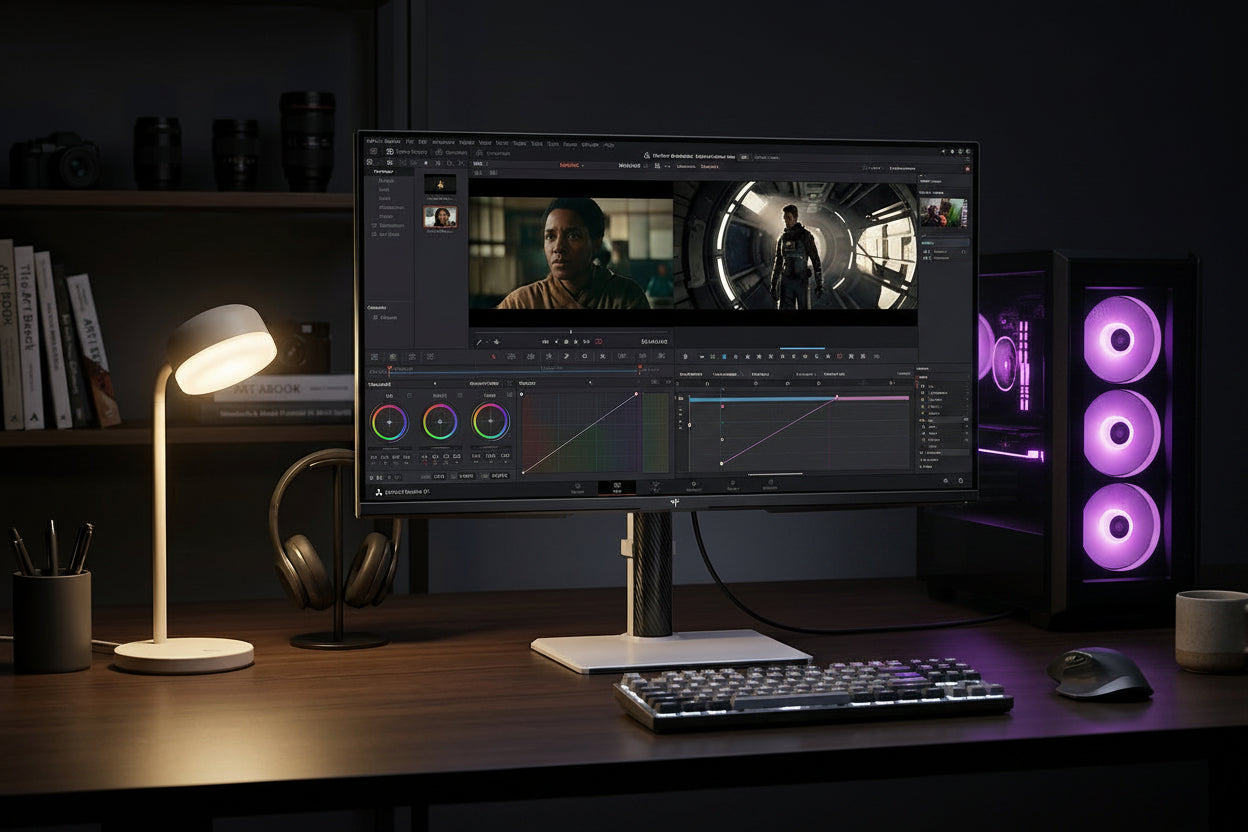
Two verified examples help narrow the claim. Sidus Link for Android supports control of professional lighting fixtures from a smart display dashboard, which makes the MegPad concept plausible for lighting adjustments on location. Blackmagic Camera for Android adds another useful case, because it supports manual camera controls and remote monitoring for production workflows.
That does not mean every creator app is guaranteed to work the same way. It means the app ecosystem is real enough to support a production-style dashboard if your specific workflow matches the apps you already use. If your kit depends on a niche casting app, a specialized camera controller, or a fragile wireless setup, test that path first.
Teleprompter, Second Screen, and Dashboard Roles
MegPad is not equally strong in all three roles. For field work, the most practical use depends on how much rigging you can tolerate and how much eye-line discipline the job needs.
| Creator Role | Best-Fit Field Scenario | Setup Needs | Common Friction | Better For |
|---|---|---|---|---|
| Teleprompter | Talking-head clips, short scripted takes, simple prompt reading | Stable placement, readable text, careful camera alignment | Eye contact can look off if the lens is not positioned behind the text | Solo creators when the shot is controlled |
| Second Screen | Shot lists, comments, notes, playback, script pages | Quick mirroring or app switching, clear reading distance | App switching and source compatibility can slow the flow | Solo creators and small teams |
| Production Dashboard | Lighting control, camera monitoring, shared status view | Reliable app access, touch behavior, and power | More useful when the interface stays glanceable, not crowded | Small crews and field control stations |
Teleprompter use is the most conditional role. A smart display can help with prompting, but it does not automatically give you pro teleprompter eye contact. As teleprompter guidance for creators explains, the lens has to sit where the text does if you want the gaze to feel natural. Without that rigging, the screen is better described as a script surface than a true teleprompter replacement.
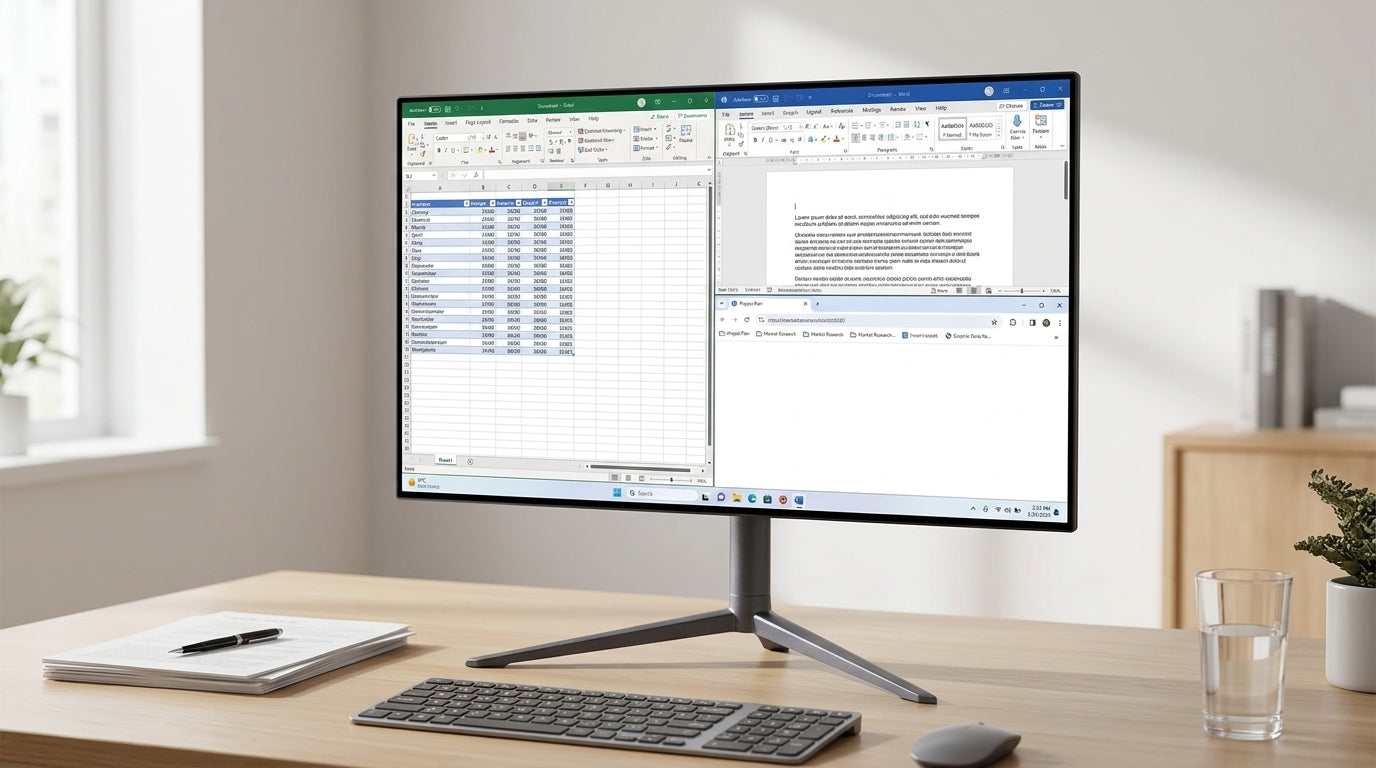
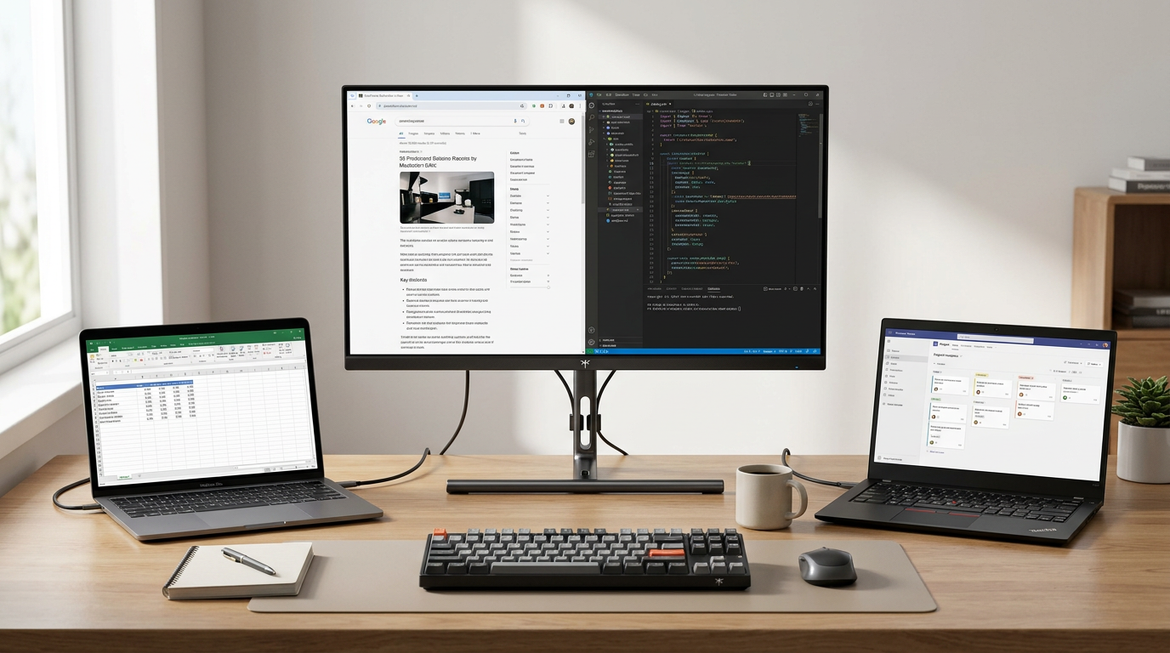
For second-screen use, MegPad is more forgiving. That is the role where notes, comments, playback, and shot references can benefit from a larger surface without needing perfect eye-line alignment. For production dashboards, the value comes from glanceable controls and a bigger interface, especially when you are switching between lighting, camera, and review tasks.
MegPad Models That Fit Creator Conditions
The model choice mostly comes down to portability versus visibility. None of the models is a universal winner, but each one maps cleanly to a different kind of creator kit.
The 25-inch model is the lightest option in the supplied lineup and is the easiest fit when the display has to travel often or sit in tighter spaces. Its product facts show Android 14, Google EDLA, a built-in camera, Type-C connectivity, and a 5000mAh battery, so it works best when your priority is a more compact mobile screen rather than a bigger shared workspace. For more details, check the 25-inch portable touch monitor.
The 27-inch model is the clearest middle-ground option for mobile creator kits. It adds wheels, a 9500mAh battery, an 8MP camera, and a Type-C all-in-one path, which makes it easier to move between rooms or positions while still feeling substantial enough for scripts or a dashboard. If you want the balanced option, the 27-inch mobile touch display is the one to inspect first.
The 32-inch model is the biggest dashboard choice. It has a 4K panel, adjustable height and tilt, Android 14, Google EDLA, wheels, and an 8550mAh battery, so it favors visibility over portability. That makes it the better pick for shared views, roomier set corners, or creators who want a more obvious production hub. You can compare it through the 32-inch 4K smart touch display.
If you want the shortest decision rule, think of it this way: 25-inch for the easiest carry, 27-inch for the best balance, and 32-inch for the clearest shared dashboard. MegPad for content creators only becomes a clean recommendation once you decide which of those trade-offs matters most on your shoots.
Creator Setup Checks Before You Buy
Use this as a quick filter before you add anything to cart:
- Decide whether the main job is prompting, monitoring, or dashboard control. A screen that looks attractive on paper can still be wrong for the job.
- Verify your source device's output path, especially if you plan to connect a phone. USB-C video output or a proven casting route is the first compatibility gate.
- Check where the display will sit, how it will move, and whether you can keep it stable without extra rigging.
- Confirm that the apps or control paths you actually use work in the way you need on location.
- Compare the size you would realistically carry against the visibility you need during the shoot.
If you pass those checks, MegPad is a reasonable fit for field creator workflows. If you fail the compatibility or rigging checks, a simpler portable monitor or a tablet may be the better buy. For readers who still want a mobile touch-screen path, the Ultrawide & Portable collection is a broader browsing route, but the final choice should still follow the workflow, not the screen size.
FAQs
How Is MegPad Better as a Teleprompter Than a Standard Portable Monitor?
MegPad can be more practical when you want a self-contained screen with touch and Android app behavior instead of a basic display. The limitation is that teleprompter quality still depends on camera placement and rigging. If the lens is not aligned behind the text, it is more accurate to think of it as a script surface than a pro teleprompter rig.
When Does MegPad Work Better as a Second Screen on Location?
Second-screen use makes sense when you need a larger, easier-to-read surface for notes, shot lists, comments, or playback. It is usually the most forgiving role because it does not demand perfect eye-line behavior. It still depends on the device connection path and app behavior, so check that first.
Can MegPad Handle a Field Production Dashboard Without a Desk Setup?
It can, if your workflow mainly needs a readable control surface for lighting, camera monitoring, or other app-based tasks. The setup is still model- and app-dependent, and the practical success of the workflow depends on power, placement, and whether the interface stays glanceable on location.
What Should I Check Before Using MegPad With My Phone or Camera Gear?
Start with the source-device output or casting method. For phones, verify USB-C video output or a supported casting path before you buy. Then check the cable path, the app you plan to use, and whether the display can be positioned safely in the space you have.
Can a Smaller MegPad Model Be Easier for Solo Shoots?
Yes. A smaller model is usually easier to carry, place, and fit into tight shooting spaces. The trade-off is less on-screen workspace, which can matter if you want to keep scripts, notes, and controls visible at the same time. That is why the smallest model is often best for travel-first kits rather than shared dashboards.
Final Takeaway
MegPad for content creators works best when you treat it as a mobile workflow tool, not a universal studio replacement. The 25-inch model favors portability, the 27-inch model is the balanced field option, and the 32-inch model gives you the clearest dashboard-style view. If your phone output, app path, and mounting plan are already sorted, MegPad can make sense. If they are not, start with the compatibility check before you choose a size.