A USB-C cable supports 4K video only if its specs explicitly mention video capability, such as DisplayPort Alt Mode, USB4, Thunderbolt 3 or 4, or a rated 4K output mode. The connector shape alone is not proof.
Your new 4K monitor lights up, then drops to 30 Hz, flickers during a match, or shows nothing at all from the same laptop that charges perfectly. A 60-second spec check before checkout can prevent the most common failure: buying a charge-focused cable that never carried display signals in the first place. Here is the practical way to read the listing, match the cable to your screen, and avoid paying for the wrong performance.
USB-C Is the Shape, Not the Promise
A USB-C plug only tells you the connector shape; the USB-C connector can be used for charging, low-speed data, high-speed data, video, or a mix of those functions depending on the cable and device design. That is why two cables that look identical can behave completely differently behind a desk.

For 4K video, the important phrase is not just “USB-C.” You want evidence that the cable can carry display traffic. In most monitor setups, that means DisplayPort Alternate Mode, often written as DP Alt Mode or DisplayPort over USB-C. In more demanding setups, USB4 or Thunderbolt 3 or 4 labeling is the cleaner buying signal because those standards are commonly associated with higher bandwidth and stronger display support.
The trap is that many inexpensive cables are built mainly for charging. They may charge a laptop or cell phone reliably while lacking the wiring, signaling, or certification needed for video. A cable can also support data but still fail your exact target mode if the adapter, dock, port, or monitor cannot handle the same resolution and refresh rate.
The Labels That Actually Matter
Before buying, ignore vague claims like “fast,” “premium,” or “4K compatible” unless the listing backs them with a real video standard. A full-featured cable should name the display path. USB-C video guidance makes the core point clearly: not all USB-C cables support video, and video requires capabilities such as DisplayPort Alt Mode, Thunderbolt 3, or USB4.

Here is the quick translation table I use when judging cables for office displays, portable monitors, and high-refresh gaming panels.
Cable or listing phrase |
What it usually means for 4K buying |
Charge-only |
Avoid for monitors; it may not carry video at all |
USB 2.0 |
Fine for basic charging and low-speed accessories, not a confident 4K video choice |
USB 3.x 5 Gbps or 10 Gbps |
Better for data, but still verify video or DP Alt Mode support |
DisplayPort Alt Mode |
Strong signal for USB-C monitor output when the laptop port also supports it |
USB4 |
Good buying signal for modern docks, displays, and high-bandwidth setups |
Thunderbolt 3 or Thunderbolt 4 |
Strong choice for 4K displays, docks, and multi-device workflows |
4K 60 Hz rated |
Suitable target for most office and productivity monitors if the rest of the chain matches |
4K 120 Hz or 4K 144 Hz rated |
Better for gaming monitors; confirm DP version, adapter limits, and monitor input support |
A simple real-world example: if you are connecting a laptop to a 27-inch 4K office monitor at 60 Hz, a cable that clearly says “USB-C with DisplayPort Alt Mode, 4K 60 Hz” is a better purchase than a “100 W fast charging cable” with no video language. If you are connecting to a 4K gaming monitor at 144 Hz, the safer search terms become USB4, Thunderbolt, DisplayPort 1.4, DSC, or an explicit 4K high-refresh rating.
Check the Port Before You Blame the Cable
The cable cannot add video output to a USB-C port that was never wired for it. A laptop may charge through USB-C and still lack display output. KTC’s compatibility guidance frames this correctly: the decisive check is whether the port supports DisplayPort Alt Mode, Thunderbolt, or USB4.
Look beside the port for symbols, but treat them as clues rather than final proof. A lightning-bolt icon often points to Thunderbolt. A DP logo or small monitor icon may indicate display output. The stronger method is to search the exact laptop model number and read the manufacturer specification sheet for wording such as “USB-C with DisplayPort,” “DisplayPort 1.4 over USB-C,” “Thunderbolt 4,” or “USB4 with DisplayPort.”

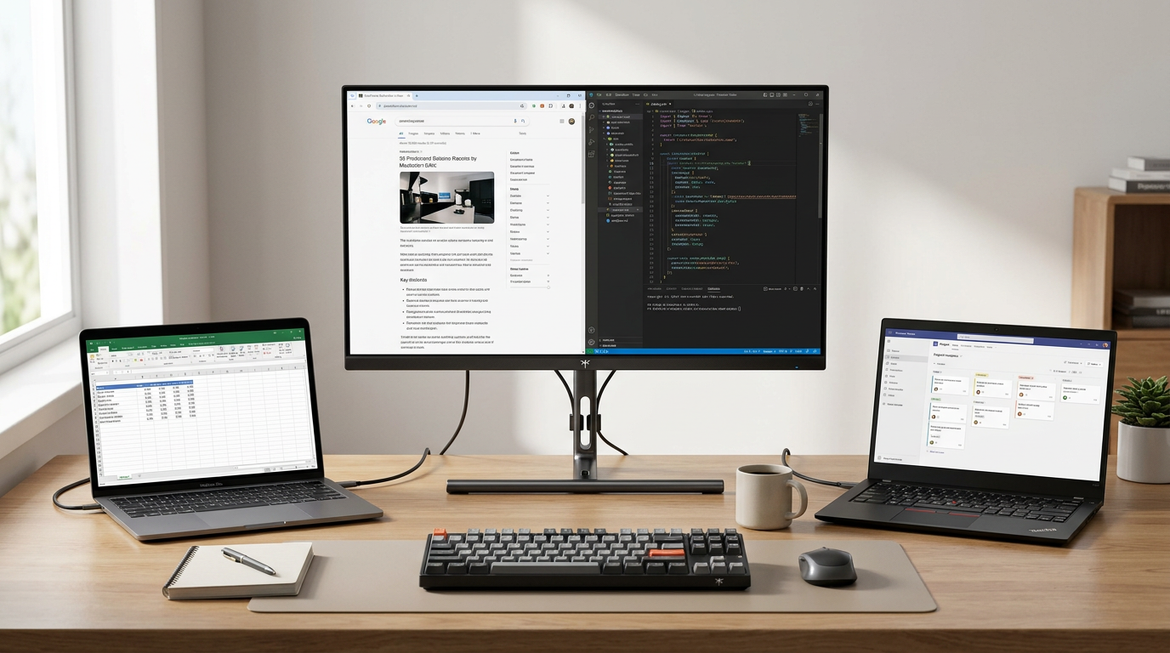
This matters for portable smart screens too. One-cable portable monitors need both video and enough power from the host port. If the laptop’s USB-C port is data-only or charge-only, a premium cable will not create a native display signal. You may need HDMI plus USB power, or a DisplayLink-based solution with drivers, which is useful for office expansion but less ideal for latency-sensitive gaming or color-critical creative work.
Match Resolution, Refresh Rate, and Bandwidth
4K at 30 Hz and 4K at 60 Hz are not the same experience. For spreadsheets, coding, and general office work, 4K 60 Hz is the practical baseline because the pointer, scrolling, and window movement feel smoother. For competitive gaming, 4K 120 Hz, 144 Hz, or higher needs much more from the port, cable, adapter, and monitor.

A USB-C cable breakdown is useful because it shows why cable type matters beyond the plug: USB-C cable types vary in wiring and capability. A cable designed mainly around charging may be robust for power but not built for the high-speed lanes needed by display traffic.
A practical buying calculation is to start with the monitor’s native target. If the monitor is 4K 60 Hz, buy a cable rated for at least 4K 60 Hz through USB-C video or USB-C to DisplayPort. If the monitor is 4K 144 Hz, do not settle for a listing that only says 4K without a refresh rate. If the monitor is 4K 240 Hz, expect stricter requirements such as DisplayPort 1.4 with DSC or newer display hardware support; a random USB-C cable or basic HDMI adapter is not the right bet.
Adapters and Docks Can Be the Bottleneck
A USB-C cable may be capable, but the adapter can still cap output. A USB-C to HDMI adapter rated for 4K 30 Hz will not output 4K 60 Hz just because your laptop and monitor can. The same applies to docks with multiple USB ports, Ethernet, card readers, and dual display outputs sharing the same upstream connection.

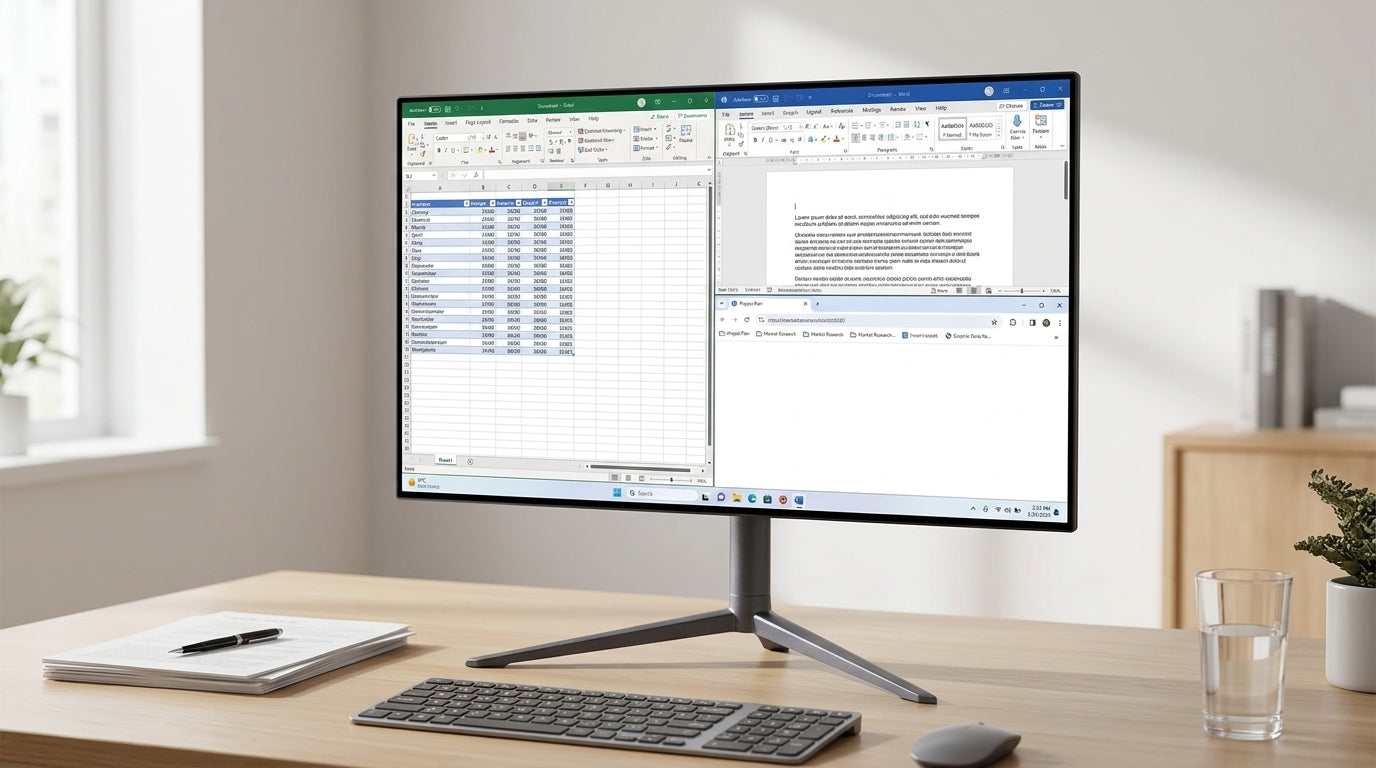
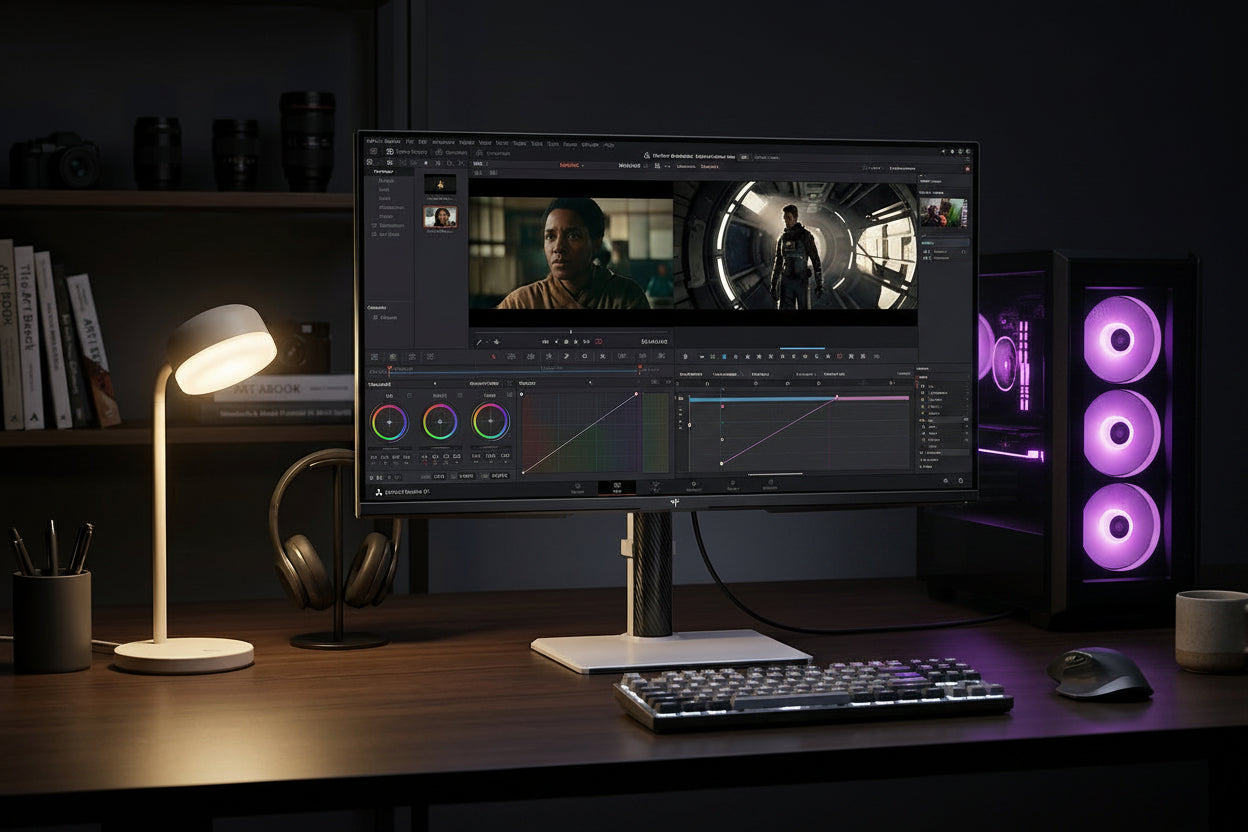
This is where office productivity and gaming priorities split. For a quiet desk setup with one 4K monitor, power delivery, and keyboard and mouse peripherals, a stable USB-C cable with DP Alt Mode and enough wattage may be the best value. For a gaming station or dual-4K workflow, Thunderbolt or USB4 is usually more reliable because the bandwidth headroom is larger and the certification language is clearer.
Cable length also matters. For demanding 4K or high-refresh use, shorter cables are usually more dependable. A 3 ft to 6 ft cable is a strong default behind a monitor arm or laptop stand. Longer runs can work, but the risk of signal loss, flicker, and intermittent black screens increases, especially with low-quality shielding or unverified claims.
How to Read a Product Listing Before Checkout
A good listing tells you the video mode, data rate, power rating, and certification. If it says “4K 60 Hz,” “DisplayPort Alt Mode,” “USB4 40 Gbps,” or “Thunderbolt certified,” you have useful evidence. If it only says “USB-C fast charging,” “compatible with laptops,” or “supports 100 W,” you still do not know whether it can drive your monitor.

Cable compatibility material emphasizes that USB-C features vary by cable and length, so a product page should be read as a specification, not a vibe check; USB Type-C cable compatibility depends on supported features, not just the reversible connector. For high-power laptop use, also look for an E-marker or clear power rating, especially above 60 W. Power support does not prove video support, but weak power delivery can still ruin a one-cable monitor setup by making the laptop drain under load.
A reliable listing should make one of these promises in plain terms: USB-C video, DisplayPort Alt Mode, Thunderbolt, USB4, or a specific resolution and refresh rate. The best listings combine those claims with a known speed rating such as 10 Gbps, 20 Gbps, or 40 Gbps, plus a realistic cable length.
Pros and Cons of Buying a Higher-Spec Cable
A higher-spec USB4 or Thunderbolt cable costs more, but it buys flexibility. It can serve a 4K monitor today, a dock tomorrow, and a faster portable SSD later. It also reduces the guesswork when you move between a gaming laptop, workstation, tablet, and portable screen.
The downside is that overbuying can waste money. If your laptop only supports basic DP Alt Mode and your monitor is fixed at 4K 60 Hz, a certified 4K 60 Hz USB-C video cable may be the best value. A Thunderbolt 4 cable will not upgrade a non-Thunderbolt port, and it will not make a 4K 60 Hz monitor refresh at 144 Hz.
The value-oriented answer is to buy to the highest mode you realistically use. For office productivity, choose stable 4K 60 Hz, enough Power Delivery, and a length that keeps the desk clean. For gaming, prioritize verified high-refresh support, DisplayPort 1.4 or better where applicable, USB4 or Thunderbolt, and a short certified cable.
Quick FAQ
Can any USB-C cable connect a laptop to a 4K monitor?
No. The cable must support video, and the laptop’s USB-C port must support video output. A charge-only USB-C cable may power devices but fail to display anything.
Is Thunderbolt required for 4K video?
No. Many 4K 60 Hz displays work through USB-C DisplayPort Alt Mode. Thunderbolt becomes more valuable for dual monitors, high-refresh 4K, docks, fast storage, and cleaner compatibility across demanding setups.
Why does my 4K monitor only show 30 Hz?
The most likely causes are a low-spec cable, a 4K 30 Hz adapter, a USB-C hub sharing bandwidth, or a port that lacks the required DisplayPort mode. Test a direct USB-C to DisplayPort or verified USB-C video cable before replacing the monitor.
Does 100 W charging mean the cable supports 4K video?
No. Charging wattage and video capability are separate features. A cable can be excellent for charging and still lack the conductors or supported mode needed for display output.
The Smart Buying Rule
Buy the cable based on the display mode you want, not the connector you recognize. For 4K, the product page should explicitly say DisplayPort Alt Mode, USB4, Thunderbolt, or the exact 4K refresh rate you need; anything less is a gamble on your screen quality, desk reliability, and game-day smoothness.