A ultrawide monitor as dual-screen replacement works best when you want one continuous canvas for side-by-side work and your desk, apps, and seating distance all support it. A 49-inch super ultrawide is the closest practical replacement for two standard monitors, while a 34-inch ultrawide is usually better treated as a consolidation move, not a perfect one-for-one swap.

When One Ultrawide Replaces Two Monitors
The replacement test is not just screen size. It is whether one wide display gives you enough workspace, enough comfort, and enough control over windows to match how you actually work.
If your day is mostly code next to docs, charts next to watchlists, or timelines next to reference material, a single ultrawide can feel cleaner than two separate screens. If you rely on strict separation, portrait layouts, or frequent task switching across two physical displays, dual monitors still stay safer.
A useful rule of thumb is this: choose the ultrawide only if you want one shared workspace more than two isolated ones. That is why the ultrawide monitor for productivity replacement question usually comes down to workflow habits first, not the spec sheet.
Size and Workspace Tradeoffs
The size question is where the ultrawide vs dual monitor decision becomes concrete. A 49-inch 32:9 panel gives the closest practical stand-in for two standard 27-inch QHD monitors, while a 34-inch 21:9 screen is better described as a strong single-monitor productivity upgrade with some consolidation benefits.
| Screen class | Workspace continuity | Desk footprint | Task separation | Best reading |
|---|---|---|---|---|
| 34-inch 21:9 | Medium | Easier to fit | Moderate | Consolidation tier |
| 49-inch 32:9 | High | Largest | Good, but still one canvas | Closest practical replacement |
| Dual 27-inch QHD | High, with a bezel break | Medium to large | Highest | Best for separate zones |
The tradeoff is simple. Remove the bezel and you get one smoother span for spreadsheets, timelines, and reference windows. Keep two separate displays and you get stronger task separation, which some users still prefer when the workday includes multiple unrelated apps.
For a broader browse path, the ultrawide and portable displays collection is the closest category fit if you are comparing curved wide-screen options.
Comfort and Ergonomics
For most buyers, comfort is the make-or-break factor in an ultrawide monitor as dual-screen replacement setup. OSHA's workstation guidance cautions that prolonged head-and-neck turning can contribute to fatigue and pain, so the screen should sit where your primary work zone stays mostly in front of you.OSHA monitors guidance
That is why wider displays often need a deeper desk or more viewing distance. Ergonomic guidance from Taylor Ergonomics suggests that monitors larger than 30 inches diagonal are often easier to place farther back, with recommended distances often around 31 to 39 inches for larger screens.ergonomic viewing distance guidance
In practical terms, this means a shallow desk can erase the benefit of a wide panel. If you have to sit too close, the edges start working against you, and the supposed productivity gain can turn into constant neck movement.
Viewing Distance and Head Turning
If the screen sits too close, you may end up scanning the whole width with your head instead of your eyes. That matters most in coding, trading, and spreadsheet sessions where the left and right sides of the panel stay active for long periods.
A simple check helps: sit at your normal posture, open your usual apps, and notice whether your primary window stays in the comfortable center zone. If you are frequently turning just to read the edges, dual monitors may still be the better fit.
Curvature and Text Placement
Curvature can make a large ultrawide feel easier to take in, but it is not a universal comfort upgrade. Some people like how a curve keeps the edges from feeling distant; others find it odd for text-heavy work, especially when they are comparing lines, columns, or code blocks.
That is why curvature should be treated as a preference, not a promise. On a wide curved display, the best experience usually comes when the main app sits near the center and the side panels hold secondary material.
Stand, Arm, and Desk Setup
Desk setup matters as much as the panel itself. Height, tilt, and mount options determine whether the display sits naturally in your line of sight or forces you to compensate with posture.
If your desk is compact, a 49-inch screen is more likely to demand planning before purchase. If you want to reduce neck strain, the screen should support a calm, straight-ahead posture rather than a repeated side-to-side check pattern.
If you want a deeper ergonomic follow-up, the article on wide monitor neck pain is the closest match for setup-specific comfort advice.
Brightness and Fatigue Checks
Room brightness, glare, and text scaling can change the comfort story more than people expect. A wide display that looks great in a store can feel tiring in a bright home office if the font sizes, window placement, or reflected light are off.
For long sessions, test the actual workday mix, not just the desktop wallpaper. Comfort is not only about the screen class, it is also about how far back you sit, what you read, and how often your eyes and neck have to travel.
Which Workflows Benefit Most
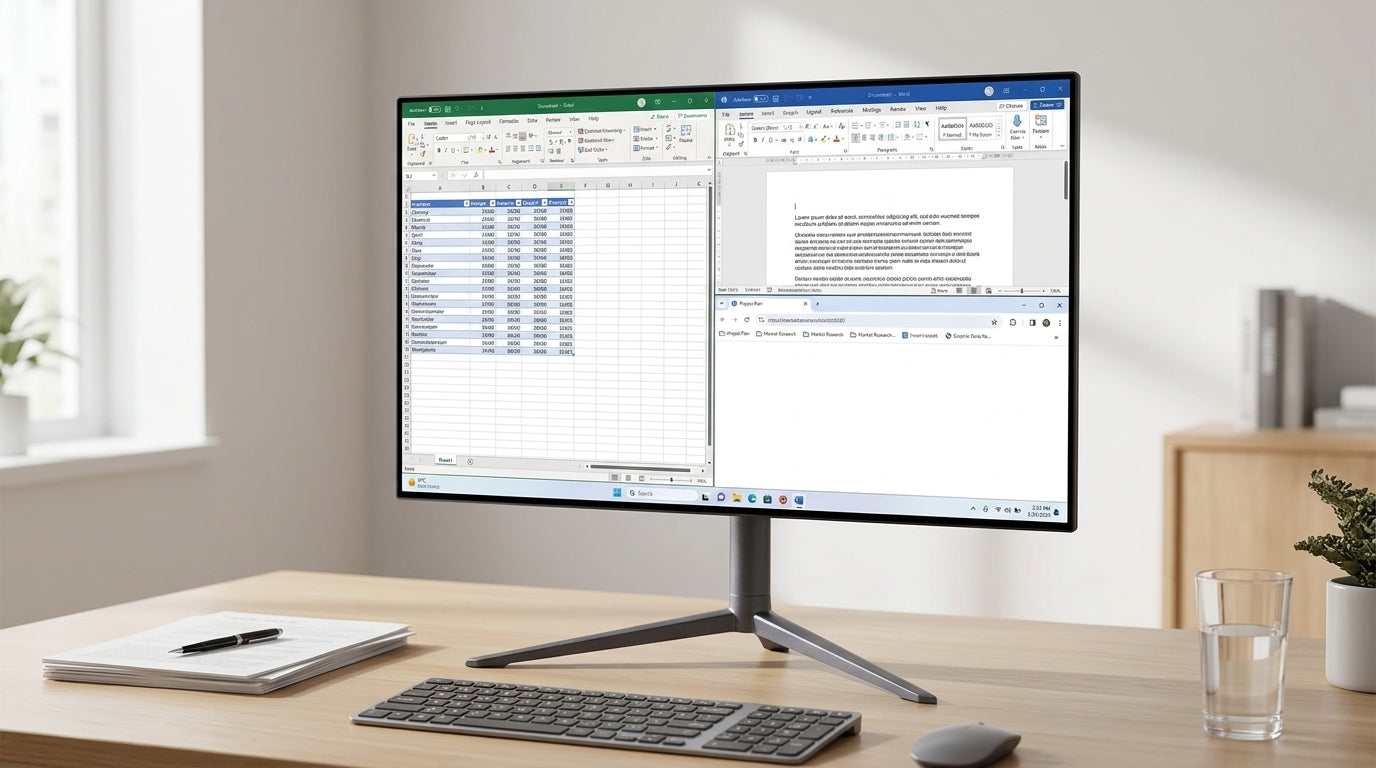
A single ultrawide monitor for office work tends to shine when the workflow is naturally horizontal. That means side-by-side comparisons, long timelines, reference panes, charts, or dashboards that want one uninterrupted strip instead of two separate islands.
Coding and IDE Layouts
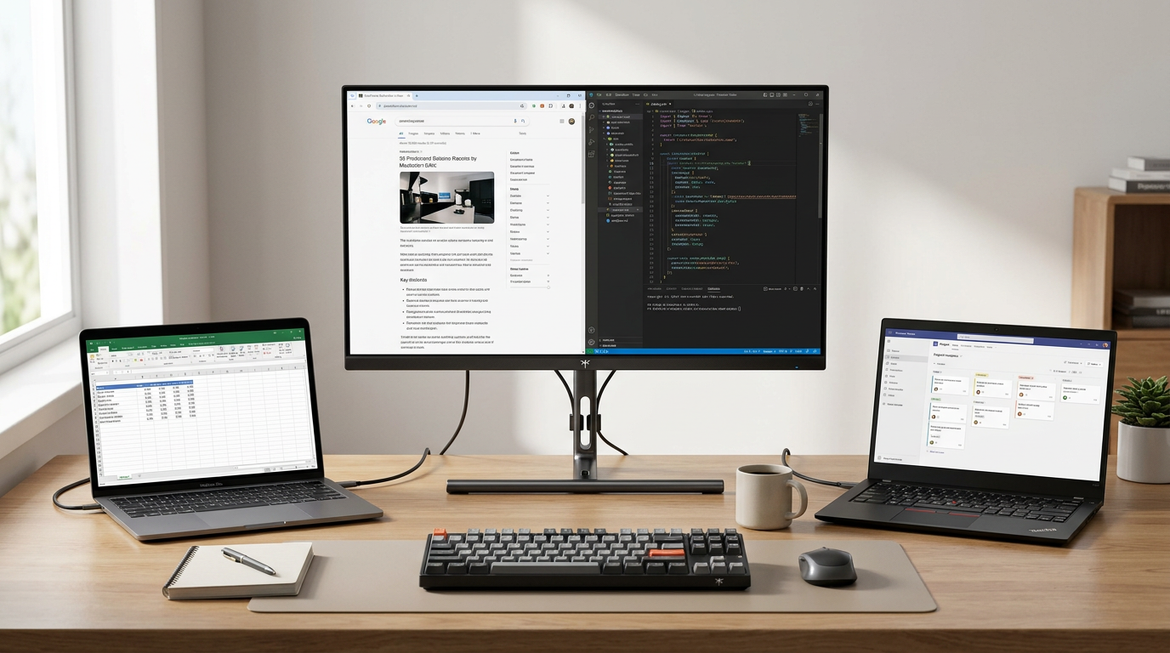
Developers often like an ultrawide because code, terminal, and docs can live on the same canvas without a bezel in the middle. The catch is that editor width, font scaling, and panel layout still need to be checked.
If your IDE or side panels feel awkward at wide widths, the display may expose layout problems rather than solve them. The blog on split IDE panel uniformity is a useful extra check for coders who care about screen consistency.
Spreadsheets and Financial Work
For spreadsheet users, width helps when you compare columns, watchlists, or reference tabs side by side. The tradeoff is that some people need more vertical rows more than extra width, so an ultrawide is strongest when comparison is the main task.
If you want a deeper breakdown of that tradeoff, see spreadsheet aspect ratios. It is especially relevant if you spend more time reviewing rows than comparing panels.
Trading and Multi-Pane Monitoring
Traders and analysts often like one continuous canvas for charts, news, and order windows. That said, platform layout support matters, and it is better to check your software than assume a wide panel will snap perfectly on its own.
Windows users can use custom window layout zones to build custom layouts, which is helpful when the built-in snap behavior feels too limited. On Mac, Stage Manager can help organize windows, but it is still a layout aid, not a guarantee that every app behaves the same way.
Content Review and Timeline Work
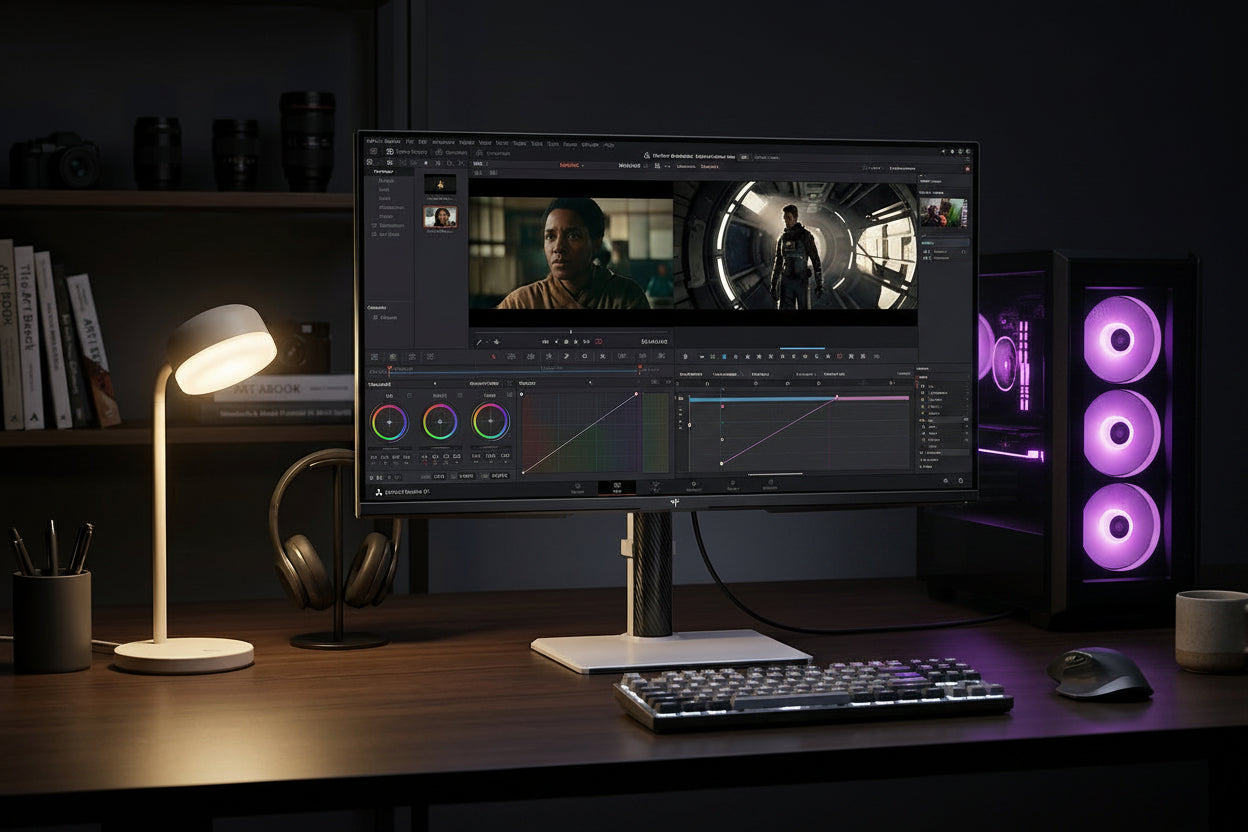
Editors and reviewers often benefit from a wider timeline, preview area, and reference space. One display can make drag-and-drop work feel simpler because you are not crossing a bezel every time you move between panels.
The downside is that not every review workflow wants one big canvas. If you prefer one screen for active work and another for reference or communication, dual monitors can still be the cleaner setup.
Compatibility and Setup Checks
Before you switch to an ultrawide monitor for productivity replacement, check the parts that actually decide whether the setup will feel smooth in daily use.
- Measure desk depth and sitting distance first. If the screen will sit too close, the comfort benefit drops fast. This is the most important check for a large curved ultrawide.
- Test your top apps for window behavior. Open your IDE, browser, spreadsheet tool, and meeting app to see whether they stay readable and easy to manage.
- Confirm your layout tools. Windows users may be fine with custom window layout zones, while Mac users may rely more on Stage Manager. Treat both as helpers, not magic fixes.
- Check meeting behavior. Zoom can share a portion of your screen, which is handy when you do not want the whole ultrawide visible in a presentation.
- Confirm your ports and resolution path. A wide display only helps if your laptop or desktop can drive it in the mode you expect.
- Run a real-world trial before committing. Use the same mix of apps, documents, and calls you use on an average workday.
If you are comparing actual models, the 49-inch super ultrawide option is the featured-size example for a true replacement-style setup, while the 34-inch ultrawide model is better for buyers who want consolidation without going all the way to a very wide desk footprint.

Make the Replacement Decision
Choose an ultrawide if you want one continuous workspace, fewer cables, and mostly side-by-side multitasking. Choose dual monitors if you need strong task separation, portrait use, or a setup that stays flexible when the day's work changes.
If you want the closest true replacement, start with a 49-inch class screen and confirm desk depth, app layout, and meeting behavior first. If those checks feel shaky, stay with dual monitors or treat a 34-inch ultrawide as a consolidation step instead of a full swap.
FAQs
Can One Ultrawide Replace Two Monitors for Coding?
Often, yes, if you work mostly with code, terminal, and docs side by side. The main caveats are font scaling, editor layout, and whether the screen sits at a comfortable distance. If your IDE feels cramped or too spread out, dual monitors may still be easier.
What Size Ultrawide Is Closest to a Dual-Monitor Setup?
A 49-inch super ultrawide is the closest practical match for two standard monitors. A 34-inch ultrawide is usually better framed as a middle ground: it gives you more continuous workspace, but it does not fully behave like two separate displays.
Why Can Curvature Matter on a Wide Monitor?
Curvature can make edges feel easier to take in on a big panel, especially at a sensible viewing distance. It can also feel different from a flat dual-monitor arrangement, so text-heavy users should treat it as a comfort preference rather than an automatic win.
Can Windows or Mac Apps Snap Cleanly on an Ultrawide?
Sometimes, but not always. Custom window layout zones and Stage Manager help with window organization, yet they do not guarantee that every app will behave the same way. The safest move is to test the exact apps you use most often.
What Should I Check Before Buying an Ultrawide for Office Work?
Check desk depth, viewing distance, mounting options, scaling, and your main apps before you buy. Then test whether you really want one continuous canvas or two separate work zones. That choice matters more than the panel's width alone.
Final Takeaway
If your work is mostly side by side and your desk gives you enough distance, an ultrawide can replace two monitors well enough to simplify the setup. If you need stronger separation or more flexible posture options, dual monitors still make more sense.