UHBR20 monitor buyers should think of the port as bandwidth headroom, not an automatic upgrade. If you are shopping for high-refresh 4K or 5K, the real question is whether your monitor, GPU, cable, and any adapter all support the same mode. Start with the resolution and refresh rate you actually plan to use, then match the connection standard to that goal.

What UHBR20 Changes
UHBR20 is the highest DisplayPort 2.1 link tier commonly discussed for consumer monitors. In plain terms, it gives the connection more room to carry demanding signals, which can make uncompressed high-refresh 4K and some 5K workflows practical when the rest of the chain supports it. The DisplayPort organization describes UHBR20 as an 80 Gbps class link across four lanes, but that capacity only matters if the source and display can actually use it.
That is why the main buying question is not whether UHBR20 sounds newer. It is whether your intended mode really needs that much bandwidth. A 27-inch 4K panel running at 160 Hz may still lean on compression or a lower link tier depending on the implementation, while many 1440p or lower-refresh setups do not need the extra headroom at all.
A monitor can also advertise a capable input while the real-world result still depends on the GPU, cable, and selected mode. A monitor may list a DP 2.1 port while real performance still depends on the GPU output, cable certification, and chosen settings. That is the part shoppers often miss. If you care about a clean uncompressed path, the whole chain matters more than the port name printed on the spec sheet.
When HDMI 2.1 Is Enough
HDMI 2.1 is often the smarter choice for console-first buyers and mixed-use shoppers. If your target is 4K 120 Hz on a console, or a PC setup that already runs cleanly over HDMI 2.1, UHBR20 is usually a future-proofing option rather than a requirement. HDMI 2.1 remains sufficient for many 4K high-refresh console and mixed-use setups. The simpler path is often the better path when it already gives you the refresh rate you want.
For many buyers, HDMI 2.1 is enough because the upgrade target is not maximum bandwidth. It is stable picture quality, easy compatibility, and fewer setup surprises. That matters especially when the monitor will be used for both gaming and everyday desktop work.
The recommendation flips when your use case pushes harder on the signal path. If you are trying to stack very high resolution, very high refresh, and richer image settings at once, UHBR20 becomes more attractive. If you are not pushing those limits, paying for the newest port tier can be wasted budget.
A useful rule of thumb is this: if your target mode already works well on HDMI 2.1, UHBR20 is optional; if your target mode strains HDMI 2.1 or depends on DisplayPort-specific headroom, then UHBR20 deserves closer attention. For a broader browsing path, the 4K & 5K High-Refresh Monitors collection is a sensible starting point.
Check the Whole Signal Chain
The full signal chain matters more than any single label. Before you buy, verify the GPU or source output, the monitor input, the cable, and any adapter or dock in between. If one piece is underspecified, the setup may fall back to a lower mode, use compression, or become unstable.
GPU and Port Support
Start with the source device. A desktop GPU, laptop, console, or dock may all expose different limits. A port that looks modern is not enough by itself; it must support the exact resolution, refresh, and color mode you want.
This is where a good educational follow-up can help. The RTX 6080 Monitor Compatibility: Decoding UHBR10 vs UHBR20 Requirements is a useful next read if you are trying to sort out GPU-side bandwidth expectations.
Cable Type and Length
Cable quality becomes more important as bandwidth rises. VESA says DP80-certified cables are required for reliable UHBR20 performance, and its DP80LL active cable program is aimed at longer runs. In practical terms, that means the wrong cable or an overlong run can turn a capable system into a flicker-prone one. Why Picture Quality Drops With Certain Monitor Cables and Lengths explains the practical impact.
For everyday buying, shorter and clearly certified usually beats vague marketing claims. If you need a hardware starting point, the Premium Display Signal Cables for Gaming & Productivity Monitors page is a useful navigation stop, though it currently lists HDMI 2.1 and DP 1.4 options rather than a UHBR20 cable.
Monitor Input and Settings
Do not stop at the headline port label. Check the monitor's input table and confirm which port actually supports the mode you want. Some models offer their best refresh rate only on one input type, or only under specific settings such as color depth or HDR mode.
If the image is unstable, step back to a known-good baseline before blaming the monitor. Lower the refresh rate, simplify the color setting, and remove adapters one by one. That approach saves time because it tells you whether the issue is bandwidth, cable quality, or a compatibility layer.
Console or Creator Workflow Checks
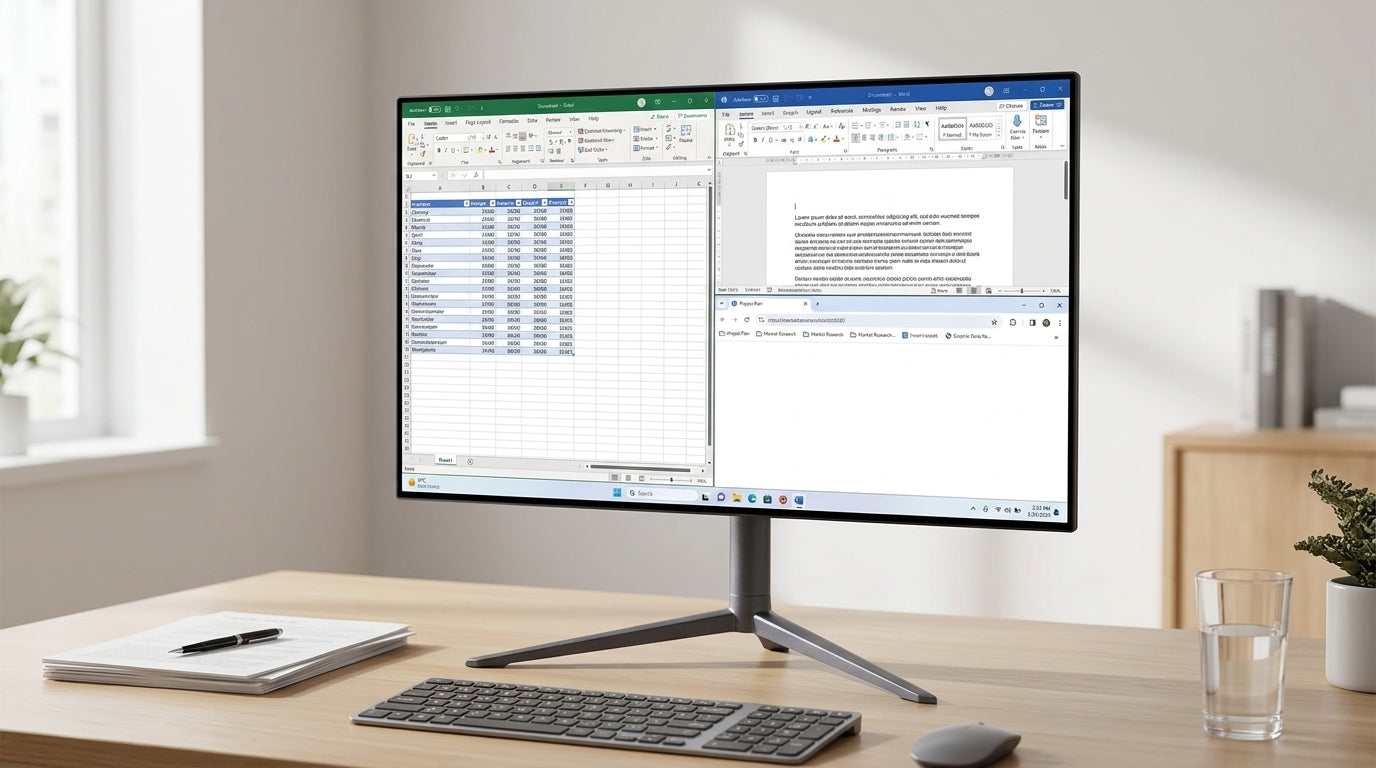
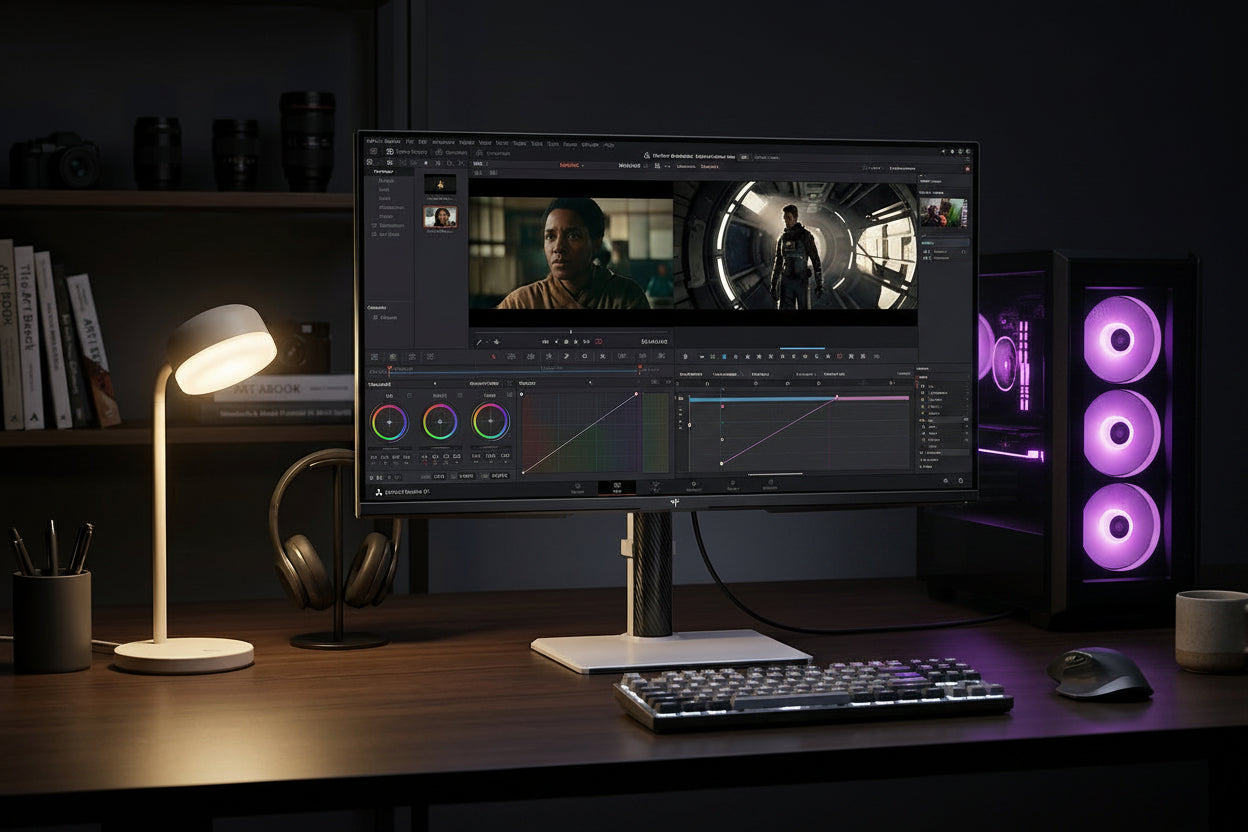
Console-first buyers usually care more about easy HDMI compatibility than maximum DisplayPort headroom. Creator or productivity users often care more about whether the desktop stays sharp and stable at the chosen resolution. In both cases, the right standard is the one that fits the actual workflow, not the one that sounds most advanced.

Pick a Monitor for Your Use Case
For most shoppers, the monitor choice should come before the port choice. UHBR20 matters most when your display goal already sits near the top of the bandwidth range. If your real priority is immersion, convenience, or value, a different monitor class may be the better fit even if it does not need the newest link tier.
4K High-Refresh Gaming
Choose a 4K high-refresh gaming monitor if you want the most mainstream balance of clarity and speed. This is where DisplayPort bandwidth starts to matter more, especially if you plan to stay on PC and push beyond the easy middle ground. A model like the KTC 27" 4K 160Hz/1ms HDR400 Gaming Monitor | H27P22S is worth checking as a category fit.
Mini-LED and HDR Focus
Choose a Mini-LED option if HDR impact and contrast matter as much as refresh rate. The KTC Mini LED 27" 4K 160Hz HDR1400 Gaming Monitor | M27P6 is a useful fit check for buyers who want stronger HDR behavior.
5K and Creator Work
Choose a 5K or creator-oriented monitor if desktop sharpness and text clarity matter more than raw gaming speed. That is where higher DisplayPort bandwidth can become appealing, because the display may need more room to carry the target mode cleanly. For shoppers who want to browse by that use case, the Gaming Monitor collection can help you compare broader categories before narrowing the exact spec.
32-Inch and Ultrawide Setups
Choose a 32-inch 4K or ultrawide model if scale and multitasking matter more than compact size. In those cases, the bigger question is how the monitor behaves in your room and on your desk, not just whether it supports the newest link tier. If you are comparing larger layouts, the 4K & 5K High-Refresh Monitors collection is a more relevant browse path than starting from port acronyms alone.
Final Buying Checklist
Use this checklist before you buy a UHBR20 monitor:
- Confirm the exact resolution and refresh rate you want.
- Check whether HDMI 2.1 already covers that mode cleanly.
- Verify the monitor's input table, not just the headline port name.
- Confirm the GPU, laptop, console, or dock supports the same mode.
- Use a certified cable when bandwidth demand is high.
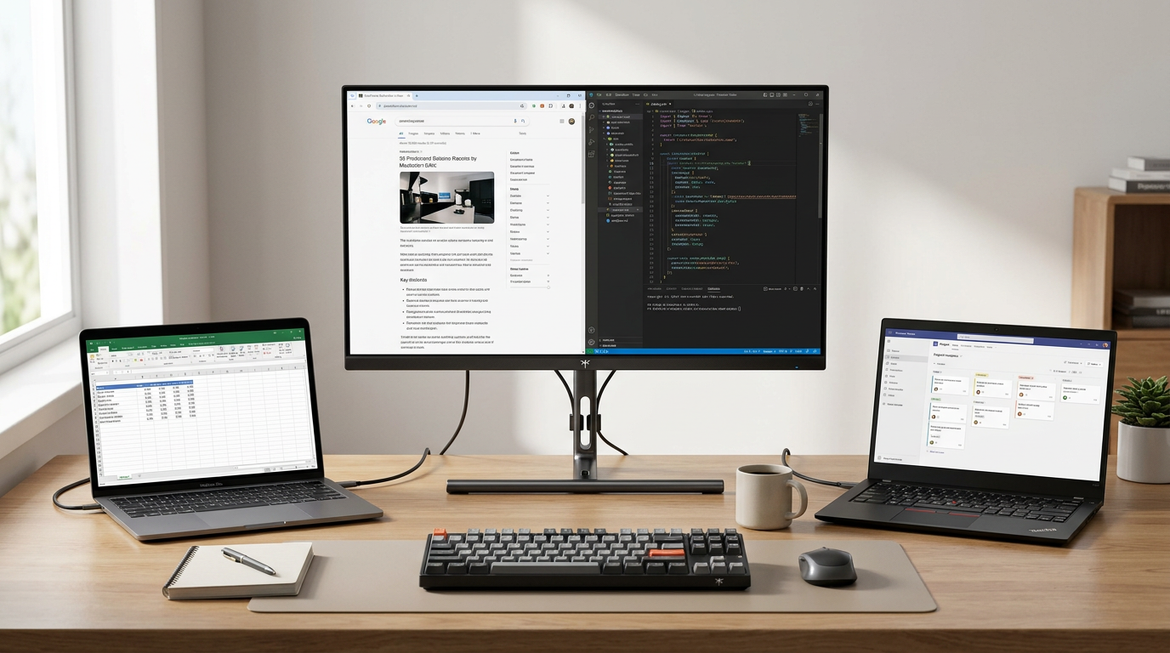
- Treat adapters, hubs, and KVMs as risk points until proven stable.
- Recheck color depth, HDR mode, and adaptive sync, because those settings can change the available signal path.
- Pay extra for UHBR20 only if your use case actually needs the headroom.
If you are still building out the cable side, the Premium Display Signal Cables for Gaming & Productivity Monitors page is the most direct store-side place to compare supported cable types and lengths.
Related Resources
- GPU Port Planning for 4K High-Refresh Displays in 2026 Builds
- RTX 6090 Monitor Requirements: The Native UHBR20 Audit
- RTX 60-Series Display Requirements: Why DP 2.1 UHBR20 is Non-Negotiable
FAQs
Q1. How Do I Know If I Need UHBR20 Instead of HDMI 2.1?
You usually need UHBR20 only when your target mode pushes beyond what HDMI 2.1 comfortably covers, or when you want the extra DisplayPort headroom for a high-resolution PC setup. If your current mode already works cleanly over HDMI 2.1, UHBR20 is more of a future-proofing choice than a must-have.
Q2. What Cable Should I Buy for a UHBR20 Setup?
Buy a cable that matches the exact port standard and run length you need, then favor certified options over vague "8K" or "high speed" claims. VESA's DP80 guidance is the safest benchmark for UHBR20-class DisplayPort cabling, especially if you want to avoid flicker or fallback behavior.
Q3. Can a Monitor With DisplayPort 2.1 Still Run Fine on HDMI 2.1?
Yes, many can, but the result depends on the monitor's input rules and the source device. Some displays offer strong performance over HDMI 2.1 even if they also include a DisplayPort 2.1 label. The key is to check the exact mode table for the port you will actually use.
Q4. Why Does My High-Refresh Monitor Drop Frame Rate or Flicker?
The most common causes are a weak cable, a marginal adapter, a dock, or a mode that exceeds the stable bandwidth path. The safest first fix is to step down to a known-good resolution or refresh rate, then add complexity back one piece at a time.
Q5. Can UHBR20 Matter for Console Gaming in 2026?
Usually less than it does for a high-end PC setup. Most console buyers will be better served by HDMI 2.1 compatibility and a stable input path. UHBR20 becomes more relevant if the monitor also has to serve a future PC upgrade or a mixed-use desktop setup.
UHBR20 Buying Decisions Should Follow the Full Setup
The best UHBR20 monitor is not the one with the flashiest port label. It is the one whose monitor input, source device, and cable all support the same target mode without surprises. For many buyers, HDMI 2.1 is already enough. For others, especially high-end PC users who want more bandwidth headroom, UHBR20 is worth verifying before purchase.